Real-Life Narcotics G-Men Reveal Targets Celebrities Under Drug Surveillance


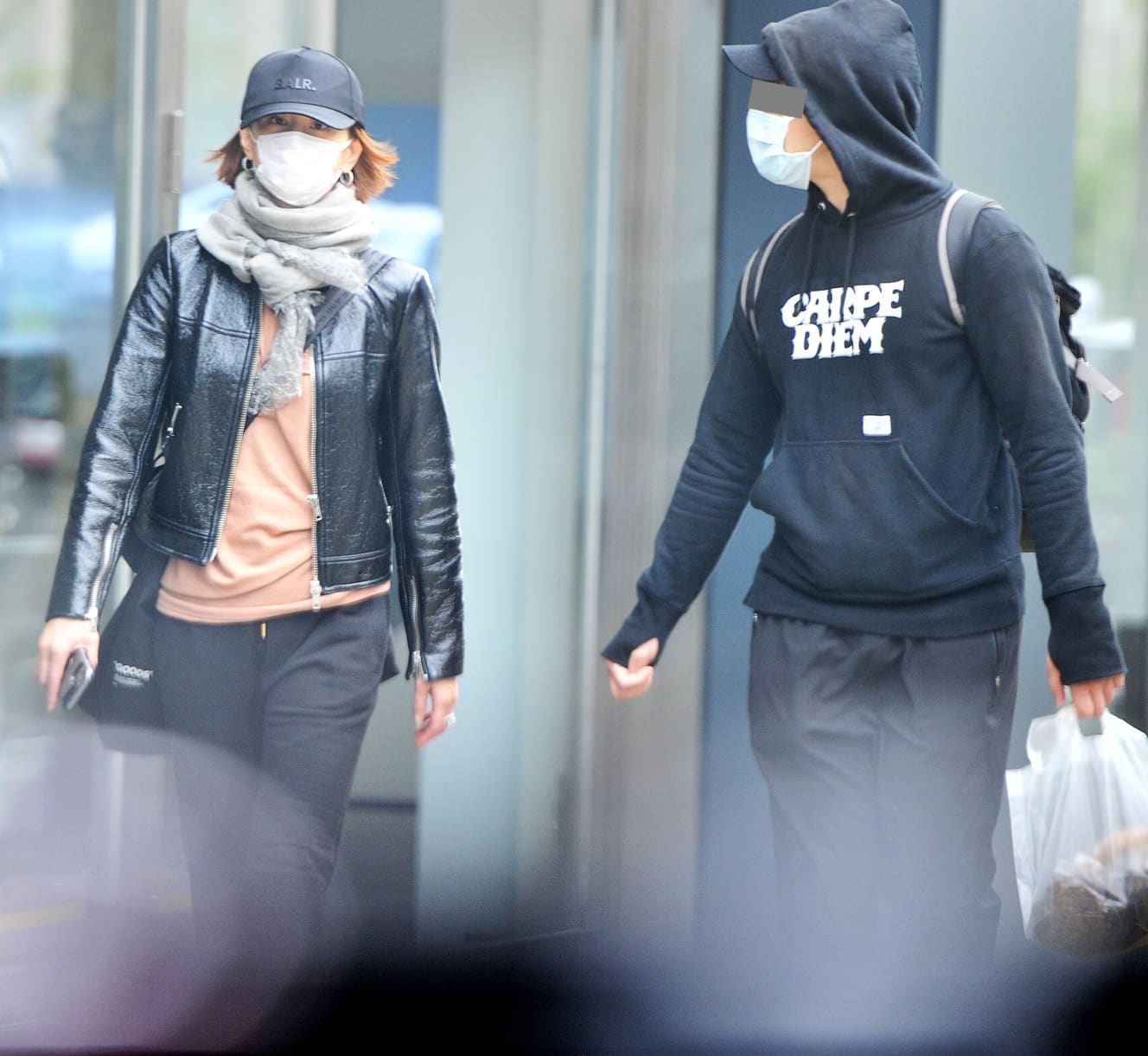
Ryoko Yonekura’s Apartment Search Raises Questions
Rockers attending Roppongi drug parties, investigators interfering with local investigations, real estate company complaints about lotion baths, and a beautiful talent who narrowly avoided trouble because of marijuana in her underwear—these are just some of the sensational elements surrounding celebrity drug cases.
In drug cases, possession is generally the fastest and easiest offense to prove. The substance itself is seized, chemical analysis is completed, and the location of discovery and possession is clearly identified. At this point, the facts are usually sufficient to establish a case.
Simple possession is structurally straightforward to prove and should, in theory, be the easiest way to establish criminal liability. However, in Ryoko Yonekura’s (50) case, possession could not be legally established.
Illegal drugs were seized from her home, and the chemical analysis was confirmed. Yet authorities did not proceed with an arrest. Why? Because there is a crucial distinction between the fact that illegal drugs existed and determining who controlled or managed them.
Fumitaka Kohirumaki (52), a former deputy inspector with the Tokyo Metropolitan Police, joined the force in 1993. He has devoted nearly 30 years to organized crime, firearms control, and drug investigations, confronting major incidents and investigating numerous celebrities. Regarding Yonekura’s drug case, he expresses only a sense of discomfort.
The Ministry of Health, Labor and Welfare’s Kanto-Shinetsu Narcotics Control Department (the “Matri”) likely attempted to apply joint possession under Article 60 of the Penal Code. However, proving joint possession is more difficult than single possession. Simply finding drugs in a shared apartment is insufficient; authorities must reasonably demonstrate that both parties jointly controlled and managed the drugs.
Since the Argentine man, reportedly Yonekura’s partner, could not provide testimony to corroborate the evidence, the case was effectively dead in the water. Even if Yonekura had been arrested, investigators could not reasonably expect to prove joint possession through subsequent evidence-gathering.
Still, the fact remains: drugs were discovered in her residence. Authorities needed a way to close the case. After deliberations between the Narcotics Control Department and the prosecutor’s office, the compromise was documented referral without prosecution.
Celebrity drug cases attract massive public attention, so the Tokyo Metropolitan Police Headquarters typically handles them directly, with a specialized team. Investigators aim to collect evidence to a level that insiders call taking the sense—usually 98% certainty of conviction—before making an arrest. This ensures the process is serious and not just seen as harassing a celebrity.
Although Yonekura was not prosecuted, her television commercials remain halted. Due to sponsors, it is still difficult for networks to cast her in dramas. For celebrities, image is everything—arguably a matter of life and career. This is why these investigations proceed with extreme caution.
Investigation leads can start from tips, rumors, or minor information, but the process of steadily accumulating evidence to reach an arrest is consistent. In one notable case, a major artist was arrested thanks to a key clue involving how they parked their car.

The shocking truth behind the industry term “Shabu-dome”
When monitoring a target’s daily actions—watching their expressions, checking the places they visit—there are moments when you sense, “Now’s the time!” There are clear signs when their behavior changes.
In our industry, we have a term called “Shabu-dome.”” It refers to a distinctive way people who use methamphetamine park their cars. On the day I noticed something unusual while monitoring an artist, he performed a Shabu-dome.
I cannot provide specifics due to the investigation, but it is a parking style that definitely inconveniences cars behind. Traffic patrol officers occasionally see it, but it was my first time witnessing it personally.
Since then, I’ve seen several cars doing Shabu-dome and have questioned the drivers, all of whom tested positive for meth. Even the personal vehicle of a high-profile artist was clearly found to contain drugs.
That artist was arrested, causing a major news stir. At the same time, there were cases where, despite having secured evidence and conducted a raid, human errors led to missing a high-profile celebrity.
In one instance not at my site, when conducting a urine test on a suspect, perhaps out of privacy concerns or hesitation, the suspect was allowed to provide a sample alone in a restroom, making it impossible to confirm whether it was truly the suspect’s urine.
Although the arrest of the celebrity was carried out by the local police station and they received criticism, I heard that the operation was actually directed by officers who came from elsewhere. In other words, it wasn’t a mistake by the local station.
I understand that observing a suspect while they urinate has human-rights implications. It is not something to be recommended in textbooks, but if you allow the evidence to be tampered with, it defeats the purpose. I thought, “This is a mistake by someone who doesn’t know the scene.”
If the collection isn’t supervised, someone could swap the urine with tea or another person’s sample. I have actually investigated a yakuza who carried someone else’s urine in a condom. By discovering the urine I had hidden, that yakuza was eventually arrested after a test confirmed it. Testing the urine in the condom also showed a positive reaction. In drug cases, when a yakuza is brought to the station, accomplices sometimes secretly provide a condom with someone else’s urine—but in this case, the yakuza was betrayed by his own accomplices.
To digress, the urine collection does not have to take place in the suspect’s home restroom. I would simply say, “Sorry, but please come to the station.” Doing it at the station leaves no room for tampering.
Later, a popular singer who would be repeatedly arrested for drug cases had their investigation triggered when their partner was stopped and caught by the police.
During questioning, it became clear that the singer’s relationship was not going well. Apparently, the singer had another steady boyfriend, and as the investigators listened to various troubles, they were told, “That person is also doing drugs.” As a boyfriend, that is certainly frustrating. Not only did the partner find someone else, but now only they were getting caught.
—From “FRIDAY”, March 27 – April 3, 2026, combined issue
PHOTO.: Keisuke Nishi (1st photo) Shinji Hasuo (2nd photo)