The soaplands “OL A-ko.” and “Married Woman A-ko.” use anonymous working names. They staged a amateur-like feel for the cast (Chiba, 2018).
Roleplay in adult entertainment establishments also serves as a cultural history of the sex industry that reflects its era like a mirror. In the final installment [Part 1] of a series tracing that history, sex industry journalist Akira Ikoma follows its evolution. In the late 2010s, image clubs, amid intense competition with other venues, began to push increasingly niche and edgy themes. At the same time, the classic cosplay staple—the bunny girl costume—also became popular.
A succession of outlandish concept theme clubs began to appear
By the mid-2010s, a wave of image clubs with highly distinctive concepts emerged in an effort to differentiate themselves from competitors. This trend was especially pronounced among outcall-style establishments. At the time, delivery-based services such as deriheru were oversaturated. It was even said that in Kabukicho, even if 10 to 20 new shops opened every month, most would go under. To survive the fierce competition for customers, one strategy was to stand out with a highly original concept.
Riding the wave of the Showa retro boom, the delinquent-themed delivery service “Furyo Musume,” featuring yankee-style girls who greeted customers with an enthusiastic “Yoroshiku!”, appeared in Tokyo’s Uguisudani, Ueno, and Kinshicho areas. It gained attention for offering encounters with women dressed in flashy tokko-fuku outfits, with the appeal of having a one-on-one showdown.
Another popular example was “Defeated Super Heroine,” a delivery service in Gotanda, Tokyo, where women dressed as noble heroines in tokusatsu-style costumes. Customers would take on the role of villains and defeat these otherwise invincible, two-dimensional heroines. The sense of taboo was its main appeal, and since its founding, it attracted a strong following among middle-aged otaku-type men.
Some customers even brought anime DVDs and requested to recreate their favorite scenes, while others brought costumes of original characters they had designed and played the villain roles themselves. According to one female cast member, “If you laugh even a little, it’s over. It kills the mood, so fully staying in character is essential.”
There were also sister establishments such as “Defeated Women’s Pro Wrestling” and “Defeated Mistress,” and this “Defeat Series” of three shops remains popular to this day. Each had a highly refined concept, and their popularity illustrates the depth and diversity of image club culture.
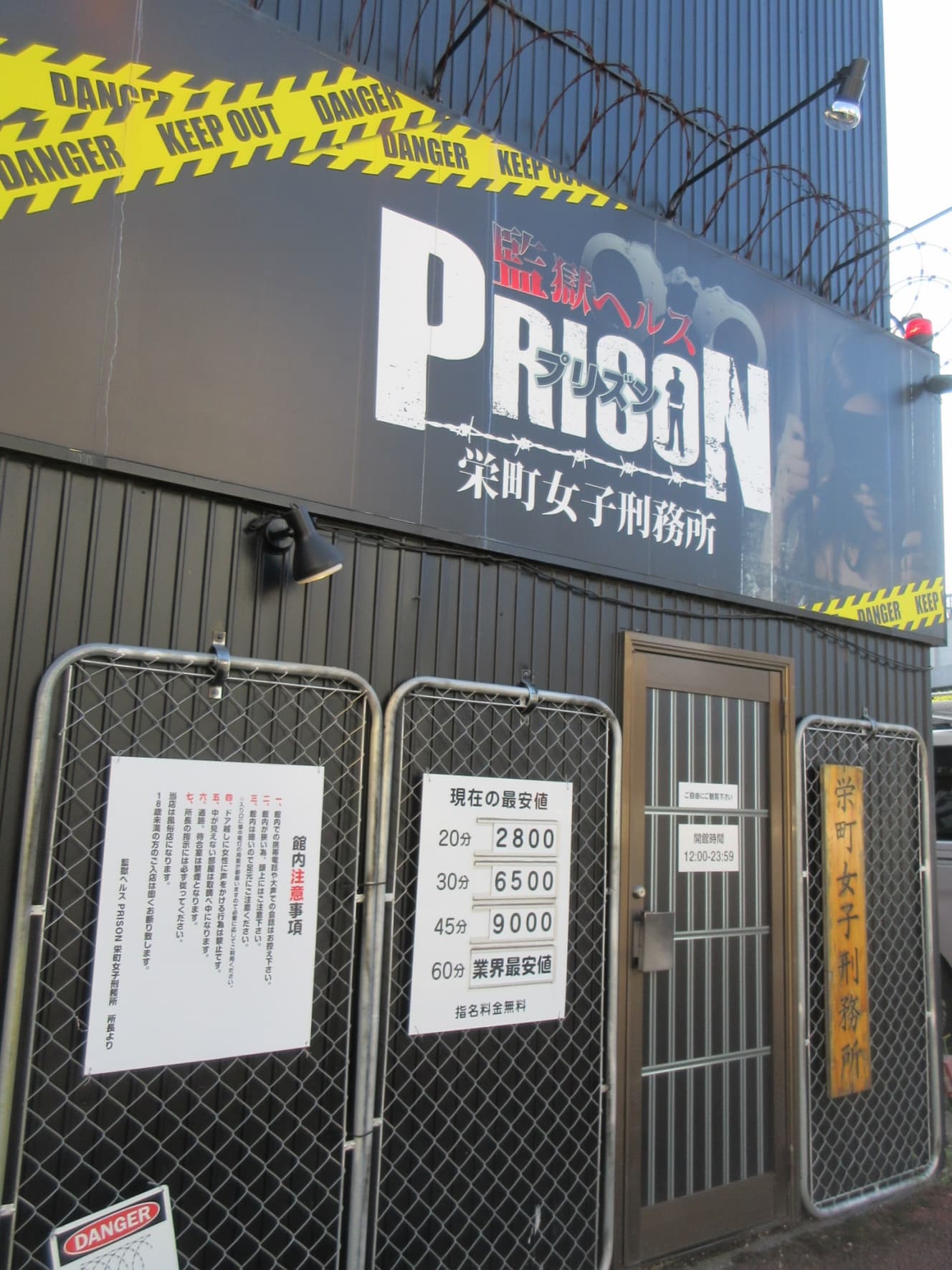
The prison-themed health service “Kangoku Health Sakaemachi Women’s Prison Prison” in Sakaemachi, Chiba exudes a dangerous atmosphere. The barbed wire above the sign and the wire mesh beside the door create a prison-like feel (Chiba, 2023).
A delicatessen where women pretend to be robots
The cast would arrive dressed in a one-piece in summer or wearing a coat with nothing underneath in winter, and begin the service immediately at the doorway. This was known as instant, instant full nudity, considered the ultimate form of the immediate play style. Establishments such as the hotel health service “Full Nude Special: A Woman Who Can’t Hold Back Attacks You” in Funabashi, Chiba, which adopted this concept, also became popular.
A cast member from the hotel health service “Goddess of Full Nudity” in Ueno, Tokyo, shared the following anecdote unique to this instant, instant full nudity style:
“I get so nervous on the way from the shop to the hotel, worrying that people might notice I’m completely naked. My heart is pounding the whole time. By the time I arrive, the tension makes my body feel flushed.”
“Instant, instant full nudity” was not about role-playing like cosplay, but rather an image play where the cast physically committed themselves.
Another particularly distinctive example was “Robot Delivery Service” in Shinjuku, Tokyo, where the cast would act as robots and customers would control them with a remote. Settings such as the woman does not speak could be applied, allowing customers to experience play exactly as they wished. Some customers would dress the cast in their daughter’s high school uniform at home, while others waited wearing a school swimsuit. Since the partner did not speak, even activities that might otherwise be considered awkward became possible. Because no verbal communication was required, it also attracted many foreign customers, and it is said that even a vice president from an African country once visited.
Up until then, new developments in the industry were generally based on adding more—developing new techniques, elaborating playrooms, or expanding costume options. However, “Robot Delivery Service” succeeded through a subtractive approach—eliminating conversation.
It may have been a service that matched the times, as the spread of the internet and social media led to more people feeling uncomfortable with face-to-face communication.
The soapland “Do-M Bunny-chan Wakayama Branch” in Shinzakae-machi, Wakayama. By the late 2010s, bunny girl–themed soaplands began appearing simultaneously across the country, spreading even to regional cities such as Niigata, Utsunomiya, Shimonoseki, Takamatsu, and Kumamoto (2018).
Bunny girls became popular nationwide.
While edgy-themed establishments continued to emerge one after another, specialty shops featuring the “classic” cosplay of bunny girl costumes became popular nationwide across all types of adult entertainment, including soaplands, health services, and delivery services. They also gained popularity in girls’ bars, particularly in venues where passersby could catch a glimpse of the bunnies inside. Bunny costumes were visually sexier and more immediately recognizable than nurse outfits or school uniforms, making them highly effective for attracting customers.
The bunny girl outfit originated in 1960 as the waitress uniform for the upscale “Playboy Club,” created in collaboration with the American adult magazine PLAYBOY. The rabbit motif was chosen because rabbits were popularly imagined to be in mating season year-round, symbolically suggesting that the women wearing the costume were always ready to accept men.
Because the outfit emphasizes the body’s curves, it was preferable for the wearer to have a certain standard of physique. Many women listed it as a costume they wanted to try at least once, and sex workers also responded positively, noting that the bunny ears and tail are cute.
At the time, a staff member from a bunny-themed soapland in the Kansai region shared:
“A customer once posted that at a bunny-girl girls’ bar, you can look and talk but generally can’t touch. But at a sex service shop, you can touch as much as you like, which makes them happy.”
They also noted, “Older customers also come frequently.” It seemed to be particularly appealing to senior patrons that they could get close to women wearing an outfit long associated with the image of a desirable, unattainable woman.
The soapland “Ponytail” in Shinzakae-machi, Wakayama, featured mini shorts as its main costume. Women with their hair in ponytails greeted customers wearing tank tops and hot pants (2018).
Soaps and Pinsaro also became themed by store
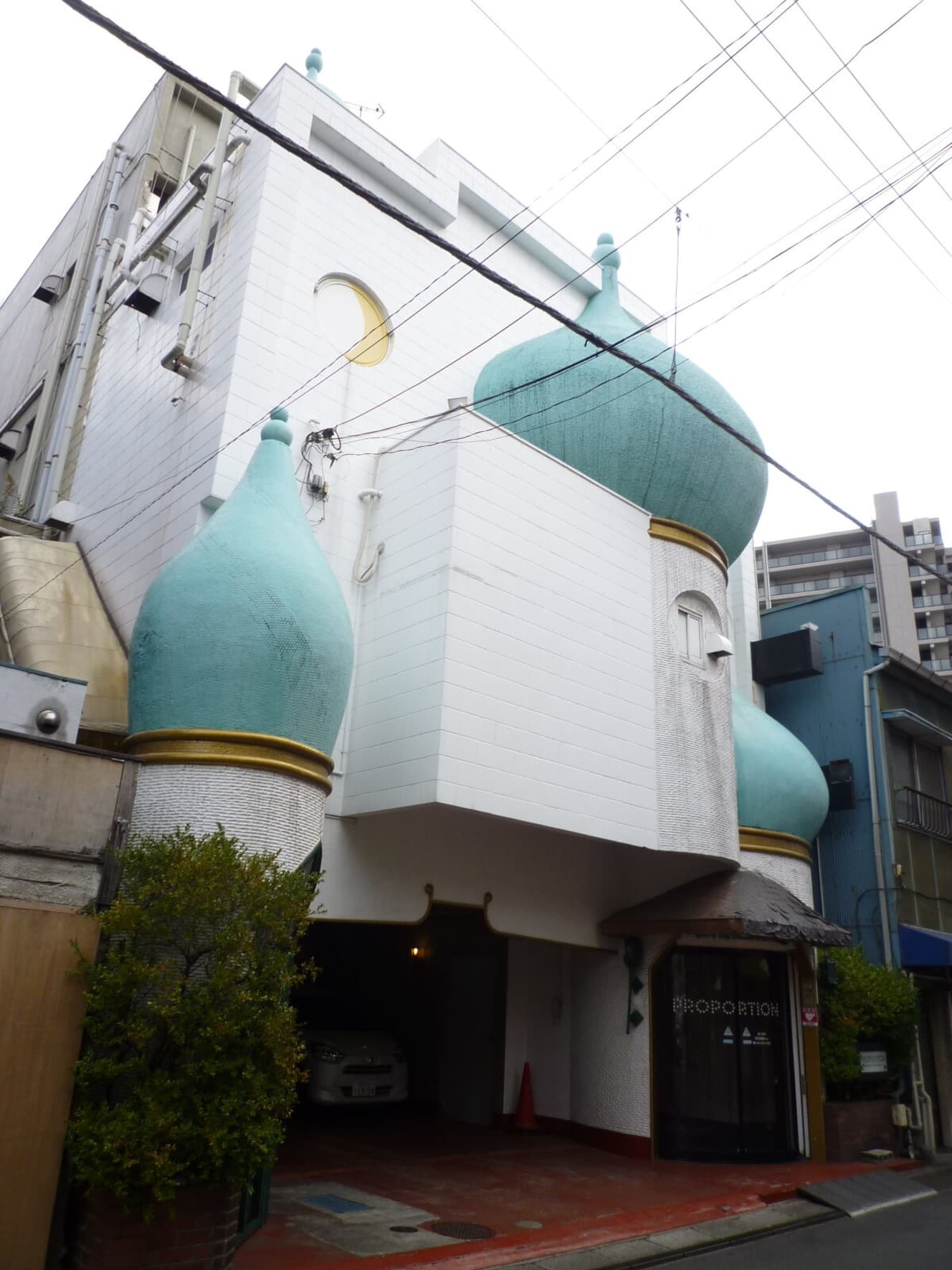
By the late 2010s, even traditionally conservative soaplands began adopting image-play–style concepts. Kawasaki’s Horinouchi-based “Proportion” shocked customers with microbikinis, operating as a busty-specialty shop featuring only E-cup or larger cast members.
In Chiba’s Sakaemachi, soaplands using anonymous working names, such as “OL A-ko.” and “Married Woman A-ko.,” became popular. “OL A-ko.” introduced cast members on its website as “R-ko, 32, working in the beauty industry” or “M-ko, 26, active nursery teacher,” while “Married Woman A-ko.” listed profiles like “M-ko, 37, residing in Meguro Ward” and “S-ko, 31, residing in Odawara City.” Photos of them at work or outdoors emphasized an amateur-like image, effectively creating a real woman style of image play.
In Kansai, soaplands featuring mini shorts as the main costume appeared. In Shinzakae-machi, Wakayama, “Ponytail” lived up to its name, with women in ponytails greeting customers in tank tops and hot pants; the ultra-mini denim shorts exposed not only thighs but also part of the buttocks. In Kobe’s Fukuhara, “Eternal” welcomed visitors in short shorts paired with a single shirt and no bra.
The revealing mini shorts appealed not only to men—who said they didn’t know where to look or couldn’t help but look at the thighs—but also to women, who praised them for looking cute and making legs appear longer. This casual, everyday-wear–like outfit was previously mostly limited to stores specializing in leg fetishes, so its adoption as a soapland uniform was innovative. “Ponytail” has since transitioned into a school-themed soapland.
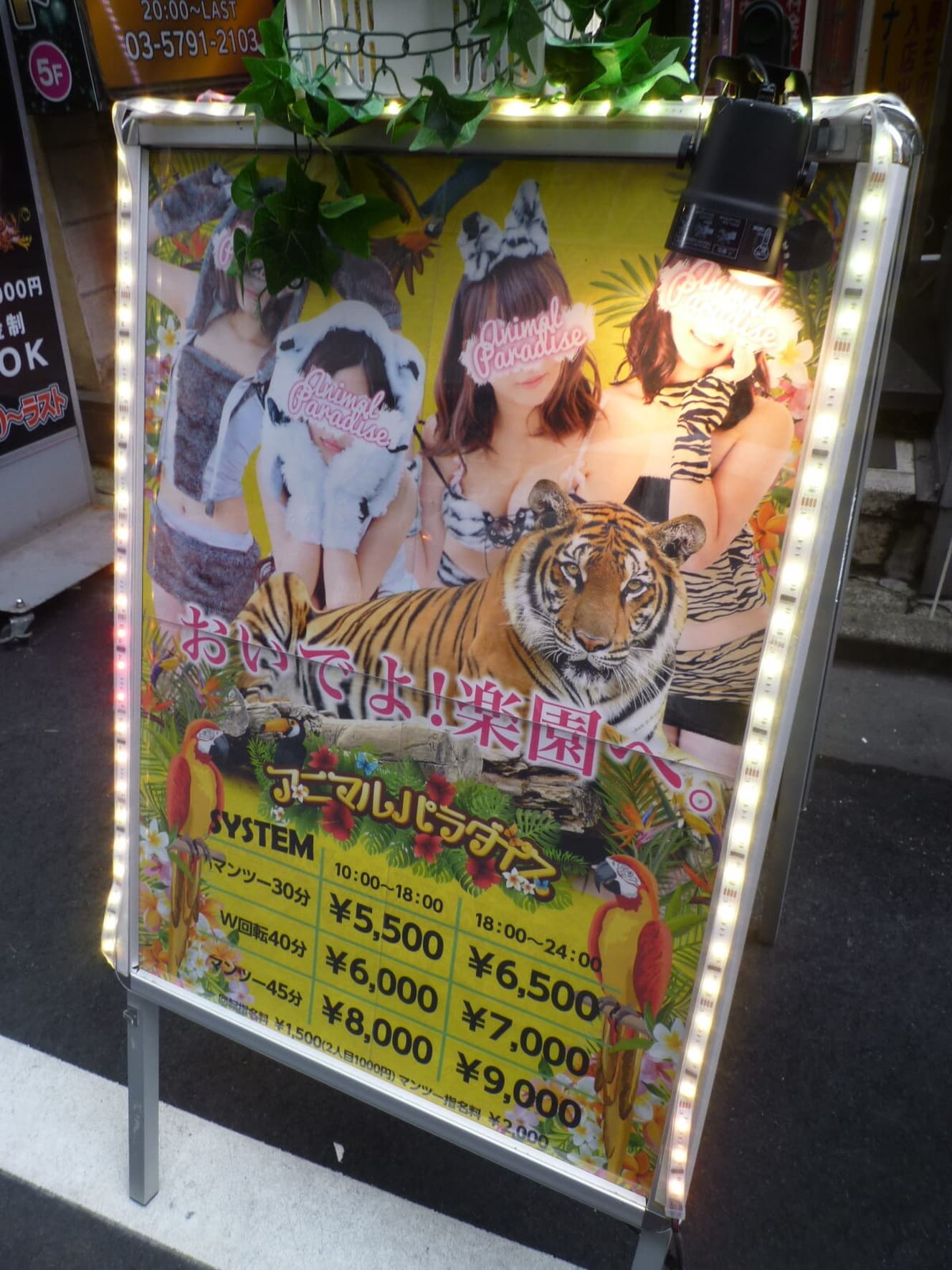
In pink salons, the trend of specialized concepts also progressed, particularly in dense areas like Gotanda, Tokyo, where distinctive shops emerged: “Marine Surprise,” with a navy concept and sailor-style uniforms, and “Animal Paradise,” featuring animal-themed outfits like leopard-print dresses and costumes with ears. Both shops remain in operation today.
Across all types of adult entertainment, the rise of theme-focused specialty shops reflected the intense competition in the industry, making differentiation essential for survival.
In Part 2, we will discuss the future of image play and the “Costume-less sex clubs,” which have persistently progressed despite the COVID-19 crisis.
Reference
Ore no Tabi (adult entertainment magazine), Million Publishing (from December 2018, formerly Taiyo Tosho), 2015–2019
Fūzoku no Gendaishi by Akira Ikoma, Seidansha Publico, 2022
Érotique Japon by Agnès Giard, Kawade Shobo Shinsha, 2010
In addition, numerous other books and online media were referenced.
A signboard for a concept café in Akihabara, Tokyo. Bunny girl costumes became popular across all types of adult entertainment, from concept cafés to soaplands (2023).
Even in soaplands, more establishments began showcasing individuality through a variety of costumes. Kawasaki’s Horinouchi-based “Proportion” featured microbikinis as the main outfit (2024).At the pink salon “Animal Paradise” in Gotanda, Tokyo, women dressed in animal-themed costumes served customers in an interior designed to evoke a jungle setting (2017).A woman in a nurse costume. Many male customers seek the comfort and care associated with nurses (Sendai, 2002).




 A signboard for a concept café in Akihabara, Tokyo. Bunny girl costumes became popular across all types of adult entertainment, from concept cafés to soaplands (2023).