800K Sold Abroad Why Japan’s Quiet Stories Are Winning the World


Released on February 18, 2026, Pension Wakeatte had already been confirmed for translation in 7 countries and 8 languages prior to publication. The author’s previous work, “Days at the Morisaki Bookshop” (Shogakukan), is currently being translated into 50 languages across 40 countries, with over 800,000 copies of the English edition sold, including 200,000 copies (print) in India alone. In 2024, it was also shortlisted for the “Debut Fiction” category at the “British Book Awards”.
While the socially themed Butter attracted Western readers, Yagisawa’s works resonate through the quietness of everyday life and the warmth of having a place to belong. Why is it that ordinary Japanese daily life is now capturing hearts across borders? We asked Satoshi Yagisawa.
From Taiwan to the world! A surprising offer
Behind the global success of “Days at the Morisaki Bookshop” is a Taiwanese woman. Around 12–13 years after its publication, when it was not widely read even in Japan, an overseas agent who fell in love with the Taiwanese edition set out to “sell this book to the world.” From there, translation offers began pouring in one after another.
“When the first offers came, about 20 countries approached all at once. I received piles of contracts—it was like, what is going on? (laughs)
Among them was ‘HarperCollins’ in the United States. At the time, the editor-in-chief of my Japanese publisher told me, ‘It’s extremely rare in Japan to get an offer from one of the Big Five publishers in the U.S.’ That’s when I realized something incredible was happening.”
The English translations of Yagisawa’s works have consistently been handled by Eric Ozawa. The only major difficulty in translation came from a scene where the protagonist Takako and her aunt bathe together naked in a hot spring.
“Apparently, that’s not something people normally do there, so they were confused about the situation. I heard the translator explained Japanese onsen and public bath culture in the afterword.”
Even so, reactions from overseas readers are strikingly similar to those of Japanese readers: “Simple, beautifully written, easy to read, and with a good rhythm.” These impressions transcend language barriers.
The English editions sell particularly well, with 200,000 print copies sold in India alone. Some readers even visit Jimbocho after reading the book. “It truly makes me happy that people come all the way from overseas,” Yagisawa says with a smile.
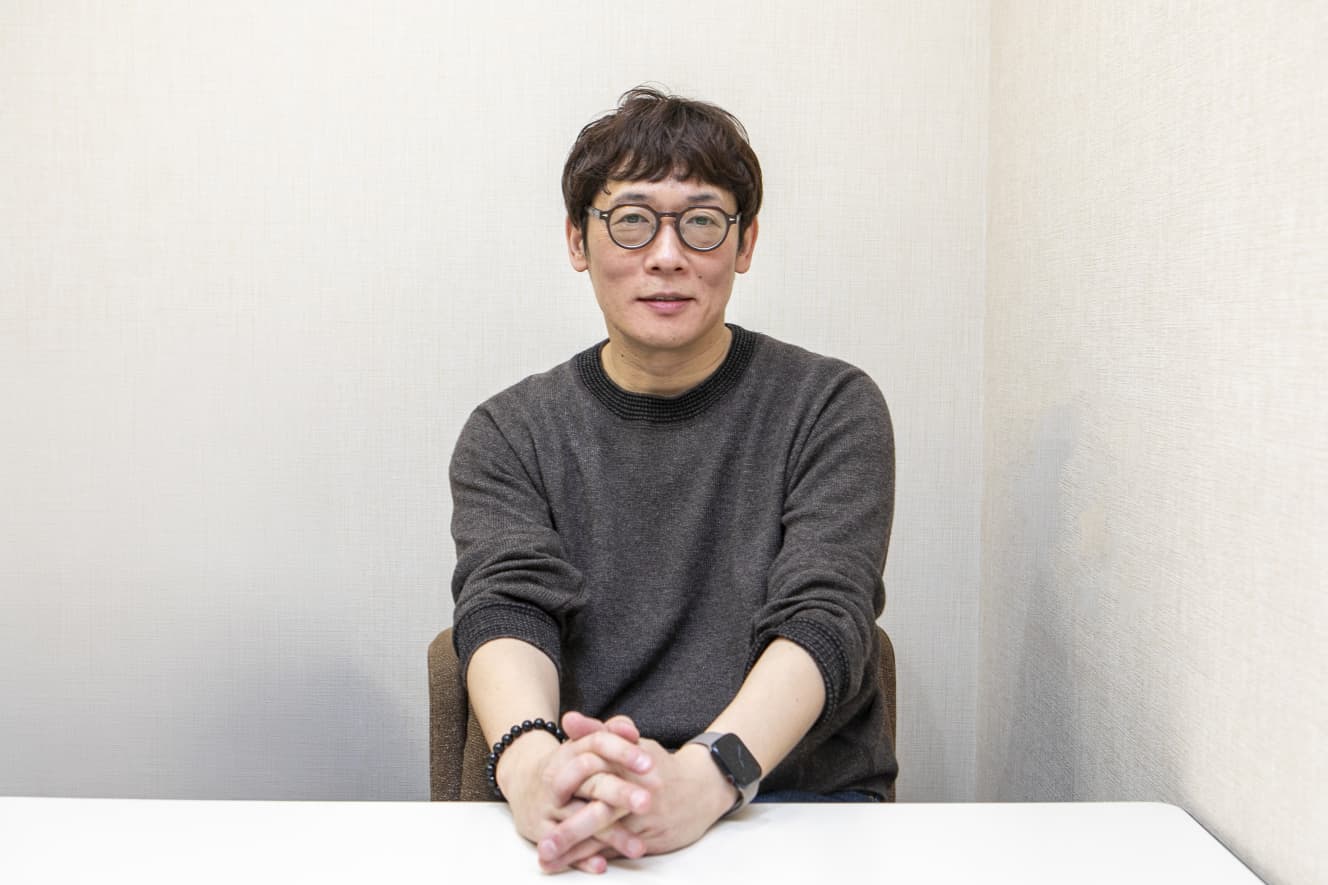
Praised by overseas readers: Meditative reading
Of course, the way people read differs between Japan and abroad.
For example, in Japan, many readers post short comments on Instagram or other platforms after finishing a book, such as felt warm and cozy or the food looked delicious. According to Yagisawa, however, European readers take three to four days to mull over a book internally, thoroughly digesting it before writing long, reflective responses.
“What I often hear from readers in the West is that it’s like meditative reading. I had never seen this kind of comment from Japanese readers, so I was surprised. Some even say that while reading, they are given an opportunity to face their inner selves. Reading doesn’t end with just it was interesting; it seems that they consider a book finished only after fully internalizing it themselves.”
When asked how it is received in India, a country often associated with passionate and energetic impressions due to film and other media:
“For young people in their 20s and 30s in India, such intense energy can feel overwhelming. Some have written, ‘I wondered about my own sensitivity, but I realized it’s okay to be myself as I am.’ Thinking about it, people with introverted or HSP-like (highly sensitive) traits exist in about one in five people in every country, so not everyone is energetic and extroverted.”
When asked about comparisons with popular Japanese literature abroad, like Haruki Murakami, Yagisawa noted:
“Murakami’s works are loved as literary works, but I think readers love mine as stories. That makes me happy. I want my books to be a place for people who don’t normally read books.”
Even if the healing-novel boom ends
Yagisawa himself coined the term healing novel on the cover of Days at the Morisaki Bookshop. “When you hear healing music, you know it’s something to listen to on a tiring night. Similarly, I thought this label would help the right readers find it. I wanted to reduce mismatches.”
Abroad, the term “Healing Fiction” was already widely used, but this book became the catalyst for its spread in Japan.
However, he clearly denies writing just to follow trends:
“I don’t write because healing novels are trendy. For me, what matters most is what I can and want to write. The fact that my work is categorized as healing fiction is incidental. Even if the trend ends in a few years, I think I’ll continue writing the same things. That’s all I can write.”
He describes his style with a cooking metaphor:
“I treat universal human emotions as the main ingredients and add inns and interesting characters as seasoning. In cozy stories, attractive chefs or delicious food are often the main ingredients, but for me it’s the opposite. So the entry point might feel light, but as you read, it gains depth.”
“I don’t set out to heal the reader. My first intention is to heal the characters from their wounds. While writing, I realized it’s about healing my past self and my own feelings of inadequacy. Readers experience that journey and are healed naturally along the way.”

Verbal abuse from editors eight years away from writing
The path to becoming a globally acclaimed author was far from smooth. Yagisawa calls the post a milestone.
“When I debuted, my editor would say things like, ‘Anyone could write a work like this. Don’t get cocky just because you debuted with this level of work,’ not only criticizing my work but also belittling my character. I was continuously told this every time I met them. It completely shattered my confidence. At the time, I was just a young rookie and didn’t fully understand the value of my own work, so hearing that repeatedly made me lose all confidence.”
A few years later, whenever he sat at his computer, his heart would race, and he would have to rush to the bathroom. For about eight years, he could hardly write any novels while taking medication. While his wife worked outside, Yagisawa immersed himself in psychology and philosophy books, and spent two hours each day walking, reflecting on the words he read.
“It was tough, but at the same time, it felt very alive. It was a process of understanding my own mind. I would walk and think, ‘What does that word really mean?’ — it was an incredibly luxurious time. I feel that all of that has gone into my current works.”
When he began recovering, he received the news of being shortlisted for the British Book Awards.
“At the time, my work was disparaged by editors, and I had lost confidence. Yet the same work is now receiving such recognition abroad. And through these eight years, as my mind healed, a solid confidence grew within me. So, to write new works, I wanted to first put everything into words and organize it in my mind. I intended to write it as a milestone, so I honestly didn’t expect such a huge response.”
He ultimately did not attend the British Book Awards ceremony. “I had never even seen my books on shelves overseas, so I was hesitant. Looking back, maybe I could have gone at least once. It was a missed opportunity (laughs).” Like his characters, he hesitated even in a setting where he was globally recognized — that relatable authenticity mirrors the sincerity of his stories.
Harsh past and the search for a place to belong
Both Days at the Morisaki Bookshop and Pension Wakeatte share the theme of a place to belong. In the stories, the owner Kaede says, “I want this to be a safe haven,” which reflects Yagisawa’s own words.
“As a child, I grew up in a dysfunctional family. The home felt tense and unsafe, so from around late elementary school, I was always searching for a place where I could feel safe and be myself. That has remained in my heart for a long time and likely became a theme in my works.”
He says he first truly felt a place to belong after breaking mentally: “With my wife, a cat, and a good meal waiting at home, I realized that was enough to feel happy.” Even being recognized worldwide as an author did not eliminate his struggles. “Self-respect comes more from being able to say, ‘I’m okay as I am,’ than from praise from others. External evaluation doesn’t matter much; it’s about feeling it every day and facing it each day.”
Having graduated from Nihon University’s College of Art, Department of Broadcasting, and debuting just before turning 30 without ever working at a company, Yagisawa’s words carry the authenticity of someone who truly followed his own path.

Even the Agency for Cultural Affairs is paying attention! His next work will be set in a public bathhouse
Tatami mats, coffee shops, secondhand bookstores, public bathhouses — Yagisawa comments on the phenomenon of retro Japanese daily life being in demand overseas:
“I’ve always really liked these kinds of places. Somehow, they’ve just matched overseas tastes (laughs). Photos of secondhand bookstores have an indescribable charm and a calming feel, letting you sense human activity. Even photos of bathhouses feel warm, even if there’s no one there. I think overseas readers unconsciously seek out these places because everyone’s a little worn out.”
He recalls that when he wrote these works, it was before the COVID-19 pandemic, when concepts like slow life or mindfulness would have been laughed at. Many overseas readers have told him they feel a spirit of slow life or mindfulness in his works, to which Yagisawa responds:
“Overseas readers put it into words for me, and that’s when I realized that what I was writing was really about the process of healing universal human emotions. I only understood that fully after hearing their evaluations.”
This year, the Agency for Cultural Affairs began actively promoting the overseas export of Japanese content, including novels in addition to anime and manga. Yagisawa participated in the London Book Fair this month at the Agency’s request, and he has invitations lined up for Buenos Aires in May, Singapore and Malaysia in September, and Iceland next year. His next work will be set in a bathhouse. Even during the eight years he couldn’t write, stories continued forming in his mind, and he says, “I have enough material stocked to last at least five more years.”
“Using a food metaphor, I’ve mainly been making Japanese-style dishes so far, but now I want to experiment with Western-style seasoning while keeping the same ingredients. I think I can do that as a service for overseas readers.”
What he wrote without aiming to reach the world ended up resonating globally. Stories written by someone who has long sought a place to belong reach those who are themselves searching for their own place. The boom is perhaps simply the cumulative result of countless such resonances.
▼ Satoshi Yagisawa – Novelist. Graduated from Nihon University, College of Art, Department of Broadcasting. Debuted around age 30 with Days at the Morisaki Bookshop (Shogakukan). His works are currently being translated in 40 countries and 50 languages, with over 800,000 copies of the English version sold. In ’24, he was shortlisted for the British Book Awards “Debut Fiction” category. In February ’26, he published his first entirely new work in ten years, Pension Wakeatte (Poplar Publishing).
Interview and text by: Wakako Tako
Writer, born in 1973. After working for a publishing company and an advertising production company, became a freelance writer. In addition to interviewing actors for weekly and monthly magazines, she writes columns on dramas for various media. His major publications include "All the Important Things Are Taught by Morning Drama" (Ota Publishing Co., Ltd.).
PHOTO: Mayumi Abe