Ex-Abe MPs, Slush Funds, and Shimbashi BBQ — The Story Behind Takamichi’s High Approval


Gathering at a yakiniku restaurant
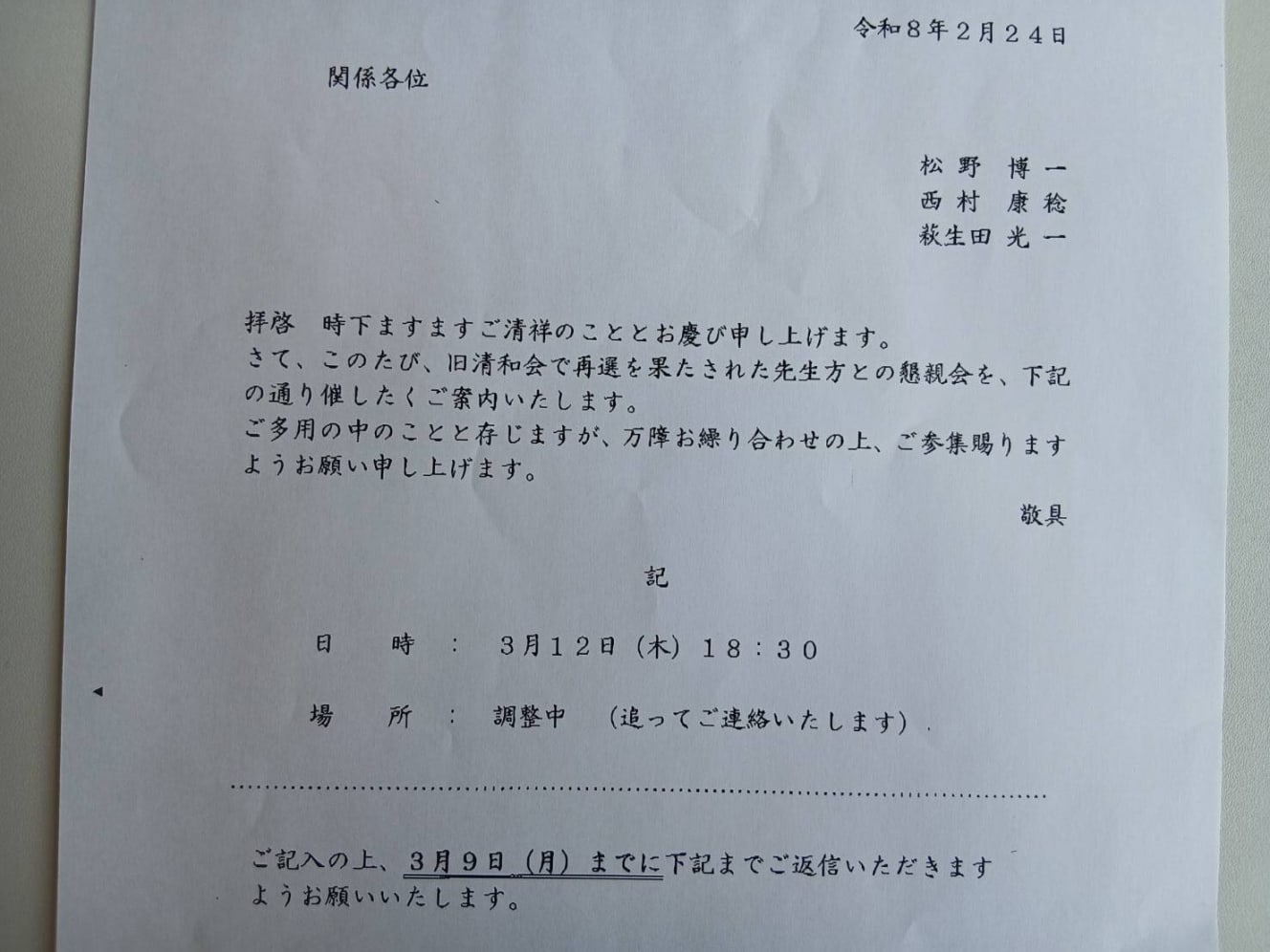
On March 12, around 20 people gathered at Yakiniku Yacchan, a restaurant slightly away from the bustling streets in front of Shimbashi Station, known for not using frozen meat and favored by major celebrities with refined tastes.
Those gathered were members of the former Abe faction, which once numbered over 100 and was the largest faction within the LDP. In the 2024 House of Representatives election, most of these lawmakers lost due to the faction slush fund scandal, but in the February general election this year, 39 were elected riding the “Takaichi wave.” While staff cut a slab of meat in front of them, Yasutoshi Nishimura (63), election strategy committee chairman and one of the five men of the former Abe faction, said:
“Let’s support Prime Minister Sanae Takaichi and the Takaichi administration with our own hands.”
According to participants, the meeting was hosted by Nishimura and Koichi Hagiuda (62), deputy secretary-general, with former Cabinet Office Parliamentary Secretary Hideaki Suzuki (51) acting as the contact person. Mainly younger lawmakers who had lost in the 2024 election gathered, and rookie lawmaker Shinichiro Kawamatsu (45) helped liven up the event.
The week after the special Diet session was convened, on February 25, members of the former Abe faction also gathered at the upscale Chinese restaurant Kamonka in Akasaka. Hirokazu Matsuno (63), former Chief Cabinet Secretary, who had missed the February Chinese gathering, attended the March yakiniku meeting, enjoying the restaurant’s famous harami (skirt steak) and tongue with the younger lawmakers.
“In the 2024 general election, Seiwakai (the former Abe faction) was criticized as the source of the faction slush fund scandal, singled out as slush fund lawmakers, and under the Ishiba administration, members were suspended, denied endorsements, or barred from dual-list proportional candidacy, leading to a disastrous election result.
The drinks flowed as participants joked about the common experience of losing supporters after defeat and complained about the Ishiba administration’s operations at the time. Prime Minister Takaichi also belonged to Seiwakai at one point, and their policies align closely. Stories were shared about the tough quota for party tickets, leaving the faction, and the unusual excitement when coming to support in their districts, reaffirming the unity of Seiwakai,” said a participant.
When the Takaichi administration was launched in October last year, Hagiuda was appointed deputy secretary-general. Then in February this year, Nishimura became election strategy committee chairman and Matsuno took office as head of the organizational movement headquarters, marking the public return of the former Abe faction’s five men. Among them, the election strategy committee chairman is a powerful position, responsible for candidate selection and endorsements alongside the secretary-general, signaling the faction’s resurgence.
“While the high approval rate and catalog gift issue have been settled, Takaichi’s lone-wolf style leaves her party base weak. To push the Takaichi agenda, a certain number of supporters is needed. Depending on the situation, the Aso faction supporting the administration may distance themselves, so some members of the former Abe faction and new lawmakers were likely appointed with the expectation they would function as the ‘Takaichi support squad,’” said a national newspaper political reporter.
Following the faction slush fund scandal, the LDP’s governance code prohibits traditional factions, but the formation of policy groups for policy research, personnel development, and educational purposes is permitted.
Who is the senior lawmaker bringing in many rookie lawmakers?
After the general election, 66 rookie lawmakers were elected, and cases of them being recruited by senior politicians began to appear. Among them, the Aso faction, the only one to survive, recruited rookie lawmakers one after another, expanding the faction to 60 members.
Senior figures such as Foreign Minister Toshimitsu Motegi (70) and former Minister of Internal Affairs Ryota Takeda (57) have also held gatherings to recruit rookie lawmakers. By holding regular meetings, they are effectively moving toward a return to factionalism.
“Next autumn, the LDP presidential election is scheduled, and Prime Minister Takaichi’s close aides are aiming for an uncontested re-election. By having Hagiuda and Nishimura compete against each other, they likely aim to increase the number of Takaichi loyalists within the party. However, with inflation continuing and international conditions uncertain, the Cabinet’s approval rating cannot be expected to remain high until next autumn. Senior faction leaders are recruiting rookie lawmakers to strengthen factional returns. They are preparing meticulously so that when cracks appear in Takaichi’s dominance, they can act immediately,” said the same reporter.
After the election, the LDP has grown to 417 members in total across both houses, the largest in postwar history. Within this expanded party, seeds of opposition to the Takaichi administration are already starting to sprout.
Interview and text by: Daisuke Iwasaki PHOTO: Hiroyuki Komatsu