Even Finance Minister Katayama is concerned about this “serious problem! Chinese Smartphone Payments Become a Hotbed of Tax Evasion and Money Laundering


The number of foreign visitors to Japan and foreigners residing in Japan for work purposes is increasing every year. The “Chinese smartphone payments” such as Alipay and WeChat Pay, now in daily use among them, are at risk of becoming a hotbed for tax evasion and money laundering.
What is surprising is that government authorities could lose all track of the flow of funds, even for purchases and food and beverages in Japan. What on earth is going on behind our backs? We take a closer look at the “dangerous blind spot” of payment apps, which has begun to be discussed in the Diet.

Katayama is also concerned! The “Dark Side” of Payment Apps
Chinese smartphone payment apps are widely used and have become the norm. Mr. Tsukasa Abe, a member of The Japan Innovation Party’s House of Representatives, raised this issue at a Budget Committee meeting on March 11. Mr. Abe pointed out the following risks, depending on how they are used.
The Japanese financial system will be able to be completed without passing through any Japanese financial infrastructure, and a sphere of life will be created in Japan that has no contact with Japanese rules and systems.
Finance Minister Satsuki Katayama responded as follows.
This is a very serious problem.
Citing the Chinese payment apps Alipay and WeChat Pay as examples, Katayama explained that depending on how they are used, the following concerns may arise.
It has become very difficult to actually exert legal registration obligations and supervisory authority.”
Furthermore, Finance Minister Katayama stated about coexistence with foreigners: “As the Cabinet, we are committed to working with foreigners in an orderly manner.
As a cabinet, we must ensure orderly coexistence with foreigners and eliminate any sense of unfairness.
I have a strong sense of the problem, from both sides, that this must be rectified.”
The authorities can keep track of the transactions on the front page.
What exactly is going on here? Let’s take a look at the cases in question, based on the explanations of Mr. Yuki Fukumoto (Head of Financial Research Office, Nissay Fundamental Research Institute), an expert on the mechanism of funds settlement.
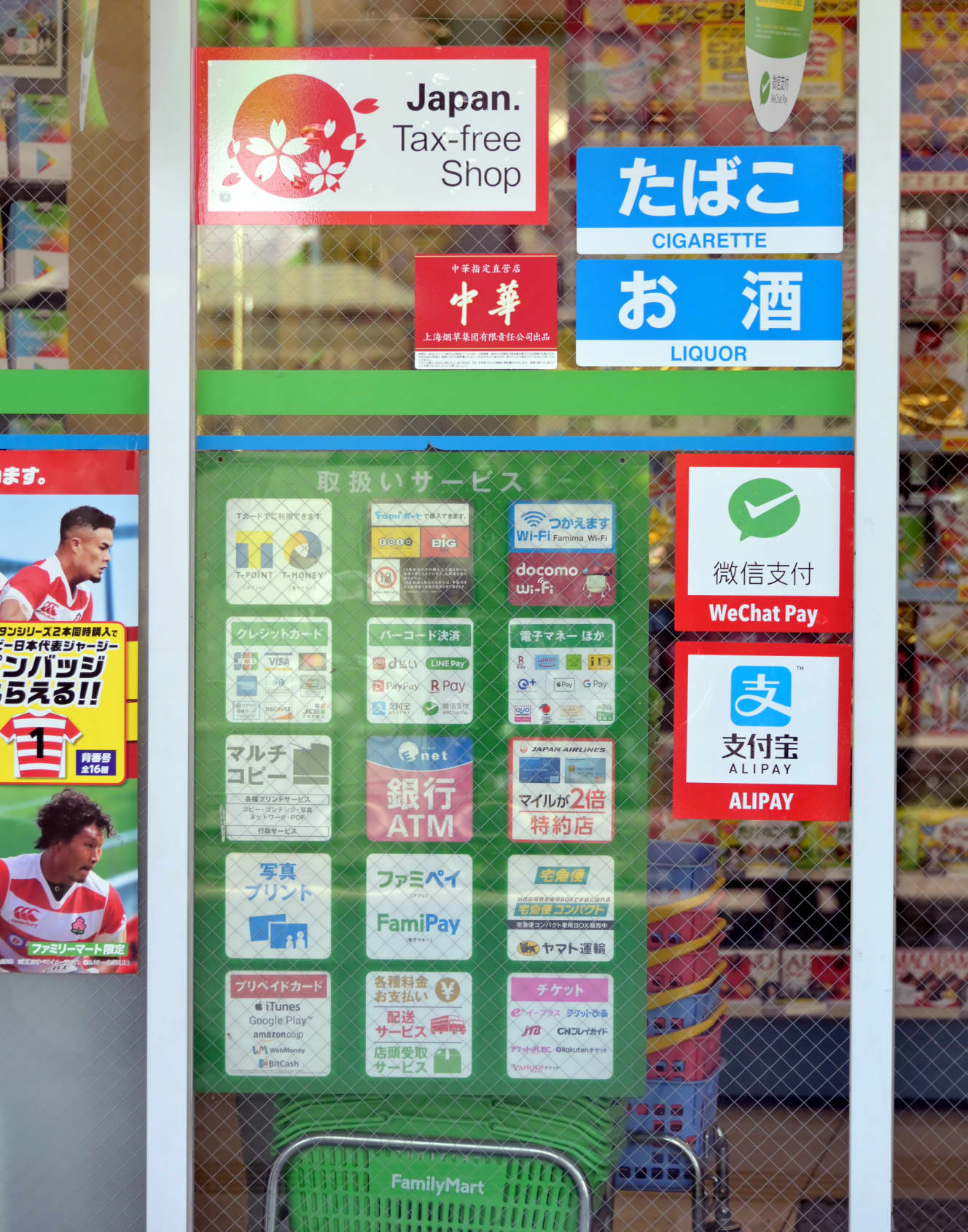
Let’s start with a common case. Suppose a foreign visitor to Japan makes a purchase at a convenience store in Japan. For example, a Chinese visitor pays for the purchase using Alipay. Alipay is a QR code payment service provided by the Chinese IT giant Alibaba Group, which reportedly has more than 1 billion local users.
When a Chinese user makes a deposit or charge in Chinese yuan to an Alipay China account, the amount is reflected in a “wallet” on a smartphone or other device. When the user pays for a convenience store using Alipay, the money is transferred in Japanese yen from the Alipay China account to the convenience store in Japan. Mr. Fukumoto explains.
Alipay, for example, has established a local subsidiary in Japan and has a license under Japan’s Funds Settlement Law. Alipay, for example, has established a local subsidiary in Japan and has a license under Japan’s Funds Settlement Law.
In this process, Alipay’s Japanese subsidiary has a business partnership with a Japanese bank in order to make payments in Japanese yen. If Alipay or other overseas operators were to refuse to provide transaction information to the Japanese authorities, there is a strong possibility that the business partnership would be revoked by Japanese banks. This would make it difficult for them to continue doing business in Japan.
According to Fukumoto, even though it may be difficult to obtain information on whose wallet a payment is being sent to a convenience store, it is possible for Japanese authorities to obtain information on money transfers to convenience stores in Japan if they wanted to. This is because Japanese companies such as Alipay operate their payment services under Japan’s Funds Settlement Law, which gives the authorities the authority to investigate.
On the other hand, since the wallet information resides on the Chinese side, not in Japan, the acquisition of that information will depend on whether the Chinese side agrees to provide it or not, depending on their response.
Concerns that inter-company payments will become a “hotbed of tax evasion
So far, this is a common case, and there are no major problems. What Mr. Fukumoto cites as a potentially problematic case is “personal transactions” with people from the same country of origin.
For example, a Chinese visitor to Japan shops, eats, and drinks at a store owned by a Chinese national in Japan. If both parties use Alipay, which has an account in China, and settle the transaction in Chinese yuan, the Japanese authorities will not be able to track the transaction information.
With the recent increase in the number of foreigners residing in Japan, people from certain countries and ethnic groups have formed local communities that are sometimes difficult for Japanese to enter. There are also stores and restaurants there that are run for people of the same country or ethnicity. Even if a transaction occurs in Japan, if it is settled only within the inner circle of the foreign community, the Japanese authorities may not be able to ascertain the flow of funds.
This is precisely the risk, pointed out in the parliamentary questioning at the beginning of this paper, that funds could be settled domestically without going through Japan’s financial infrastructure.
This problem has been brought to attention by the spread of Chinese smartphone payment apps such as Alipay, but it has always been possible for cash settlements in local currency to occur. For example, a Chinese visitor to Japan makes a cash payment in yuan at a Chinese-owned store in Japan. If the owner of the store reports the transaction in Japan, it is fine, but if he does not report the transaction, the Japanese authorities will not be able to track the transaction.
What happens in such a case? The payment of Japanese consumption tax would be avoided. The customer is relieved of the consumption tax and the hassle and cost of converting the transaction into Japanese yen, and the shopkeeper avoids paying the consumption tax and declaring his or her income. Such evasive transactions have become much easier with the spread of foreign smartphone payment apps than with cash payments in local currencies.
The “Data Sovereignty” Barrier That Also Plagues the World
These problems are by no means unique to Japan. Fukumoto points out the following regarding bank account information, and says that countries are tightening their monitoring of money laundering and tax evasion through the conclusion of treaties and other measures.
There is a lot of interest worldwide.”
On the other hand, he expresses concern about transaction information using smartphone payment apps.
‘Where the sovereignty of the data lies is an issue and is being debated around the world.’
Finance Minister Katayama called this a “very venerable problem” and recognized that it must be corrected in his Diet speech. It is also a global problem, but no drastic solution has yet been found.
Interview and text by: Hideki Asai PHOTO: Afro