Aika Kanda Opens Up About Her Experience During the Great East Japan Earthquake
The Great East Japan Earthquake and I" [Vol. 111] Me, Pink, and Sometimes New York


On the front lines of news reporting
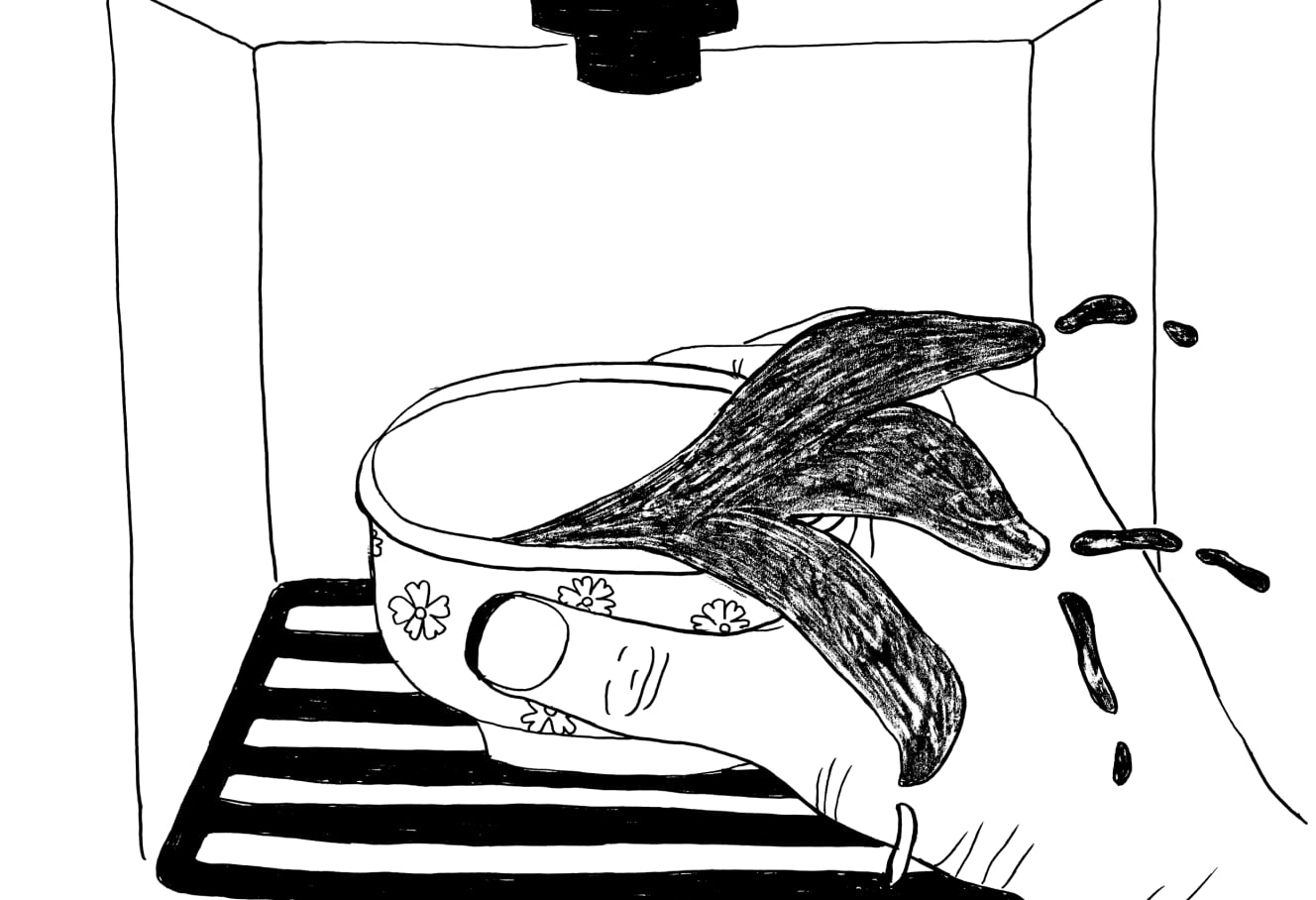
At 14:46 on March 11, 15 years ago, I was in the announcer’s room at the NHK Broadcasting Center in Shibuya. I pressed the button on the tea dispenser to pour myself some tea. As the tea started flowing and filled the cup halfway, the room shook violently.
Immediately, I thought, “It’s an earthquake!” I instinctively held the cup to prevent the tea from spilling. The shaking didn’t stop, and the tea continued to splash onto my hand. I thought, “This is not normal! I have to make a call!”
NHK, funded by license fees, has a mission during disasters to protect the lives and property of the public through broadcasting. For that reason, announcers on the front lines of emergency reporting train daily for various scenarios. Moreover, I had previously experienced the Fukuoka Prefecture Western Offshore Earthquake, which reached a maximum seismic intensity of lower 6, at my first posting in Fukuoka. So I could predict that this quake was extraordinarily strong, that landlines and mobile phones would soon become difficult to use, that I might not be able to return home at night due to disaster coverage, and that the elevator in my (family) apartment might stop.
As soon as the shaking subsided, I ran straight to the phone and dialed my family home number at full speed. The phone rang. I silently prayed, “Mom, please pick up!” Then I heard my mother’s voice, more tense than usual: “A-chan!?” She had been waiting, expecting my call. I hurriedly said, “I’m alive, okay? I’m fine! You might not hear from me for a while, but don’t worry. Just survive!” My mother replied, “Yes! Be careful!” and I hung up.
A senior colleague came running over. I had passed the phone, but it was no longer connected, and my colleague did not know the safety of their own family until the next day. It was a matter of seconds.
The announcer’s room quickly transformed into a large conference room. Two large whiteboards were brought in, and the shared large table was filled with the gathered announcers. Without anyone deciding, some began checking unblocked routes to reach the disaster area, while others started preparing to head to the local station to assist. The voices of supervisors giving instructions echoed. Even though detailed information had not yet come in, everyone recognized this as an unprecedented disaster and braced themselves for prolonged reporting. And everyone silently hoped, “Please, let it not become the worst-case scenario” It was a strange atmosphere I had never experienced before.
I moved to the production room for my assigned program and was discussing preparations for a recording scheduled for the next day. In the middle of that discussion, the worst-case scenario appeared on television: a tsunami.
A Daily Life Taken Away in an Instant
Aerial footage kept arriving at the news center. It showed cars being swallowed by the black floodwaters, people clinging to boards and calling for help being overtaken by the tsunami as it swept along debris. After the waters receded, countless bodies were visible on the shoreline. I heard that many of the editing staff who worked on these images later suffered from mental health issues.
A few hours after the earthquake struck, it was decided that all programs unrelated to disaster coverage would be temporarily suspended. From the next day, I was assigned to educational television to handle safety information broadcasts. These were messages meant to help people confirm the safety of those they could not reach: “From XX of ◯◯ to △△ of ■■. We are worried about you; please get in touch.” I read messages like this for hours. While reading, I almost cried. The confusion, sorrow, and boundless anxiety of those whose everyday lives had been suddenly taken were conveyed directly through these messages. I shook with frustration, thinking, “How can such a thing happen!?”
The following year, I left NHK. Once I realized that being alive tomorrow was not guaranteed, I felt I had to start moving toward my life’s goals immediately, even by a single second. I was fortunate to be alive, and I felt it would be irresponsible not to act on that.
Fifteen years after the Great East Japan Earthquake, for the victims, the disaster is not over. Different homes, changed lives, family members who will never return, grief that will never disappear—through these experiences, I was taught the fragility of life. I will never forget that lesson and will continue to live each and every moment to the fullest.
 ©Kazuki Shimomura
Aika Kanda, born 1980 in Kanagawa Prefecture, graduated from the Department of Mathematics, Faculty of Science, Gakushuin University, and joined NHK as an announcer in 2003. She left NHK in 2012 and became a freelance announcer, working mainly in variety shows. She currently appears as the main MC on the daytime program Pokapoka(Fuji TV).
Her first book compiling this series, “Where Does the Royal Road Go?”, is now on sale and receiving great acclaim.
From “FRIDAY” March 27–April 3, 2026 combined issue
Illustrations and text: Aika Kanda