Mystery Surrounds ¥1.2 Billion Debt as Takashi Tachibana Declares BankruptcyMystery Surrounds ¥1.2 Billion Debt as Takashi Tachibana Declares Bankruptcy


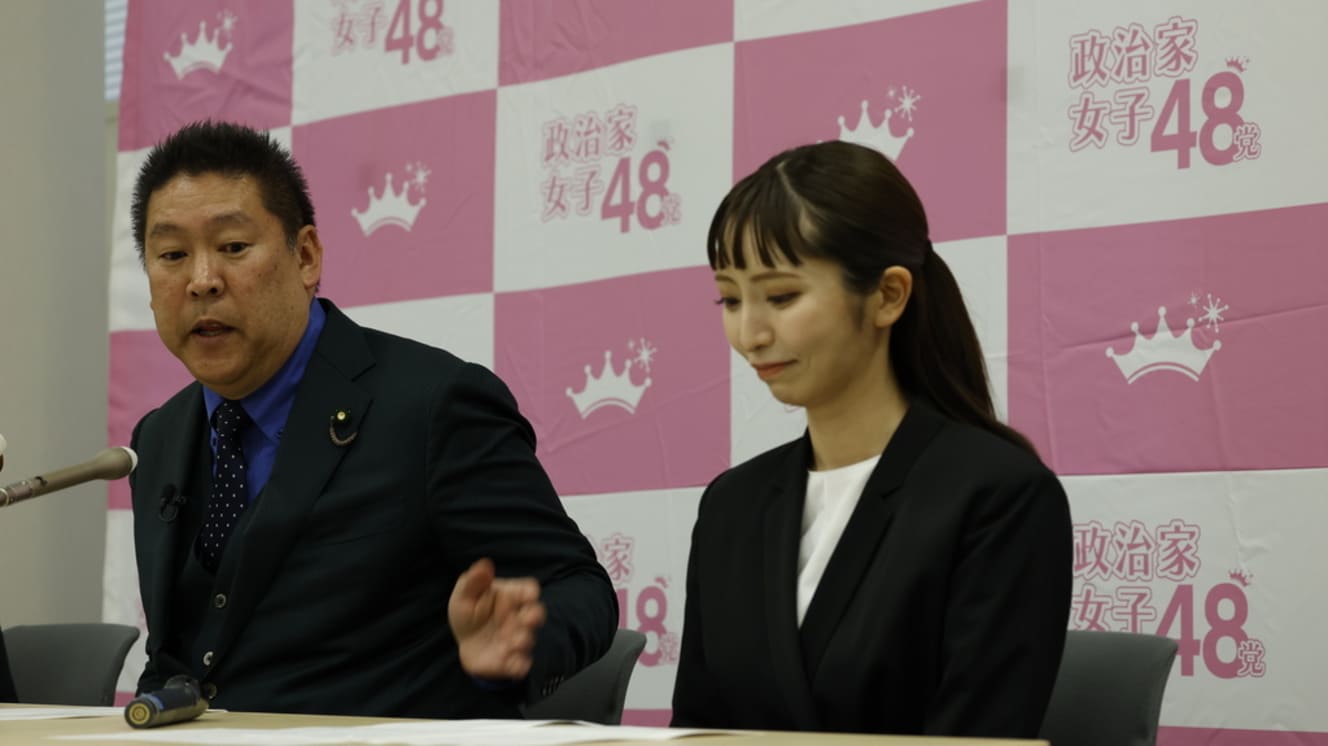
NHK Party has 230 million yen in debt
NHK Party (officially “The Party to Protect the People from NHK”), a political group that announced it would go dormant, revealed that its leader, defendant Takashi Tachibana (58), has filed for personal bankruptcy.
On March 11, Tachibana updated his website, stating:
“Today, March 11, Reiwa 8 (2026), at 5:00 PM, Takashi Tachibana filed for personal bankruptcy, and a decision to commence bankruptcy proceedings has been issued, with attorney Yoshihiko Itabashi appointed as the bankruptcy trustee.”
According to Tachibana, there are 240 individual creditors, with filed claims totaling 1.244 billion yen.
Tachibana’s personal assets are around 15 million yen, and since there will be no dividend funds remaining due to income tax payments, he decided to file for personal bankruptcy.
In addition, alongside Tachibana, the party itself has 160 creditors and total debts of 230 million yen. The party’s assets are 23 million yen, meaning about a 10% liquidation rate. It plans to send written proposals by mail offering full repayment to creditors owed 100,000 yen or less, and for those owed between 100,000 and 1 million yen, to pay 10% of the claim plus 100,000 yen.
Tachibana was arrested and indicted last November for defamation against a former Hyogo prefectural assembly member and remains in custody.
In December last year, Tachibana disclosed that he personally had debts exceeding 500 million yen, but this time the amount is 1.2 billion yen—more than double. Regarding this, Satoshi Hamada (48), leader of the Japan Freedom Party who has acted as Tachibana’s right-hand man, said in a YouTube video released on March 12:
“He really managed to raise a lot. Debt reflects a person’s ability to gather people and their level of trust, so that part is worthy of respect.”
However, he also commented:
“Was it really necessary for the NHK Party, which became a national political party, to borrow that much? With substantial government subsidies coming in, I honestly don’t understand why this money was needed. I would like to hear an explanation from Takashi Tachibana himself.”
Tachibana had long appealed for support through videos, and in November 2019 borrowed about 500 million yen from unspecified supporters at 1 million yen per unit, 5% annual interest, and in 2021 borrowed about 800 million yen under the same terms. While those massive funds were already depleted for party promotion and election expenses, questions remain as to whether all of the spending was legitimate.
Charges of Fraud of Concern
Ayaka Otsu (33), head of the Minna Tsukuru Party (MinTsuku Party), who parted ways with defendant Takashi Tachibana, posted on X on March 12:
“As a simple question—what was the money used for? Where is the money now?”
Tachibana had shifted hundreds of millions of yen in debt onto the MinTsuku Party, the predecessor of the NHK Party, and that party had already entered bankruptcy proceedings ahead of him.
Otsu continued in a follow-up post:
“Going forward, there will be a structure in which there are creditors common to both the MinTsuku Party and Mr. Tachibana. As for why Mr. Tachibana brought onto himself the responsibility for debts that belonged to the MinTsuku Party, I believe he may be trying to settle (wipe out) those debts by acknowledging them as his own responsibility, effectively admitting they were problematic borrowings.”
She is casting a suspicious eye on the situation.
Regarding allegations of unaccounted funds involving Tachibana, Otsu filed a criminal complaint with the Metropolitan Police Department in May last year on suspicion of embezzlement in the course of business, which has been accepted. If bankruptcy proceedings move forward, there is a possibility that the flow of Tachibana’s money will be clarified under legal procedures.
In response to this outlet’s reporting, an associate familiar with Tachibana said:
“If he files for personal bankruptcy, the use of funds will be clarified under the law, but that will take considerable time. At the same time, proposing settlements on the party’s debts is likely intended to silence claims that this might be fraud. By settling, they’re appealing to creditors’ psychology—many would prefer to recover something, even 100,000 yen or just a tenth, rather than have it all wiped out in bankruptcy. If problems are uncovered in how the borrowed money was used and creditors file fraud complaints, it could negatively affect the trial he is about to face. That may be what Tachibana feared.”
In a statement, Tachibana said:
“The fight with NHK is by no means over. Starting with myself, all party members will continue to do everything possible to achieve the scrambling of NHK broadcasts.”
He spoke forcefully, but aside from some fervent supporters, how many people will believe those words—?
PHOTO: Kyodo