Became a “billionaire” in just four years…a top-notch investor? What is Taizo Sugimura’s “Big-boned” investment technique for stocks?


Bank deposits are dwindling.
When people in their 40s reach old age, the gap between the middle class and the upper middle class will widen considerably. In Japan, where the birthrate is declining, the middle class will be divided into ‘upper middle’ and ‘lower middle’ over the next few decades, and the ‘middle middle’ will be thin. Whether or not they can manage their assets and earn dividend income from stocks is the dividing line.
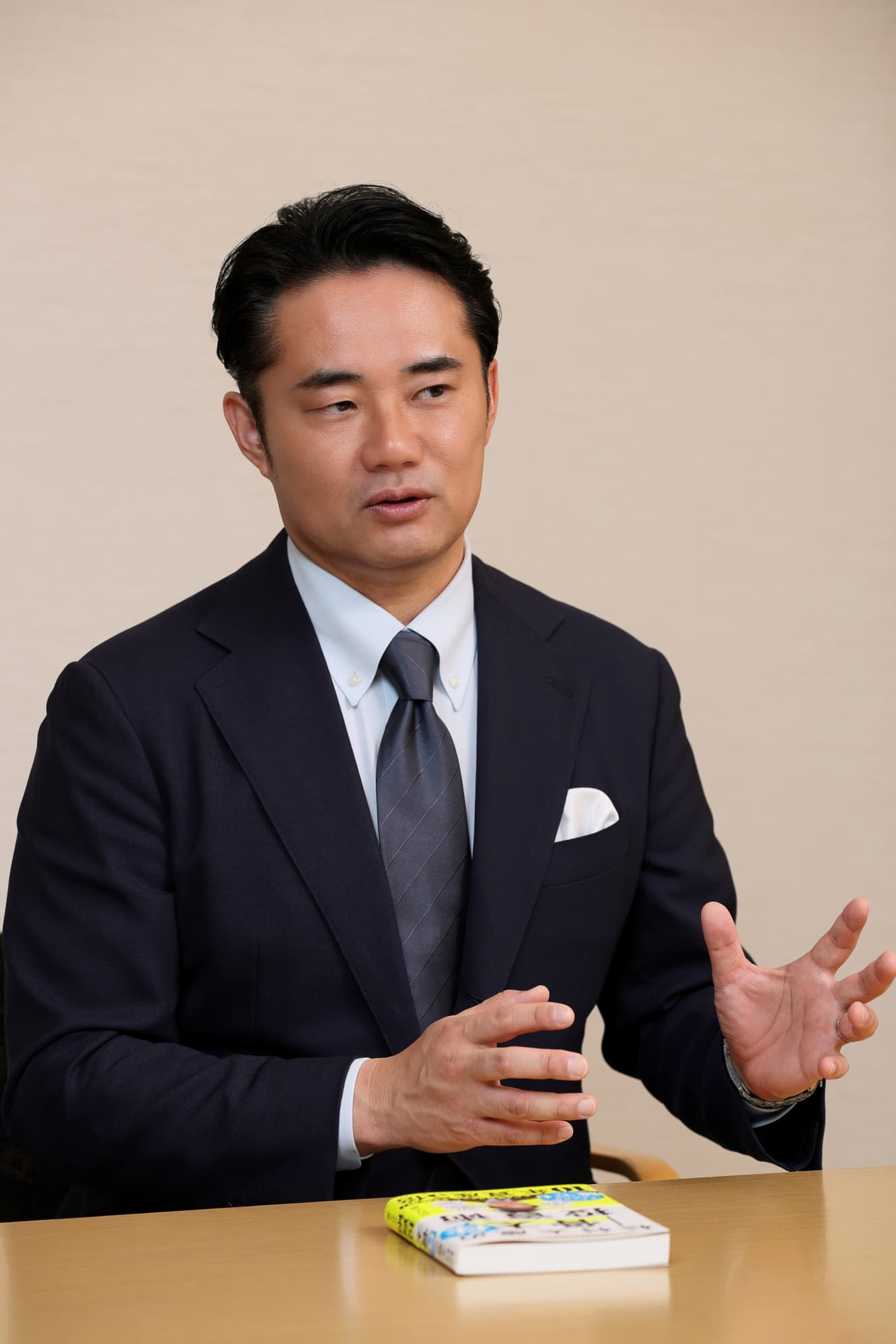
Taizo Sugimura, a former member of the House of Representatives and a popular TV personality with his light-hearted manner, explains with a stern expression on his face.
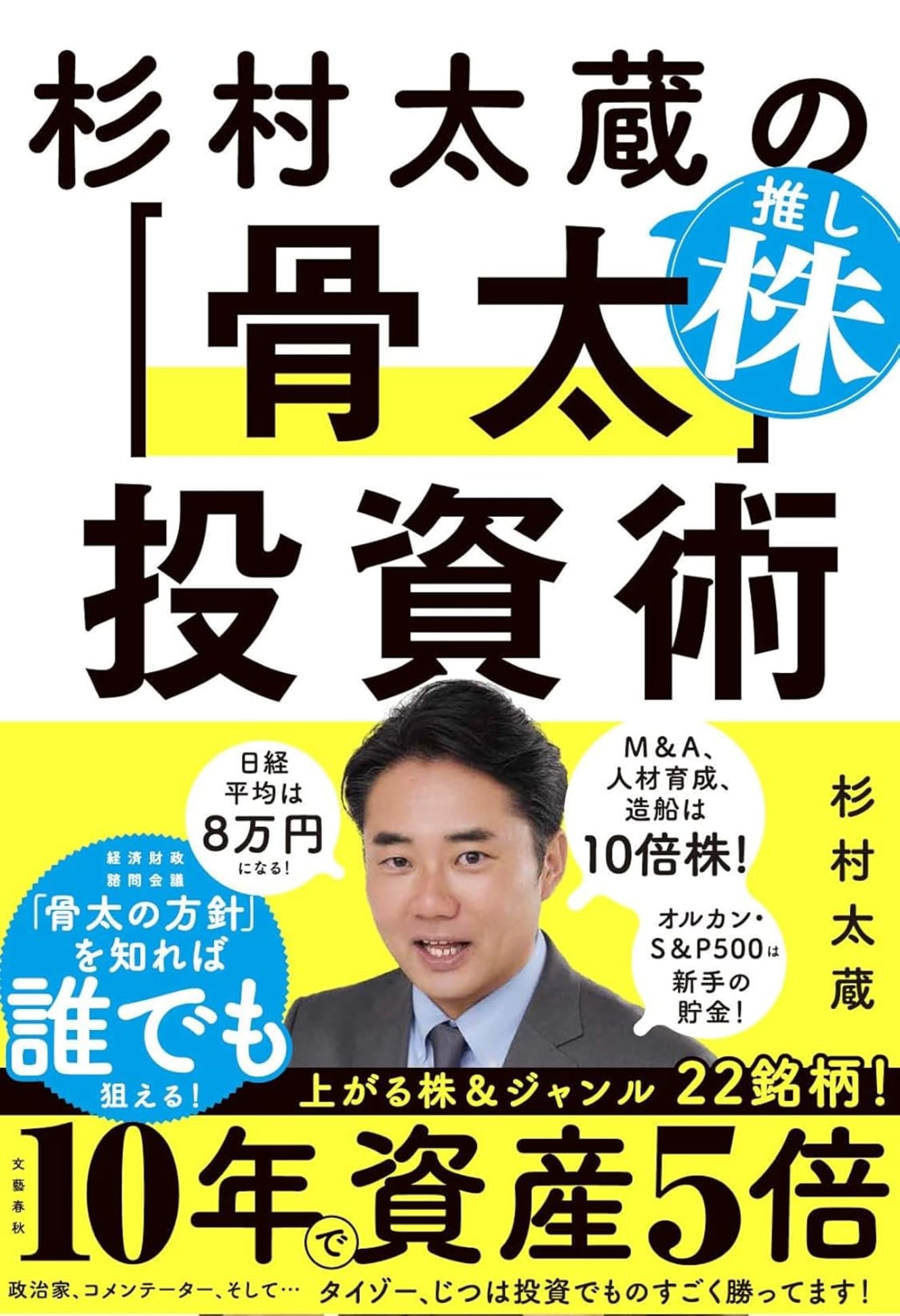
Taizo also has an “investor” side. After leaving Nagatacho in 2010, while working as a TV personality, he achieved 100 million yen in assets in just four years of investing. In January of this year, he published a book titled “Taizo Sugimura’s Estimated Stock ‘Big-Boned’ Investment Techniques” (Bungei Shunju). In the book, he introduces the know-how of selecting stocks with specific company names, saying , “It is not a dream to multiply your assets by 5 times in 10 years.
In the book, he says, “What I wanted to convey was, why don’t you enrich your life with two incomes by managing your assets and earning dividend income in addition to your salary income while you are still in your working age? The current working generation can only get by with pensions and retirement savings until they are in their 60s. Even if the working-age population saves money for retirement, they will only lose money. This is because of inflation. When there is inflation, it is a good time to make use of those savings,” said Taizo.
Currently, Japan’s economic situation is inflationary and the value of cash is falling. To give an example, an onigiri (rice ball) from a convenience store used to cost about 100 yen. However, due to price hikes of raw materials such as seaweed and rice, the price is now around 200 yen. The value of cash has effectively fallen because wage increases have not kept pace with the rise in prices.
Bank interest rates have also increased slightly, but under inflation, prices have risen more than bank interest rates, and the value of cash is diminishing even if you save it. Cash is a weak asset against inflation, and conversely, stocks and real estate are strong assets against inflation. However, real estate is not easily affordable as the average price of a used condominium in the 23 wards of Tokyo is 100 million yen. If this is the case, asset management will be done with stocks. If you have savings equivalent to your annual income, you should start investing immediately.
Mr. Taizo believes that the Nikkei average will exceed 80,000 yen in the next 10 to 15 years. With the Japanese economy expected to grow significantly for some time to come, he says that Japanese stocks, not “Orcan” or “S&P 500,” are the ones to buy.
Invest in “guessing stocks.”
Some people may not have the money to start with. Taizo first reduces his expenses by cancelling unnecessary subscriptions and switching to cheaper telecommunications. He also advocates buying a refrigerator, buying and freezing as much supermarket specials as possible, and cooking for oneself to lower one’s Engel’s coefficient.
If you are earning 300,000 yen a month, you can save 1 million yen in less than three years by putting 30,000 yen into savings every month. What is important when investing is to do it with surplus funds, even if the worst happens and the million yen becomes a piece of paper. If it is a tiger’s money, it would be better not to do it.
But even if you do buy stocks, which company will you choose from among the 4,000 stocks available? Taizo says you should choose “recommended stocks,” like “recommended activities,” companies you “wanted to join” or “companies you would definitely support because of their business models that solve social issues. Even so, this may still be a bit vague. The “key to investment” advocated by Mr. Taizo is the “Framework Policy” of the Council on Economic and Fiscal Policy.
It is a summary of the country’s economic guidelines, and stocks that conform to what is written in the policy will grow in the years to come. Since the Meiji era, the public and private sectors have worked together to build the Japanese economy based on ‘national capitalism,’ and even if the prime minister changes, the major economic policies remain the same. The hints for investment are written in the “Kotta Policy,” so you should definitely read through it.
You can easily find it by going to the Cabinet Office’s website, so check the primary information, and if there are areas you don’t understand, just skip reading it because it is not an exam study. Try to find a potential investment in a company that is in an industry that is in line with the bone fide policy, a company that you feel attached to and love, that you ‘wanted to work for,’ that has ‘great products and services,’ and that you ‘want to support.'”
It is getting tougher and tougher to keep up with inflation based on salaries and wages alone. It may not be a bad idea to think about investing again.
In “FRIDAY GOLD,” Mr. Taizo introduces “Recommended Stocks” that aim for a 10-fold increase in 10 years, as well as areas of focus.
Interview and text by: Daisuke Iwasaki Photo courtesy of: Bungei Shunju-sha