Falling real estate prices, sluggish domestic demand, declining population, and trade frictions… Xi Jinping is on a roll, but China’s economy is in deep trouble. | FRIDAY DIGITAL

Falling real estate prices, sluggish domestic demand, declining population, and trade frictions… Xi Jinping is on a roll, but China’s economy is in deep trouble.

  • Share on Twitter
  • Share on LINE
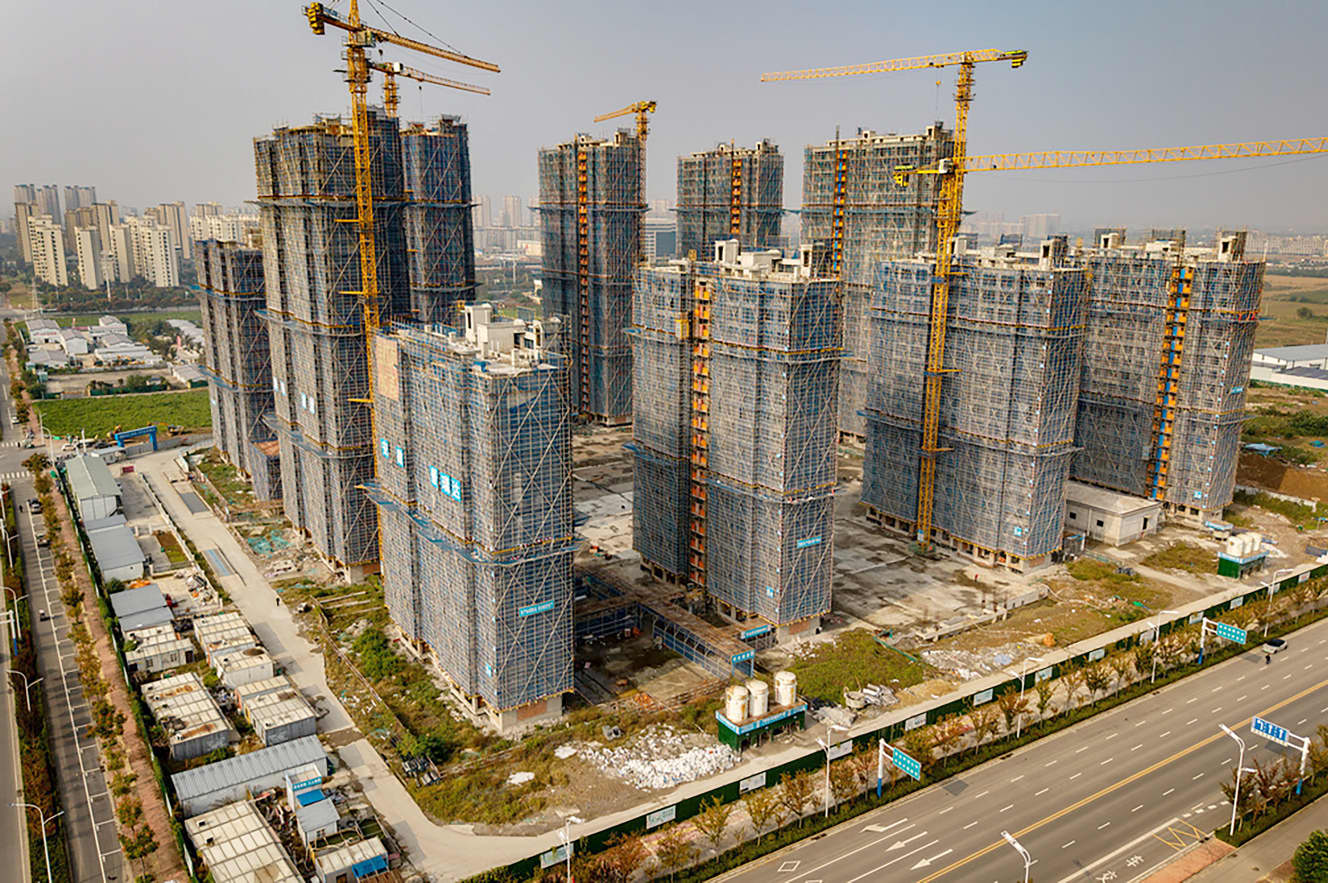
Skyscrapers whose construction has been halted due to financial difficulties. Anhui Province, eastern China

Latest China Report.
Bubble bursts, real estate prices fall, domestic demand slumps, population declines, and trade friction. ……

Although China’s GDP (gross domestic product) grew by 5% year-on-year in 2013, achieving the government’s target of “around 5%,” the future of the Chinese economy is likely to be marked by internal and external troubles. However, the future of China’s economy is likely to be a “quadruple whammy” of falling real estate prices, sluggish domestic demand, a declining population, and trade frictions.

Kota Takaguchi, a journalist well versed in the Chinese situation and the author of “Peak Out China” (Bunshun Shinsho) and other books, says, “On the surface, the Chinese economy appears to be doing well, but it is not. On the surface, the Chinese economy appears to be doing well.

President Xi Jinping (72), in a speech on February 14 before the Chinese New Year, said that he would “accelerate the construction of a new development paradigm (framework)” and the economy is booming. In reality, however, the situation is quite dangerous. Mr. Takaguchi continues his explanation.

It is true that China has increased its technological capabilities in areas such as artificial intelligence (AI) and electric vehicles (EV), and its production capacity is the highest in the world by far. However, the people’s consumption is low and demand is not keeping up with the bloated supply. In China, since the 1970s, when the country was still developing, there was a government-led initiative to curb consumption and invest in factories and other facilities.

In Japan, the people’s consumption rose at a rapid pace in the ’80s after a period of rapid economic growth, but China still tends to give priority to investment in business. This is known as a “supply-strength-demand-weakness” situation, and the economic growth rate has been steadily declining.

Furthermore, the number of births is on the decline. The population peaked at 1.41 billion in 2009 and has since turned downward. The shrinkage of domestic demand associated with a declining population will become more serious, and the trend of oversupply will accelerate.

The biggest cause for concern is the plunge in real estate prices due to the bursting of the bubble economy.’ Investment in fixed assets, which was high in the 20-30% range in the 2000s (as a percentage of the previous year), turned negative in 2013 (see table above). Construction work has been halted throughout China due to funding difficulties, and abandoned buildings have been left abandoned.

The Chinese economy is about to enter a long period of deflation!

It is not only major developers who are suffering from the bursting of the bubble. The Chinese people had about 70% of their assets in real estate. The plunge in prices has hit ordinary households hard. The plunge in prices has hit ordinary households hard, making their wallets even tighter.

There is a term called the “lipstick effect. When a recession hits, expensive items don’t sell, but luxury items such as lipstick do. For example, the Chinese New Year holidays have begun, and people are beginning to think that they should travel domestically instead of going abroad, which can be expensive.

Those who have recently traveled to China may argue, “Well, I’m not going to go to Beijing or Shanghai, but I’m going to go to China. People who have recently traveled to China may argue, “Cities such as Beijing and Shanghai are full of goods and vibrant. The recession is a lie. However, the only places where things are abundant and vibrant are the places that stand out from the crowd. Try going to the suburbs or to the upper floors of buildings in the suburbs. They are empty, with no tenants. There are plenty of places where there is not only no activity, but not even a hint of popularity.

It is even worse in the countryside. During the bubble era, bureaucrats built train stations and airports in places that no one would use in order to improve their own performance during their term of office. These infrastructures have become a burden on local economies in terms of maintenance costs alone. The unemployment rate in recent years, according to the government, has been around 5%, but the sample is only for people in urban areas. The figure would be even worse if rural residents and migrant workers are taken into account.

While domestic demand is not rising at all due to all the negative factors, it is external demand that is supporting the Chinese economy. Exports to Europe (EU) and other countries are booming. In particular, government-supported new businesses such as AI and EVs have grown significantly in recent years. However, …….

Avoiding additional tariffs on China, which were temporarily raised to over 100% by US President Trump, China is focusing on exports to other regions. For example, the trade surplus with the EU in ’25 swelled to over ¥45 trillion, the largest ever. While exports in yuan terms expanded by about 1.7 times over the previous decade, imports from the EU remained at 1.3 times.

That is why our trade surplus doubled. The trade imbalance was so great that French President Macron expressed his strong dissatisfaction, saying, “It is intolerable; it is a matter of life and death for the EU. There is a danger that the anger over the imbalance will explode and lead to trade friction, including higher tariffs.

Falling real estate prices → sluggish domestic consumption → increased exports → trade friction ……. The situation surrounding the Chinese economy is by no means bright. We are on the brink of long-term deflation.

From the March 6, 2026 issue of FRIDAY

In the metropolis of Shanghai, there are construction sites where work has been halted. Only numerous foundations remain.
The Chinese economy had been supported by external demand to counter weak domestic demand. However, Mr. Xi’s aggressive export offensive is provoking opposition from other countries.
Steady decline! Economic Growth Rate
  • PHOTO AFRO Kyodo News

Photo Gallery4 total

Related Articles