Some frogs croak “wan-wan, can-can”… The author of “The Illustrated Book” talks about his love for frogs, of which there are 54 species in Japan alone.


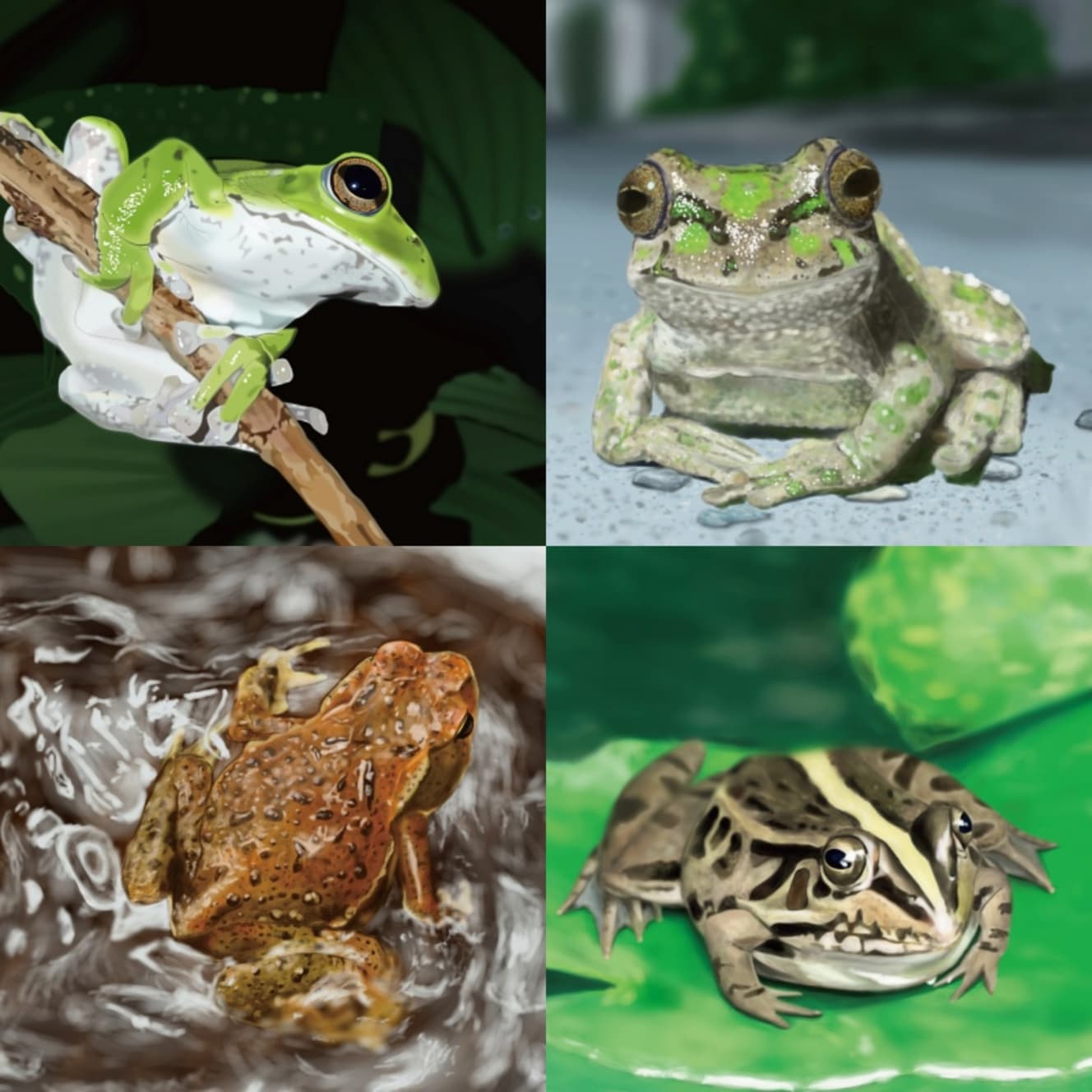
The more you know about them, the more you like them.
With their round, round eyes, smiling mouths, and stocky bodies, these frogs are cute to say the least. On the other hand, her sticky skin texture is also poisonous. If we say they are disgusting, we might be right. Frogs are strange and contradictory creatures.
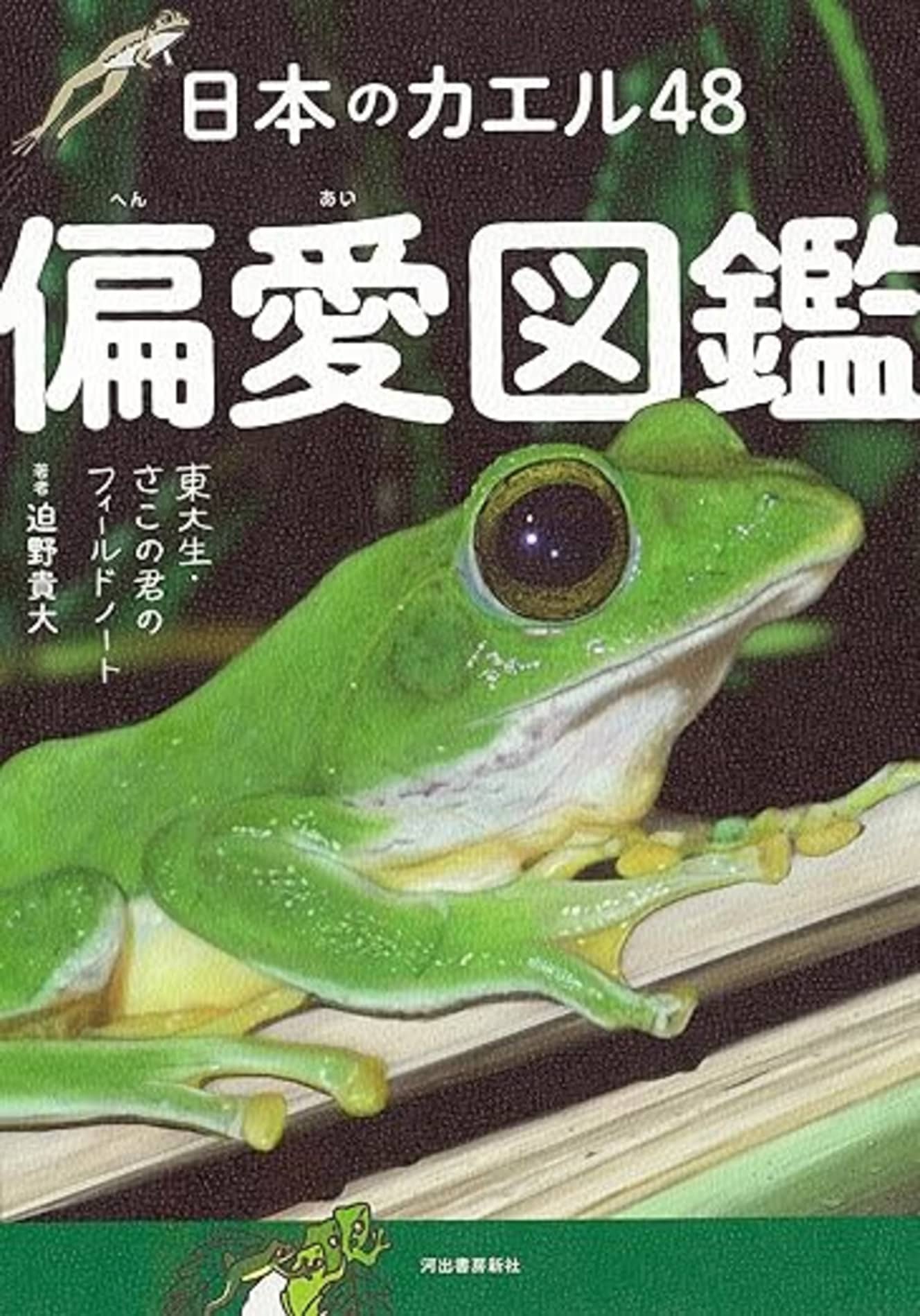
Takahiro Sakono’s love of frogs has led him to observe almost all species of frogs distributed in Japan in the field. While studying the reproduction of deer, monkeys, and other mammals at the University of Tokyo’s Faculty of Agriculture, he joined the University of Tokyo’s Biology Research Group and began his journey in search of frogs. His hobby led him to publish “48 Frogs of Japan: An Eclectic Illustrated Guide” (Kawade Shobo Shinsha), which contains his own exquisite illustrations and commentary. A new edition of the book was published in January.
Frogs are the only vertebrates that change so much from larvae to adults. As they grow from tadpoles, their tails disappear and their limbs grow longer. In addition to changes in form and function, their habitat, diet, and behavior also change.
Tadpoles are aquatic, but some adult species live on trees using suckers. Frogs cannot swim across the ocean, and their appearance and genetic characteristics differ in various regions. New species have been discovered, and at the time of the first publication of this book in June ’20, it was thought that there were 48 species, but the number has now increased to 54. The more you know about them, the more you like them, and the more you are fascinated by the depth of the frogs,” (Sakono also made the following comments).
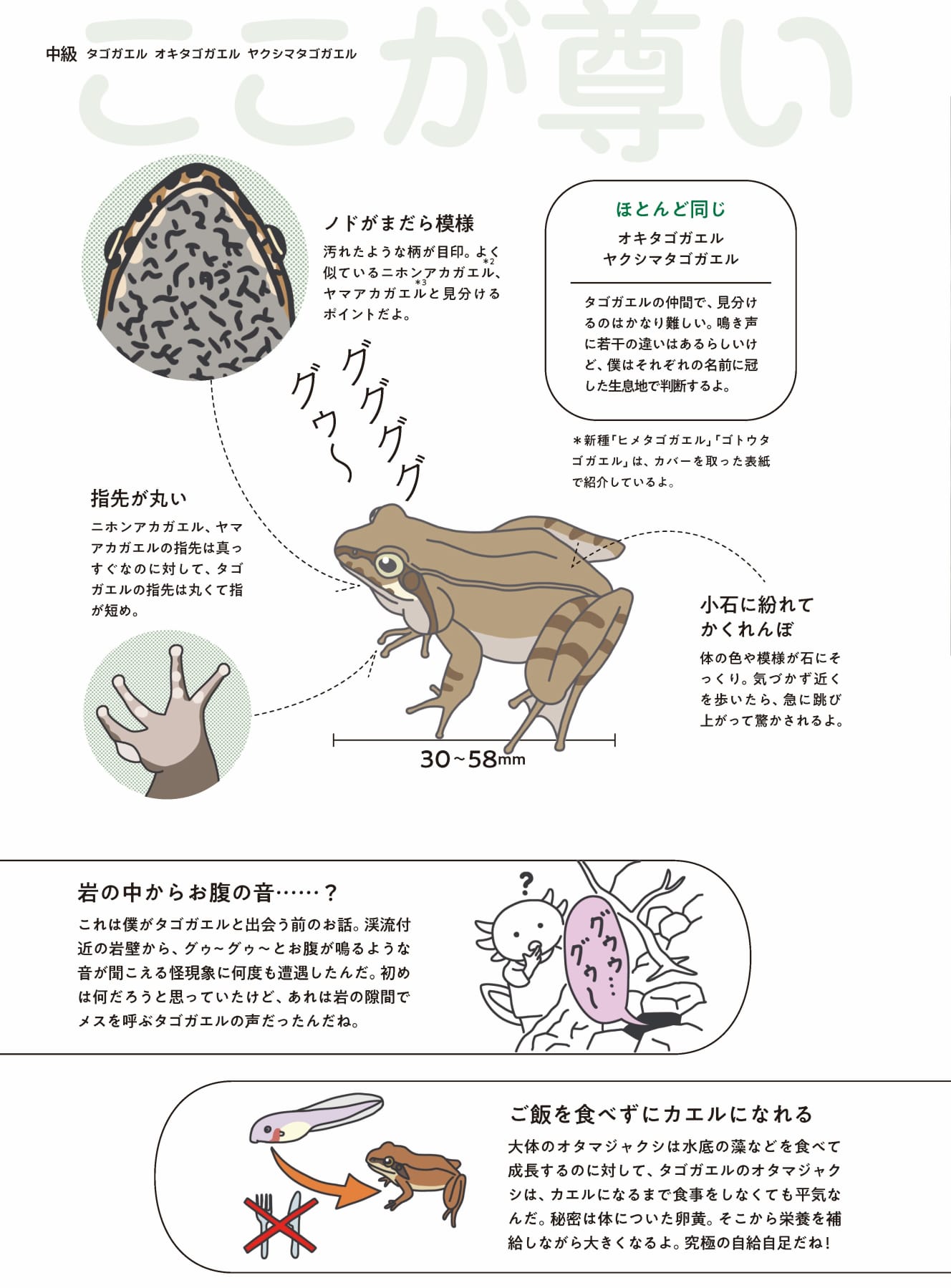
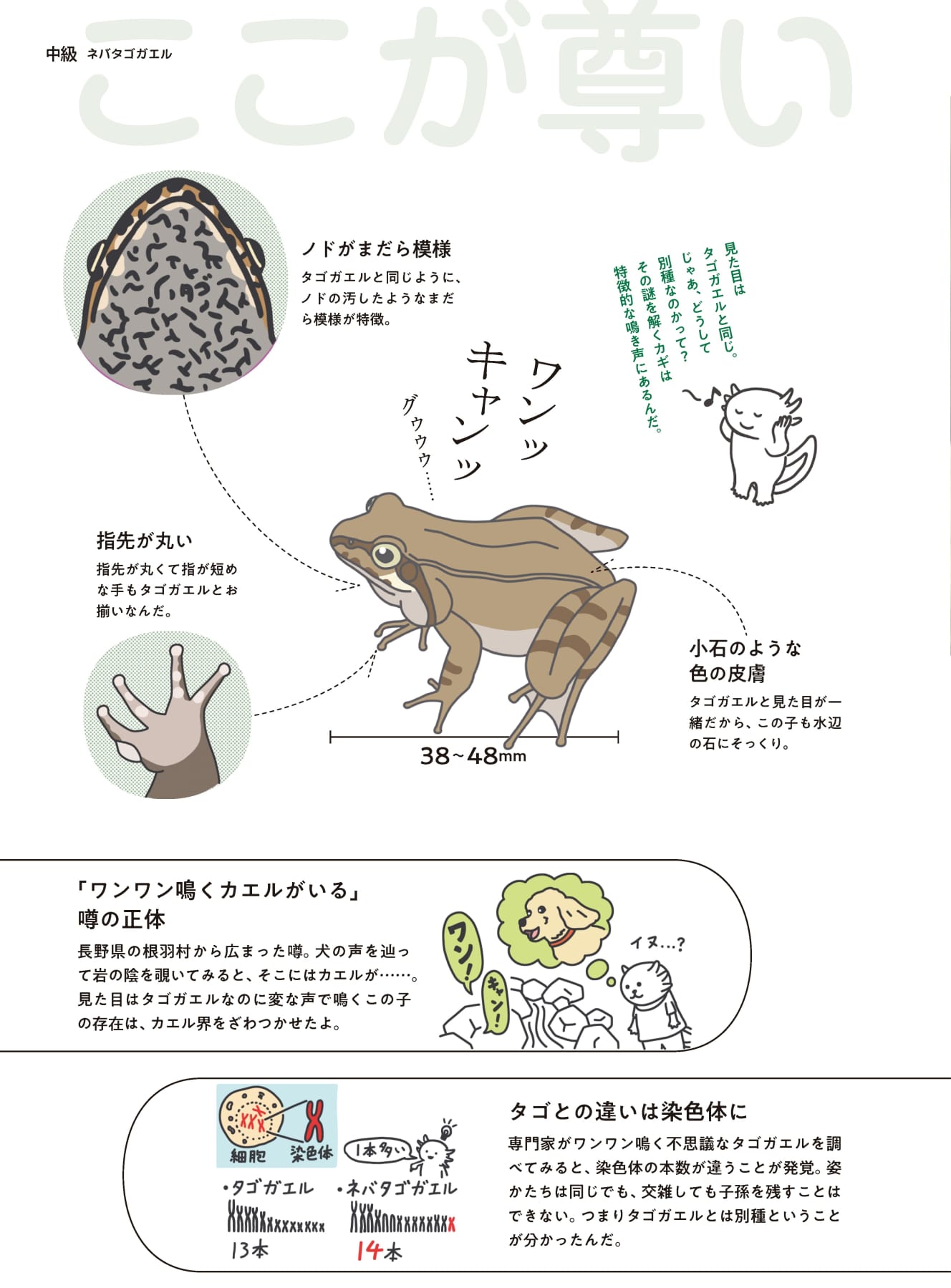
The common image of frogs’ croaking is “kerokero,” but in reality, it varies from species to species. In reality, however, the frogs vary from species to species, and the Nebatago frog was discovered in Neba-mura, Nagano Prefecture, after a rumor circulated that there was a frog that croaked.
Frogs have been loved since ancient times
The frog is distributed in limited areas such as Aichi and western Shizuoka prefectures, and its high-pitched, puppy-like voice makes a “woof, woof, woof” sound. During the breeding season from April to May, females walk around looking for males, so it is relatively easy to spot them at night along streams.
Genetic analysis of frogs began around 2010, and in 2002 it was discovered that the nevatago frog and the tago frog are two different species with different numbers of chromosomes. Although not as doggy-like as the nevatago frog, the tago frog also sometimes croaks. Since they are not identifiable by their appearance, the nevatago frog was previously thought to be a tagog frog.”
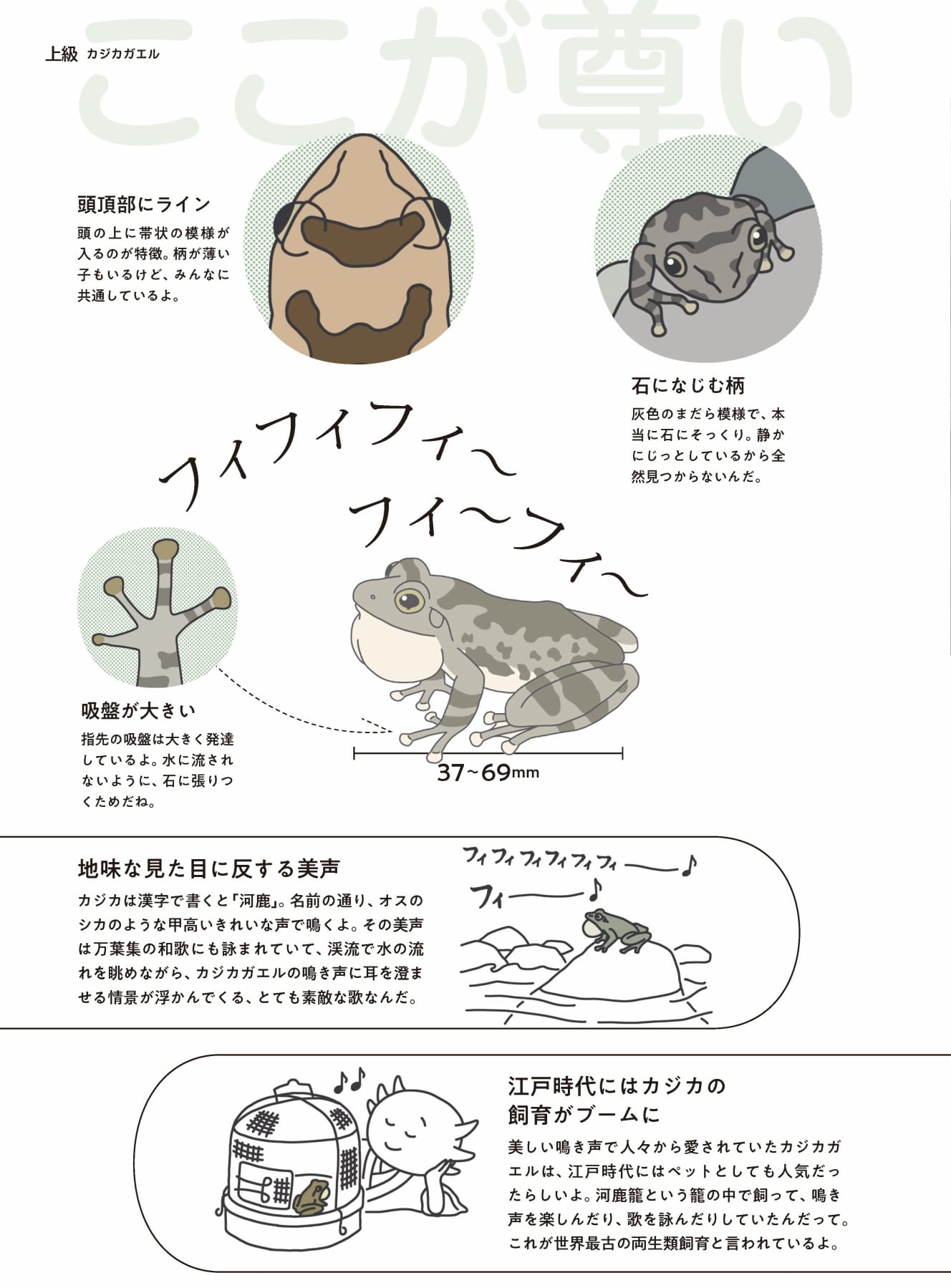
Other frogs in the family include the Kajika frog, which has a beautiful deer-like cry, “Fee, fee,” and was sometimes kept as a pet during the Edo period (1603-1868).
The frog is a member of the family Ooïidae and lives in rocky areas such as mountain streams. In the “Kyuai Zuitsu” (Essays on the Oi and the Dust) of the mid-Edo period, it is written that it is a taste of the fengryu people to love the sound of the frog’s cry, and it also describes how to keep the frog. The name “kawaka” was written in Chinese characters and a special case for keeping the animal, the kawaka cage, was also made. They have been loved since ancient times, as evidenced by their inclusion in the Manyoshu (The Anthology of Myriad Leaves). They are widely distributed in Honshu, Shikoku, and Kyushu, and in Tokyo, they live in the Okutama area where Mt.
In the “Birds, Animals, and Caricatures,” a collection of caricatures of birds and animals dating back about 800 years, frogs are personified along with rabbits and monkeys, and are depicted playing in the water and wrestling.
In one of the pictures of sumo wrestling, a frog, probably a tree frog, throws a rabbit to the ground, indicating that frogs have been loved by people since ancient times.
Japan is long from north to south, and the climates of Hokkaido and Okinawa are very different. Naturally, the ecology of the frogs living there is also different.
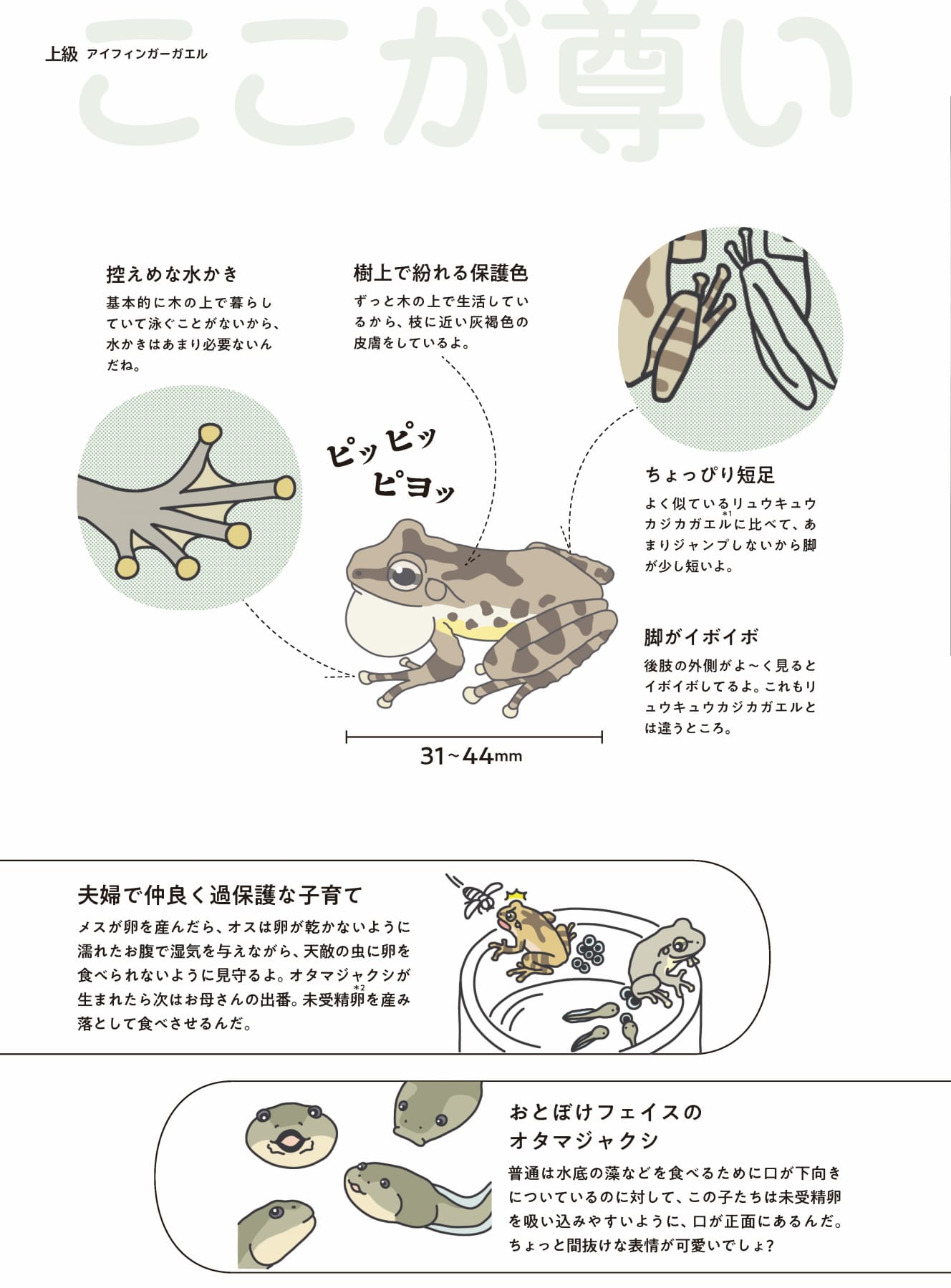
The ichneumon frogs found on Ishigaki and Iriomote Islands in Okinawa Prefecture raise their young as a couple. They lay their eggs in puddles of water in tree hollows. The father frogs keep their wet bellies moist and watch for the arrival of natural enemies. Since there is no food such as algae, the mother frog feeds unfertilized eggs.
Ordinary tadpoles have their mouths facing downward to feed on algae on the bottom of the water, but Eiffinger’s tadpoles have their mouths facing forward so that they can easily suck in unfertilized eggs. If you look closely, you can see the face of the tadpole.
The journey to find frogs continues!
Genetic analysis is progressing, new species are being discovered, and as already mentioned, the number of species has increased to 54. So far, Sakono has encountered 52 species of frogs.
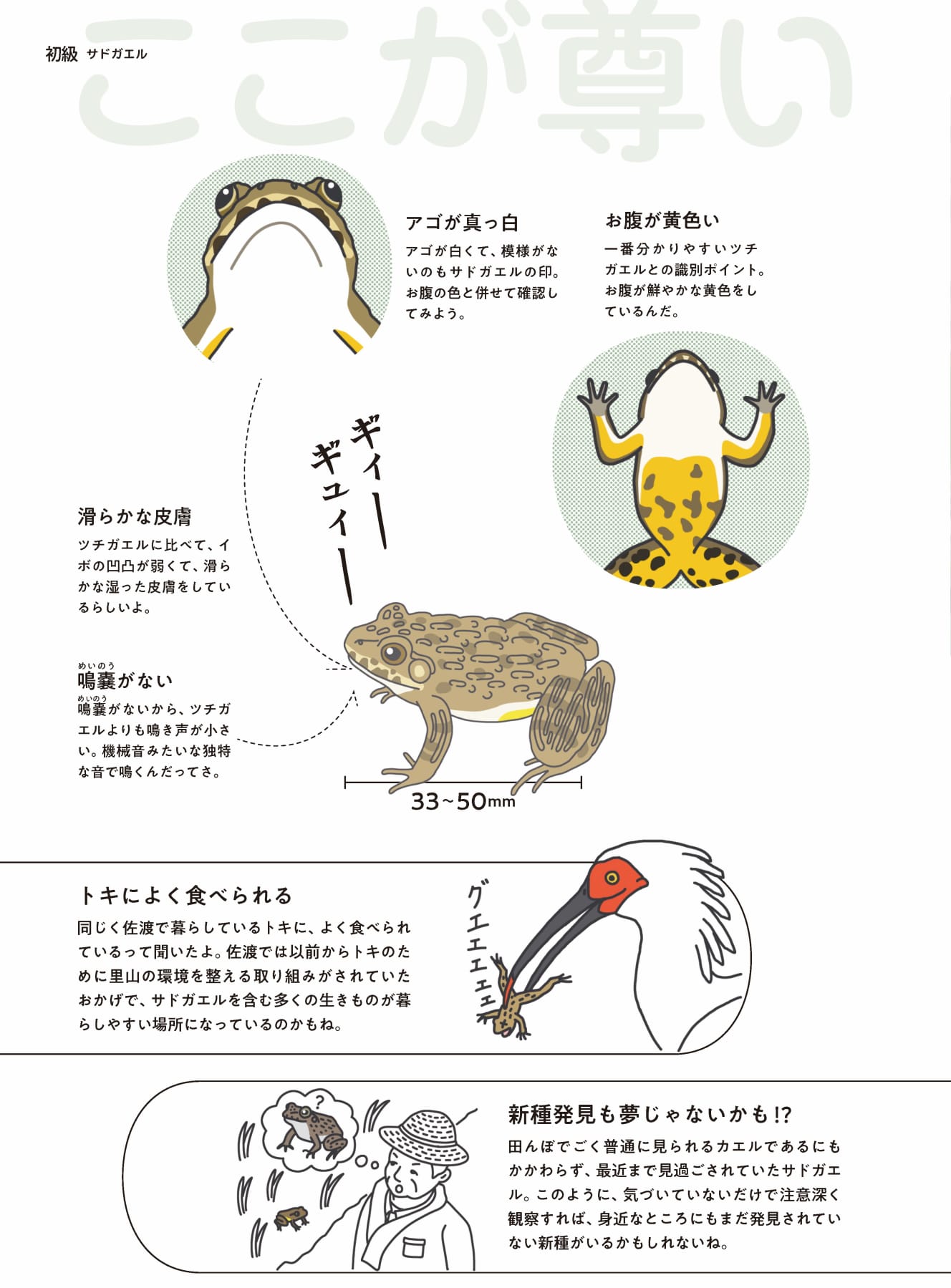
Two species, the Sado Island frog and the Gotoh tag frog, I haven’t met yet,” he said. As their names suggest, they are distributed on Sado Island in Niigata Prefecture and on the Goto Islands in Nagasaki Prefecture. Sado frogs live in the rice paddies of Sado Island and are often eaten by crested ibis. Sado is a pleasant environment for frogs because of its satoyama environment for ibis breeding.
In the Goto Islands of Nagasaki Prefecture, the Goto and Tagotago frogs seem to be distributed on each island. I have visited all 47 prefectures, but there are many islands in Japan, and there are likely to be new species for each island and region, so my journey in search of frogs is likely to continue.
If it is a species that lives in the rice paddies, he says, it is easy to raise them from tadpoles to frogs. If you fill a bucket with rice paddy mud and water, you can witness their dramatic metamorphosis to adulthood. However, there is a caveat.
The mud contains plankton such as Daphnia magna, and the mud itself is a mass of organic matter, which the tadpoles feed on as they grow larger. The metamorphosis of the tadpoles is very impressive. If they are tree frogs, they climb out of the bucket using suckers on their limbs.
But do not move the area too far. It could lead to the adult frogs disrupting the ecosystem of that remote area. There have been cases, for example, of more than one species of tree frog being found on Izu Oshima Island, where they are not supposed to be.”
There are many different species of frogs, including those that live in rice paddies, on trees, and along mountain streams. Even in Honshu, some species breed in winter. This weekend, why don’t you look for these mysterious creatures with dull eyes?
Interview and text by: Daisuke Iwasaki