Ami Nakai: Next, quadruple! Miracle Girl” who “surpasses Mao Asada” is the strongest in Japan’s history in terms of jumps and character!
Bronze Medal in Women's Figure Skating at Milano Olympics!


She broke the record for the youngest performer!
One girl has captivated the world.
The Milan Cortina Olympics came to a close on February 23 (Japan time). A new heroine was born in Japan’s home specialty, figure skating. She is Ami Nakai, the youngest medalist in Japanese women’s figure skating history at the age of 17, breaking the record set by Mao Asada (35) at the Vancouver Olympics in 2010 by two years.
Her greatest weapon is the triple axel, Asada’s signature move. Nakai succeeded in both the short and the free skate, becoming the youngest ever medalist in the history of the Olympics. Emi Watanabe, former national figure skating team member, explains Nakai’s strong points.
Compared to Asada, Nakai’s triple axel has no height. She makes up for the lack of height by increasing her rotation speed. It is not difficult to make her body rotate three and a half revolutions at a high speed. But then, it becomes difficult to control the timing of the descent and the stance when landing on the ice, and the risk of falling down jumps up.
Nakai, however, has great flexibility in her knees and ankles, and is able to release her power well when landing on the ice. She used to be a rhythmic gymnast before she started Figure skating, and I think she has been able to make use of the spring she has cultivated in Rhythmic Gymnastics. Her landing is her strong point.
Nakai, who has charmed the world with her “high-speed triple axel” made possible by her high flexibility, continues to fascinate others with her character even after leaving the rink. Her teacher Minoru Oshima, who was her homeroom teacher for three years in junior high school, reveals the true face of Nakai.
His nickname among his classmates was ‘Amigo. He was always at the center of the class, and everyone loved him. He had a very serious personality. He often missed school due to overseas tours and other reasons, but he used the 10-minute breaks between classes to frantically copy notes borrowed from his friends. I also heard that he took his homework to the rink and did it between practices. In my three years of junior high school, I never once failed to turn in my homework.”
He also showed his friendliness.
In fact, I scolded Nakai once, in the first grade, when he was doing one or two jumps in a special classroom during cleaning time. I told him it was dangerous, and he apologized. I heard that he jumped because his friends begged him to, but he never made excuses for it. I was impressed by his strong sense of responsibility.
Nakai had said since junior high school, “It is my dream to compete in the Olympics. Having made her dream come true in Milan, the miracle girl’s eyes are already on the next Olympics. The key to becoming the second gold medalist in the Japanese women’s figure skating world is her jumps.
To surpass Asada in the true sense of the word, it depends on whether or not she can master combinations that include triple axel. Nakai has only one triple Axel in each program.
To do it multiple times, and as a combination, it is essential for him to improve his muscle strength to jump high jumps. If she can add height to her speed, she will be able to succeed in the quadruple jump, which she has stated she will attempt at the next Olympics. I am sure she can achieve it,” said Watanabe.
The “perfect child of jumping” will surely show us more flying at the next Olympics.
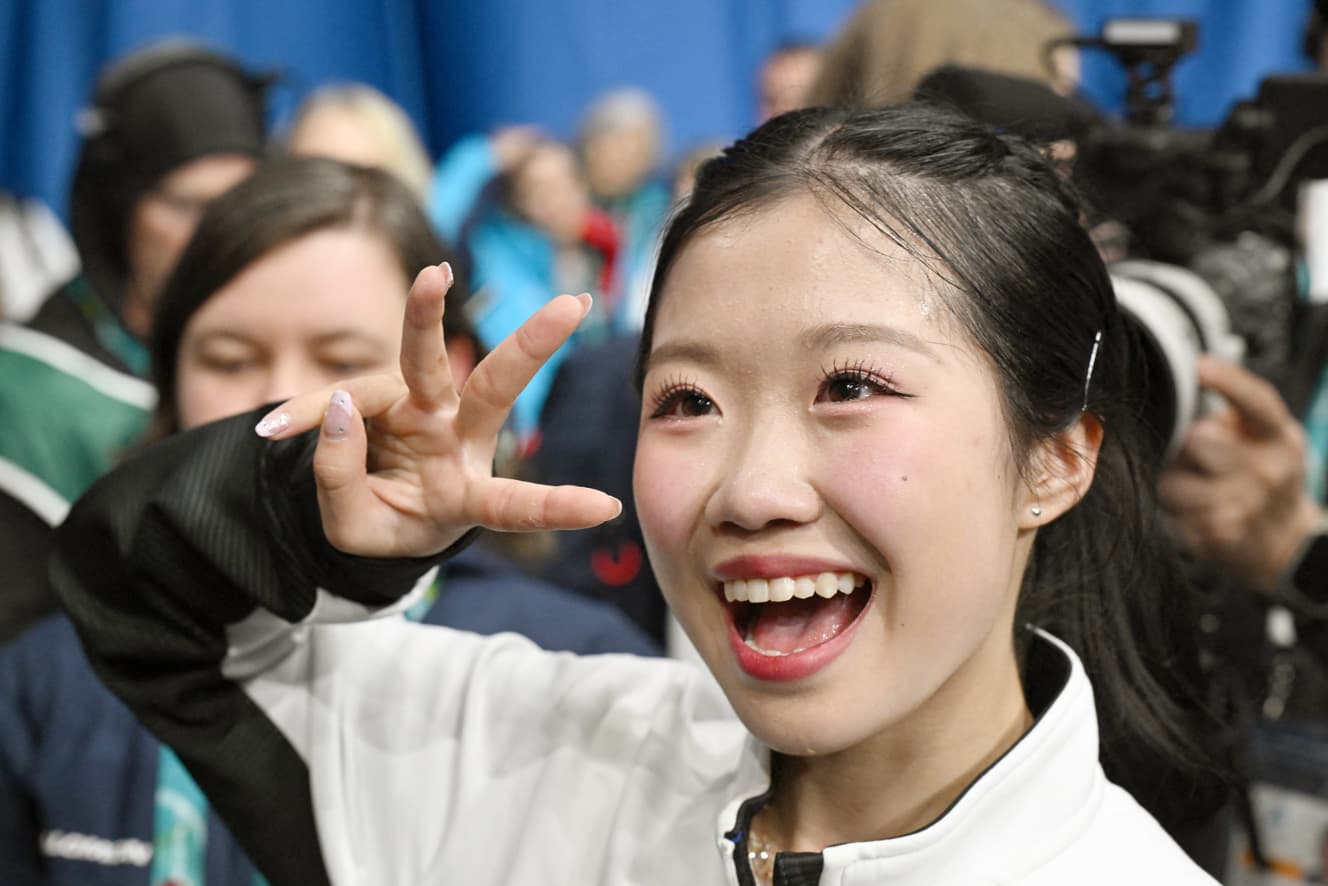
From the March 13-20, 2026 issue of “FRIDAY
PHOTO: Kyodo News