From Tried-and-True to Bold Originals—Script-Driven Winter Dramas You Should Watch Now
TV people were surprised by Hana Sugisaki's "Something in Winter, Something in Spring" and "Omusubi" duo's Gekkan 9 "Yandoku! etc.




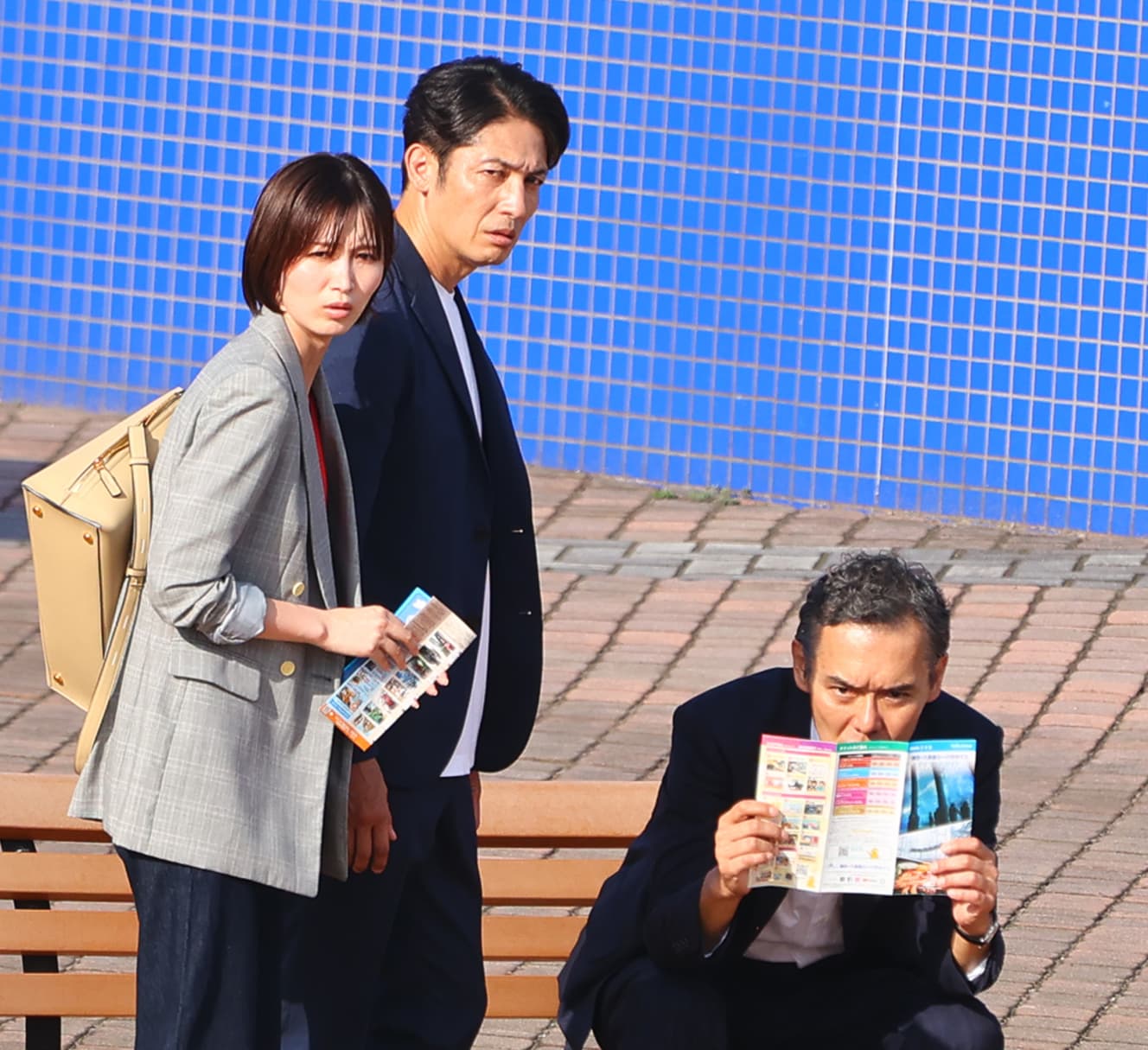
The three attended a location shoot. Inoue is starring in a TV drama series for the first time in three years; Sugisaki and director Imaizumi are working together again for the first time since ’23, while Hashimoto and Nemoto have reunited following Omusubi.
[See Part 1 here] Which winter dramas are worth watching even now — heating up with fan theories! New candidates for hit series!
Hana Sugisaki goes to a love hotel with a man
It is Nippon TV that continues to pursue a unique direction. While it hasn’t matched the record-breaking streaming numbers of the previous season’s Yoi Koto Warui Koto, which became the network’s most-watched title ever, watchers and TV insiders say it has delivered something memorable with Fuyu no Nanka sa, Haru no Nanka ne, as part of its strategy targeting the core (younger) audience.
“This is a very bold project, with film director Rikiya Imaizumi handling both the script and direction. The story—quietly depicting a complex mix of romance, subculture, and self-consciousness in a style completely different from conventional dramas—will likely divide opinions and isn’t for everyone,” said Ooyama.
“Even though explanatory dialogue is drastically reduced, it’s remarkable how everything is conveyed through the subtle facial expressions of lead actress Hana Sugisaki (28). I’d recommend it to people who like art-house films,” said Kawada.
“There are scenes of Sugisaki smoking, and almost every week she goes to a love hotel with a man—giving more range to today’s dramas, which tend to be overly cautious about compliance,” said a production company director.
Episode 1 performed well with 2.264 million streams, but by Episode 2, viewership dropped by 40%.
“Expectations were high before it aired, but many viewers may not have been able to keep up. A lot of people seem to be watching while telling themselves, ‘I like this kind of world,’” said Aida.
Fuji TV, aiming for a revival after restructuring its management, is placing dramas at the center of its business. While its streaming-focused short drama app (FOD Short) is doing well, the core of its terrestrial programming remains the “Monday 9 PM” slot.
This season, it has introduced Yandoku!, about a former delinquent who becomes a highly skilled neurosurgeon and takes on the suffocating management system of a hospital.
“The script is by Nonji Nemoto, known for many hit works including Hakozume. He also worked on the morning drama Omusubi, starring Kanna Hashimoto (27), so this reunion seems aimed at building a solid production team. Interestingly, Nemoto is also handling Nippon TV’s Panda yori Koi ga Nigate na Watashitachi. It’s a rare case, but likely reflects both networks placing strong emphasis on scriptwriting,” said Kawada.
Pursuing entertainment value with a focus on scripts
Following Yandoku!, Professional: Insurance Investigator Ren Amane (Fuji TV), which ranked third in core ratings, features Hiroshi Tamaki (46) in the lead, supported by the charmingly comedic characters played by Sae Okazaki (30), Atsuro Watabe (57), and Shinya Kote (52).
In addition to its unique theme of insurance investigators, the story has effective twists and delivers a stable kind of entertainment similar to TV Asahi’s classic dramas (Ooyama), and scriptwriter Tetsuya Oishi’s work has also been highly praised by watchers.
A key network producer points out that a clear trend has emerged in the winter dramas.
“The first episode of Yandoku! performed well in both household and core ratings, with 2.607 million streams, but the second episode saw a significant drop in ratings, and streams fell below 2 million. While TBS is riding high on the success of Reboot, Mirai no Musuko, which airs in the same slot as the breakout fall drama Jaa, Anta ga Tsukutte Miro yo, has been underwhelming in both ratings and streaming numbers. In fact, Jaa~ was produced with a budget reduced by nearly 100 million yen compared to conventional dramas.
It’s no longer about lavish production or time slots—viewers have started strictly selecting which dramas are worth watching. In this era of content overload across terrestrial TV, catch-up streaming, and online originals, if the first episode doesn’t make viewers feel I can’t wait for the next one, then even a Monday 9 PM drama or an ambitious work by a film director will be weeded out.”
TV Asahi has shifted its strategy from traditional staple dramas to focusing on buzzworthy works and streaming. It has also adopted a writers’ room system, where multiple writers collaborate to develop stories, leading to an increase in script-driven productions—all in pursuit of greater entertainment value.
The winter era, when dramas were built around fixed lead actors and casting-first approaches, is coming to an end, and Japanese dramas are beginning to return to what they should truly be.

From the March 6, 2026 issue of “FRIDAY”
PHOTO: Kumataro Arai, Kenji Sugawara (Professional)