Why Are Tokyo High School Students Tending a 500-Year-Old Bonsai Linked to Tokugawa Iemitsu?


Close to Withering Iemitsu’s Bonsai in Danger!
While bonsai is currently experiencing a global boom, unrelated to that trend, Tokyo Metropolitan Horticulture High School has maintained a bonsai club for 117 years since its founding in 1908. Among the trees cultivated there is a 500-year-old bonsai said to have been loved by Tokugawa Iemitsu. In 1999, it was registered as a valuable bonsai by the Japan Bonsai Association. But why is such a precious bonsai at a high school?
“We actually don’t know for sure. Records say that in 1908, Tokyo Prefecture purchased it from its owner at the time and transferred it to the school upon its founding, but that’s all we know,”
says Soshi Katayanagi, the advisor of the bonsai club. He has been teaching at the school for 10 years and became the advisor due to his background studying bonsai in his student days.
Tokyo Metropolitan Horticulture High School opened in 1908 as Japan’s first horticultural high school—117 years ago.
“Since it was the first horticultural high school, they likely wanted to highlight unique features. There are records showing that a bonsai club already existed in 1933,” Katayanagi explains.
Yes, this school has a bonsai club as a club activity. With grounds 2.3 times the size of Tokyo Dome, the bonsai club’s activity area alone spans about two tennis courts and houses around 1,000 bonsai trees.
Currently, there are about 30 club members. Some have been interested in bonsai since elementary school and even hope to apprentice under professional bonsai masters after graduation.
Upon joining, each member is assigned two “personal bonsai” to care for. The students also take care of Iemitsu’s bonsai.
And it’s not just a club activity—second- and third-year horticulture students also have bonsai classes taught by specialists. For bonsai enthusiasts, it’s an ideal environment.
However, most members had no experience with bonsai before entering high school. Is it really safe to entrust them with such a valuable tree?
“We teach them how to care for it and regularly check their work, so it’s fine.”
Still, there was a crisis three years ago in March.
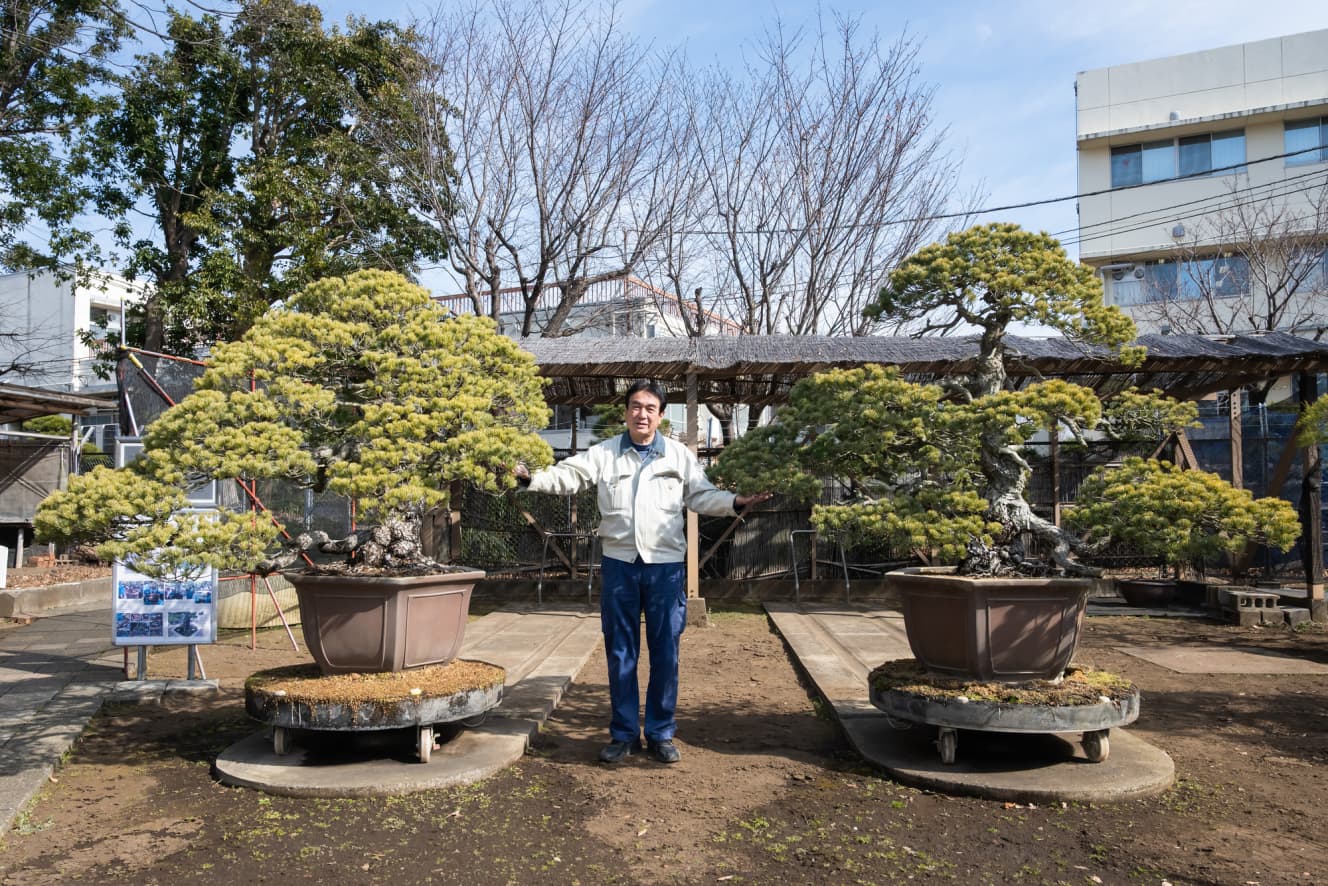
“One of the two bonsai trees associated with Iemitsu, a ‘Kitagoyomatsu’ (Japanese white pine), began to wither.”
Was it due to improper care by the students?
“No. At first, we had no idea why it was withering. But after investigating, we found that winter that year was unusually warm, with temperatures reaching as high as 18°C. This may have caused filamentous fungi to become active, along with bacterial growth from bird droppings and leaf burn due to moisture evaporation—likely a combination of factors.”
Fortunately, the tree later recovered, but it seems climate change is also affecting bonsai.


Ignoring the Predecessors!? The Appeal of Bonsai
So, what exactly does caring for bonsai involve?
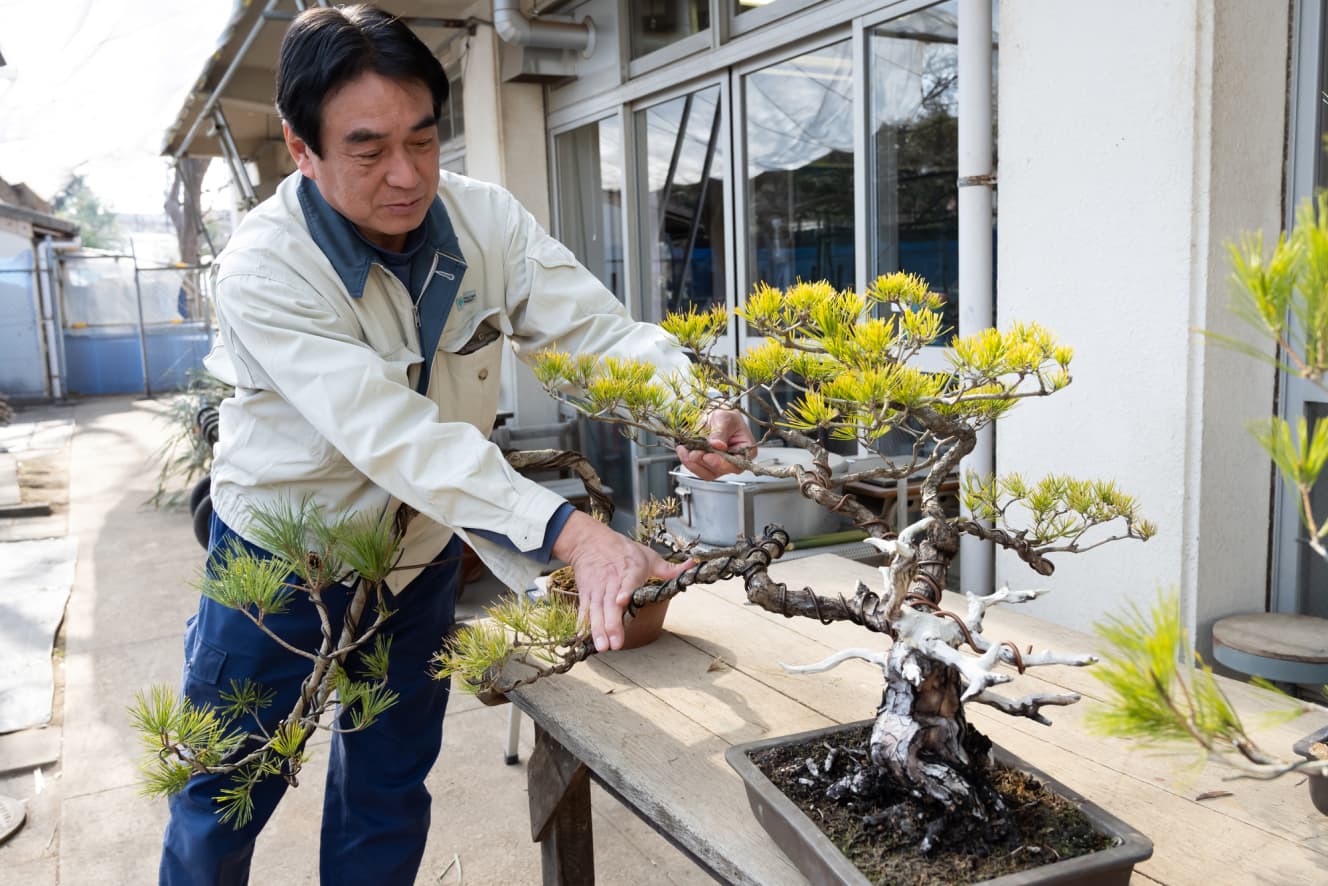
“You check where new buds have sprouted and cut off those that grow downward. You also trim buds that have grown too long.”
This is done branch by branch—an extremely painstaking process.
It may seem like a modest club activity, but what draws students to bonsai?
“They say it’s because it’s cute or cool.”
Cute? Cool? It’s hard to imagine—so we took a look at the students’ bonsai.
“This one is shaped so the branches extend to the left. It represents a windswept style, as if wind is blowing from the right.”
Some aim for shapes resembling dragons, making it easier to understand the sense of coolness.
“But the previous student who worked on this didn’t want a windswept style—they wanted a more spread-out form.”
Wait—you don’t have to carry on the previous caretaker’s vision?
Bonsai can live for 100 or even 200 years, and naturally, the caretakers change over time.
“As generations change, the bonsai keeps changing too. That’s what makes it interesting.”


Unconventional! Ghibli-Inspired Bonsai
While bonsai has many rules for shaping and presentation—
“We teach the basics, but after that, it’s all up to them. We let students express their own creativity.”
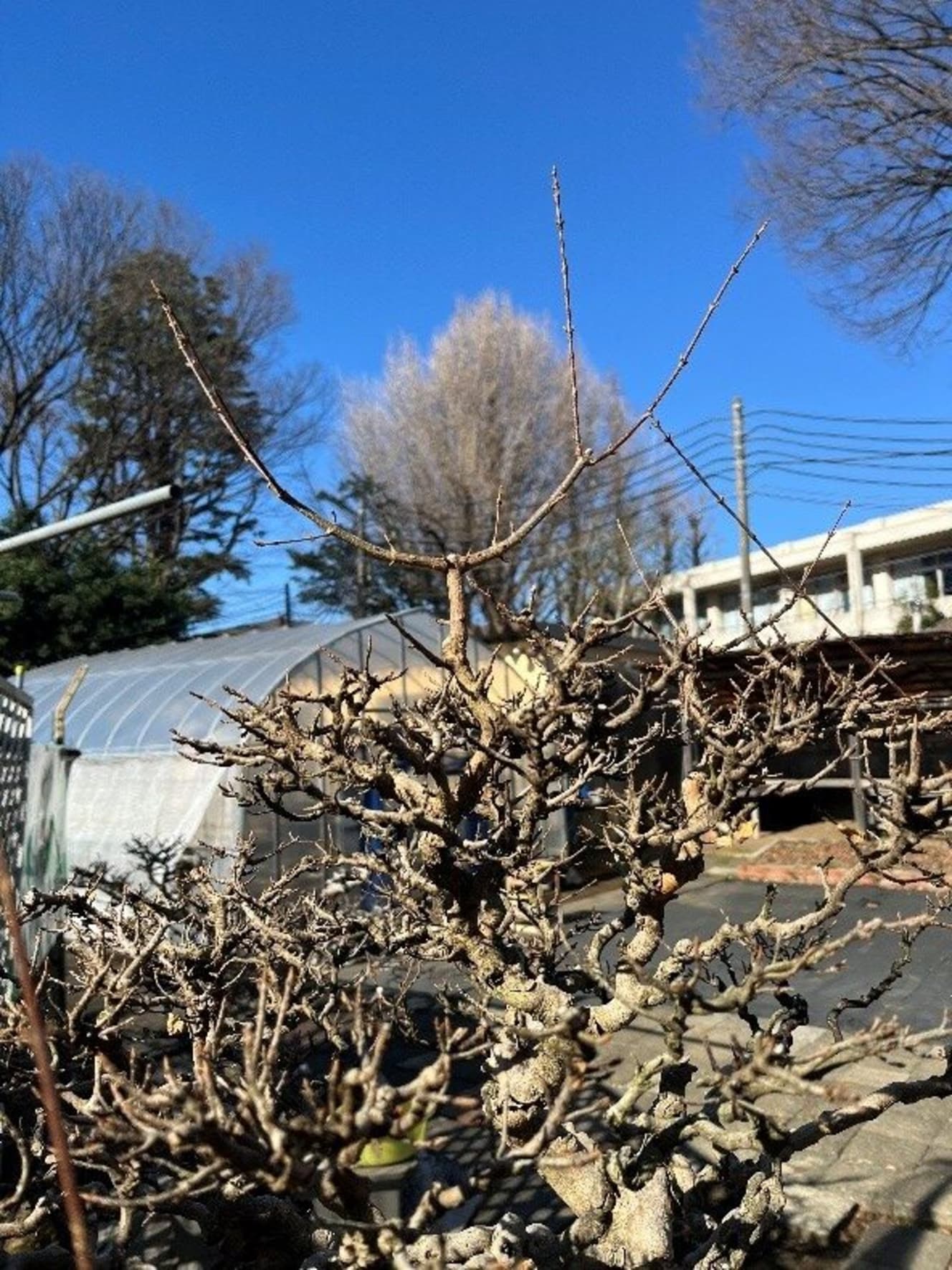
As a result, some bonsai are inspired by the world of Ghibli, with branches stretching like antennas, or using pots that wouldn’t normally be paired with pine trees. Students freely enjoy the world of bonsai.
“I think that’s great. Bonsai techniques don’t just end with bonsai. Trying different things to achieve your vision becomes your strength. I want them to keep that spirit of challenging themselves toward their goals.
Also, bonsai requires thinking in the long term—10 years, even 100 years. Looking at bonsai is like looking at time itself. In this busy world, at least when caring for bonsai, I hope they think not only about what shape the tree will take in the future, but also about what kind of person they want to become.”
Students’ future paths vary—some go on to higher education, others aim to become nurses. How will they shape their own futures?

Interview and text by: Izumi Nakagawa PHOTO: Ayumi Kagami