Sunplaza Nakano-kun Reflects on the Unexpected Messages in Ōkina Tamanegi no Shita de and Runner
The legendary band "Bakufu Slump" will hold a concert at the Nippon Budokan in August for the first time in 35 years!


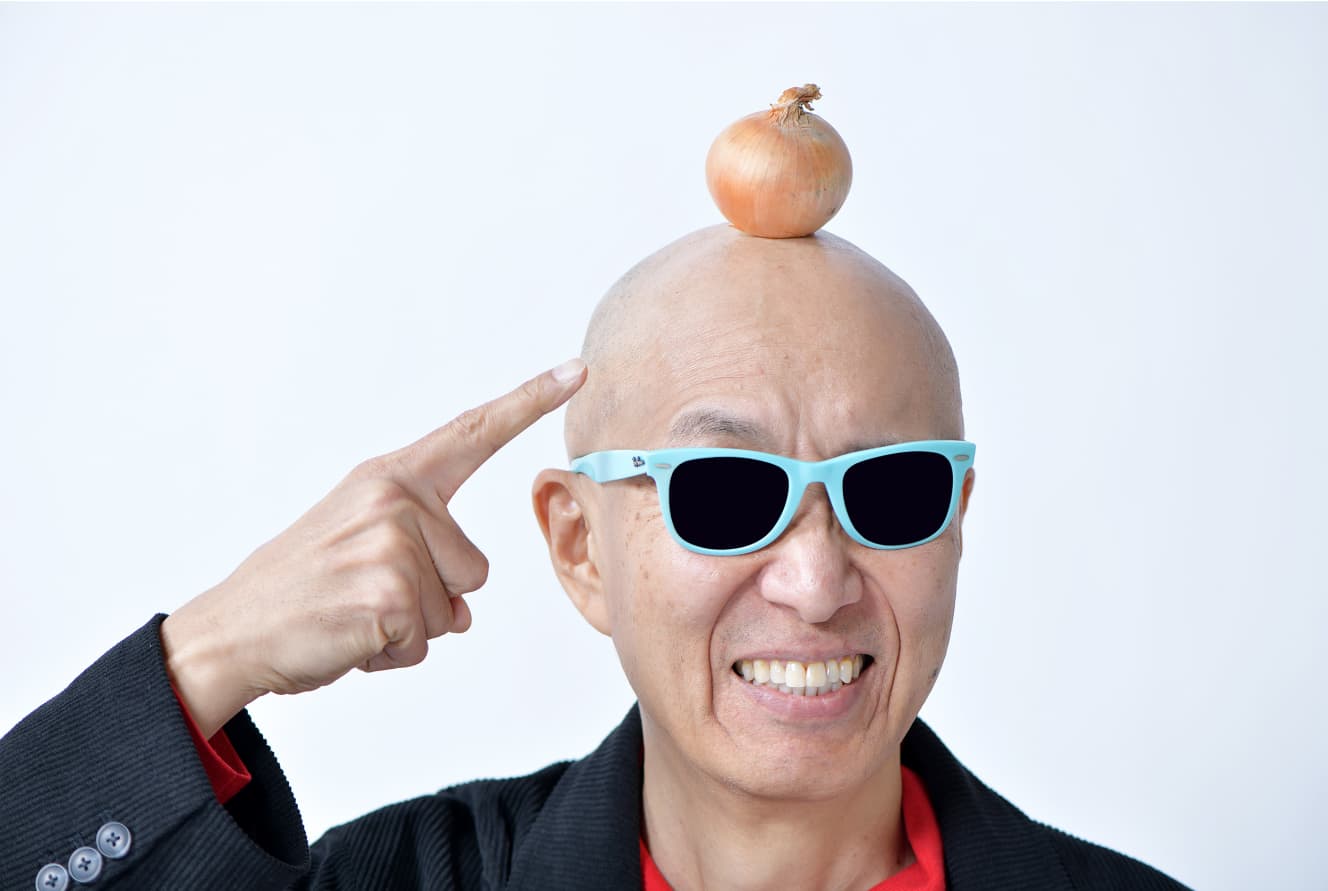
The vocalist should shave his head
“Our goal is, of course, a full house! The Budokan, with its big onion, is a special place for us,” says Sunplaza Nakano (65), lead vocalist of the rock band Bakufu Slump.
Bakufu Slump, which reunited in August two years ago for its 40th anniversary, is set to hold a concert at Tokyo’s Nippon Budokan (Chiyoda Ward) this August—the first in 35 years. The Budokan is a holy site for both the band and its fans. Their hit song Ōkina Tamanegi no Shita de (“Under the Big Onion”) references the finial (“giboshi”) atop the Budokan’s roof. Naturally, Nakano is determined to fill the arena. He also shares behind-the-scenes stories of their hit song and the origins of his iconic look: a shaved head and sunglasses.
“I went to the same high school (Chiba Prefectural Tokatsu High) as guitarist Pappara Kawai, but we weren’t particularly close. The turning point came in May 1980, just after I entered university (Waseda). I got tickets to see his band, Super Slump.
It was such a bizarre band—the members wore insect costumes like cicadas and grasshoppers while performing. Somehow, it was cool. I seriously thought, ‘I want to sing too.’ By chance, they were looking for a tall person who could fit a worm costume, and I joined as vocalist.”
Nakano wasn’t shaved at first, but a pivotal moment came before entering an amateur rock band contest:
“We were confident in our musical ability, but visuals were the problem. The band unanimously decided, ‘The vocalist should shave his head.’ Each member contributed 1,000 yen, and we went straight to the barber. I’ve kept the shaved head ever since, but it’s not easy to maintain. Hair grows naturally, so I always tidy up before concerts and interviews.”
Super Slump aimed for the “East-West” contest, a gateway for rock bands. They reached the finals in August 1980 and, in the following year, won the runner-up prize.
“At the after-party for the runner-up contest, I casually asked a female staffer, ‘What would be a good artist name?’ She said, ‘Your real name is Nakano, right? The venue is Nakano Sunplaza, so flip it and use it as your name.’ That’s how my stage name was born.”
He started wearing sunglasses thanks to a suggestion from another band’s female vocalist. At a live show, he was wearing silver-rimmed glasses, and she said, “Why not wear sunglasses today?” I resisted, but others persuaded me, saying, ‘She insists so much.’ When I tried them, the combination of shaved head and sunglasses made a strong impression and surprisingly got a positive response.”
Meeting Funky Sueyoshi and Hōjin Egawa, former band members, led to the formation of Bakufu Slump in June 1982. Though they broke audience records at live houses, major debut remained elusive.
“Well, of course. Our appeal was extreme performances, like throwing flour into the crowd. The record companies didn’t know how to handle that.”
Because the seat next door is reserved
Finally, they made their major debut in August 1984. Their borderline-forbidden lyrics and chaotic antics—using fire even on TV music programs—quickly won popularity. At the Sony Group record company they belonged to, they were dubbed one of the three major eccentric bands alongside Seikima-II and Kome Kome Club.
“At that time, young people were looking for something new. In comedy, for example, instead of the traditional boke-and-tsukkomi style, slightly edgy teasing like Downtown was popular. Bakufu Slump’s wild, innovative performances probably fit the era’s mood as well.”
They hosted a regular radio show, and by December 1985, their first Budokan concert was scheduled.
“When we finished a live at Kudan Kaikan in December the previous year, the record company staff told us, ‘The seat next door is reserved.’ The next door referred to Budokan. I was thrilled, but also felt immense pressure. Back then, rock bands didn’t draw large audiences. How could we possibly fill the venue?”
To prepare a pretext, Nakano wrote what would later become a hit song, Ōkina Tamanegi no Shita de (“Under the Big Onion”), about a pen pal who promised to attend Budokan but didn’t show up—essentially a contingency plan for empty seats.
The worry proved unnecessary; their first Budokan show was a full-house success. Another signature song, Runner, their 12th single released in October 1988, is also well known.
“While it’s generally regarded as a cheering song, I had a different intention. At the time, a member was leaving Bakufu Slump after the release of Runner. Having been on my high school track team, I pictured his departing figure and wrote Runner as a sort of autobiographical reflection on the band. When it became the insert song for the TV show Tensai Takeshi no Genki ga Deru TV!! (NTV), people interpreted it as a youth anthem—it was a strange sensation for me.”
Though Bakufu Slump was hitting success after success, April 1999 marked a turning point: they temporarily suspended activities.
“We were extremely busy with TV appearances, nationwide tours, recording, and writing songs—so busy that I barely remember it. Then, Funky Sueyoshi, our drummer, said he wanted to work in China. He was fluent in Chinese and loved the country. We were exhausted too, so we agreed, ‘Let’s take a break and do what we want.’”
The reunion two years ago was initiated by Nakano.
“It was our 40th anniversary. It’s better for the fans to have all members active together than to celebrate alone. Sueyoshi, based in China, conducted a ‘Japan-China Friendship LIVE’ tour. This year, we have the Budokan show in August. I absolutely want to make this commemorative live at a memorable venue a success!”
Under the big onion a new legend of Bakufu Slump is being born.


From the February 20/27, 2026 issue of “FRIDAY”
PHOTO: Mitsutoshi Watanabe