Pacific Coast Lake Dries Up Amid Drought, Boat Shops Forced to Halt Operations
Local Photo Report


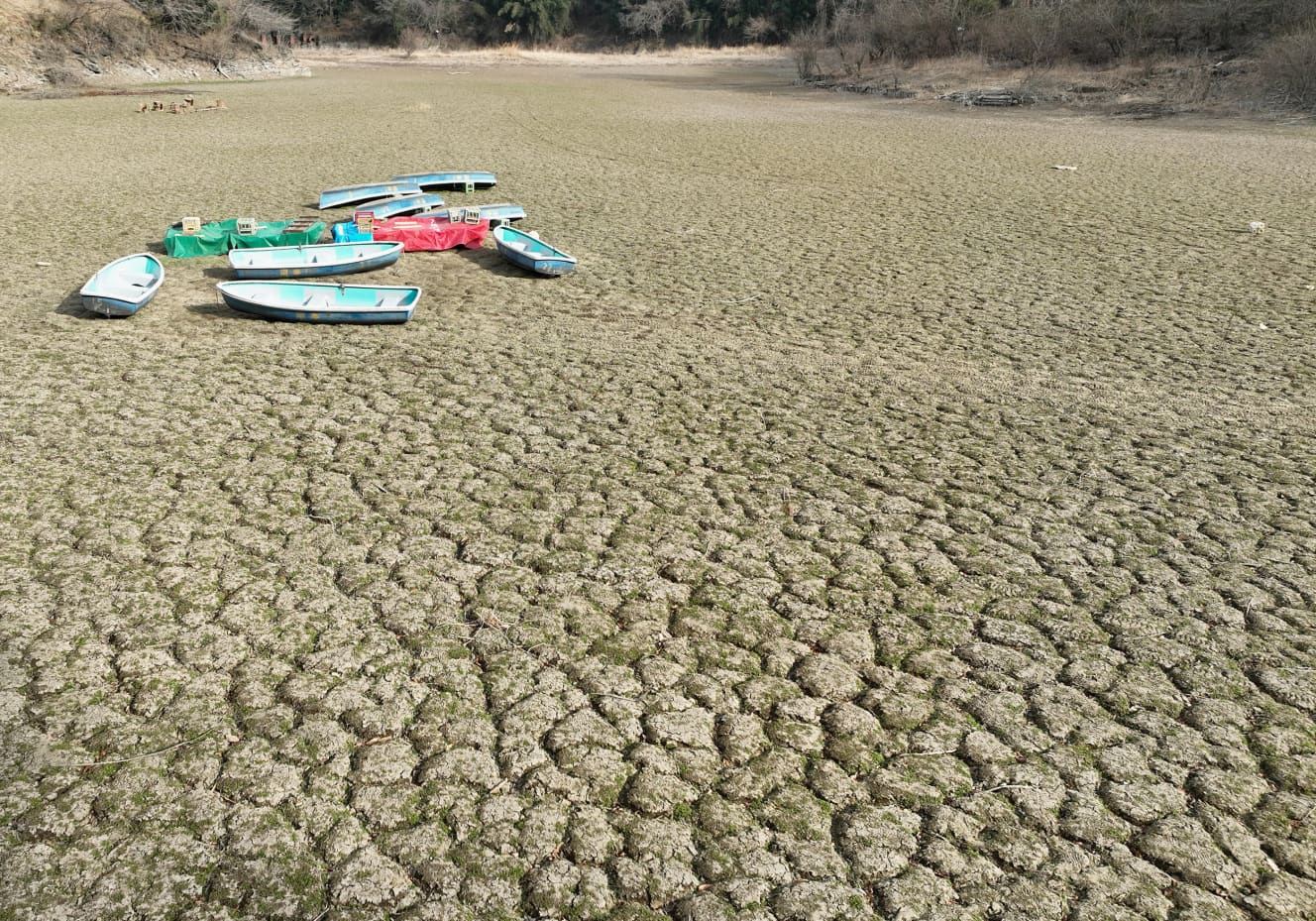
A sunken village emerges!
Until just a few months ago, Tsukui Lake in Sagamihara, Kanagawa Prefecture, was full of water, but now it has dried up, exposing its cracked lakebed.
The photo above shows the drastically lowered water level caused by record low rainfall. A man who runs a boat rental business on the lake expressed his frustration:
“With almost no water in the lake, we haven’t been able to put boats out since the end of November last year. Normally, this season brings customers for wakasagi (smelt) fishing, but the drought has made it impossible to do business. Last summer there were few typhoons, and now the lack of rain has dried up the lake. All five boat rental shops on Tsukui Lake are closed. This has never happened before.”
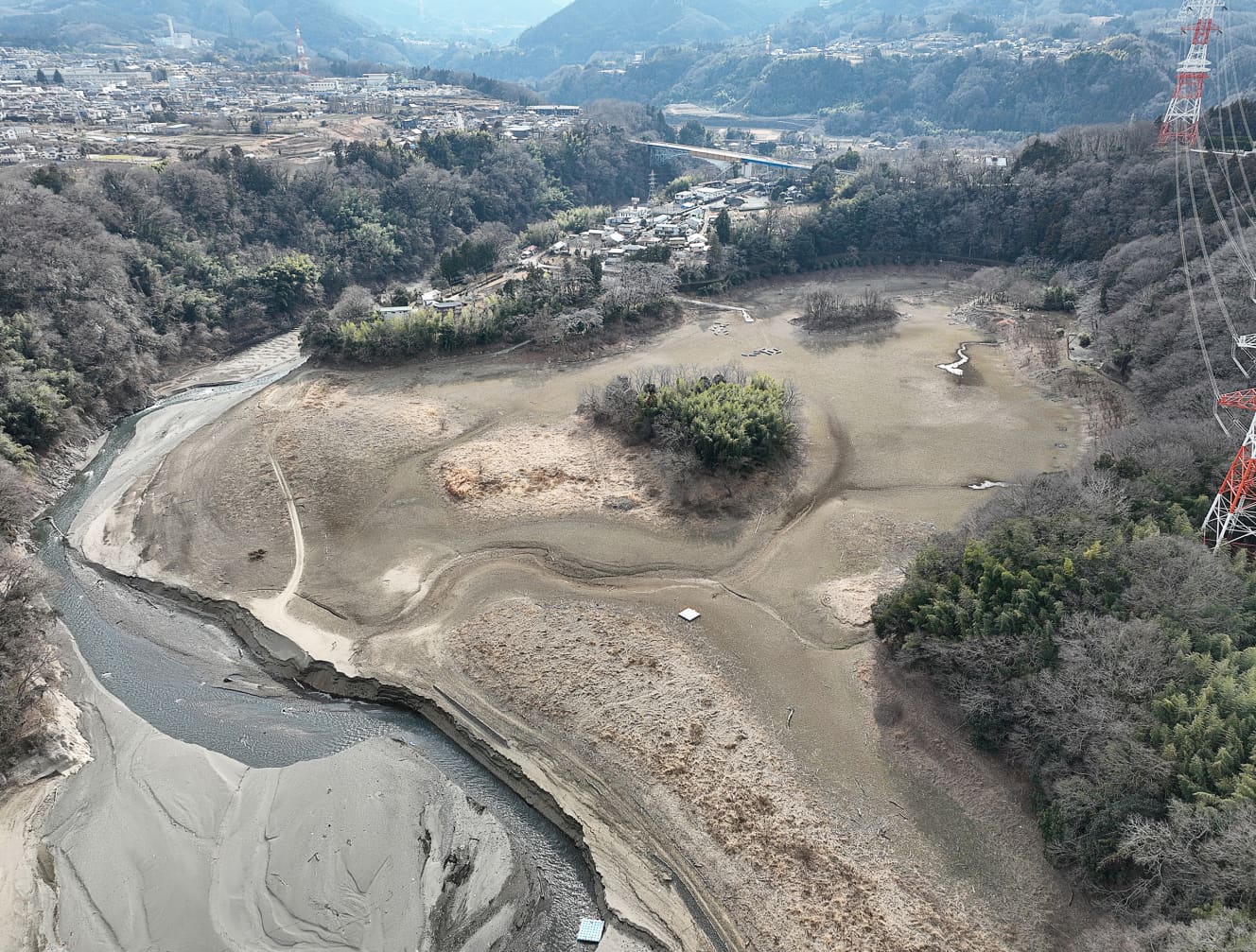
Walking downstream from the former boat dock, shells and nets lay on the ground, evidence that this had once been water. The first glimpse of water appeared about 400 meters ahead, where the river flows into the dam’s embankment.
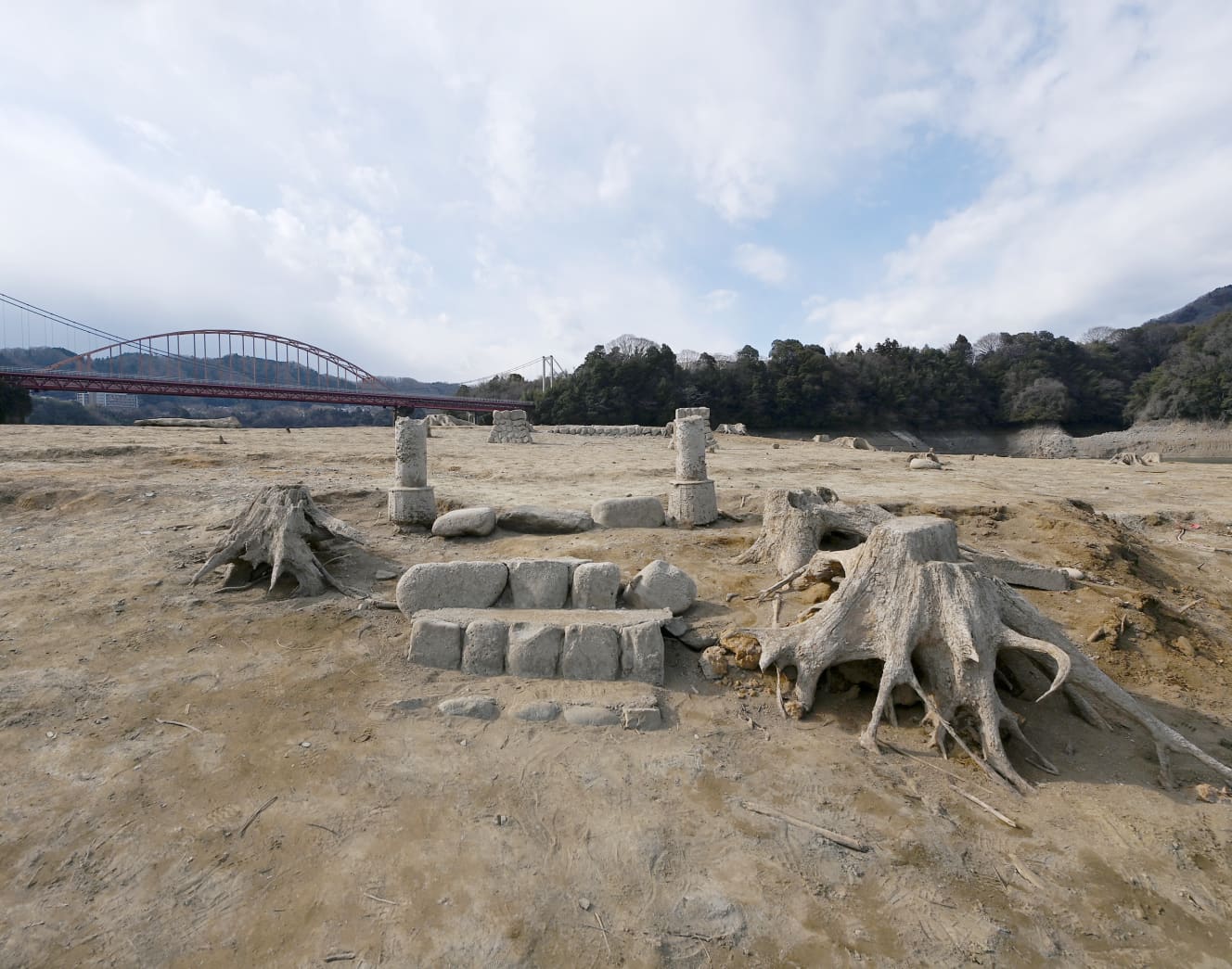
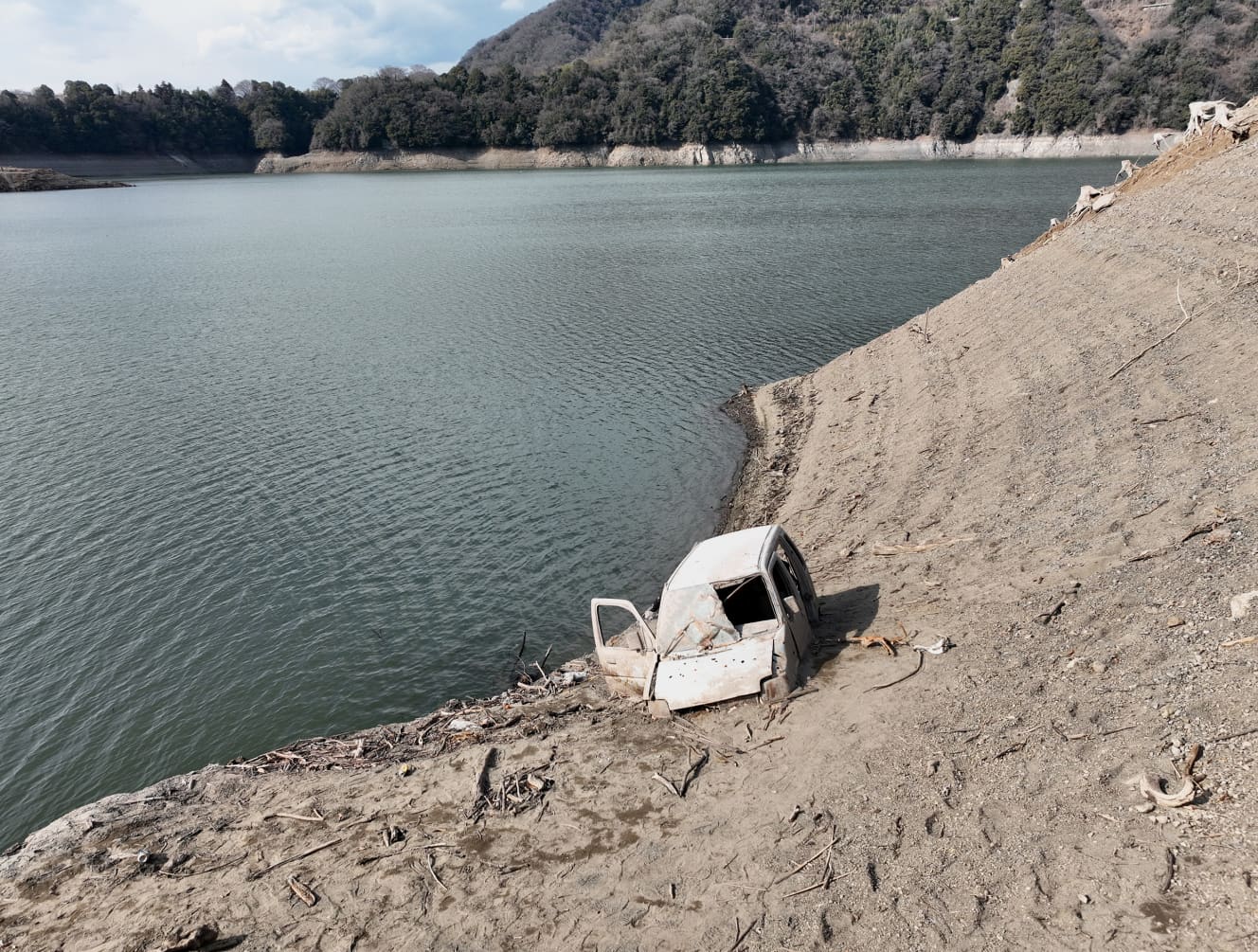
Because Tsukui Lake is a reservoir, remnants of villages submerged when the dam was built around 60 years ago have reappeared. Stone structures and steps, likely the remains of a shrine, along with tree roots, are visible. Additionally, a decayed old car, presumably illegally dumped long ago, is partially buried on the opposite shore. Many spectators with cameras came to see the rarely exposed lakebed.
As of February 4, the water level of Tsukui Lake had dropped to 19%, and the overall Sagami River dam system, to which the lake belongs, had a storage rate of only 42%. An official from the Kanagawa Prefecture Sagami River Dam Management Office explained:
“The lake’s water level is about 20 meters below full capacity. This is the lowest winter level on record. The cause is last year’s low rainfall, especially from October onward, which was roughly half the usual amount.”
Such droughts in dams and lakes are occurring across Japan, particularly on the Pacific side.
At the Ōdo Dam in Kōchi Prefecture, the water level reached zero for the first time, triggering emergency water intake. At Lake Kawaguchi in Yamanashi, the hexagonal hall on an islet has been connected to land since last spring. According to the Japan Meteorological Agency, rainfall in January was the lowest in 80 years since records began in 1946 across regions including Tokai, Kinki, Shikoku, and northern and southern Kyushu.
Meteorologist Masamitsu Morita explains:
“The cold air near the Arctic split into two streams, one of which flowed over Japan. The persistent cold strengthens the winter pattern, preventing low-pressure systems from approaching. As a result, heavy snow falls on the Sea of Japan side, while the Pacific side sees very little rain. Meanwhile, the other stream caused a severe cold wave in the U.S.—a rare global abnormality.”
According to the Meteorological Agency, the extreme dry conditions on the Pacific side are expected to continue through February, prompting calls for water conservation in Tokyo, Aichi, Kyoto, and other areas.
From the February 20/27, 2026 issue of “FRIDAY”
Reporting and writing: Masayoshi Katayama (Journalist)