Overconfidence leads to chaos in Hakone snowstorm — travelers stuck for 10 hours


〈Last weekend, central Tokyo was wrapped in spring-like warmth. However, from midweek onward, a winter pressure pattern returned, keeping Tokyo’s minimum temperatures in the low single digits. In the mountain areas, snowfall was forecast, making it premature to think winter is over. This winter, our reporter personally experienced the importance of preparation—〉
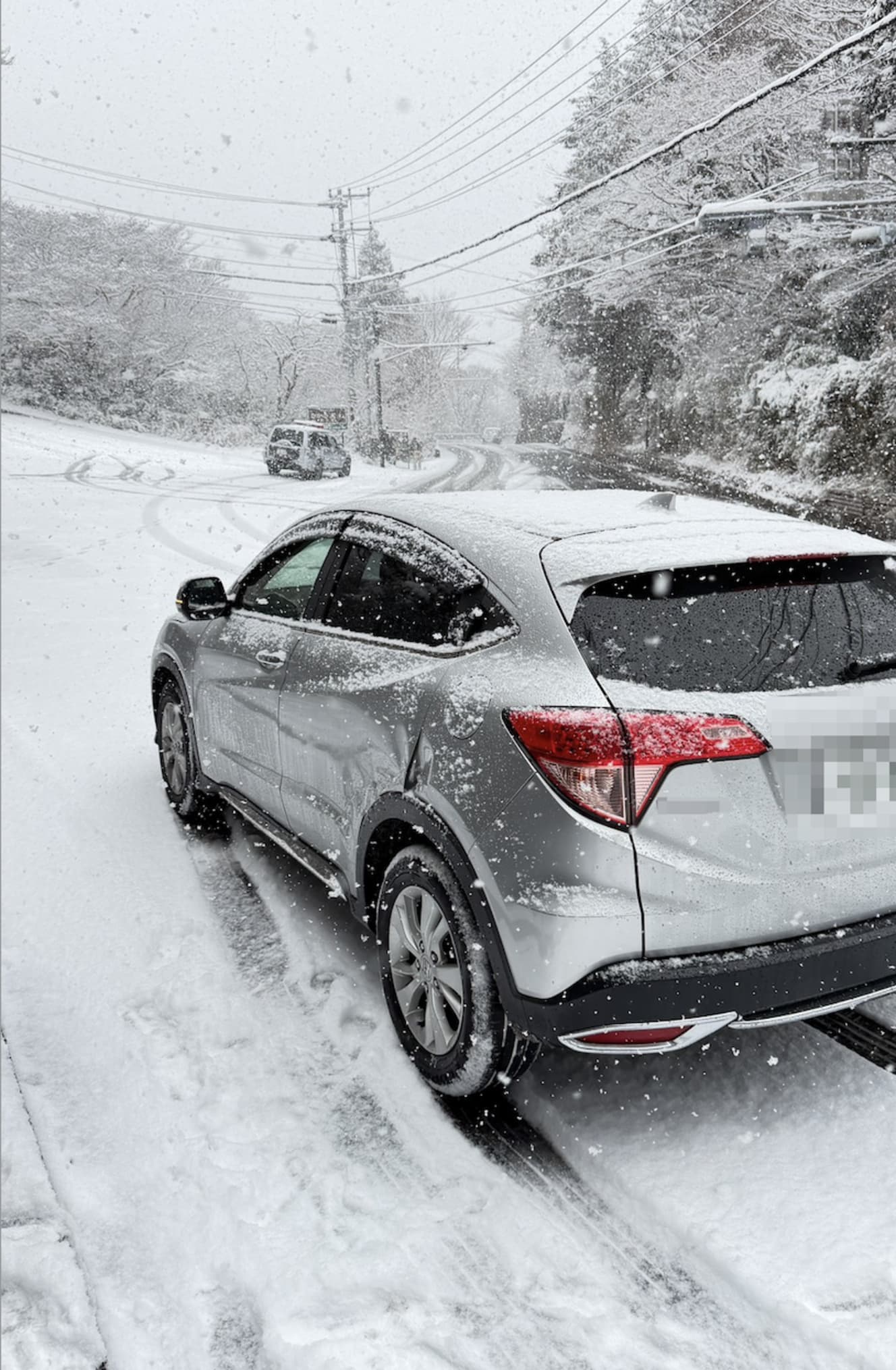
Suddenly, the sensation of the ground disappeared
〈Extreme cold in Hakone, accidents on icy roads. Stranded overnight〉
On February 8, when snow also piled up in Tokyo, many people may have seen footage of vehicles stranded in Hakone (Ashigarashimo District, Kanagawa Prefecture) on TV with headlines like this. Our reporter was actually caught in that scene.
On the previous day, February 7, the reporter and a colleague drove to Hakone for an urgent assignment. Because it was an emergency, the car still had normal (non-winter) tires, but just past noon, the sky was still bright, and the reporter felt no urgency.
The anomaly began after passing the Hakone Open-Air Museum, on the mountain road from Kowakudani to Motohakone along Route 1. Powdery snow quickly turned into large flakes, painting the road white. The hazard lights were turned on, the car shifted to low gear, and the speed dropped to under 10 km/h, but on the narrow mountain road, there was no room to turn back.
Just past 1 p.m., as the descent began, the reporter saw a car stuck after hitting a utility pole ahead. While the car in front swerved into the opposite lane to get around, the reporter also tried to avoid it—at that instant, the tires lost all grip, and the sensation of the ground vanished from the steering wheel. Pressing the brakes only activated the ABS (anti-lock braking system), and the car wouldn’t stop. Slowly sliding into the stuck vehicle, the reporter finally came to a halt after making contact.
Rushing to apologize to the stuck driver, there was no sign of anger from the man in his 40s. He was also busy dealing with his own accident and seemed resigned, understanding this situation as unavoidable.
Looking around, hazard-lit stranded cars were scattered along the slope. Nearby, police cars were handling other accidents. An officer warned, “Driving further on normal tires is dangerous,” and strongly advised calling for a tow. They also instructed that passengers cannot ride in the tow truck, so reporters should call a taxi or other transport to descend on their own.
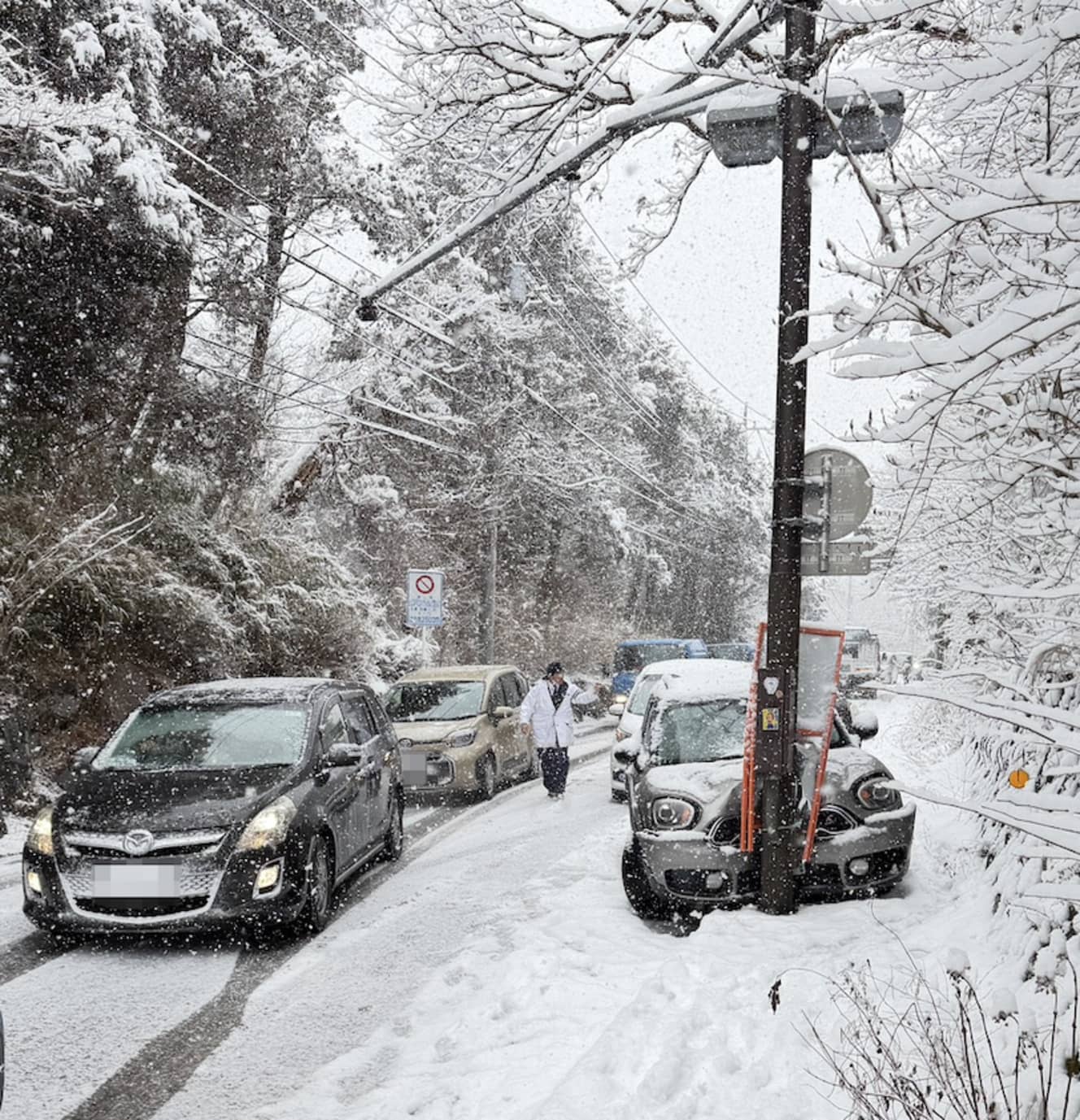
An Inevitable Result Caused by Lack of Preparation
This marked the true beginning of the stranding. The reporter frantically called insurance companies, JAF (Japan Automobile Federation), and local repair shops, but all responded that they could not guarantee arrival that day. Taxi companies were also unavailable. Completely isolated in the snowy mountains, there was no help in sight.
Just as hope was fading, a tow service finally contacted the reporter, saying they could come to the scene late at night. With nothing else to rely on, the reporter had no choice but to wait in the car. Opening the smartphone, social media was filled with updates like “Multiple slip accidents at Otome Pass” and “Ashinoko Skyline chain restrictions.” It wasn’t just the western shore of Lake Ashi where the reporter was—it seemed the entire Hakone mountains were in operational disarray.
But why did this situation become so severe? The cause lay less in the heavy snow itself than in the drivers’ ignorance of proper equipment, including the reporter. A traffic accident expert familiar with snowy road risks explained the danger of using normal tires:
“The biggest enemy is the it won’t happen to me normalcy bias. In mountain areas like Hakone, even if central Tokyo is sunny, road surfaces can be below freezing. Rubber on summer (normal) tires hardens in low temperatures, becoming slippery like plastic. Driving downhill in this state is like running full speed on ice in leather shoes. Brakes won’t work.”
The expert also pointed out that the tow truck won’t come situation was structurally inevitable.
“When a heavy snow warning is issued, requests to JAF and other road services increase by tens of times the usual volume. Priority is given to accidents involving human life, while simple stuck or immobilized vehicles are deprioritized. The idea that if something happens, I can just call someone is overly naive.
In winter, having studless (snow) tires is not just etiquette—it’s a condition for survival. Failing to do so makes you, like in this case, a perpetrator affecting not only yourself but also vehicles behind you and logistics.”
Following the expert’s warning, the reporter could do nothing but shiver in the car, trapped as a perpetrator of the dangerous situation.
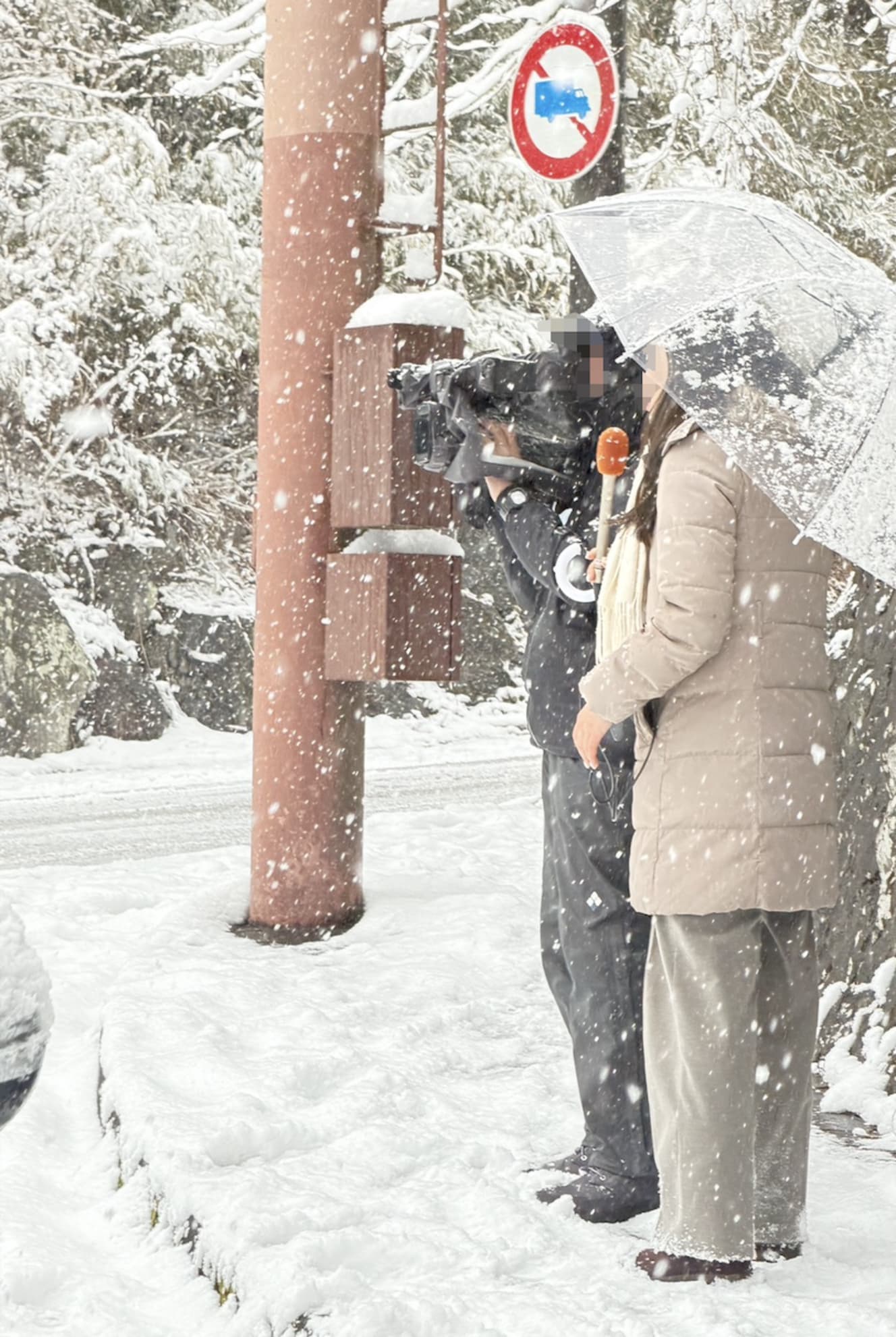
After ten hours, they finally managed to escape
As night fell, temperatures dropped below freezing. Gasoline had decreased to a range of only 25 km due to continuous use of the heater. Running out of fuel would have stopped the heater, which could be life-threatening. Leaving a colleague in the car, the reporter walked along the snowy road and spotted a gas station with lights on a few hundred meters ahead. After confirming with the shop owner that refueling was possible, the reporter carefully moved the car right after a snowplow passed and managed to fill the tank.
By the time the reporter returned, the stuck car they had hit earlier had been towed away from the scene. Even the police had disappeared, seemingly retreating before nightfall.
Even if a tow truck arrived, without securing transport for people, they would still be trapped in the snowy mountains. Having been refused by local taxi companies, the reporter relied solely on a ride-hailing app. Despite repeated searches, after a long wait it only displayed no vehicles found. Persisting, they miraculously managed to book one taxi shortly after 10 p.m.
By 11 p.m., the tow truck arrived and lifted the car with a hook. Almost simultaneously, the reporter climbed into the waiting taxi. By then, ten hours had passed since the accident began.
Later, watching news footage, the reporter felt it could easily have been them in those scenes. The images of people spending the night inside their cars could have been their own. Indeed, from the night of February 8 into the 9th, Hakone turned into even harsher conditions. Snowfall exceeded 20 cm, and temperatures dropped to minus 10°C. Around Lake Ashi, trucks and cars got stuck on slopes, and about 450 people in nearby Itō City spent the night in their vehicles.
Television reports showed cars lodged against utility poles and drivers unable to move for over 24 hours. Across the mountains of Hakone, 1,300 households experienced water outages due to infrastructure collapse. The reporter’s accident was only the prologue to this massive disruption.
The main cause of this chaos was the reporter’s misjudgment of the weather forecast and entering the mountains with normal tires. Both public assistance and personal measures can fail when limits are exceeded. Proper preparation is not only necessary for self-protection but also a minimum responsibility to prevent paralyzing infrastructure.