“Luffy Group” executive linked to robbery with famous comedians reveals shocking past



“I was at the very bottom”
The trial verdict for Seiya Fujita (41), one of the executives of the “Luffy Group,” which committed a series of wide-area robberies from 2022 to 2023, will be handed down today.
Fujita was indicted for seven robbery cases, including special fraud and the robbery resulting in the death of a 90-year-old woman in Komae City, Tokyo. He denied some charges, such as instructing accomplices to commit assaults or carry weapons. The main point of contention in the trial was whether aiding and abetting applies to robbery.
This was the second trial of an executive since Tomonobu Kojima (48), drawing attention because other executives—including Yuki Watanabe (41) and Masato Imamura (41), who went by “Luffy”—remain silent regarding the robbery cases.
However, the trial of Fujita, which began on January 26, did not fully reveal details about the robberies or the group’s internal relationships. There were moments when the judge asked Fujita about inconsistencies in his testimony, and the prosecutor reconfirmed, “You signed the statement, didn’t you?”
“I was at the very bottom among the four of us. So I had no freedom, and I was scared, so I had no choice but to follow orders.”
Fujita repeatedly said this while on the witness stand. While the prosecution demanded life imprisonment, the defense argued that Fujita was in a subordinate position and requested a fixed-term sentence.
What did the executive of the criminal group that shook Japan reveal in court? In the first part, we cover Fujita’s background and his life in the Bicutan detention center in the Philippines.
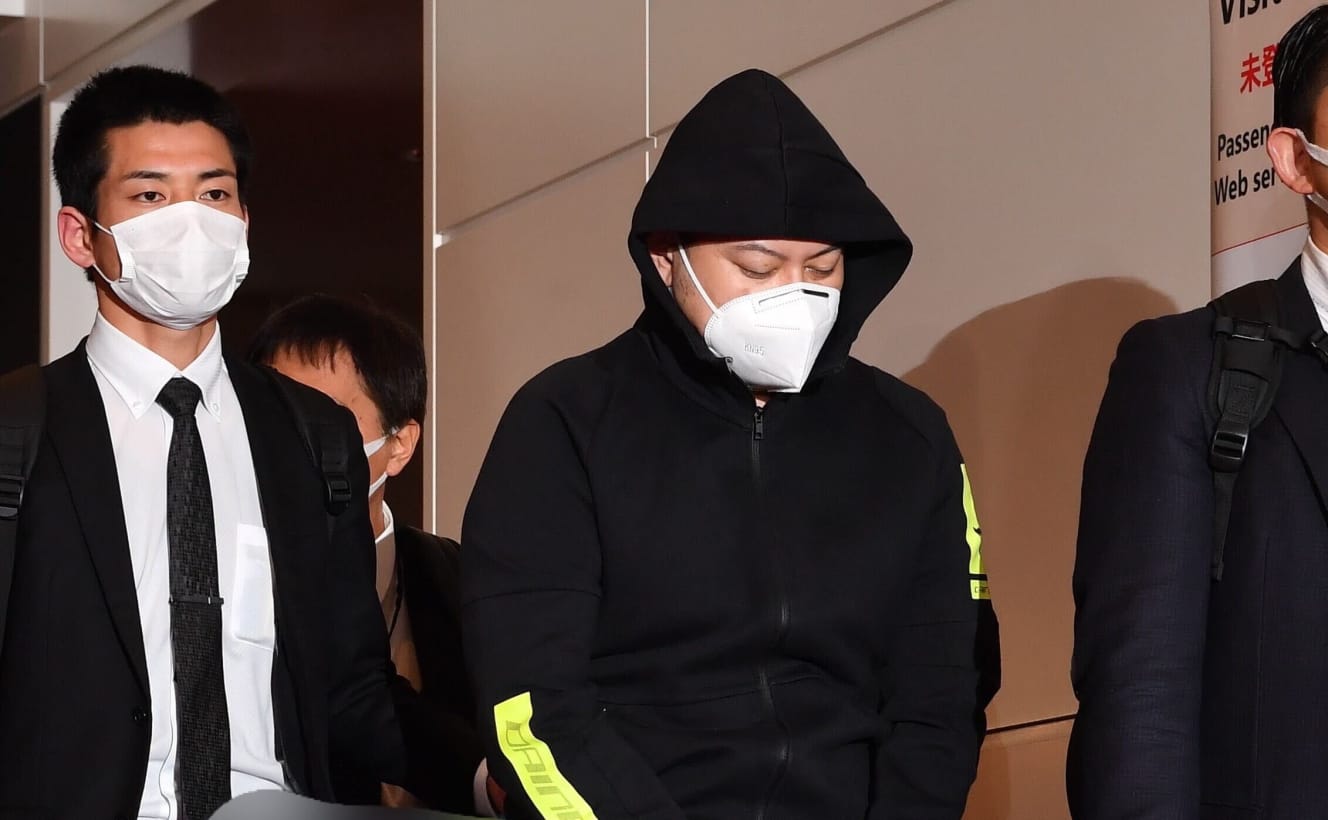
Involved in a robbery case with a popular comedian
Seiya Fujita was born in June 1984 in Hakodate, Hokkaido. He attended public elementary and junior high schools in Nanae Town, adjacent to Hakodate, and then went on to a public high school in Hakodate. After graduation, he enrolled in a welfare vocational school in Sapporo. During three years of study, he obtained multiple qualifications, including a care worker license, but after graduating he took a job at a local real estate company.
“Real estate is profitable,” Fujita reportedly thought at the time. After resigning, he moved to Kyoto for about two and a half years and worked in nightlife. At age 27, he returned to Sapporo and sought funding to start his own real estate company. Through a friend’s introduction, he met Wataru Watanabe, who would later become the leader of the special fraud group and also be involved in robbery cases.
“I want to start a real estate company. I need money, so if there’s a good job, please introduce it to me,” Fujita reportedly said.
Watanabe suggested that Fujita work at Watanabe’s chat-lady office. A chat-lady service involves men interacting with women online through chat.
Not long after, Watanabe bought a dormant company, and he and Fujita began running multiple businesses together. They managed the chat-lady service, worked in real estate, ran a call center, acquired rights to hot springs, sold water, and operated five to six bars, among other ventures.
However, in August 2012, Fujita’s downfall began when he and Watanabe broke into the home of a host in Sapporo and stole a safe containing 10 million yen. For this incident, Watanabe received a prison sentence of 1 year and 2 months, while Fujita, who was on probation for another assault case, was sentenced to 3 years and 6 months. Fujita told the court:
“The boss (Watanabe) said his ex-girlfriend had been assaulted by the host and had her valuables taken. The boss told me, ‘We’ll get the money back,’ and so he, I, a bar employee who is now a popular comedian (note: Fujita revealed the group name and stage name in his statement), and one other person entered the house just to talk things over.
The host wasn’t home, so we decided, ‘Let’s take it and sell it.’ Later, the boss told me, ‘You were the main culprit,’ trying to pin the blame on me. I couldn’t accept it, but he said, ‘I’ll make sure there’s money so you won’t be in trouble if it comes out,’ and I gave in.”
After being released at 33, Fujita worked as a construction worker at a demolition company run by a friend and also traded in FX, earning some profit.
However, he suffered a major knee injury, tearing his cruciate ligament at work, with a recovery period of one year. Feeling down from the injury, in July 2019, he said he traveled to the Philippines for a change of pace and to a place where English could be used, which he claims led him to join the criminal organization.
Desperate Life in the Detention Center
Fujita claimed that his visit to the Philippines was purely for travel. After arriving, he coincidentally encountered Watanabe at the casino where Watanabe primarily stayed, and ended up working as a fraud recruiter at Watanabe’s invitation. Fujita recalled, “The boss I met at the casino had become a completely different person compared to the Sapporo days.” According to Fujita, he officially joined Watanabe’s organization as a recruiter in September 2019.
Fujita quickly achieved significant results within the group and was regarded as a potential executive within a few months. However, the position of recruiter was low in the hierarchy, and he stated that there was a huge gap between me and Watanabe. Regarding the money obtained from special fraud, Fujita claimed that of the 120 million yen in promised salary, 90 million yen remained unpaid.
In February 2021, Fujita experienced what he described as a fabricated arrest. He was detained by immigration officers at a hotel in the Philippines. By April, he was placed in the Bicutan detention center, the same facility linked to the wide-area robbery incidents. Around that time, he reunited with Imura, Watanabe, and Kojima in the detention center, and the four began conspiring in the robbery cases.
“It was a place of despair beyond imagination,” Fujita described Bicutan. Inside, he struggled daily just to survive. Growing frustrated, he planned an escape to Spain using connections he had. This required large bribes for the detention staff and funds for the escape.
However, after being detained, it became difficult to generate funds through special fraud as before. Fujita and Watanabe tried to raise escape funds through schemes like methamphetamine sales, but all attempts failed. Their attention turned to Imura, who was living lavishly inside the detention center.
In May 2022, a luxury watch worth 69 million yen was stolen from a jewelry store in Kyoto. Imura was involved as a mastermind in that incident.
“Bring Imura into the group, get him addicted, and take over his profits,” Fujita said, marking the beginning of his involvement in the wide-area robbery cases.
The second part of the article summarizes Fujita’s testimony regarding the wide-area robbery incidents that shocked Japan.
Interview and text by: Shimei Kurita PHOTO: Shinji Hasuo