Playback ’96] Three Questions Raised by the Mother of the Victim… The “Dark Side” of the Tsukuba Wife and Child Murder Case Still Remains Unrevealed


A murderer treats his victim like a bad woman.
What did “FRIDAY” report 10, 20, or 30 years ago? In “Playback Friday,” we revisit topics that were popular at the time. In this issue, we take a look at the February 23, 1996 issue, which was published 30 years ago, and discuss the “3 mysteries” of the Tsukuba wife and child murders revealed by the victim’s mother before the verdict.
The Tsukuba wife and child murders occurred in October 1994. In the case, X (31 at the time), an elite doctor in Tsukuba City, Ibaraki Prefecture, had an affair with a nurse who worked at the same place of work, and afterwards, he raped his wife, Ako (31 at the time), their eldest daughter, B (2 at the time), and son, C (1 at the time) and dumped their bodies in the port of Yokohama.
Just prior to the sentencing of defendant X, FRIDAY interviewed Ryoko Moriguchi (pseudonym, 57 at the time), the mother of Ako (the descriptions in parentheses are quotes from past articles, ages and titles are those of the time).
The sentencing hearing at the Yokohama District Court was scheduled for February 22, 1996. In November of the previous year, the prosecution had sought the death penalty. In December of the same year, the defense had completed its closing arguments, and it was expected that X would be sentenced to death or life imprisonment.
In an interview with this magazine, Ryoko began by saying that the death penalty was a foregone conclusion.
She said, “I absolutely cannot forgive X. Even if he is sentenced to death, it does not mean that the three of them will come back. Above all, I feel sorry for the two children that Aiko gave birth to and that her ex-husband is currently raising. I don’t believe that X is truly sorry for what he has done to me and my grandchildren. At the trial, X treated Ako like a bad woman. When I think of how selfish and arrogant she was, it really makes my hair stand on end.
What frustrated Ryoko more than anything else was that the prosecution did not deny the defendant’s claim that the crime was unplanned and impulsive, nor did they make it an issue at trial. The following is a summary.
The three were murdered during the night!
“On October 28, 1994, after having dinner at home at around 9 p.m., Ako and her two children went to bed in a bedroom on the second floor, leaving the defendant on the first floor. At around 4:00 a.m. the next morning, Ako woke the defendant, who was sleeping on the first floor, and accused him of having a quarrel with her about a nurse at the hospital where the defendant was engaged to be married.
Ako took a kitchen knife and a rope and said, “You take the rope and I’ll hang myself with it,” and wrapped the rope around her own neck and approached the defendant. When Ako told the defendant that she would appeal directly to the director to have the defendant quit the hospital, the defendant decided to kill her. The defendant strangled the rope around Ako’s neck, then held her nose and mouth with both hands and suffocated her to death. Then he suffocated B and C, who were sleeping at 8 and 9 a.m., respectively.
However, Ryoko says she has three questions that just don’t add up.
First, the issue of what they were wearing when they were killed: “On the night of the 28th, one of Ako’s girlfriends was visiting, and the clothes she was wearing when the three bodies were found were the same as the clothes her girlfriends last saw her wearing. It is absolutely inconceivable to me, let alone myself, that Child A would let her children sleep in their regular clothes.
Then there is the matter of the chocolates left in C’s stomach and the silver paper that wrapped the chocolates. The girl friend saw that when C ate the chocolate on the night of the 28th, he also ate some of the silver paper; if C was killed in the morning, there would be no such thing as fast-digesting chocolate left. I can’t help but think that he lied about killing her impulsively on the morning of the 20th in order to lighten his sentence.
Furthermore, the same female friend of mine clearly saw the rope and the iron array that were used to commit the crime at her daughter’s house one month before the murder.
What happened to the family on the night of October 28, the night of the incident? After a great deal of research, Ryoko came up with the idea that the three were killed sometime during the night of the 28th. She told this reporter as follows
I want to reveal the truth for sure. That is the only thing that supports me now.
The “truth” that was never revealed
The verdict was a betrayal of Ryoko’s expectations.
The sentence handed down to Mr. X was life imprisonment; he had fully admitted to the facts of the indictment, and the issues were focused on the circumstances of the crime.
The verdict stated , “X disposed of the body out of self-preservation, and his efforts to cover up the crime were despicable. The wife’s regret is immeasurable, and the child was the victim of the parents’ selfishness, and the grief and anger of the bereaved family is great. The responsibility of the defendant is extremely grave, and the maximum penalty may be considered.
On the other hand, the crime was not premeditated, but impulsive and accidental. After his confession, he honestly stated the facts, recognized the seriousness of the crime and the immaturity of his character, and deeply regretted and repented of his crime.
Many people may think, “If he killed three people, can’t he get away with the death penalty? Many people might think that if he killed three people, he could not avoid the death penalty.
However, criminal cases based on marital discord are often given relatively light sentences compared to ordinary cases. This is based on the idea that “the law does not enter the home,” as there are circumstances in marital problems that only the couple can understand and that cannot be resolved by law alone.
Ms. Ryoko held a press conference after the court closed and expressed her regret with tears streaming down her face.
I am not satisfied. There are many things that I still don’t agree with. I would like to have those things clarified.
Both the prosecution and the defense appealed, but the case was dismissed, and the verdict became final on February 28, 1997.
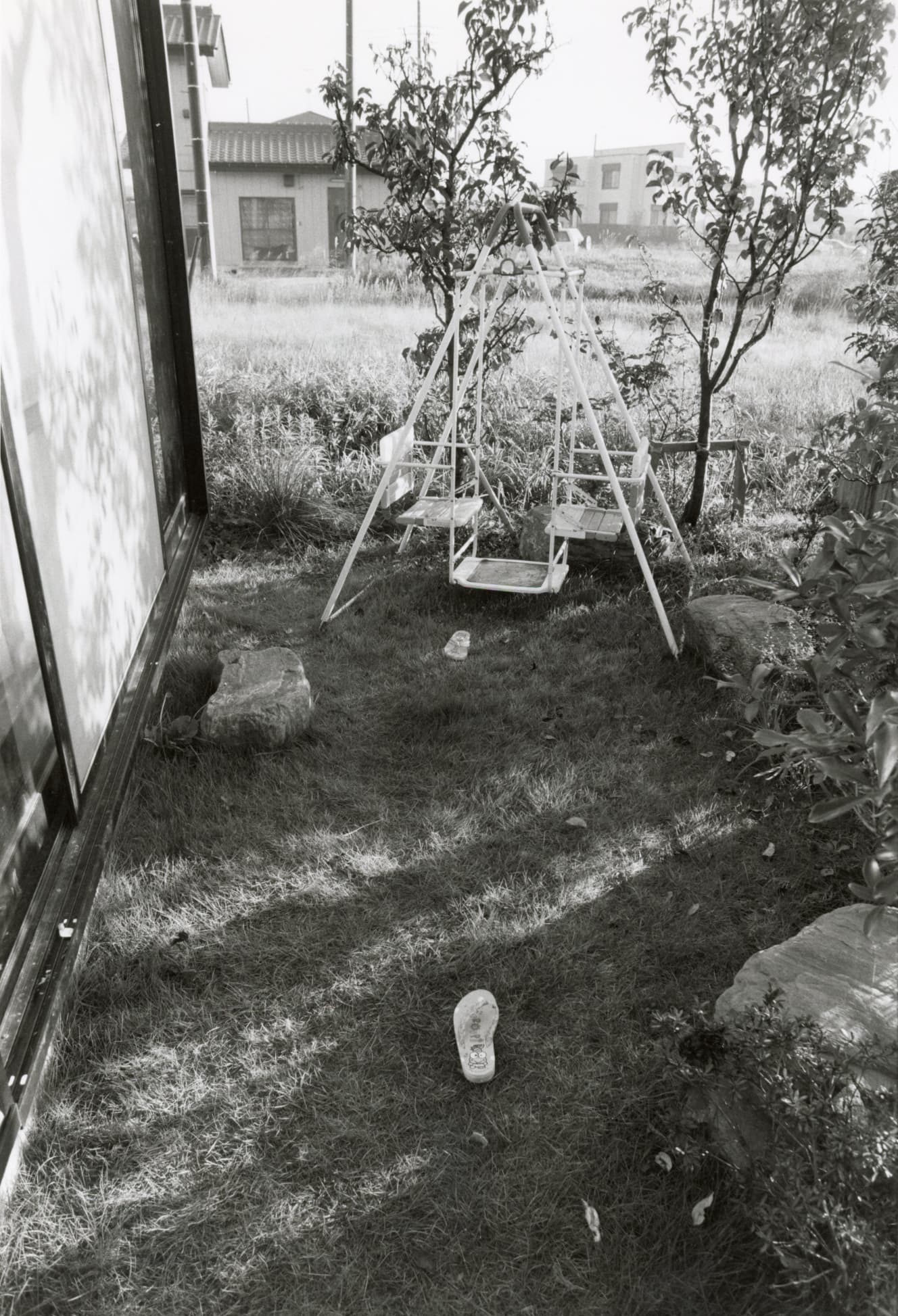

PHOTO: Hiroaki Fujiuchi (1st photo), Hiroyuki Ozawa (2nd and 3rd photos)