“I was afraid I would die” — Man who abandoned a high school girl in Aokigahara speaks of remorse in court


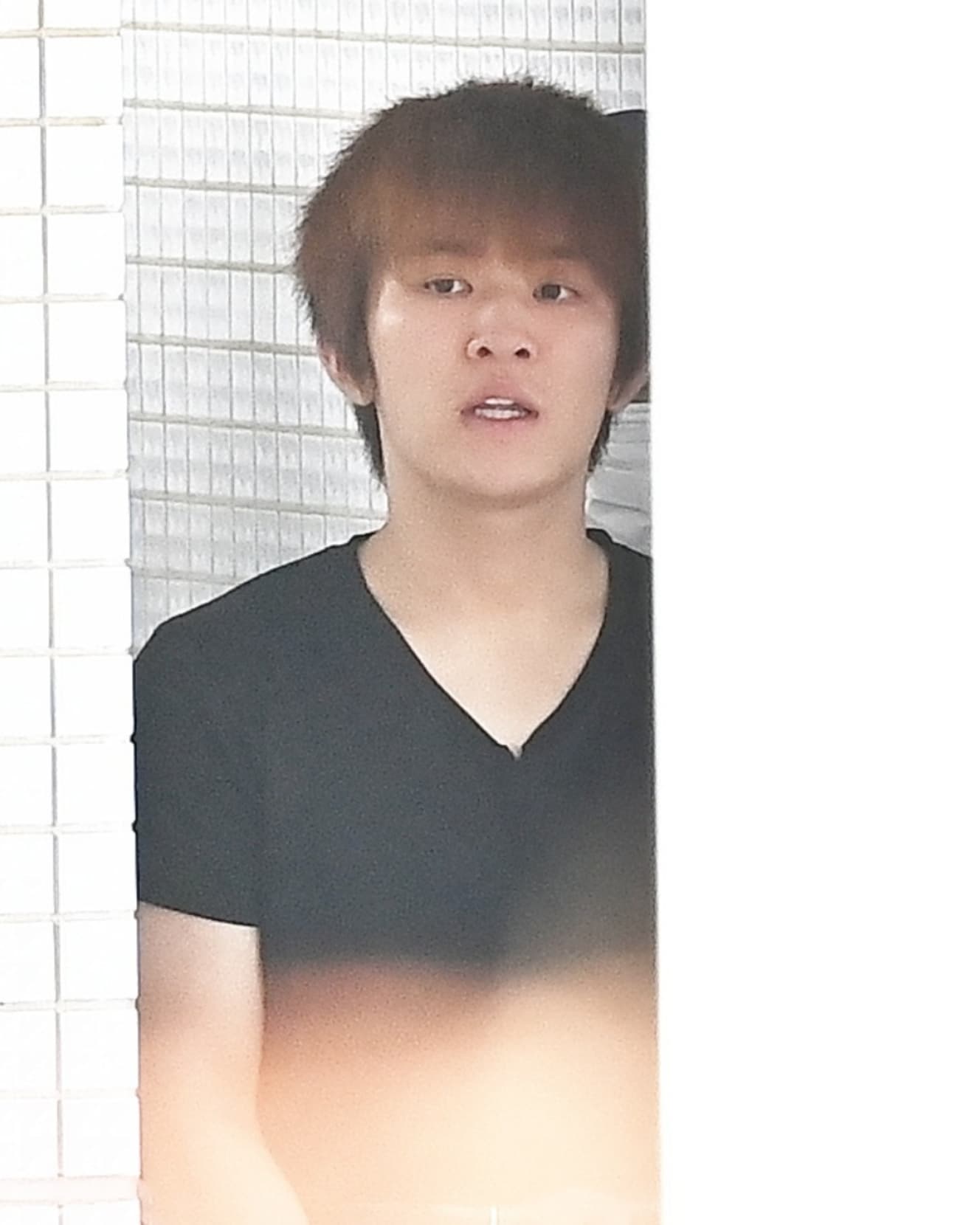
He lured a high school girl into the Aokigahara forest
“The rope came off my neck and I fell down, landing on my backside. At that moment, I thought, ‘I want to live,’ ‘I’m afraid to die.’”
The man who lured a high school girl he met on social media to the Aokigahara forest and helped her commit suicide described his feelings when his own suicide attempt failed in this way.
“On June 21, 2025, the First Investigation Division of the Saitama Prefectural Police arrested Yuto Kakuma (22), an unemployed resident of Minokamo City, Gifu Prefecture, on suspicion of kidnapping a minor after he took a high school girl A (17 at the time), whom he met on social media, away. Kakuma is suspected of luring A to Kawaguchiko Station on the Fujikyuko Line and abducting her to a parking lot near the Aokigahara forest.
Kakuma stated, ‘I thought we would kill ourselves together. It is true that I invited the high school girl and took her to the forest.’
A was found in the forest on the morning of June 15 after hanging herself, and it was believed to be suicide. After A’s guardian reported to the police on the afternoon of the 9th that she left home in the morning of the 8th saying she was going to school and has not returned, the police began searching,” said a reporter from a national newspaper’s city desk.
After the incident, Kakuma is believed to have searched on his smartphone for terms such as “Jukai news” and “Saitama missing person” to check whether the case had been discovered.
On July 10, the month after his arrest, Kakuma was rearrested on suspicion of assisting suicide. He is suspected of helping A’s suicide by, among other things, hanging a rope from a tree in the forest that he had prepared in advance. Kakuma reportedly admitted the charge, saying, “I hung the rope on the tree and created a situation in which the high school girl could kill herself.”
Kakuma, who is charged with the kidnapping of a minor and assisting the suicide of A, will be handed down a verdict on February 13 at the Saitama District Court. I would like to look back on what Kakuma has said in the hearings so far.
He also prepared a rope and other items
Regarding the suicidal thoughts he had been harboring, Kakuma stated as follows:
“I had always had a complex about my appearance — the size of my face, my facial outline, and my height — ever since I was in high school. I kept wondering why I had to keep living through such painful feelings, and thought it would be easier to die. However, I was anxious about being alone, so I thought that if I were with someone, I could end my life.”
Kakuma had previously tried to kill himself by jumping, but he was too scared to take the final step. In late May 2025, he also arranged to meet a woman to commit suicide together, but again was unable to go through with it.
Then, while posting on social media about how difficult life was and searching for someone to die with, he met A. Kakuma stated that he knew A was a high school student.
“I wanted to know her age, so I asked A and understood that she was a minor. However, I did not think she was at an age where she could not make judgments, and I believed that age had nothing to do with committing suicide.”
Kakuma promised to die together with A and called her to Kawaguchiko Station. Kakuma researched the location and the method of suicide and also prepared a rope and other items.
At around 9 p.m. on June 8, Kakuma and A met at Kawaguchiko Station. As they walked toward the forest for about two hours, they had the following conversation:
“We talked about what happens after you die — whether there is reincarnation, whether we can attain Buddhahood — we talked about those kinds of things while walking.”
They left the road, entered the forest, and hanged themselves together. However, a few seconds later, Kakuma’s rope came off his neck and he fell to the ground. Describing his feelings at that moment as stated at the beginning, he continued:
“The feeling that I wanted to live welled up inside me. I wanted to save A, but I couldn’t do anything and became scared, so I left the scene. My smartphone battery had also died, and I walked for several hours in complete darkness until I got out of the forest when it became light.”
After hiding A’s belongings, Kakuma walked to a nearby roadside station, charged his smartphone, withdrew money, and then took trains back to his parents’ home.
He said he hid the belongings because “A had said she didn’t want her body to be found, and I also felt guilty about what I had done.”
And at times, sobbing, he offered the following apology:
“If I hadn’t written things like ‘I want to die’ on social media and had consulted my family about my worries, I would not have involved A. I regret it. If A had lived, she surely would have had happy things in her life, but I ended it. I am truly sorry.”
“Please give him the heaviest possible punishment.”
During the trial, the attorney read aloud a victim impact statement from A’s mother.
From a young age, A seemed to struggle with maintaining appropriate distance from others and appeared to be living with a sense of difficulty in life. The statement included the following:
“It seemed she was always harboring suicidal thoughts, and there were times when she confided in me, saying, ‘I sometimes feel that I shouldn’t be alive.’ As a parent, she was by no means an easy child to raise. Even so, I loved my daughter dearly and truly cherished her.”
Despite this, A worked hard at her part-time job and her studies, and dreamed of getting a job and living on her own after graduating from high school. A’s mother also expressed her current feelings in the statement:
“If my daughter were alive, she would be 18. Recently, catalogs for coming-of-age ceremony furisode have started arriving, and it makes me sad as if her absence is being forced upon me.”
The statement ended with anger toward the defendant:
“Even if the defendant is punished, my daughter will not come back. Even so, I want the defendant to receive the heaviest possible punishment.”
In the closing argument, the prosecution sought three years of imprisonment, stating that there is no room for leniency in his attitude of disregarding another person’s life and that he should have stopped the victim’s suicide, yet he committed these crimes, which must be condemned.
On the other hand, the defense argued for a suspended sentence, saying, “Through the first experience of prolonged physical detention following his arrest, he has deepened his remorse and come to appreciate the value of life,” and that it can still be said that it is fully possible for the defendant to rehabilitate within society, and we respectfully request a lenient judgment with a suspended sentence.
While heading toward the forest, each time they stopped to rest, A was sending LINE messages somewhere or talking with someone on her smartphone. She may have been confused by a situation from which she felt she could no longer turn back, trying somehow to ease her fear.
What kind of judgment will the judiciary deliver to the defendant who brought about the worst possible outcome?
Japan Suicide Hotline Federation
Phone: 0570-783-556 (10:00 a.m. – 10:00 p.m.)
Yorisoi Hotline (Social Inclusion Support Center)
Phone: 0120-279-338 (24 hours; from Iwate, Miyagi, and Fukushima the last digits are 226)
Ministry of Health, Labour and Welfare “Unified Dial for Mental Health Consultation” and SNS consultation
Phone: 0570-064-556 (hours vary by municipality)
https://www.mhlw.go.jp/stf/seisakunitsuite/bunya/hukushi_kaigo/seikatsuhogo/jisatsu/soudan_info.html
List of consultation services that support life (by prefecture and ordinance-designated city)
https://jscp.or.jp/soudan/index.html

Interview and text: Nakahira Ryo PHOTO: Shinji Hasuo