LDP aide reveals how Komeito supporters mobilize votes via newspaper purchases


In the February 8 election, the Liberal Democratic Party secured 316 seats, exceeding two-thirds of the total on its own—a postwar record for a single party and a resounding victory
Meanwhile, the new party formed by the Constitutional Democratic Party and Komeito, the Centrist Reform Alliance (hereafter “Centrist”), saw its seats drop dramatically from 167 before the election to 49—a loss of over 100 seats. Breaking down the results, the Constitutional Democratic Party won 21 of its 146 expected seats, while Komeito candidates secured 28 seats, surpassing the 24 they won in the 2024 election. This meant that Constitutional Democratic candidates bore the brunt of the losses. Komeito candidates dominated the top spots on proportional representation lists across all 11 blocks, ensuring all were elected.
“It was decided at the party’s founding that Komeito candidates would withdraw from single-member districts and occupy the top of the proportional lists. The idea was that, by leveraging Komeito’s organizational strength to support Constitutional Democratic candidates in single-member districts, measures to favor Komeito in proportional representation would be understood.
However, Constitutional Democratic candidates struggled in the single-member districts. By yielding the top proportional list positions to Komeito candidates, they were unable to secure proportional seats, leading to widespread resentment,” said a political reporter for a national newspaper.
In reality, even former ministers and party leaders from the Democratic Party era were defeated. Questions have arisen among the defeated members about whether the so-called organizational votes of Komeito and its supporting Soka Gakkai, reportedly 10,000–20,000 votes per district, were actually delivered.
Prior to the election, with the LDP and Komeito breaking their 26-year coalition, around 50 LDP representatives who had historically narrowly beaten Constitutional Democratic candidates by less than 10,000 votes were considered at risk of losing.
The expectation was that Komeito votes, which would normally go to LDP candidates, might shift to Constitutional Democratic candidates, allowing them to win in competitive districts and potentially set the stage for post-election realignment or a two-party system capable of government change.
“Although leftist forces such as the Communist Party and Citizen Alliance moved away, we expected the larger number of Komeito votes to support us. When Komeito officials gave campaign speeches, crowds of Soka Gakkai members of all ages gathered, flyers were distributed, and lines formed for smartphone photos. Even though early polls predicted an LDP landslide, we had unfounded confidence that a ‘Komeito boost’ could turn the tide at the end,” said a defeated candidate.
Did the Constitutional Democratic Party’s concessions to Komeito on policies such as national security and nuclear plant restarts drive more liberal voters away than expected? Or did the Komeito votes actually shift at all?
“Buying organizational votes by purchasing a large amount of copies of the Komei Shimbun?”
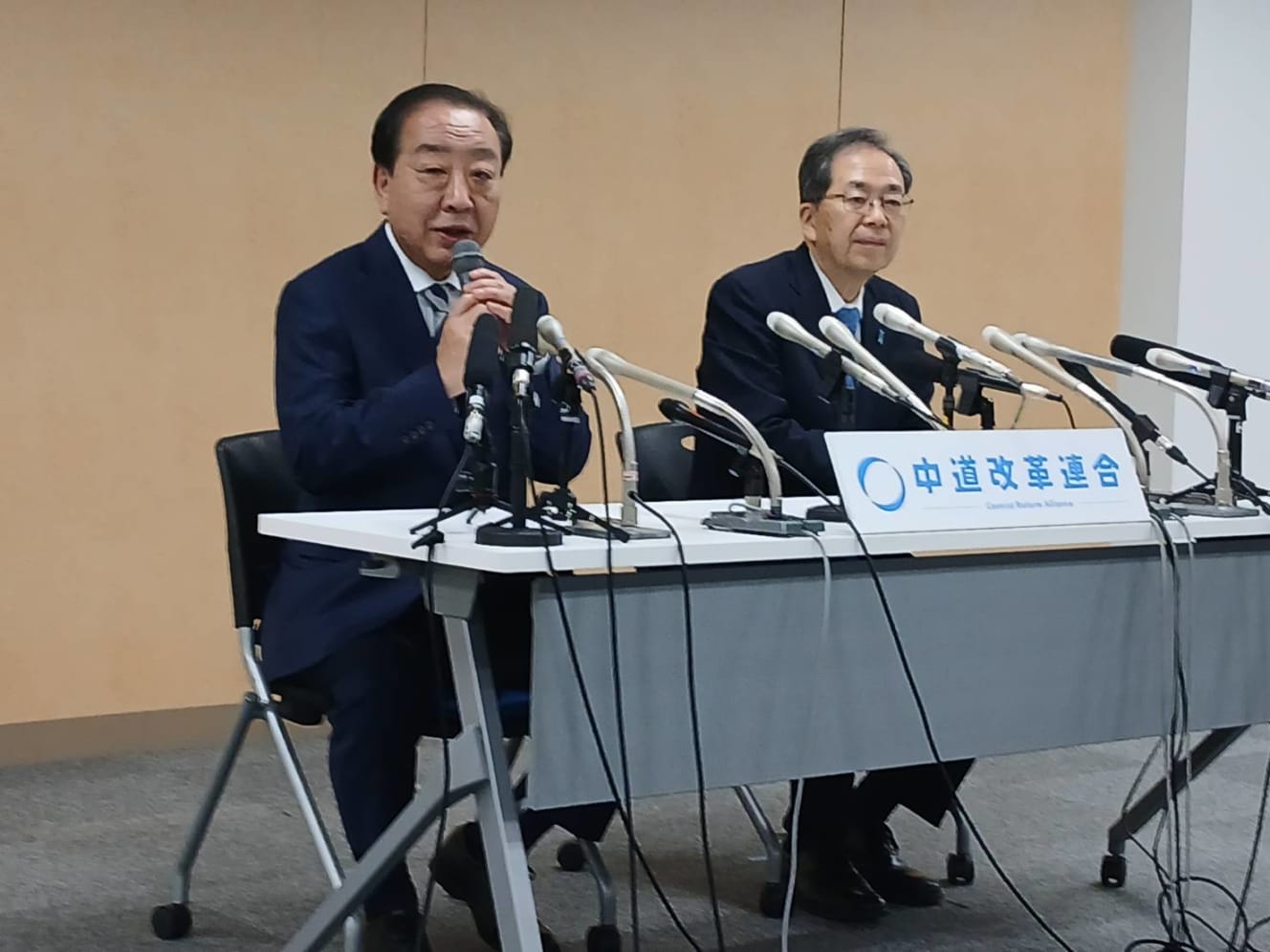
At a press conference on February 9, the day after the election, when asked whether Komeito votes had shifted in single-member districts, joint leader Tetsuo Saito (74) responded, “I believe we fully supported [our candidates],” and continued:
“We received 10.43 million votes on proportional representation. Our seats are one-sixth [of LDP’s], yet we captured half of what was a major gust for the LDP (LDP’s proportional representation votes totaled 21.03 million).”
When asked by former Minister of Land, Infrastructure, Transport and Tourism Sumio Mabuchi (65), who lost in Nara District 1 and walked to the board meeting, he said:
“We won 10.4 million proportional representation votes. That shows that [Komeito votes] did shift.”
A veteran LDP secretary from the Kansai region revealed some inside details:
“Under the LDP-Komeito coalition, we coordinated with regional Soka Gakkai block leaders to support elections by purchasing the Komei Shimbun in units of 100 copies. During elections, Soka Gakkai members also conducted phone campaigns using voter lists held by LDP city and prefectural councilors. It was unclear whether there were even 10,000 Soka Gakkai members in a given electoral district.
In this election, to get Komeito-affiliated candidates elected, they probably wrote ‘Centrist’ on the second ballot, but did they properly write the names of Constitutional Democratic candidates on the first ballot?”
Due to the sudden dissolution, only House of Representatives members left their parties and joined the new Centrist party. House of Councilors members and local legislators remain in their original parties. Joint leader Yoshihiko Noda (68) said, “We are carefully discussing this to avoid splits,” but would local Constitutional Democratic legislators, facing unified local elections in spring 2027, see benefits in joining Centrist? And how will House of Councilors members act with elections two years away? Discord is leaking from all corners.
“I apologize for involving joint leader Saito, but these two inevitably carried a sense of being outdated,” Noda self-mockingly said at the February 9 press conference. While hinting at his resignation as leader, he added that he still wanted to continue protecting the spark we’ve lit, leaving a role for himself in party management.
Within just three weeks of its founding, the Centrist party was driven to near collapse. It barely retained its position as the leading opposition party, but the road to recovery remains extremely long.
Interview, text, and photos: Daisuke Iwasaki