Seven years after Yashio sinkhole, residents still plagued by smell, vibrations, and looming danger


Seven years until restoration. Despair striking the residents
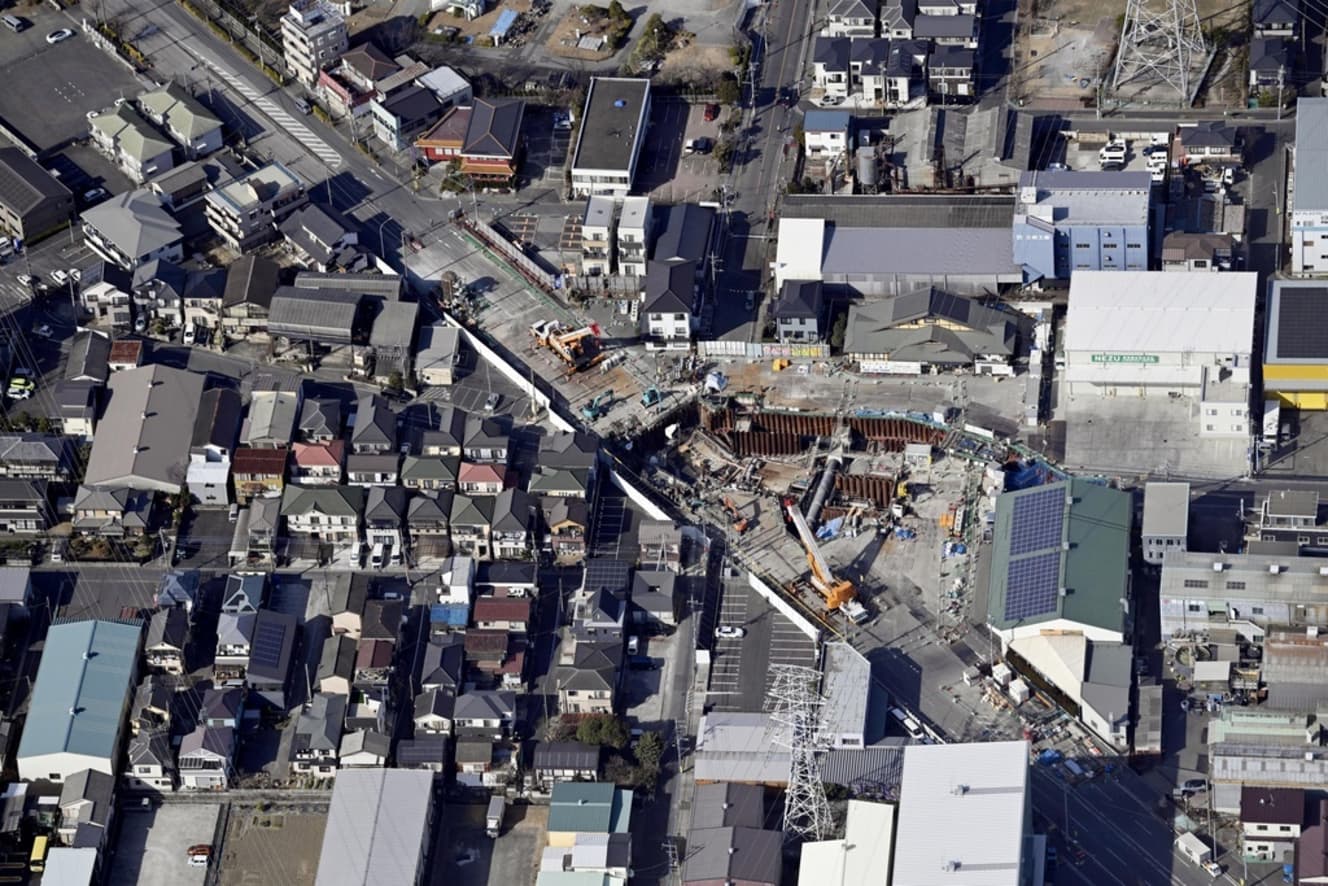
The sewer pipe in Yashio City, Saitama Prefecture, broke and caused a road collapse on January 28 last year. More than a year has passed since then. The collapsed site still has a hole about 40 meters in diameter, and nearby residents are troubled by the odor and vibrations caused by construction. The prefecture plans to cover the hole in April and reopen two lanes provisionally, but completing the construction is expected to take five to seven years. Why does it take so long?
“When we re-inspected the sewer pipes after the collapse, we found that there were sections with corrosion extending four kilometers before and after the collapse site. Therefore, we have to create a different route, but the new route has not been decided yet.”
This is explained by Hiroaki Morita, a professor at Nihon University’s College of Industrial Technology, who also serves as chairman of the prefecture’s Restoration Method Review Committee.
According to Professor Morita, once the route is decided, a year will be spent on geological surveys, a year on design, and then actual excavation and pipe installation will proceed at a rate of five meters per day. For four kilometers, that’s 800 days—just over two years. Adding these together totals just over four years, so why does it take seven years?
“If construction progresses smoothly, it would take just over four years, but before starting, we need to complete urban planning procedures and obtain residents’ consent. How long these steps take is the problem.”
Sewer pipes are laid under prefectural or municipal roads. They do not pass under residents’ houses, but accidents like this understandably make people uneasy about having sewer pipes near their homes.
The gas that corrodes thick concrete
The prefecture’s third-party committee reported in an interim report that the road collapsed because hydrogen sulfide generated corroded the concrete. The collapsed sewer pipe had a diameter of about five meters, with concrete 50 cm thick. If even concrete that thick can be corroded, many sewer pipes across Japan could be at risk.
“Hydrogen sulfide rarely occurs in sewer pipes. The Ministry of Land, Infrastructure, Transport and Tourism reports that out of 500,000 km of pipes, about 3,500 km are affected.”
Professor Morita explains that two conditions are required for hydrogen sulfide to form.
“The original component of hydrogen sulfide is sulfur. When it exists without oxygen, it turns into hydrogen sulfide. Then, when the sewage containing hydrogen sulfide is stirred, hydrogen sulfide is generated.”
Microorganisms exist in sewage. When these microorganisms consume organic matter in the sewage, they deplete oxygen. If the sewer pipe has no gradient and sewage flows slowly, the oxygen from the air in the pipe dissolves slower than the microorganisms consume it, creating an anaerobic environment.
Furthermore, if there are steps in the sewer pipe where sewage falls from higher to lower levels, this stirs the sewage and generates hydrogen sulfide. The collapse occurred due to the unfortunate combination of these conditions.
“New pipes will be lined with plastic on the inside, so corrosion from hydrogen sulfide should no longer be a concern.”
The chilling remaining danger zone of four kilometers
The damaged sections will have new sewer pipes installed, covered by the road, eliminating the odor that troubled residents. That would be the end of it—but apparently, it’s not that simple.
“Currently, we are covering the damaged section so sewage does not flow into it, and using a bypass to divert sewage. But eventually, we will have to remove the cover and connect it to the new pipe. The challenge is whether this can be done properly with such a large volume of water flowing.”
That is not the only problem.
If obtaining residents’ consent takes time, the four kilometers of sewer pipes already corroded could become dangerously unstable.
“Since hydrogen sulfide is present, reinforcing the inside is nearly impossible. We could stabilize the outside with ground improvement materials to prevent collapse, but that would be extremely costly. However, measures are necessary for anything that could affect human life.”
Even if the odor disappears, the period during which caution is needed continues.
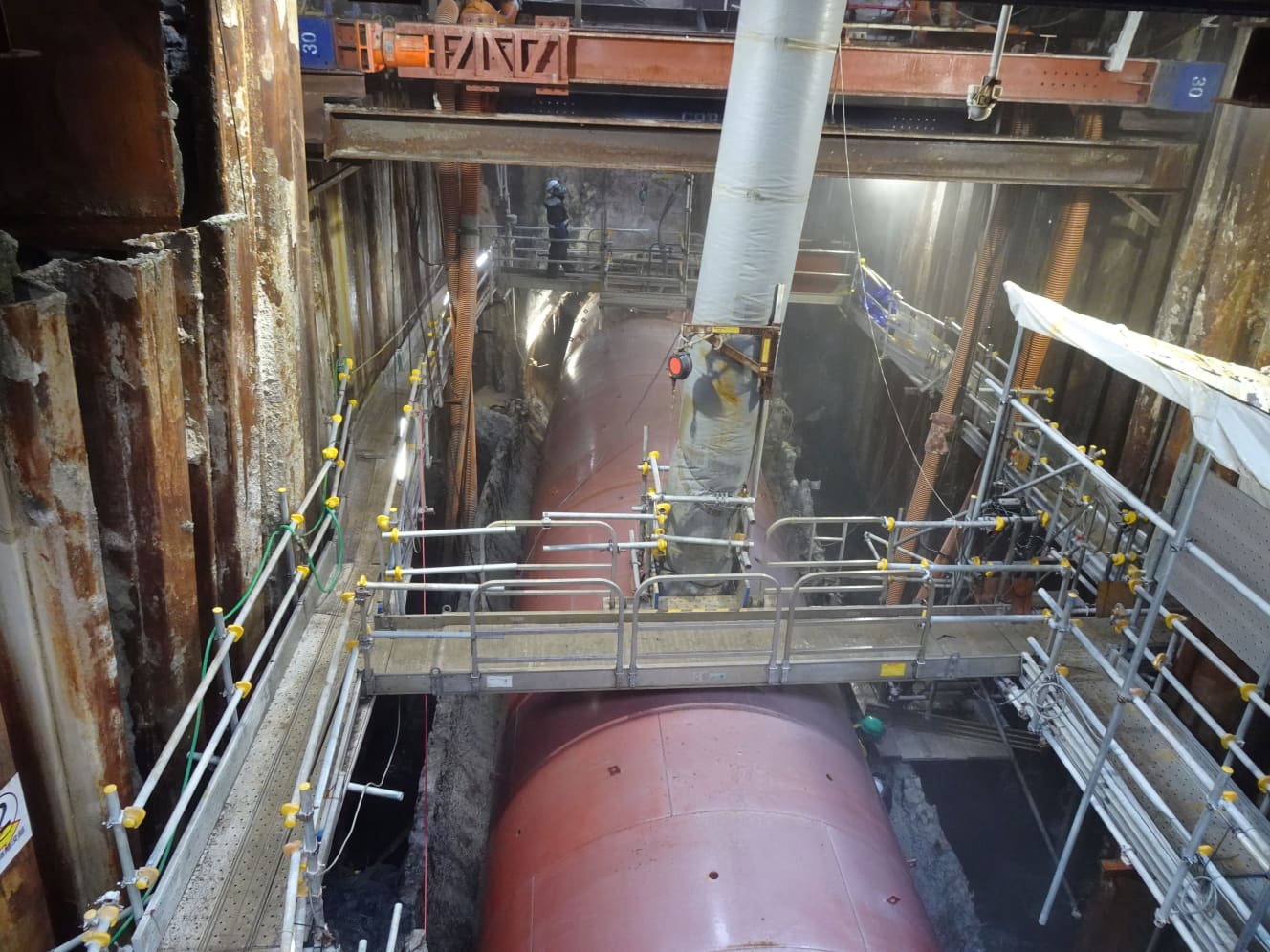
▼ Hiroaki Morita – Professor, Department of Civil Engineering, College of Industrial Technology, Nihon University. He researched eutrophication of Lake Kasumigaura at the Water Quality Research Laboratory, Civil Engineering Research Institute, Ministry of Construction. He has since worked on hydrogen sulfide corrosion, effective utilization of biomass, disposers, and the international expansion of civil engineering technologies for a recycling-oriented society. In 2015, he assumed his current position. He also conducts research on sewers, pipe jacking methods, and organic waste treatment, and serves as president of the Japan Society for Trenchless Technology.
Interview and text by: Izumi Nakagawa PHOTO: Kyodo News (1st photo)