Hikaru Nishida says working with Miho Nakayama helped her find confidence
Hikaru Nishida will soon celebrate the 40th anniversary of her debut! Special Interview Hikaru Nishida's Big Break as a "Returnee Talent": An Ordinary Girl Who Grew Up in the U.S. Becomes a Star



The drama “Department Store! Summer Story,”
and the hit song “Kitto Ai ga Aru” captivated fans——
“I feel like I’ve always been the type of person who’s good at living by the idea, ‘I am myself.’ I try any job first——and by continuing to walk that path, my 40th debut anniversary is coming up soon. Now I think it was good this way.”
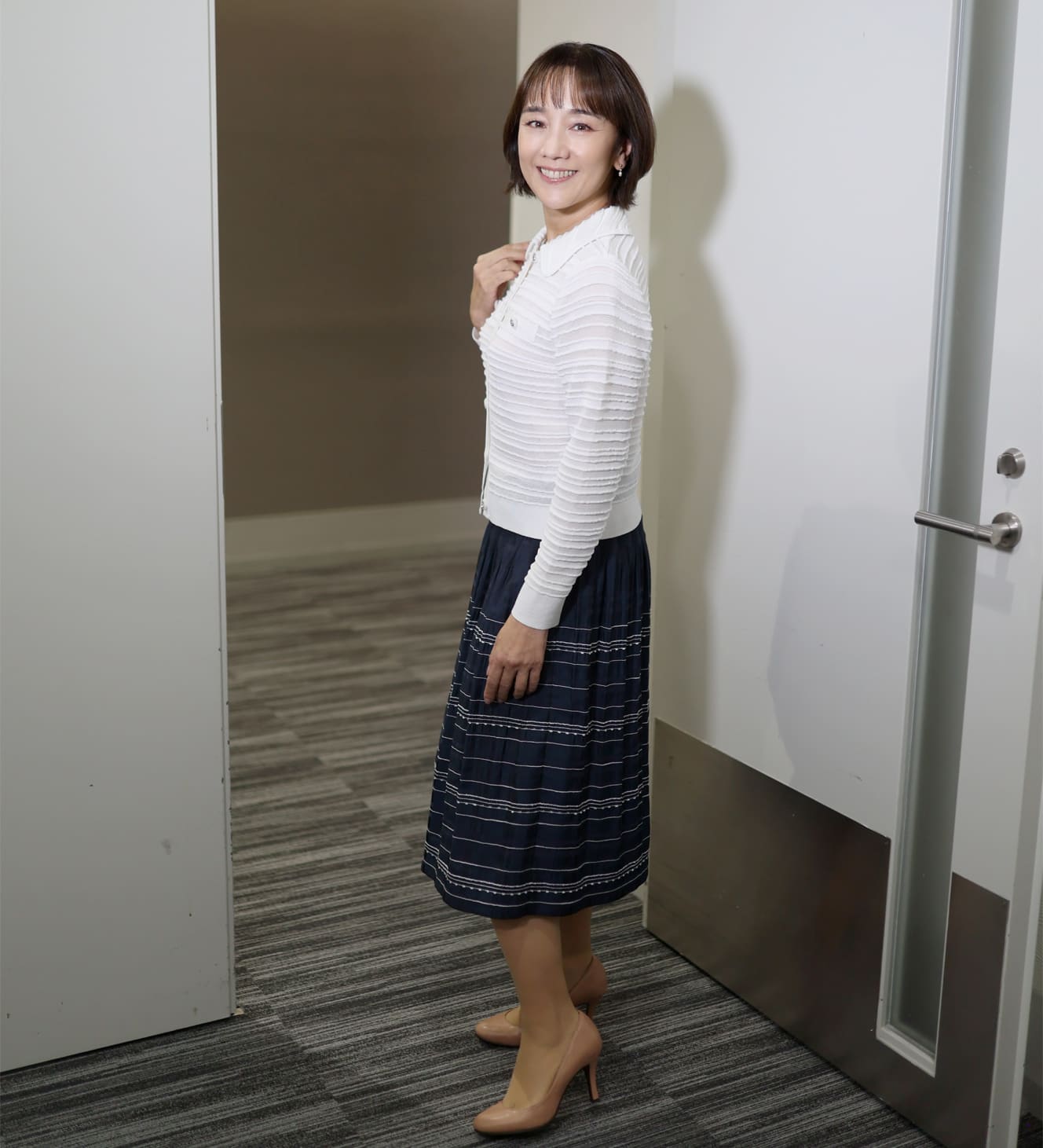
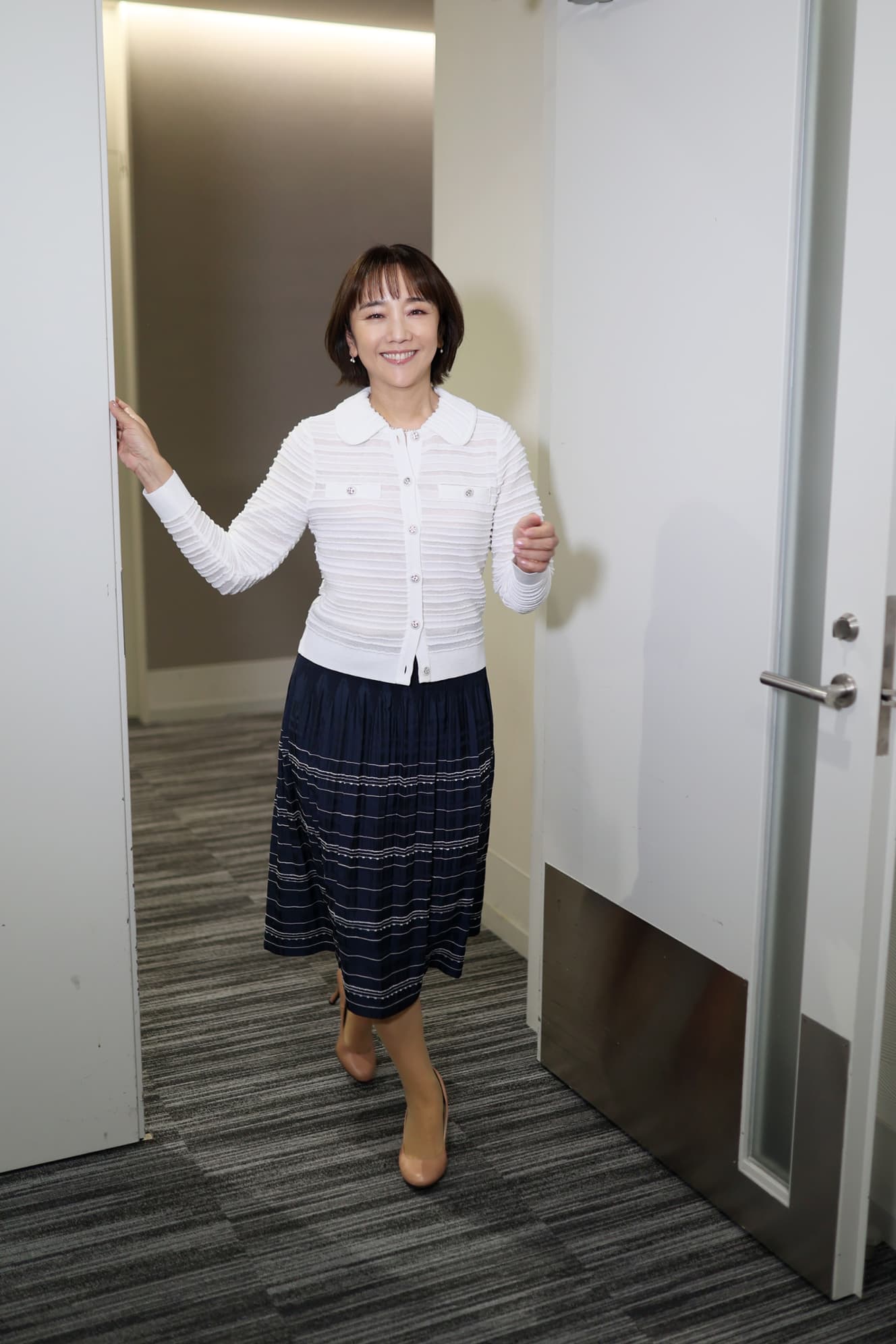
Talent Hikaru Nishida (53) showed a gentle smile that still carries the image of her debut days.
In ’88, when she was 15, she began her entertainment activities as a campaign girl for “Japan Air System (now Japan Airlines),” and made her singer debut with “Fifteen,” released the same year. The following year, she drew attention by appearing in a bold white swimsuit in the House Foods commercial “Fruiche,” for which the same song was used as the theme.
Her healthy and lively character gained support from fans, and she gradually expanded her activities into acting and variety. Having spent her childhood in the United States, she became a huge breakout star as a returnee talent.
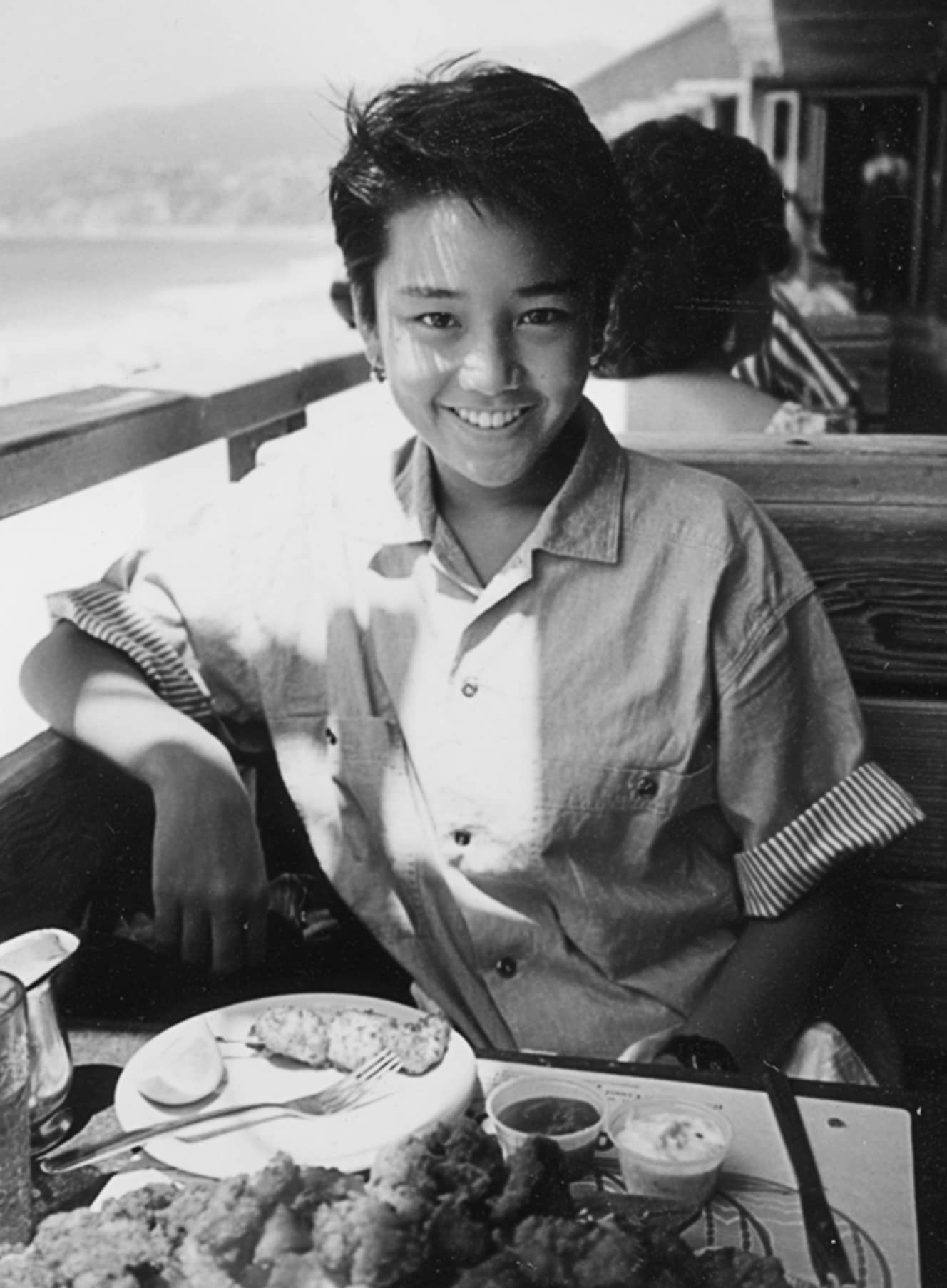
“My father’s job transfer was the reason, and I lived in the United States from shortly after I was born until I was 13. I grew up in California, where there’s a lot of ocean, so I love swimming. I had absolutely no resistance to wearing a swimsuit for work, and rather enjoyed it like an extension of play (laughs).”
At the time, America was in the golden age of MTV, when Madonna (67) and Cyndi Lauper (72) were active. Nishida recalls herself as a teenager who loved dancing.
“Back then I was an ordinary girl who admired Michael J. Fox (64) from the popular American drama ‘Family Ties.’ After returning to Japan, while attending an American school in Tokyo, I was looking for a dance class at the same time, when an acquaintance introduced me to the president of my current agency.”
After deciding to join an entertainment agency and spending her days taking singing and dancing auditions, she finally received the good news that she had passed the audition to become a “Japan Air System” campaign girl. She entered the entertainment world under the promise with her parents that schoolwork would come first.
“I never thought I would debut, so when I heard I had passed the audition, I was like, ‘Really? But maybe I’ll try it’ (laughs). I started without any knowledge of the Japanese entertainment world or any idea of ‘I want to do this kind of work!’”
For her, who had had more opportunities to use English than Japanese up to that point, the reality of the language barrier stood in her way.
“While I was living in California, as an only child, the only times I used Japanese were in conversations with my parents and at Saturday Japanese supplementary school. Even at the American school I attended after returning to Japan, I only used Japanese with my parents or teachers. But thankfully I received many job offers. I asked for all the drama and program scripts to have furigana added (laughs).”
Two Admired Master Actors
In ’89, she expanded into visual media with the morning drama series Seishun Kazoku (NHK). Six months later, she appeared in the drama Kimi no Hitomi ni Koishiteru! Special (Fuji TV), co-starring with Miho Nakayama (54 at her passing in 2024), playing the role of Nakayama’s younger sister.
“Miho-san was my complete opposite. Shunsaku Kawake (73), who was directing the drama, even said to me, ‘Miho is an actress who can convey everything with her eyes. Hikaru, you need to work harder’ (laughs). Even without saying much, Miho-san had an extraordinary ability to draw people’s attention and charm everyone around her.
Watching someone so incredible, I felt that maybe I wasn’t cut out to be an actress. But then I realized, ‘It’s not right to force myself to act like a typical actress,’ and asked myself, ‘What is my own way?’ That’s when I felt liberated: people are people, I am myself!”
The following year, Nishida encountered her second major inspiration.
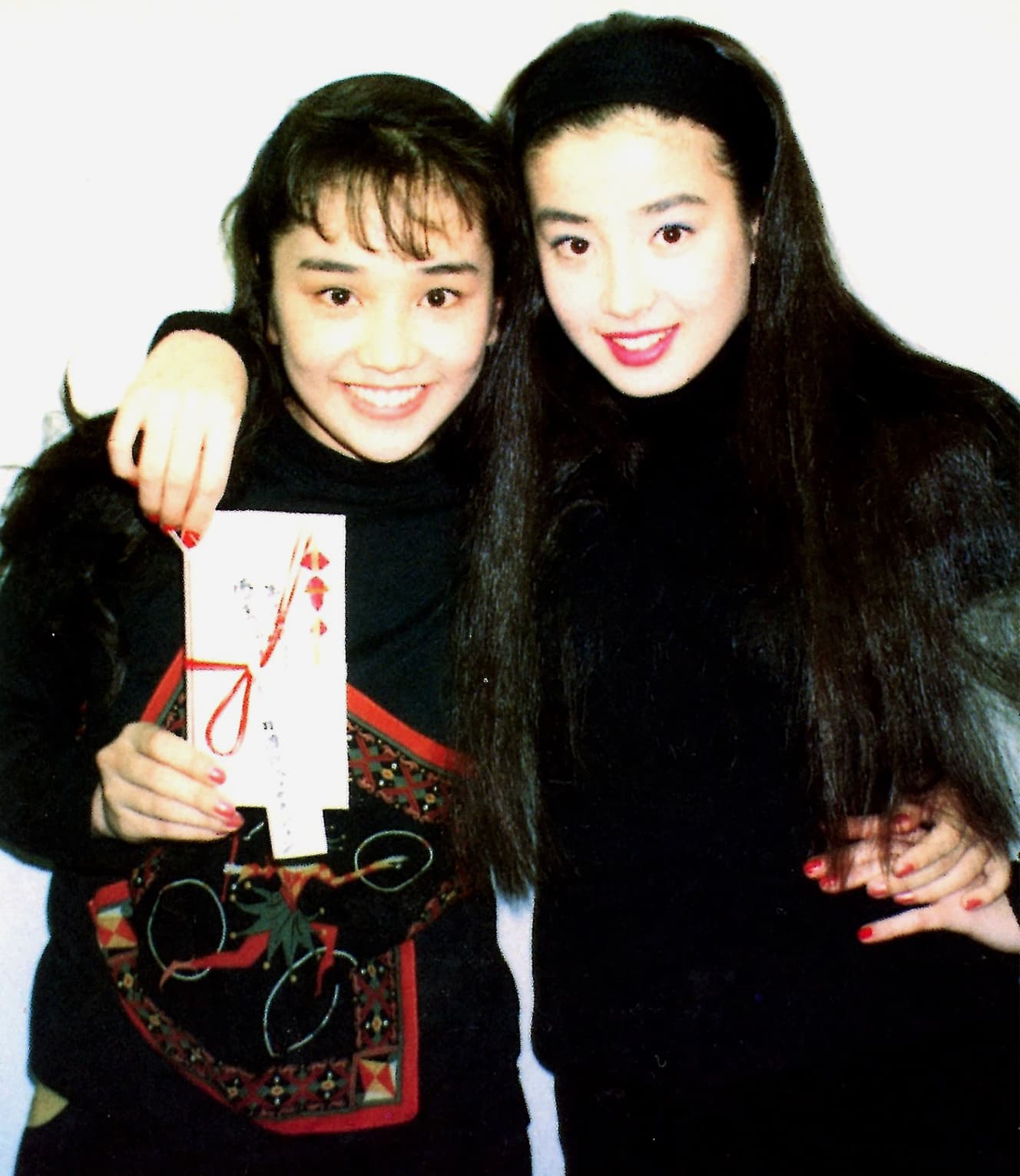
“Rie Miyazawa (52), who I co-starred with in Itsumo Dareka ni Koishiteru (Fuji TV), was the epitome of a professional. Even though she was only 15–16 at the time, her sense was exceptional. She could confidently face the top-tier professionals in fashion, design, and other fields, which was incredibly impressive.
She also had an amazing ability to absorb and make those things her own. Even as teenagers, she was completely different from me, who was just prioritizing school and doing work normally.”
Despite being awed by Miyazawa’s charisma, Nishida also recalls that on set, they got along as girls of the same age.
“When filming school-based dramas, we were on set from morning to evening, so it started to feel like a school environment. Rie-chan is a year younger than me, but we were close as peers.
On our days off, we would go shopping together in Daikanyama (Shibuya Ward), saying things like, ‘Hollywood Ranch Market is so cute!’ and have meals together. We’d chat about trivial things like, ‘What lipstick are you using?’ and just enjoy ourselves.”
In ’91, Miyazawa released the photobook Santa Fe, said to have sold 1.65 million copies, solidifying her status as a cultural icon.
“I had no idea she was releasing a photobook, so I was surprised! The photographer, Kishin Shinoyama (83 at his passing), who took the photos of Rie-chan, asked me, ‘How about you, Hikaru-chan?’ But I’m not as beautiful as Rie-chan, so I politely declined (laughs).”
Even at that time, Nishida felt the gap between herself and these two actors, who remain worthy of the title master actors.
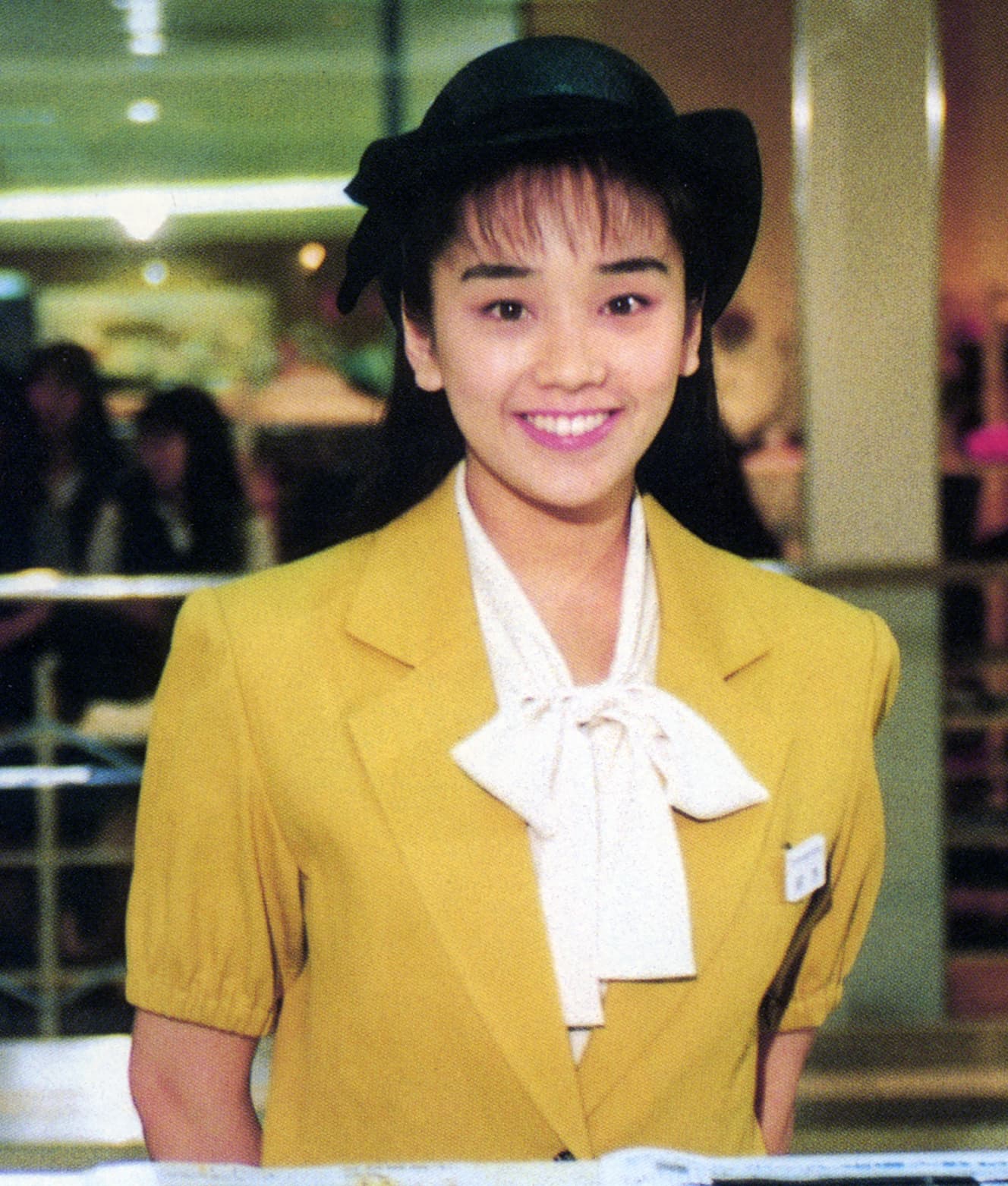
Yet, her own career momentum didn’t stop despite these internal conflicts. In ’91, she was cast as the heroine in Department Store! Summer Story (TBS), also performing the theme song Tokimeite. That year, she made her first appearance on the NHK Kouhaku Uta Gassen.
“This drama was set in a department store in Sagami-Ono (Kanagawa Prefecture). Since we filmed during business hours, many fans came to watch. The schedule was so tight that we barely had time to eat, so having tea in the store café while still in our uniforms during breaks was the only fun we had.
Back then, it was rare for Sagami-Ono to be in the spotlight, and the locals were thrilled, saying, ‘She’s Sagami-Ono’s star!’ (laughs).
When I had just debuted, the image of me as a returnee talent spread, and I worried because that wasn’t all of who I was. But over three, five, ten years of work, I gradually got to show different sides of myself. People started saying, ‘This role suits you,’ ‘You’re not just bilingual,’ ‘Your singing is good too,’ which was incredibly rewarding.”
Afterward, as a singer, she released a series of hit songs including Kitto Ai ga Aru (’94) and Jinsei Kaechau Natsu kamo ne (’95). While walking the dual paths of singer and actress, Nishida steadily found her true self, gradually overcoming her earlier struggles.
Happiness Seen Through Marriage
Running along the path of popularity, Nishida married a non-celebrity man in 2002. Behind the scenes, a careful plan had actually been laid out.
“From my late twenties, partly because the president of my agency was a woman, I was encouraged, ‘If you want to get married, go ahead.’ There were none of the typical entertainment industry dinners or business-like gatherings. People would often introduce me to someone I might like! (laughs) I had already informed the agency about my current husband, so I was able to get married without unnecessary detours.”
Considering sponsors and work schedules, Nishida had actually created a detailed plan several years in advance: “Let’s announce the engagement this year and get married the next year.”
She then gave up her position as a popular entertainer and began her married life in the United States. After giving birth to her first son in 2006 in the U.S., she returned to Japan, moved her base to Hyogo Prefecture, and gave birth to her second son in 2009. She is now a mother of two.
“My eldest is now a university student, and my youngest is in high school. Last year, I appeared in a stage production by Masahiko Kondo (61), as I did the year before. In about five years, once the kids are fully independent, I hope to return to performing on stage and in musicals in earnest.”
This year marks 20 years living in Hyogo. Occasionally, a Kansai dialect accent peeks through in her passionate speech—a fresh touch, given her public image.
“Did Kansai dialect come through? (laughs) My agency has been telling me to stop. Just when I think my Japanese is getting good, now they’re worried I’ll become a Kansai-dialect bilingual.”
Although she seemed slightly frustrated, when asked about her recent hobbies, her tone brightened immediately.
“I’ve recently gotten into knitting, so on the Shinkansen to Tokyo I knit the whole way. Also, since last year, I’ve been into mahjong! Apparently it’s popular in the U.S. too, and even Julia Roberts (58) is hooked. I go to a women-only salon with friends to learn. While memorizing the techniques.”
“Te-techniques?”
“roles! And then, the ‘Suji’, oh, Suji! 369 (Saburo-kyu) and so on!”
Even with her 40th anniversary in the entertainment industry approaching, her playful personality and charm remain intact.


From the February 13, 2026 issue of “FRIDAY”
PHOTO: Takehiko Kohiyama Costume: YUKI TORII INTERNATIONAL