Inheritance Battle of the Late Masaaki Hirao — Court Orders Sons to Pay ¥89 Million to Second Wife’s Side


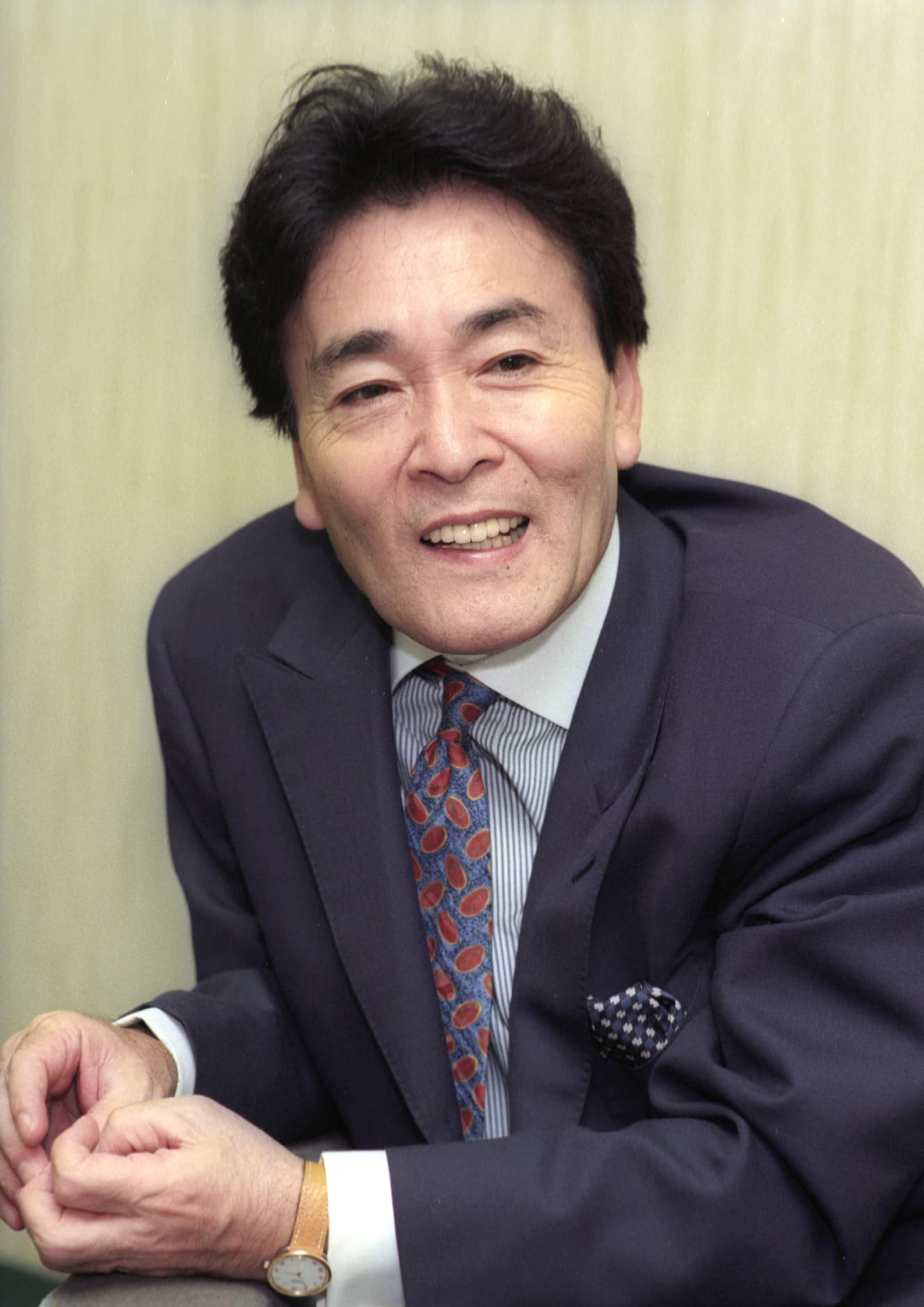
A family feud — the second act that had been unfolding behind the scenes
Masaaki Hirao, the composer who left an indelible mark on the history of Showa-era popular music and produced timeless classics such as Seto no Hanayome and Yokohama Tasogare.
More than eight years have passed since his death at the age of 79, and behind his brilliant achievements a bitter battle has been waged over an inheritance said to be worth as much as 6 billion yen.
At first, the relationship between his second wife, Ms. A, and the three sons he had with his first wife was amicable. However, after Hirao’s death they fell into deep conflict, which developed into multiple court cases. Then, in December 2025, the Tokyo District Court recognized the sons as debtors and handed down a ruling ordering them to repay a large sum to Ms. A’s side. What on earth has been happening between Ms. A and the sons?
Since Hirao’s passing in July 2017, several lawsuits have been fought among the bereaved family. But at the beginning, the fierce confrontation seen today had not yet surfaced.
At the funeral, the second son referred to Ms. A as mother, and the third son—singer and actor Yuki Hirao (44)—declared, “There is no inheritance dispute,” adding:
“We will carry on our father’s spirit as a family so that the name Masaaki Hirao is never tarnished.”
However, within just one year, the relationship between the sons and Ms. A collapsed.
In September 2018, Yuki held a press conference and announced that he had filed a petition with the Tokyo District Court for a provisional disposition to suspend Ms. A from her duties. He rejected her position as the representative director of the company their father left behind and as the representative heir who managed the royalties (copyright income).
At the same event, Yuki’s side harshly condemned Ms. A with the provocative phrase the most heinous version of a second-wife business. This remark triggered the scandal to spread nationwide, dominating wide shows day after day. The conflict between Ms. A and the biological children, led by Yuki, continued to attract public attention as a family feud.
For those who would like to know the details of the uproar at the time, please refer to the FRIDAY Digital articles distributed on September 28, 2020, and November 30, 2022.
Behind the 6-billion-yen inheritance battle over Masaaki Hirao — the third son’s love for the mother who raised him
Masaaki Hirao inheritance issue: Second wife and children face off directly in court for the first time on December 2
After that, the turmoil appeared to subside, but the legal battles were continuing behind the scenes. One of them was the lawsuit over the enormous loan for which the ruling has now been handed down.
The Sons’ Defensive Battle
The present lawsuit was filed in 2023 by the Masaaki Hirao Music Office, headed by Ms. A, against the three sons and their respective companies.
In addition to about ¥35 million that the office had paid on behalf of a company called FBI Planning—run by one of the sons—for its delinquent corporate taxes and other liabilities, the office also sought repayment of personal loans totaling roughly ¥20 million to the three sons individually.
In response, the sons mainly fought back on two points. The first was their claim that:
“There was an agreement that repayment would be made only after the division of the estate had been fully completed.”
As evidence, they submitted to the court the exchanges from a group LINE chat that included Ms. A and the three sons.
“In a group LINE chat in which the plaintiff’s representative (editorial note: Ms. A) and the three defendant sons participated, one of the sons sent a message stating, ‘The loan from the office for the inheritance tax will be repaid after the estate division!’ to which the plaintiff’s representative did not raise any particular objection.”
(From the defendants’ arguments as recorded in the judgment. The same applies to the quotations below.)
In other words, they argued that there had been a promise via LINE that the debt would be repaid after the estate division.
However, the court did not accept this claim and concluded that the legal obligations set out in the loan agreements bearing the signatures and seals of both parties took precedence over everything else.
“Given that loan agreements were executed (omitted) they stipulate that the due date for repayment shall be when the copyright royalties are paid by JASRAC to the representative of Masaaki Hirao’s heirs, and that repayment shall be made from the full amount of the royalties obtained by Party B (the defendant sons); if full repayment cannot be made at one time, it shall be made from the next payment onward (omitted) it is reasonable to find that an agreement was made that the due date for repayment would be when the royalties were paid by JASRAC to the representative of Masaaki Hirao’s heirs.”
In short, the court ruled that:
“Since the contract clearly states that the timing of the royalty payment is the repayment deadline, the obligation to repay arises when the royalties are received—even if the division of the estate has not yet been completed.”
Rejection of the Disappeared 300 Million Yen Claim and Its Evidentiary Value
The second point of contention concerned the withdrawals that Shukan Shincho had once reported as the disappeared 300 million yen. The sons submitted a list of Mr. Masaaki Hirao’s personal deposits and withdrawals to the court. The list showed that from June 2012 to July 2017, cash was repeatedly withdrawn in 500,000-yen increments—the daily ATM withdrawal limit—almost every day.
Previously, this list had been framed as evidence of unjust withdrawals by the widow’s side, but in this lawsuit, the sons presented a completely different argument. Rather than using it as evidence of embezzlement, they claimed it showed that Masaaki Hirao personally paid the office’s taxes and other expenses out of his own pocket. Their argument was essentially that of offsetting debts.
“The defendant sons assert that since 2010, Hirao had, over many years, personally paid fixed asset taxes, automobile taxes, corporate taxes, and other expenses that the plaintiff (editorial note: Masaaki Hirao Music Office) should have paid. Therefore, they have claims for restitution of unjust enrichment or reimbursement of these advance payments, and claim to offset these claims against the plaintiff’s claims for repayment, to the extent of equal amounts.”
In other words, the sons argued:
“During his lifetime, our father paid the taxes and other expenses that the office was supposed to cover from his personal funds. We inherited the right to be reimbursed for those payments, so the debts (approximately ¥55 million) now being demanded by the office should be offset against the inherited claims, reducing our repayment obligation to zero.”
However, the court rejected this claim.
“Exhibits 8 and 9 (editorial note: the deposit and withdrawal lists) appear to have been compiled by a tax accountant on behalf of the parties to the dispute, and it is difficult to recognize, without any corroboration, that the expenditures recorded in Exhibits 8 and 9 were actually made as stated.”
In other words, the court did not accept the credibility of the evidence submitted by the sons. Furthermore, the court also rejected the claim that Hirao had actually advanced the funds.
“In the corporate tax returns for the fiscal year from February 1, 2016, to January 31, 2017, the plaintiff’s outstanding debts or advance payments to Hirao were not recorded.”
If Hirao had truly intended to be reimbursed by the company, there should have been records in the company’s official accounts showing the amounts he lent. But no such records existed in the filings.
In this way, the court completely dismissed the sons’ claims, which lacked objective corroboration, and also ruled that the media-reported 300 million yen allegation had no credible evidentiary basis.
The September Defeat That Piled On
In fact, the payment orders handed down to the sons were not limited to disputes with the office. Prior to the December ruling, in September of the same year, the Tokyo District Court had already issued a harsh judgment against the sons in a separate loan repayment lawsuit.
In this September case, the plaintiff was not the office, but A personally. She sued Hirao’s three sons for the repayment of approximately ¥34 million that she had personally lent to them.
The loans included cash advances to the sons individually (¥6 million each), as well as amounts A had covered out of her own pocket for taxes and late fees the sons were supposed to pay, plus fees for tax accountants handling the inheritance procedures.
The court recognized all of these as debts to be repaid. Combined with the December lawsuit brought by the office (approximately ¥55 million), the total amount the sons owe A (through the office) comes to a staggering roughly ¥89 million in principal alone.
Additionally, the sons had previously lost a defamation lawsuit over their use of the term stepmother business in a press conference.
Looking at these long-running legal battles as a whole, the judiciary has consistently ruled in A’s favor.
FRIDAY Digital requested comments from both offices regarding the latest ruling. A representative from the sons’ office, acting as their contact point, responded:
“Some cases are still ongoing, so we cannot comment on the matter.”
Meanwhile, A’s side also declined comment through the office:
“We have nothing in particular to say.”
During his lifetime, Hirao was passionate about charity work and even noted in his will:
“Two-tenths of my assets [editorial note: 2/10] should be allocated to music promotion and charity. Please establish the Masaaki Hirao Composition Award.”
Will the handwritten wishes of the Showa-era king of pop songs ever truly be fulfilled?
Reporting and writing: Shinsuke Sakai PHOTO: Kyodo News