Preparing for Regional Threats — The F-35B’s Nerve-Tightening Vertical Touchdown
The first postwar "Hinomaru" aircraft carrier, the "Izumo" model, a collaboration between the Maritime Self-Defense Force and the Air Self-Defense Force.


A new shield for Japan
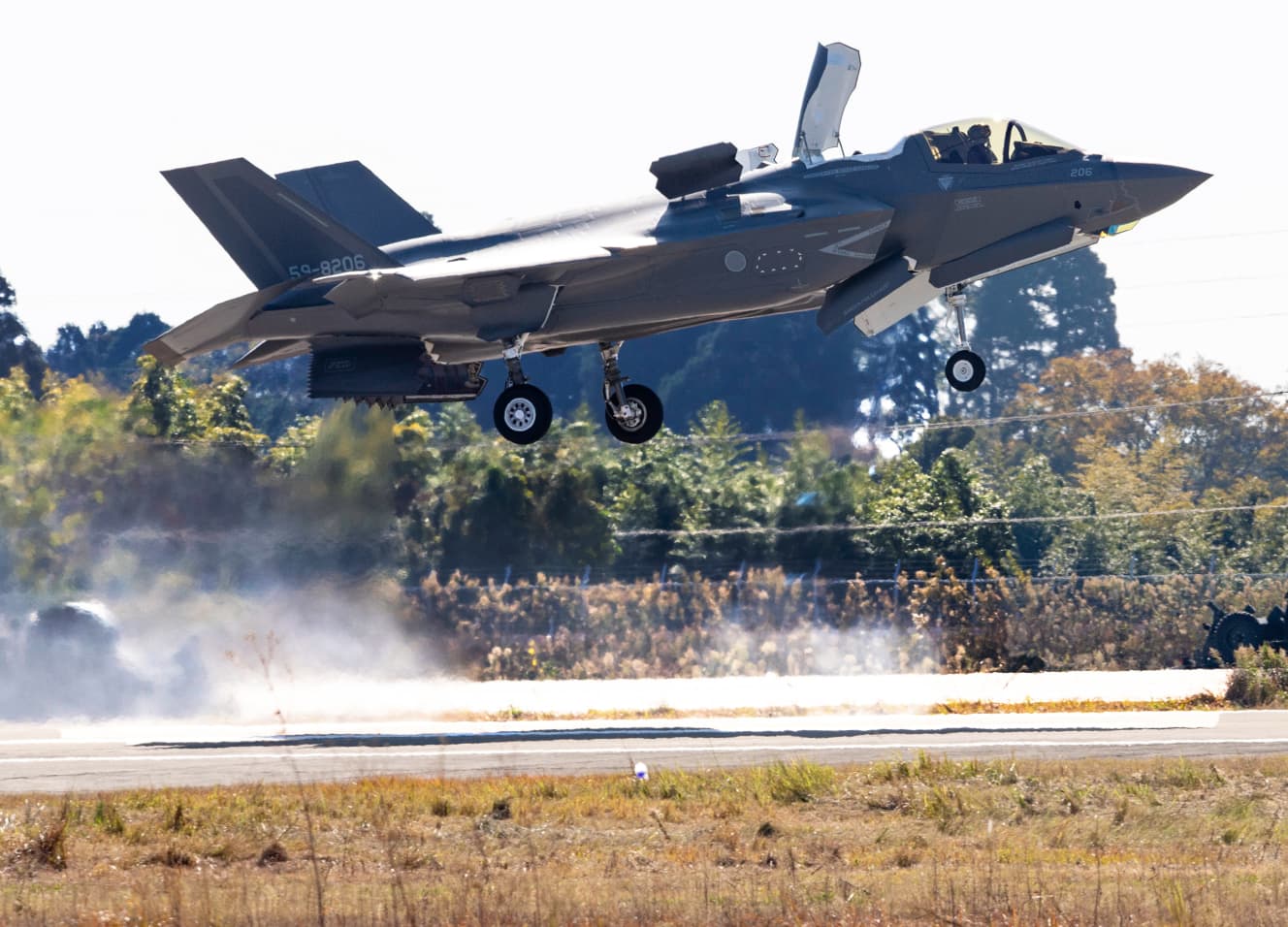
The fighter that slowly flew over Miyazaki Prefecture toward the Air Self-Defense Force’s Nyutabaru Air Base came to a sudden stop in midair. After making a full rotation on the spot, it descended straight toward the ground. When it landed lightly, cheers erupted from the local residents and aircraft enthusiasts who had been watching (top photo).
“I heard an incredible roar, so I looked up at the night sky and saw a fighter hovering like a helicopter.”
“I was waiting for a train on the platform and there was a fighter I’d never seen before above the mountains.”
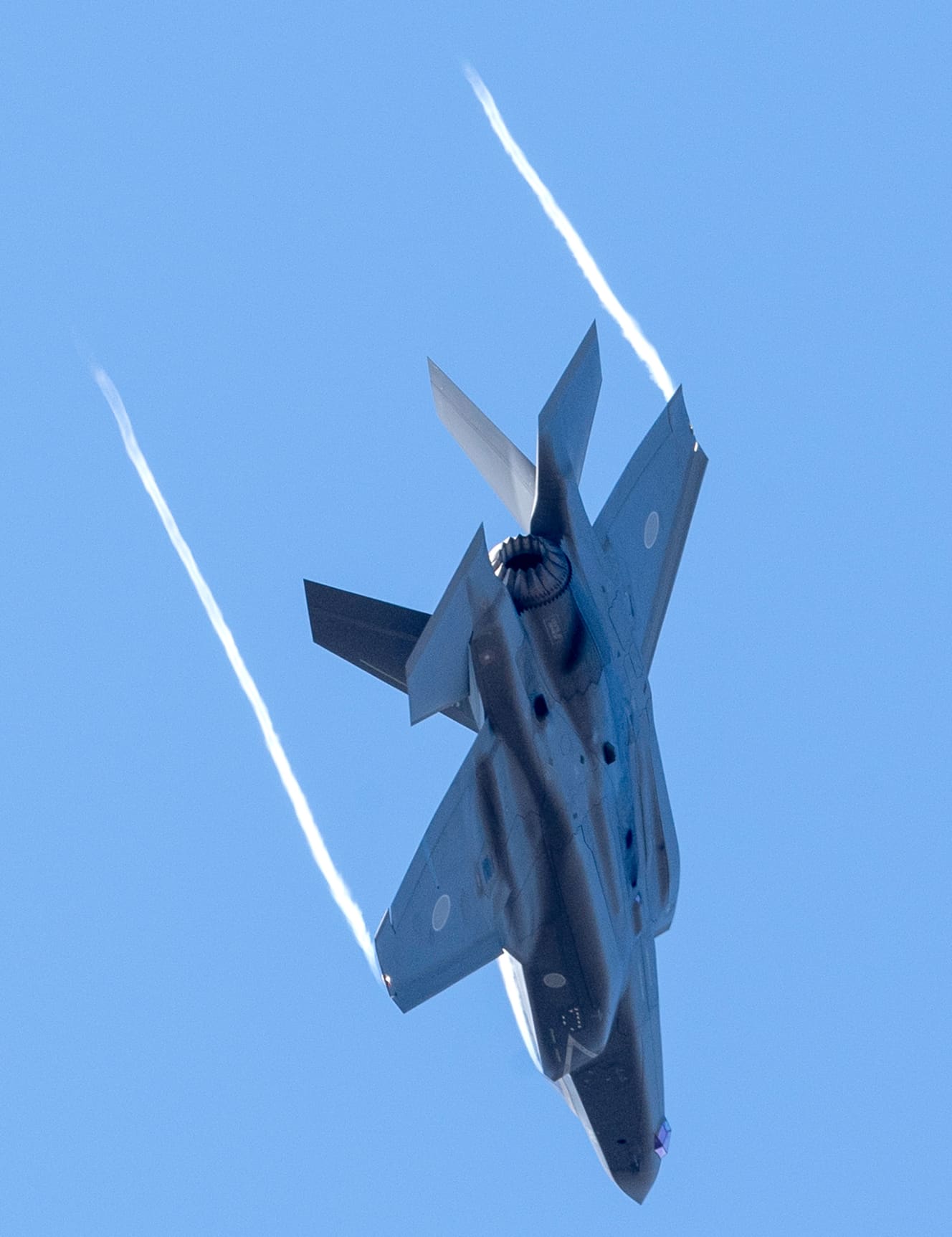
The mysterious flying object sighted across Miyazaki since last autumn was in fact the next-generation stealth fighter F-35B, the very aircraft that successfully performed the vertical landing in the opening scene.
The FY2026 draft defense budget exceeded 9 trillion yen for the first time in history. Along with what is being called the largest organizational reform and equipment overhaul since the Self-Defense Forces were established, one symbolic development is the deployment of Japan’s first aircraft carriers in the postwar era.
Rather than building from scratch, the plan is to convert the existing escort ships Izumo and its sister ship Kaga into aircraft carriers. Both vessels already have flat decks from bow to stern to operate many helicopters, so the idea is to apply heat- and pressure-resistant modifications and turn them into runways for fighter jets—quite a bold plan. The fighter chosen to operate from these hastily converted carriers is the F-35B.
The aircraft’s greatest feature is its ability to take off in a short distance of about 200 meters and land vertically. Given the roughly 250-meter length of the Izumo, there was no other choice for carrier operations.
On August 7, 2025, three aircraft were first deployed to the “Provisional F-35B Squadron” newly formed within the 5th Air Wing, headquartered at Nyutabaru Air Base. Pilot and maintenance crew training is now in full swing. Behind the Air Self-Defense Force’s rapid push to operationalize the F-35B lies the looming threat from China.
The Chinese military already possesses three aircraft carriers. Incidents such as carrier-borne aircraft locking radar onto ASDF F-15 fighters are still fresh in memory, and shows of force by China in the seas around Japan have become a daily concern. Amid this, China has begun constructing a nuclear-powered aircraft carrier.
The “Provisional F-35B Squadron” will be renamed the 202nd Squadron within February, and will eventually form a 42-aircraft carrier-borne unit for the ASDF.
The purchase of farmland on the south side of Nyutabaru Air Base is nearly complete, with plans to build dedicated F-35B facilities on the site. For the first time since the founding of the Self-Defense Forces, an ASDF–MSDF teamed-up “Hinomaru aircraft carrier” may become the shield that protects Japan.
From the February 13, 2026 issue of “FRIDAY”
Photography and text by: Masayuki Kikuchi, military photojournalist