Convenience Store Onigiri War” – Lawson is Frozen! 7-Eleven takes the high road!
The latest business report (Part 2): The front line of the gachinko duel! With rice and seaweed prices soaring, prices in the 200 yen range are commonplace, and some products exceed 300 yen...


The superstar with an annual income of approximately 16 billion yen chose a taste of his hometown.
On January 15, the American audio brand Beats released an interview with Shohei Ohtani (31) of the Dodgers, the company’s ambassador, on its official Instagram page. When asked in the video about his favorite meal before a game, Ohtani paused for a moment and then answered with a smile, “Onigiri.
FamilyMart, which has appointed Otani as its “Omusubi Ambassador” since last February, is doing very well.
Part 1: FamilyMart’s marketing of “Onigiri War in Convenience Stores,” which is becoming more upscale!
Frozen Onigiri Appearance
On the other hand, Lawson, the third largest convenience store chain in Japan, which closely trails FamilyMart, the second largest convenience store chain in terms of sales, is aiming to win the battle by developing high-priced products and health-conscious products.
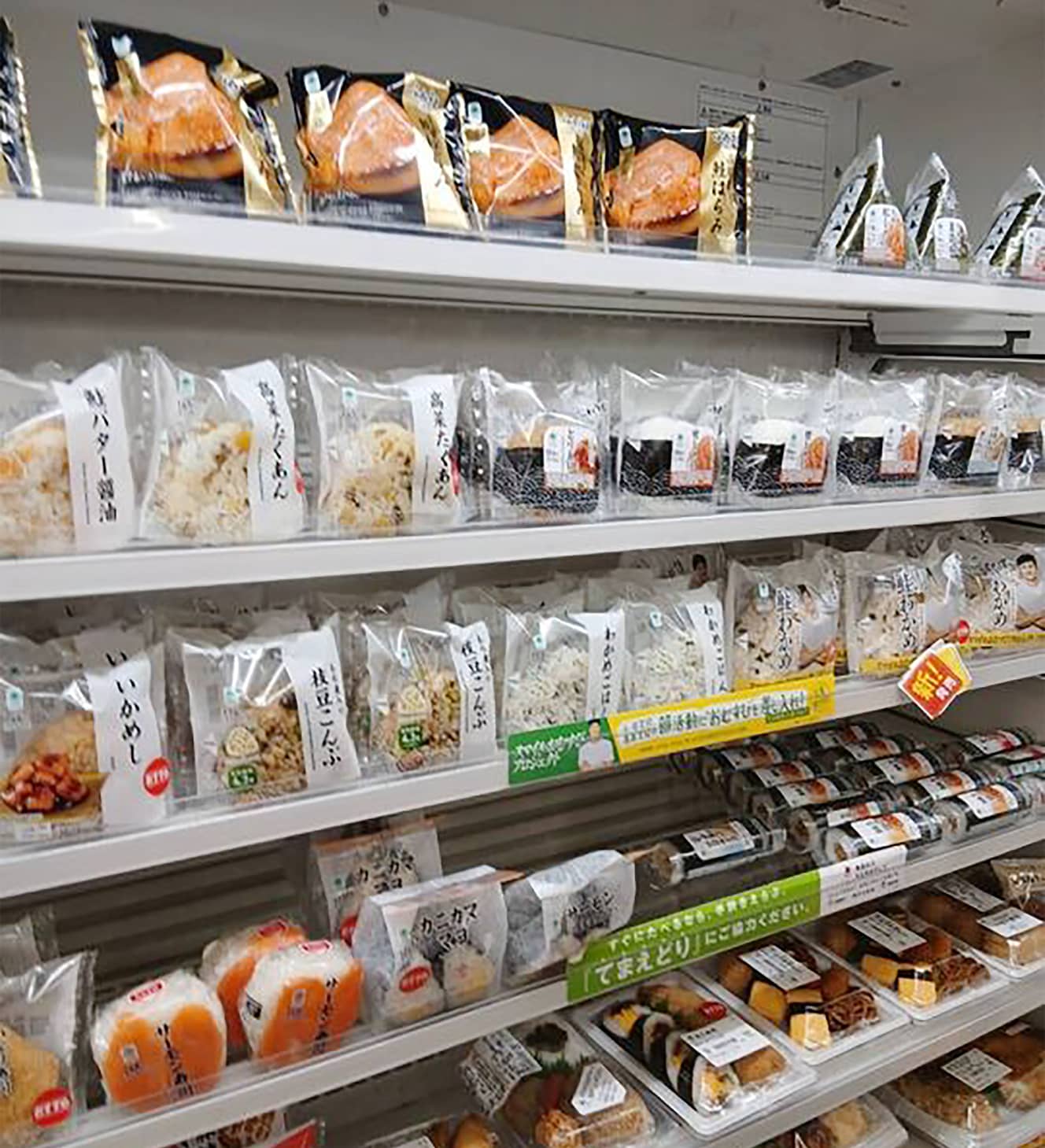
Products priced around 300 yen, such as Premium Onigiri Rice Ball with Salmon Roe Soy Sauce (308 yen) and Premium Onigiri Rice Ball with Grilled Salmon Harami (297 yen) are selling well. Many people, especially on weekend road trips, pick up these items to enjoy a little more luxury than usual.
The three “Premium Onigiri” products are certified by the Onigiri Association. Lawson also sells products supervised by “Onigiri Asakusa Shukuroku,” a famous restaurant in Tokyo. If you can enjoy the taste of “Shukuroku,” an onigiri store that has been listed in the Michelin Guide’s Bib Gourmand for seven consecutive years, at Lawson stores nationwide, it is easy to be convinced by the premium price” (Nakamura, above).
However, not many customers would buy 300 yen onigiri every day. Therefore, LAWSON has taken a lead over its rivals by offering a relatively low-priced, yet healthy onigiri. Symbolic of this is the “plenty of dietary fiber” series, represented by the ” Edamame and Salted Kelp Rice Ball with Japanese Glutinous Wheat ” (181 yen).
The use of chewy cereal rice increases the feeling of fullness and allows the user to eat without feeling guilty. In addition, the use of glutinous barley in some of the rice, instead of the more expensive seaweed, helps to keep costs down. The dashi broth flavor can be felt well, so it does not taste bland,” he said.
Furthermore, in January of this year, Lawson shook up the industry by starting the nationwide rollout of frozen rice balls, which had been introduced on a trial basis since 2011. The three products are ” Chicken Gome Onigiri ” (157 yen), ” Sesame Salmon Onigiri ” (140 yen), and ” Wakame Gohan Onigiri ” (140 yen). The frozen rice balls are said to be 10-20% less expensive than regular rice balls because they can be made in advance to reduce production costs and can be delivered only once a day (usually twice), which also lowers delivery costs.
Further improving quality
Thus, while Famima and Lawson are expanding their fronts with different approaches, 7-Eleven is taking the high road.
To begin with, 7-Eleven started the first convenience store onigiri in ’74.’ It was also the first company to introduce ‘sea chicken mayonnaise’ to onigiri in 1983. Seven’s onigiri are characterized by a fluffy texture that has evolved in pursuit of a home-style taste and fewer high-priced products than those of other companies. One senses the company’s policy of enhancing the quality of its familiar-tasting, easy-to-grab rice balls.
One of the most outstanding products is the “Seiro-mushi Akahan Okowa Omusubi” (170 yen). Although the price is low, the taste of this product is outstanding, as the glutinous rice is steamed on a separate line at the factory. The “Open-flame Grilled Sausage Omusubi” (221 yen) is a sausage disk on rice with teriyaki sauce and garlic mayonnaise. It is an exquisite dish,” says Mr. Taya.
In 2011, Oja, which has been showing high-quality and well-balanced product development, further strengthened the fluffy texture it is proud of.
Perhaps because of its pride as a champion, Seven-Eleven had not previously provided supervision, but it collaborated with Kyoto rice store Gihee VIII to create a new product. By teaming up with a long-established rice store known for its earthenware pot rice, which is thoroughly selected down to the grain, and receiving supervision for “rice polishing” and “rice blending,” the goal was to create onigiri with a good graininess and a sweet taste.
Who will win out: 7-Eleven, which has strengthened its Denka no Hoto, FamilyMart, which is riding high with the appointment of a national superstar, or Lawson, which is revolutionizing the industry with its frozen onigiri? Currently, 7-Eleven has the upper hand, but two rivals gaining momentum may bring a surprising knot to the “onigiri war.

From the February 13, 2026 issue of FRIDAY