SMBC Customer Service Responds Shockingly After 5 Billion Yen Scam by Group President


“I can enter through the back door”
Mr. A, a man who manages several restaurants in Tokyo and other areas, was approached by a friend who said, “There is an investment framework that can only be shown to special clients.” The person who appeared at a café in Tokyo was Mr. X, a former branch manager of Sumitomo Mitsui Banking Corporation. Here is the second part of the report on this allegation.
Dividends were distributed regularly, but often fell short of the targeted 3%. When Mr. A asked about the investment status, Mr. X explained using self-made papers labeled “Personal Foreign Currency Time Deposit Simulation (Euro-denominated)” and the like.
“Afterward, I occasionally received contact from him, and he encouraged me to invest additional funds. Whenever I had extra cash, I brought it to Mr. X. Each time we met, he told me all kinds of stories. For example, he said that Mr. Shigeru Ishiba (68) was a junior at Sakura Bank and that when I was young, I handed out tissues in front of the station together with Mr. Ishiba.”
Even after Mr. X became president of SMBC Green Service in 2012, he continued to solicit additional investments, and Mr. A complied.
“I once met him at the Palace Hotel Tokyo next to Sumitomo Mitsui Banking headquarters and handed him cash. Mr. X said, ‘I can enter through the back door, so I’ll handle the deposit directly,’ and headed toward the main branch.”
Even after Mr. X moved from Green Service to serve as an auditor for a listed company in 2015, he continued transactions using payment receipts from Sumitomo Mitsui Banking. By that time, the investment amount had exceeded 300 million yen. Mr. X further suggested that there were special stocks only employees could buy and encouraged Mr. A to purchase unlisted shares of a company where Mr. X served as auditor. The total amount Mr. A entrusted to Mr. X had swelled to nearly 500 million yen.
Mr. A, who had fully trusted Mr. X, noticed something was wrong last summer. His mother was considering moving into a nursing home, and he would need a large sum of cash. He asked Mr. X, “I want to withdraw the money I invested.”
“Mr. X listed excuses such as, ‘The counter has changed,’ or, ‘The person in charge passed away, so it can’t be returned immediately,’ and did not attempt to pay at all. Feeling something was off, I had a friend knowledgeable about finance examine the payment receipt, and they pointed out, ‘The shape and placement of the seals used are strange. Could it be forged?’”
In reality, the bank seal that had been stamped was used to certify official documents and is not supposed to be used on receipts, nor as a duplicate stamp.
“I noticed there was no branch name on the payment receipt and the paper quality differed from the usual type. That’s when I realized I had been deceived. In September last year, I contacted the Sumitomo Mitsui Banking customer service, but they said, ‘We don’t know about people who have left,’ and turned me away. I called the bank again, but this time was transferred to the deposit department and ultimately told, ‘Please go to the police,’ and was ignored.”
Mr. A pressed Mr. X for repayment. Mr. X admitted to the fraud and signed a pledge to repay 480 million yen by 2029. However, Mr. A’s distrust remained, and in October last year, he visited Mr. X with an acquaintance, once again demanding an explanation regarding repayment. The author obtained an audio recording of the entire exchange.
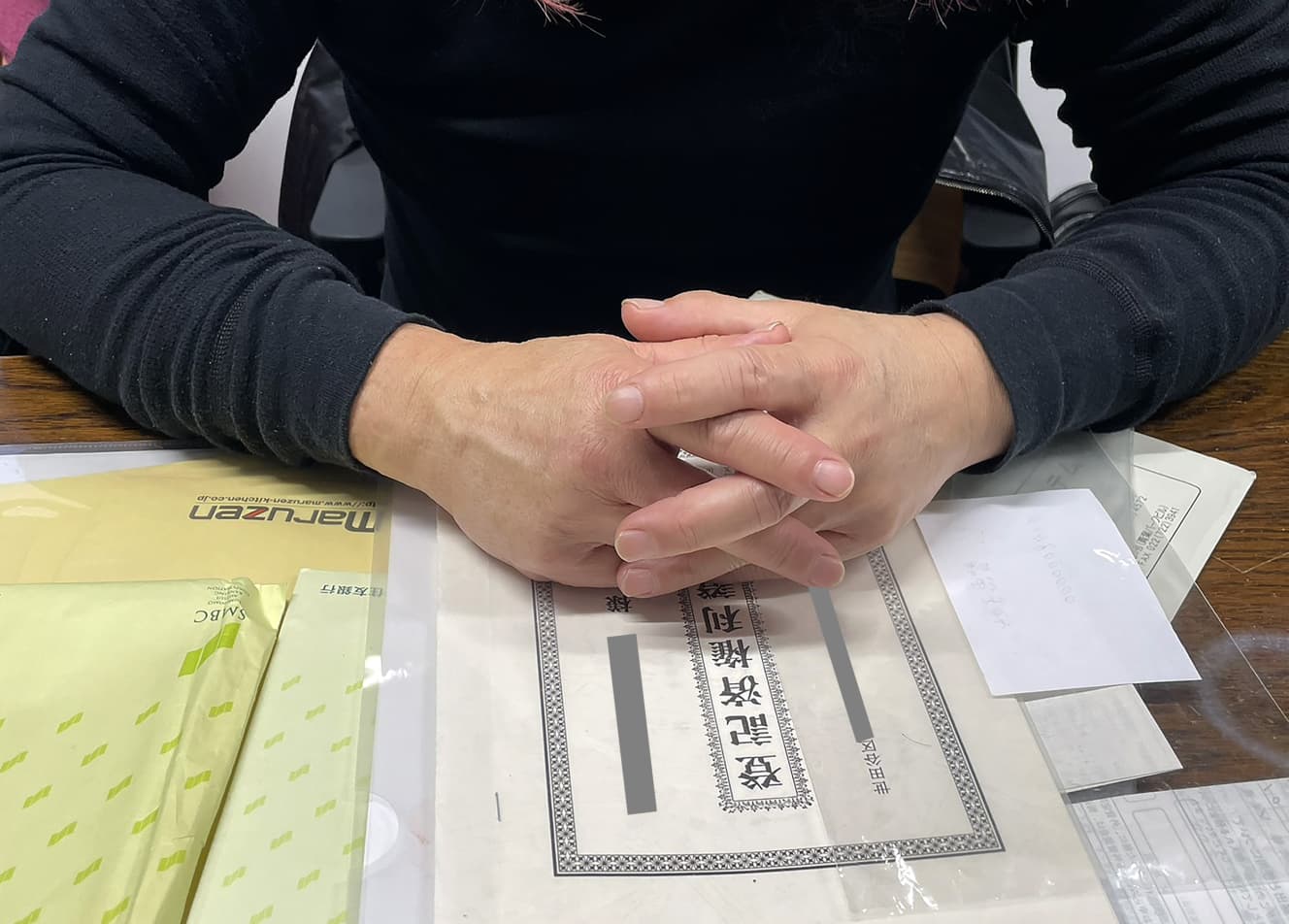
He had deposited the title deed to his home
Acquaintance: “This is fraud, right?”
Mr. X: “Yes.”
Acquaintance: “The seal was forged, right?”
Mr. X: “Well, yes.”
Acquaintance: “Forgery is terrible, isn’t it?”
Mr. X: “Absolutely, that’s true. I have no words to reply.”
Acquaintance: “How did you create the documents?”
Mr. X: “I did it inside [the office].”
Acquaintance: “Were you really managing the funds?”
Mr. X: “…”
Acquaintance: “What did you use the 500 million yen for?”
Mr. X: “To repay my personal past debts. It’s all my fault.”
Acquaintance: “Were there others besides Mr. A in this situation?”
Mr. X: “Also from friends.”
Acquaintance: “How many people are there?”
Mr. X: “That’s right.”
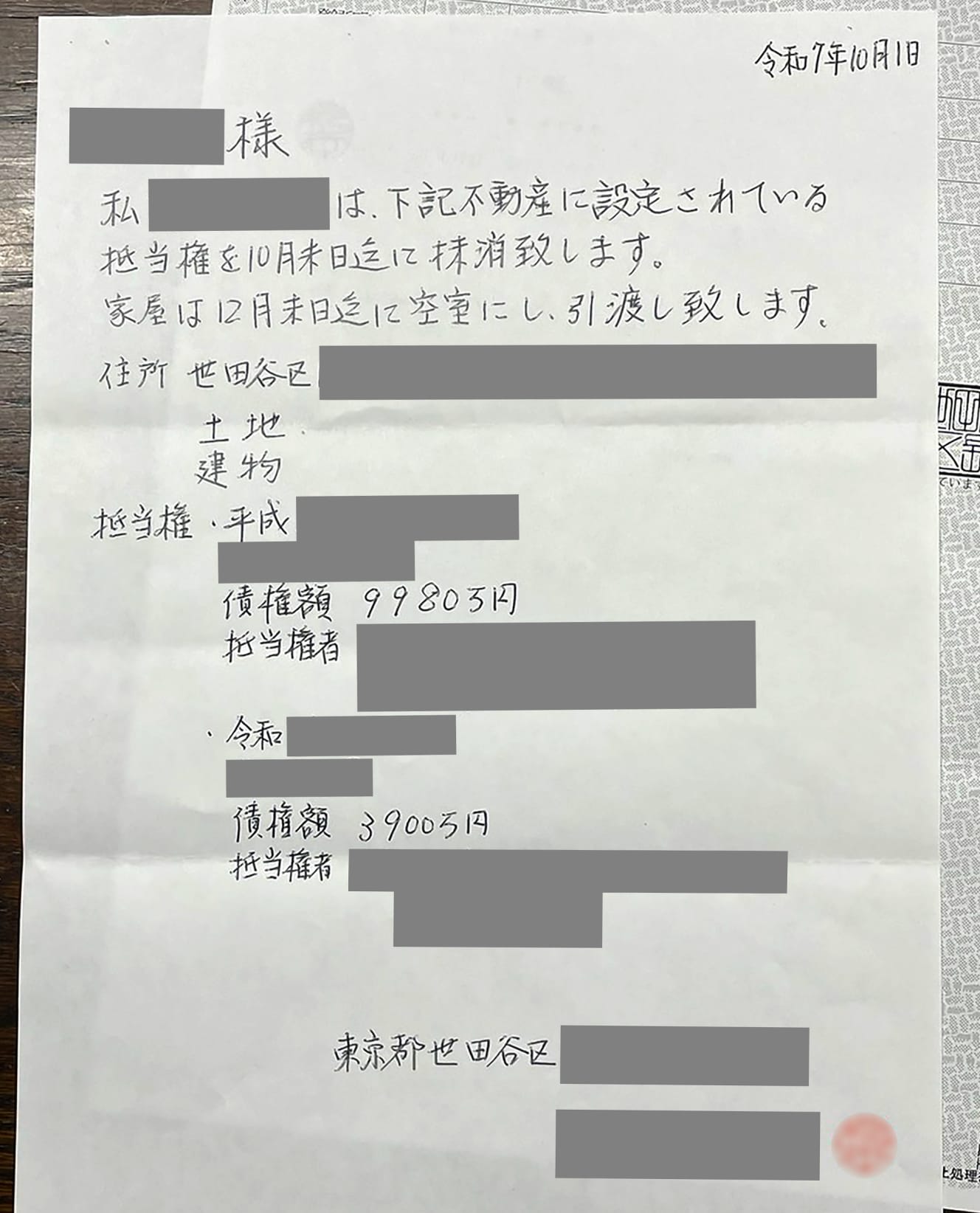
Mr. X deposited the home title deed with Mr. A to compensate for the damages and signed a memorandum promising to release the mortgage and hand it over by December last year. However, that promise was never fulfilled.
In mid-January, the author approached Mr. X as he left his home to confirm the facts, but he only muttered things like “There is a misunderstanding” and did not respond to questions. A written request for an interview was also sent, including to his representative, but no response was received by the deadline.
How does a person who has served as a director and president of a wholly-owned subsidiary, and caused a trouble using the name and resources of Sumitomo Mitsui Banking Corporation, take responsibility? The Public Relations Department of Sumitomo Mitsui Financial Group responded to the magazine’s inquiry as follows:
“Gathering funds privately from customers or clients, or soliciting personal investment opportunities, is prohibited under internal regulations, such as employment rules. (…) Regarding this matter, our bank was not aware of the facts and has never confirmed or investigated them. Through this interview, we have now become aware of the situation and intend to investigate to confirm the facts. (…) At this time, we could not confirm any records of such a damage report from Mr. A, the complainant.”
Incidentally, Mr. X has never held the position of deputy president at Sumitomo Mitsui Banking Corporation. Mr. A is preparing to file a police report to clarify the actual damages.
“Of course, it’s Mr. X’s responsibility, but does the bank intend to escape by pretending not to know? I intend to fight until the end.”
Once again, a dark side of the financial industry has been revealed.
From “FRIDAY”, February 13, 2026 issue

Interview and text by: Hironori Jinno (Nonfiction writer)