Sanae Takaichi’s “overwhelming victory mood” in the “general election for the nomination”: Behind her strength lies a “commonality” with Mayor Akira Ogawa, who “secretly meets at a love hotel”. | FRIDAY DIGITAL

Sanae Takaichi’s “overwhelming victory mood” in the “general election for the nomination”: Behind her strength lies a “commonality” with Mayor Akira Ogawa, who “secretly meets at a love hotel”.

  • Share on Twitter
  • Share on LINE
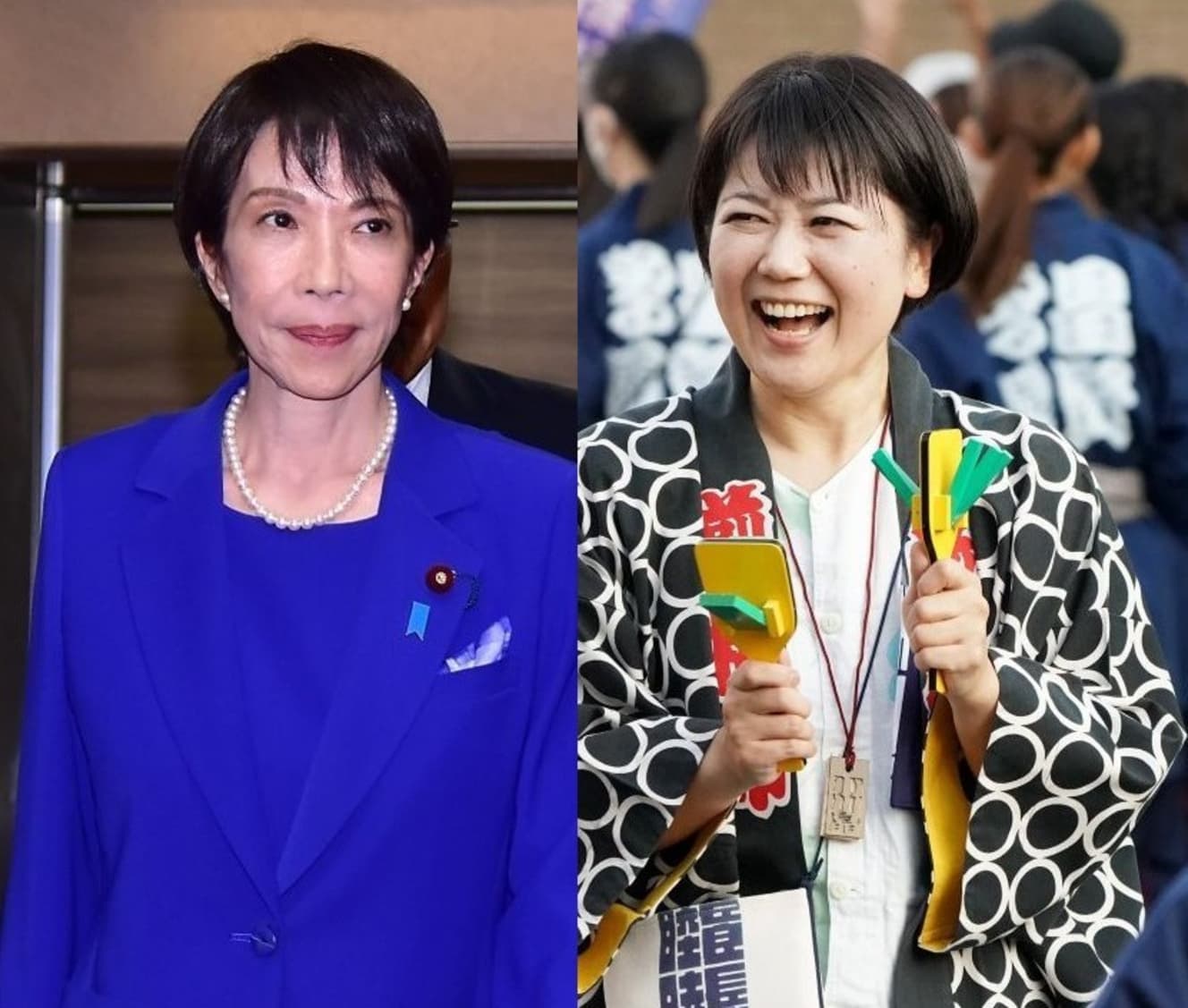
Prime Minister Takaichi of the Liberal Democratic Party (left), who is in the mood for an overwhelming victory in the February lower house election, and Akira Ogawa, the mayor of Maehashi City, who was reelected in a runoff election after a love affair.

Core voters in the Rikken are in a “sober mood.

The LDP, led by Prime Minister Sanae Takaichi (64), looks likely to win the lower house election to be held on February 8.

In a survey of the situation by media outlets, the Asahi Shimbun reported that the LDP is poised to win a majority of seats, possibly as many as 300 seats. Other major media outlets are also reporting that the LDP is in a favorable mood.

In contrast, the “centrist reform coalition,” which is a “combination” of the Constitutional Democratic Party of Japan and the New Komeito Party, is facing a tough election campaign. It was thought to be the eye of the typhoon with the “anti-Takaichi” and organizational votes of the Soka Gakkai, but unexpected circumstances have continued and it has not been able to expand its support. A person involved in the middle-of-the-road movement said with a sigh, “The first thing is the name of the party.

First of all, the name of the party has been rejected by the younger generation with the single word “tacky” before they even see the party’s policies. Then there is the issue of the proportional list. Komeito does not put up candidates for primary elections, but instead lists its members at the top of the list, but from the perspective of Rikken supporters, this means that a Komeito candidate is more likely to be elected even if he or she writes ‘centrist. There is a sober mood among the Rikken’s core constituency.”

The other parties are also in a difficult situation.

The Japan Innovation Party, which forms a coalition with the Liberal Democratic Party, will lose its raison d’etre if the Liberal Democratic Party wins a majority. A person involved in the political world said

The “Japan Restoration Association” has a bad reputation because of the “National Health Insurance evasion” of the members and the double election in Osaka. It will be tough for them to win seats outside of Kansai, where they have a geographical advantage. There is a possibility that the number of seats won will be less than the number of seats won before the announcement of the election, even if the party intends to take advantage of the popularity of Takaichi.

He also commented that, “The party’s popularity in the Kansai region is not good enough to win seats outside of Kansai.

The Sanseito Party, which created a whirlwind in last year’s Upper House election, backfired when its leader, Munehide Kamiya (48), decided to take a “vs. Takaichi” line. Although supported by enthusiastic sympathizers, the party is expected to fall short of the 30 seats it is aiming for.

It is now “LDP or nothing. The situation is similar to the “push” for Prime Minister Takaichi, who became the first female prime minister in the history of constitutional government. Political commentator Harumi Arima told this website that “Sasa has been a strong supporter of the LDP ever since she took office,

When she was inaugurated, the phenomenon of “Sanae-sales” occurred, and her bags, ballpoint pens, and even snow shoes sold like hotcakes. Whenever she makes a speech on the street, women cheer her on. In the past, when Ryutaro Hashimoto, Shinzo Abe, Junichiro Koizumi, and Shinjiro Koizumi took to the streets, they were cheered by many yellow people, but Prime Minister Takaichi’s enthusiasm was so great that it far exceeded the cheers for them. It is amazing that he can attract people who have never been interested in politics before,” said Mr. Koichi.

The popularity of Takaichi is astonishing.

The “poor me” sympathy vote

When I went to a speech on the street, I was surprised to see a large number of elderly women. Like idol chasing fans, they were holding handmade Takaichi goods and shouting, “Sana-chan! like idol chasing fans.

In parallel with the election campaign, the Weekly Bunshun and other publications have reported on Prime Minister Takaichi’s “unusual relationship” with the former Unification Church. This had a considerable impact on the prime minister, as it overturned his position that he had “no relationship” with the church.

Furthermore, the prime minister cancelled NHK’s “Sunday Debate” scheduled for February 1 due to a hand injury. Since the possibility of pursuing the allegations was high, social networking sites were flooded with comments that he “ran away. It was later learned that Chief Cabinet Secretary Minoru Kihara (56) had begun looking for a replacement for the prime minister two days before the broadcast, citing the deterioration of his chronic rheumatoid arthritis. However, for fans who are “pro-Takaichi,” these ugly stories do not seem to be a big problem.

Whenever Prime Minister Takaichi is slammed, they feel sorry for him, and they become more and more enthusiastic in their support for him. The opposition parties slammed her for the dissolution of the general election in February, but the public “only criticized” her, which contributed to her failure to increase her approval rating. Normally, scandals and gaffes in the middle of an election campaign are a blow to a candidate, but with the Takaichi boom having grown to this extent, it is unlikely to have any impact.

Both the former Unification Church issue and the program cancellations do not directly affect the lives of ordinary people if we take a step back. The scandal-free composition of the mayor reminds us of Akira Ogawa, 43, the mayor of the former city of Hashi, who ran for re-election after reportedly having a “secret love hotel meeting” with a city official.

The first to take the lead in criticism was Gunma Governor Kazuta Yamamoto (68), who gave his full support to his opponent, Akira Maruyama, in the mayoral race, and on social networking sites he was constantly jabbering down Ogawa.

Unlike Mr. Ito, Mr. Ogawa has not been directly affected by the incident. Unlike Mayor Ito, Mr. Ogawa did not dissolve the council and resigned without leaving any lasting damage. As a result, he was reelected mayor, defeating Maruyama. The shadow MVP is probably Governor Kazuta Yamamoto. Seeing the relentless attacks on her, some citizens felt sorry for her and voted for her. It is similar to the way the opposition parties simultaneously slammed Prime Minister Takaichi at the dissolution of the Diet in January,” said a reporter in charge of politics at a national newspaper.

Although a simple comparison with the case of Prime Minister Takaichi cannot be made, the fact that the main figure is a woman and that she is under concentrated fire from other parties and the media are common points.

There are only a few days left until the fateful voting day. If the Liberal Democratic Party wins, Prime Minister Koichi will finally be able to move toward his ideal vision of the nation. No one knows what the outcome will be.

  • PHOTO Takeshi Kinugawa (Takaichi) and Sota Shima (Ogawa)

Photo Gallery1 total

Related Articles