Japan’s Pride on Ice and Snow—Special Feature on the Milan-Cortina Olympics


What will be the move to turn the tide?
The House of Representatives election will be held on February 8. In political surveys by major newspapers, the Liberal Democratic Party (LDP) led by Prime Minister Sanae Takaichi (64) is forecast for a landslide victory: “LDP + Ishin may exceed 300 seats” (Asahi Shimbun), “LDP likely to achieve a single-party majority” (Yomiuri Shimbun).
Even in the so-called “Do Not Forward – LDP Survey” circulating in Nagatacho, the survey conducted from January 28 to February 1, with 1,000 samples per electoral district, shows staggering figures: “LDP 257,” “Ishin 34,” “LDP + Ishin 291.”
On the other hand, the new party continues to struggle. To counter the sudden dissolution on January 23, House of Representatives members from the Constitutional Democratic Party (CDP) and those who left the coalition with Komeito formed the newly established “Centrist Reform Union” (hereafter, Centrist). With 148 members from CDP and 24 from Komeito, a total of 167 members, it set out as the second-largest group after the LDP’s 196 seats.
Since the Takaichi administration took office last October, approval ratings were high at 60–70%, but according to a Mainichi Shimbun survey conducted on January 24–25, support dropped 10 points from the previous month to 57%. This election coincides with the busiest winter season in 36 years and overlaps with the exam season. Many opposed a dissolution at the start of the ordinary Diet session without first passing the 2026 budget.
Moreover, in each electoral district, if the 10,000–20,000 Komeito votes were to shift from LDP to Centrist candidates, up to 70 LDP members could lose, causing young LDP members who had relied on Komeito support and neglected local backing to worry. This House election was expected to be highly competitive.
However––
“Centrist halved”
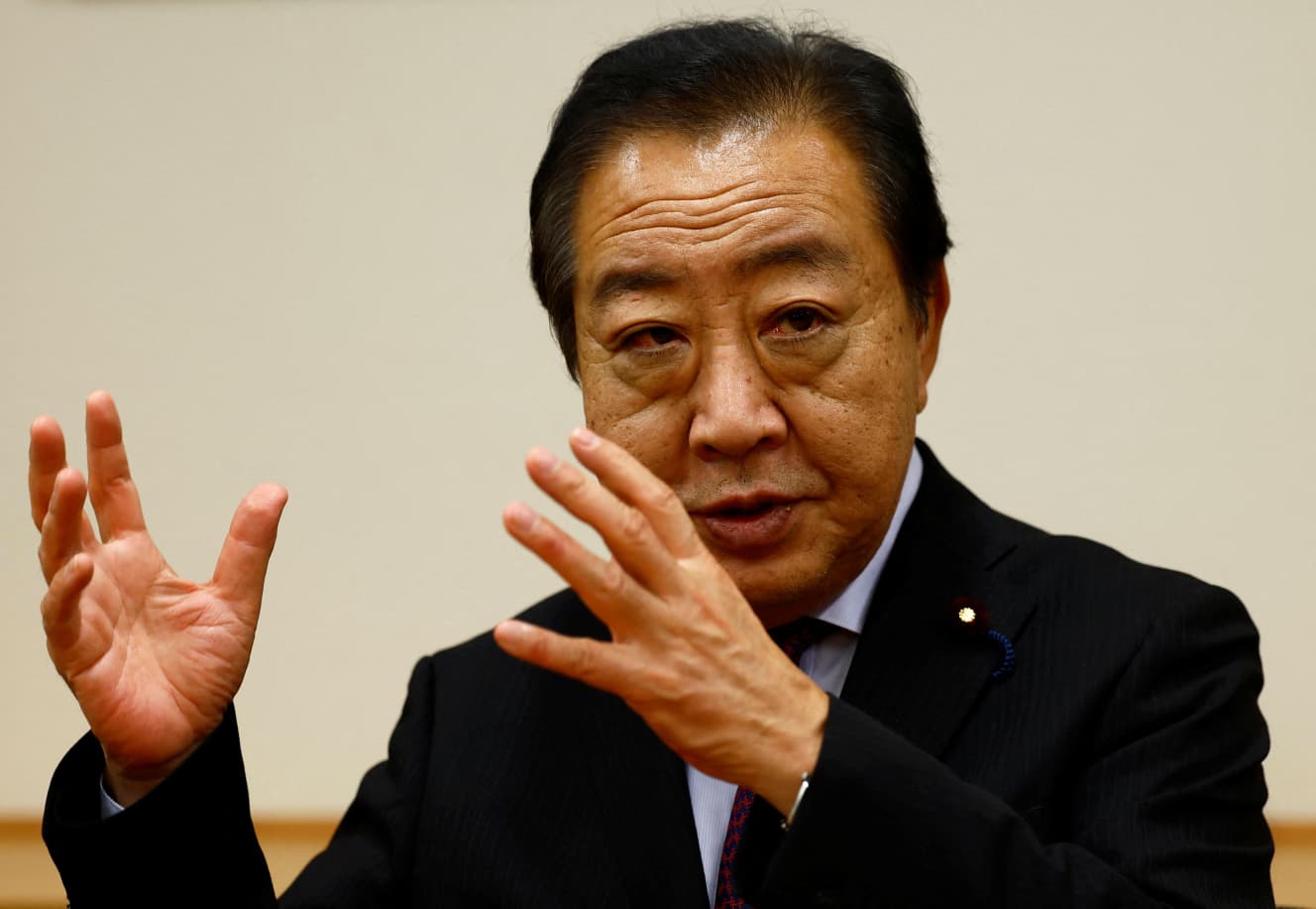
When Asahi Shimbun reported the LDP’s overwhelming victory on February 1, Co-Representative Yoshihiko Noda (68) did not hide his surprise, saying on a radio program on the 2nd, “I was suddenly slapped awake.” As mentioned earlier, political surveys by major newspapers predicted that the LDP would secure a single-party majority (233 seats), while the Centrist Party, lacking recognition of even its party name among non-affiliated voters, was forecast to struggle even among its own leadership.
“The LDP’s party support is only slightly increasing, riding on Takaichi’s high popularity. If Takaichi appears, she can gather hundreds of people at street speeches. While her personal popularity is evident, Japan’s election system is not presidential but parliamentary; her name can only be written in Nara’s 2nd district. Could someone really write her name if their own district is represented by a member with shady funding or links to the Unification Church?” (Veteran CDP secretary)
In terms of local assembly members, the LDP has 3,400 local legislators compared to 3,800 for Komeito and 960 for CDP, meaning the combined numbers can rival LDP.
“Neither the Upper House members nor local legislators joined the Centrist Party; they remain in their parties but participate in each candidate’s campaign office. With the labor unions supporting CDP and Soka Gakkai backing Komeito, it should have been possible to compete evenly with the LDP.” (same secretary)
The key factor remains Komeito votes. They excel at election tactics, such as inviting friends to vote (‘Friend Votes’) and encouraging neighbors to vote early (‘bringing along’).
“On January 14, the day before the new party was announced on January 15, the nationwide block leaders gathered at Shinanomachi for a district directors’ meeting. Chairman Minoru Harada and Executive Vice-Chair Yoshiki Tanikawa attended. Chairman Harada presented the policy of forming a new party with CDP, and in the end, all agreed to merge into the new party.
With Soka Gakkai having made a firm decision, they need to demonstrate a certain number of votes. Komeito will fully mobilize its organizational vote to overturn 20 key districts in fierce battles,” (Soka Gakkai watcher)
Even in political surveys, 30–40% of voters have not indicated a candidate or party. While Takaichi advocates bold policies to divide national opinion, she canceled party leader debates, and her detailed policies remain undisclosed, prompting criticism online: “I haven’t given a blank mandate.” Factors like her “Yen profiteering” remark and issues reported by Shukan Bunshun regarding the Unification Church or political funds could dramatically change the situation.
“The Centrist Party will be gone in three months.”
On February 4, during a street speech in front of JR Nakano Station, National Democratic Party Senator Yasushi Adachi (60) mocked the Centrist Reform Union in this way. In this highly unusual House election, will the struggling Centrist Party overturn newspaper forecasts and Adachi’s ridicule to become a central force in political realignment?

Interview, text, and photos (from the second page): Daisuke Iwasaki