Former Agriculture Ministry Bureaucrat Reveals Agricultural Policy Problems and JA’s 107 Trillion Yen Amid Rising Rice Prices


The policy of reducing rice acreage in exile
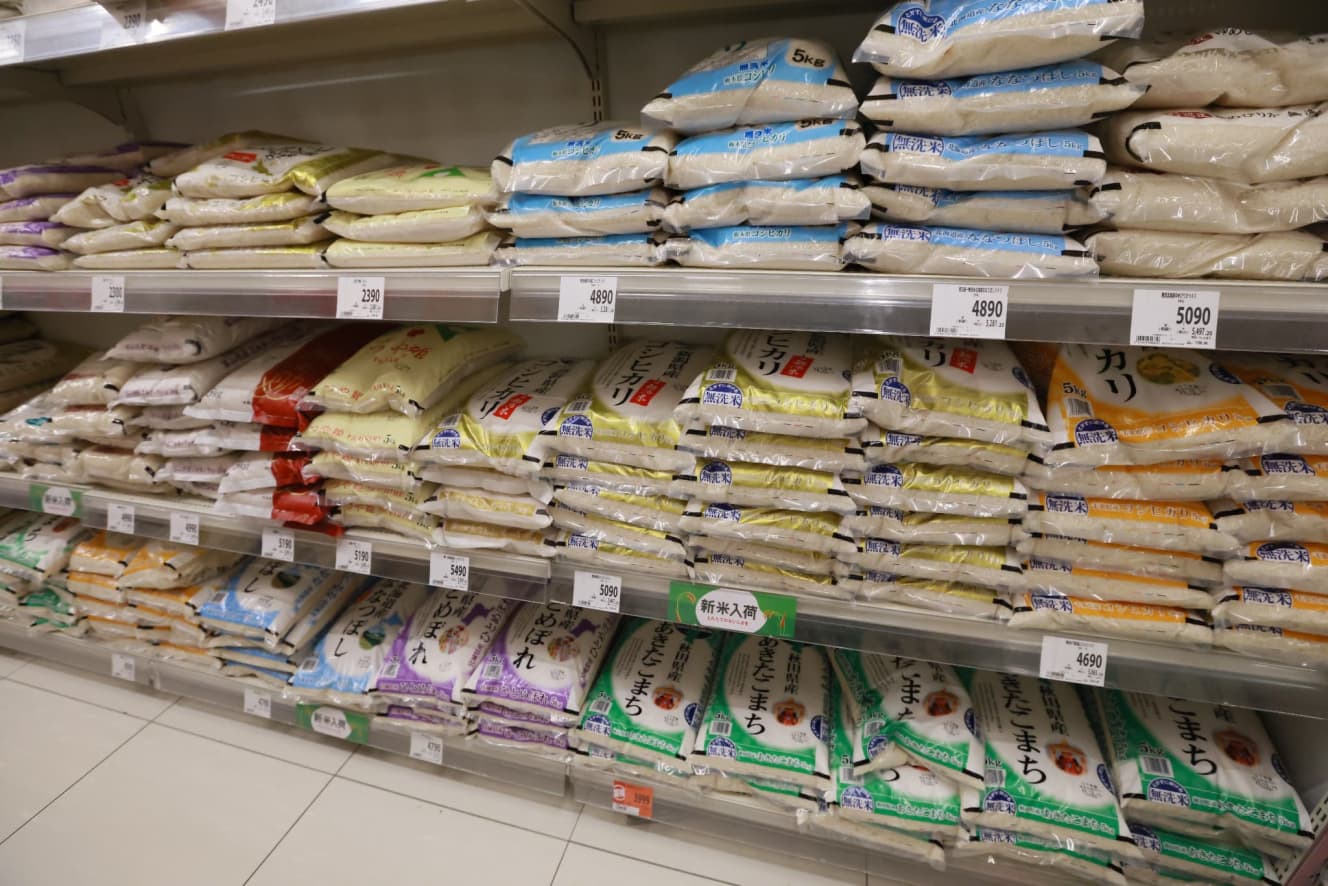
The “Reiwa Rice Crisis” that occurred in the summer of 2024. From December 29 last year to January 4, 2026, the average retail price of 5 kilograms of rice reached a record high of 4,416 yen, and prices at supermarkets have remained elevated. This phenomenon cannot simply be dismissed as inflation. It carries the risk of threatening the food security of the Japanese people.
Kazuhito Yamashita, a former career bureaucrat at the Ministry of Agriculture, Forestry and Fisheries and now a research director at the Canon Institute for Global Studies, warns of the “crisis facing Japan” lurking behind the recent price surge.
“If a national emergency were to occur and Japan’s sea lanes were destroyed, under the current production system the Japanese people would not last even half a year before starving.”
Behind the “food security” touted loudly by the Agriculture Ministry and politicians, he says, lies a massive vested interest that takes priority over citizens’ lives. What is the deep darkness of agricultural policy and the true nature of JA Bank’s “107 trillion yen money” exposed by this former bureaucrat? (All quotations below are Yamashita’s.)
“The Agriculture Ministry talks about ‘food security,’ but what they’ve been doing is the exact opposite. For about 50 years, they’ve continued the ‘gentan’ policy of reducing rice production by paying subsidies to farmers to cut output. This is a ruinous policy.”
Japan’s calorie-based food self-sufficiency rate is only 38%. If sea lanes were blocked, wheat and feed grains for livestock would no longer be imported. Supplies of beef and pork would stop, and Japanese people would have no choice but to return to a wartime-style, rice-centered diet. So how much rice would be necessary for the entire population to survive?
“During the war, the ration standard was 2.3 go per person per day—about five bowls of rice. In today’s era of abundance, few people eat that much rice, but without side dishes, rice would be the only way to obtain calories. With the current population of 125 million, that would require 16 million tons of rice per year.”
However, due to decades of production cuts under the gentan policy, current annual production of table rice is only about 7 million tons.
“The moment imports stop, there will physically not be enough food. Even if we draw down the roughly 1 million tons of stockpiled rice, it would be a drop in the bucket. Within half a year, people would begin to starve. That is the true nature of the ‘food security’ being promoted by the Agriculture Ministry.”
So how can the situation be resolved? As solutions, Yamashita proposes abolishing production controls and expanding exports.
“We should steer the ship toward increased production and exports.”
“If we fully utilize Japan’s rice paddies, it would be possible to produce 17 million tons. In normal times, 7 million tons would be consumed domestically, and the remaining 10 million tons exported overseas. Agriculture would then become a growth industry that earns foreign currency. And in the event of an emergency, exports could simply be halted and redirected to the domestic market. That would immediately secure more than 16 million tons of food.”
The idea is to use exports as a buffer valve in peacetime to ensure food supplies during emergencies. In response to concerns about whether expensive Japanese rice can really sell overseas, Yamashita states firmly:
“If production controls are abolished and rice prices fall, high-cost small-scale farmers will stop producing and instead lease out their land, earning rental income. As farmland becomes consolidated in the hands of motivated professional farmers, the ‘economies of scale’ effect—where larger production lowers per-unit costs—will take hold, dramatically reducing production costs. Even now, compared to farms under one hectare, farms of 30 hectares or more have costs that are one-third as much.
Under the production reduction policy, even breeding efforts to increase yield per unit of farmland were suppressed. Today, Japan’s yield per hectare has been overtaken by China—which produced only half as much as Japan 75 years ago—and lags 1.7 times behind California, which once had similar yields. In other words, if we planted rice varieties with California-level yields, production costs could be reduced by more than 40%. Since Japanese rice already surpasses California rice in quality, if the price gap narrows, Japanese rice has the potential to dominate the global market.”
If agriculture becomes self-sustaining as an export industry, it would also lead to what he calls “the strongest possible reserves.”
“The Agriculture Ministry is spending 50 billion yen in taxpayer money just to increase stockpiled rice by 200,000 tons. If my proposal were adopted, we could hold an enormous reserve of 10 million tons without using tax money. When it comes to protecting citizens’ lives, it’s obvious which approach is more rational.”
From both a food security and economic standpoint, “increasing production and expanding exports” appears clearly rational. Yet why is the production reduction policy maintained and rice prices kept artificially high? Yamashita explains that behind this lies the issue of JA’s (agricultural cooperative’s) profit structure.
JA’s massive funds
“What JA (the agricultural cooperatives) want to protect is not the rice market, which is worth only about 1.5 trillion yen, nor even the roughly 9-trillion-yen ‘agriculture’ sector. What they truly want to protect is the 107 trillion yen in deposits held at JA Bank.”
The vast majority of JA Bank’s depositors are people engaged in agriculture. However, most are not full-time farmers who make a living solely from farming. They are “part-time farmers” who work as company employees or civil servants and farm on weekends, or who live on pensions. In many cases, they deposit not only their agricultural income but also their salaries and pension income into JA Bank.
“If production controls were abolished and rice prices fell, inefficient small-scale part-time farmers would likely stop cultivating. If they leave farming, JA’s membership would decline, and the deposits that underpin its financial business would flow out. JA wants to keep these part-time farmers tied to rural communities at all costs. To do that, it needs ‘high rice prices’ maintained through the production reduction policy.”
The enormous 107 trillion yen collected by JA is managed by Norinchukin Bank. In reality, JA’s identity is less that of an agricultural organization and more that of a massive institutional investor.
“JA engages in political activity to promote production cuts and, as seen last year, even raises provisional payments (advance payments made by JA for shipped rice) in order to keep rice prices high. On the surface, it appears to be standing up for small farmers. But it would not be an exaggeration to say these actions are carried out not for ‘rice production,’ but to secure depositors for its financial business.”
This structure has become entrenched through the mutual relationship among JA, politicians, and the Ministry of Agriculture. JA sustains its financial operations by holding on to part-time farmers and provides organized votes to politicians. Politicians protect production controls in exchange for votes. The Agriculture Ministry maintains its authority through regulations and subsidies while securing post-retirement positions.
“Within this triangle, the perspectives of national food security and the interests of consumers and taxpayers are missing. Citizens are forced to pay taxes to fund production-cut subsidies and then forced to buy higher-priced rice. It’s a classic case of creating and then solving one’s own problem—a double burden. People are paying for policies that could leave them starving in a food crisis.”
Yamashita argues angrily that unless policy is changed, the risk of food shortages in an emergency will not be resolved.
“We must abolish the ‘ruinous policy’ of production cuts and shift toward an agriculture sector that competes globally. Otherwise, we will not only be ‘forced to buy expensive rice,’ but will continue to face the future risk of hunger. Despite the life-or-death importance of this issue, no political party raised it in the recent election—because all parties agree on maintaining small-scale farmers.”
Isn’t it time for us to calmly examine this reality?
Interview and text by: Shinsuke Sakai PHOTO: Kazuhiko Nakamura