Veteran Insider Explains Why Forever Young Could Conquer the Prix de l’Arc de Triomphe


Forever Young might actually be better suited for turf!?
The “Dirt World Champion” of 2026 is finally on the move.
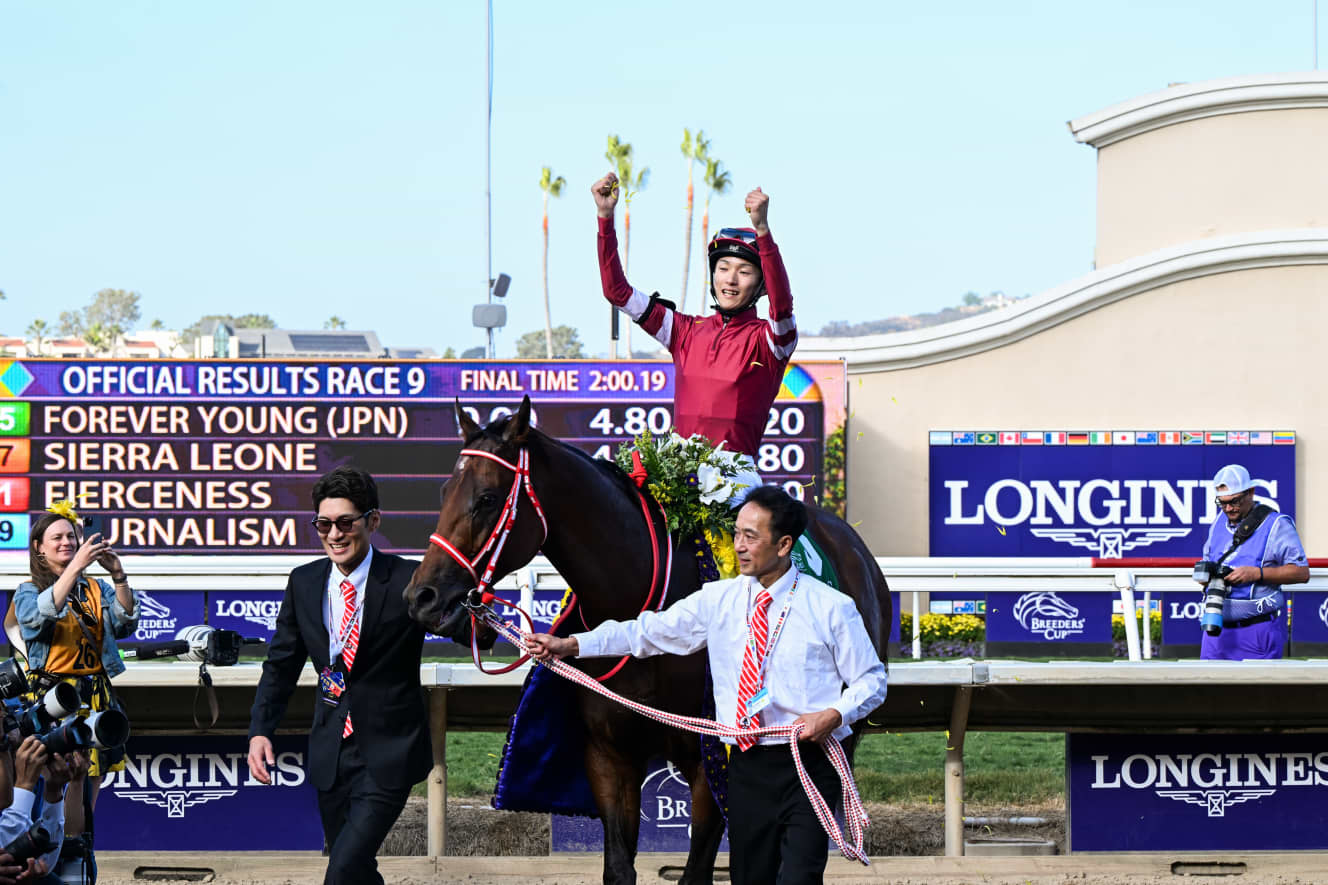
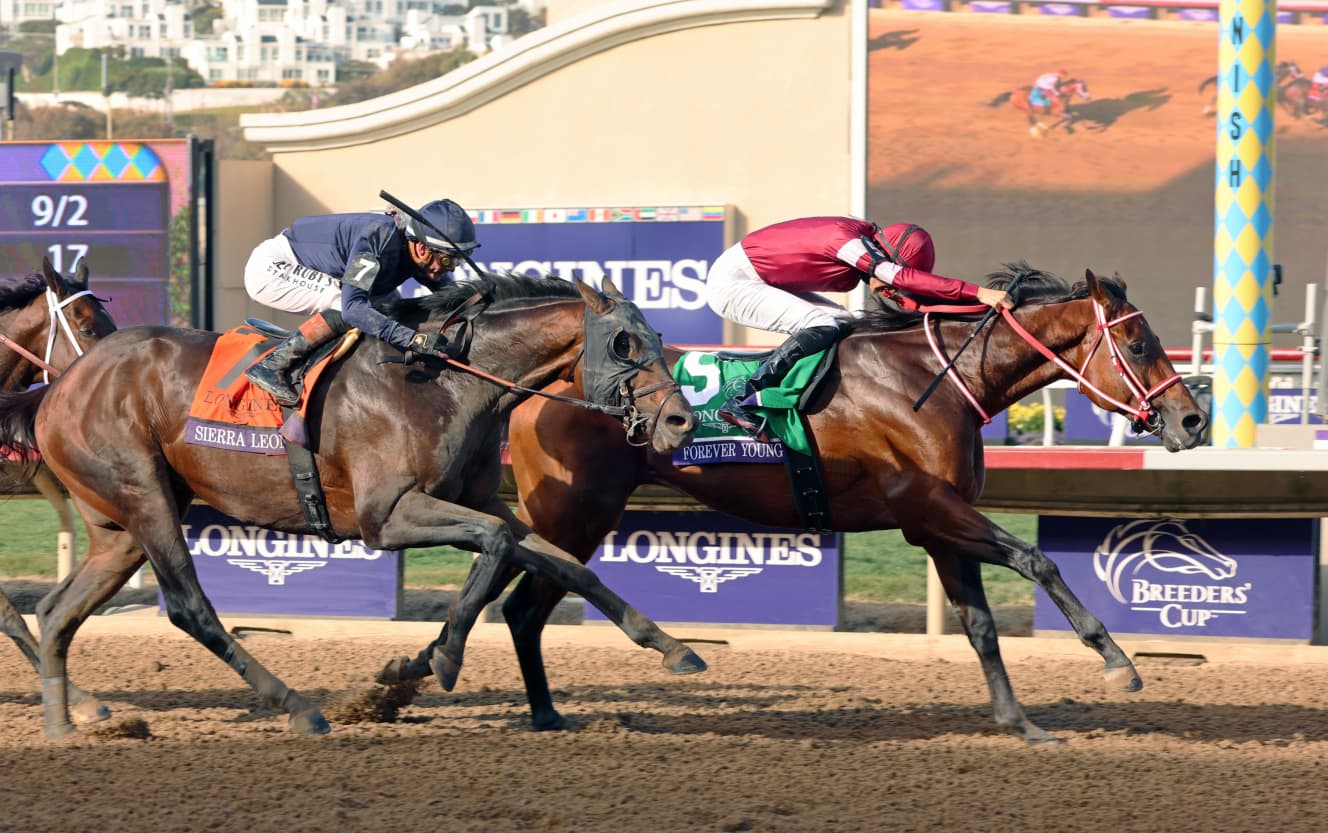
Last fall, Forever Young (5-year-old colt, trained by Yoshito Yahagi) became the first Japanese horse to win the Breeders’ Cup Classic in the U.S. The team has announced that the horse’s biggest goals this spring are the Saudi Cup (GⅠ, February 14) and the Dubai World Cup (GⅠ, March 28).
Its racing record is dazzling: 13 starts with 10 wins, all of them in dirt races. From the Japan Dirt Classic as a three-year-old to the Saudi Cup, the world’s highest-purse race as a four-year-old, Forever Young has accumulated five GⅠ and JpnⅠ titles. In November last year, it also won the BC Classic, the pinnacle of dirt racing worldwide, solidifying its status as the “Dirt World Champion,” and earned the 2025 JRA Award for Horse of the Year and the U.S. Eclipse Award for Outstanding Older Male Dirt Horse.
Despite reigning at the top of the dirt world, one expert has a different opinion on the horse’s suitability: Makio Okada (73), president of Okada Stud and head of the Normandy Owners Club, known for his legendary eye for horses. He declares:
“Forever Young is actually a horse suited for turf. I think it could win the Prix de l’Arc de Triomphe.”
A world-class dirt horse that might be better on turf? When asked about this seemingly unbelievable claim, Okada presented an extremely logical rationale, born from decades of observing horses.
“Winning the BC Classic was truly thrilling. I’ve always said Japan should aim at American racing. This victory proves that Japanese horses are at the top level in the world.”
Discussing the significance of a Japanese horse winning in the U.S., Okada then spoke about Forever Young’s suitability, recalling his first impression when the horse appeared at Monbetsu Racecourse in Hokkaido as a two-year-old:
“When I first saw him in the paddock, his back was long, legs long, and his neck was beautifully set. His hindquarters weren’t wide and bulky like a typical dirt horse. I thought, ‘This horse would run even better on turf.’”
He also explained the clear difference in movement between dirt and turf Thoroughbreds:
“A true dirt horse bends its front knees in its stride, pounding the ground and scraping forward with its forelegs. Turf horses, on the other hand, keep their front knees relatively straight, extend their legs, and rely on propulsion from the hindquarters. Horses like Karandagan, Silence Suzuka, and Deep Impact are classic turf examples. Forever Young’s movement at Monbetsu was completely of the turf type.”
So why did Forever Young become the world’s best dirt horse? Okada attributes it to the skillful “transformation” by the renowned trainer Yoshito Yahagi (64):
“Yahagi-san is brilliant. To win world-class dirt GⅠ races, he trained Forever Young to be a dirt horse. He worked him on uphill tracks, built up the forehand muscles, and developed him to run with power. Today, he has the muscular build of a dirt horse, but his underlying skeleton and natural stride are unmistakably suited for turf.”
Power type excels on Longchamp’s heavy turf!?
But can Forever Young really win France’s Prix de l’Arc de Triomphe (GⅠ), the long-cherished dream of Japanese racing?
Japanese horses have attempted this race many times, often ending in heartbreak. El Condor Pasa in 1999 was overtaken in the final stretch, finishing just half a length behind in second place. In 2012, Orfevre broke clear in the straight but veered toward the inside rail at the end, also finishing second—a nightmare still vivid in fans’ memories.
Why has victory eluded them? The main factor is said to be the uniquely heavy turf at Longchamp Racecourse in Paris.
“When it rains at Longchamp, the horses’ shoes sink completely into the ground. October in Paris is often wet, and races on firm turf are rare. In the past 10 years, only twice has the turf been good. It’s almost a different sport from Japanese races run on hard, fast tracks. That’s why winning the Arc requires the kind of power that can handle Japanese dirt racing,” says Okada.
Pure turf horses, which excel on Japan’s fast tracks, struggle in Europe’s power-oriented contests. Conversely, a horse like Forever Young—possessing the power to be the world’s best on dirt, yet fundamentally a turf horse—is considered the ideal candidate for the Arc.
“This horse is currently closer to victory than any Japanese horse that has attempted the Arc. The power has already been proven. With 2–3 months of training, we can awaken his natural turf stride again. By strengthening the hindquarter propulsion, we can restore his body to carry speed effectively.”
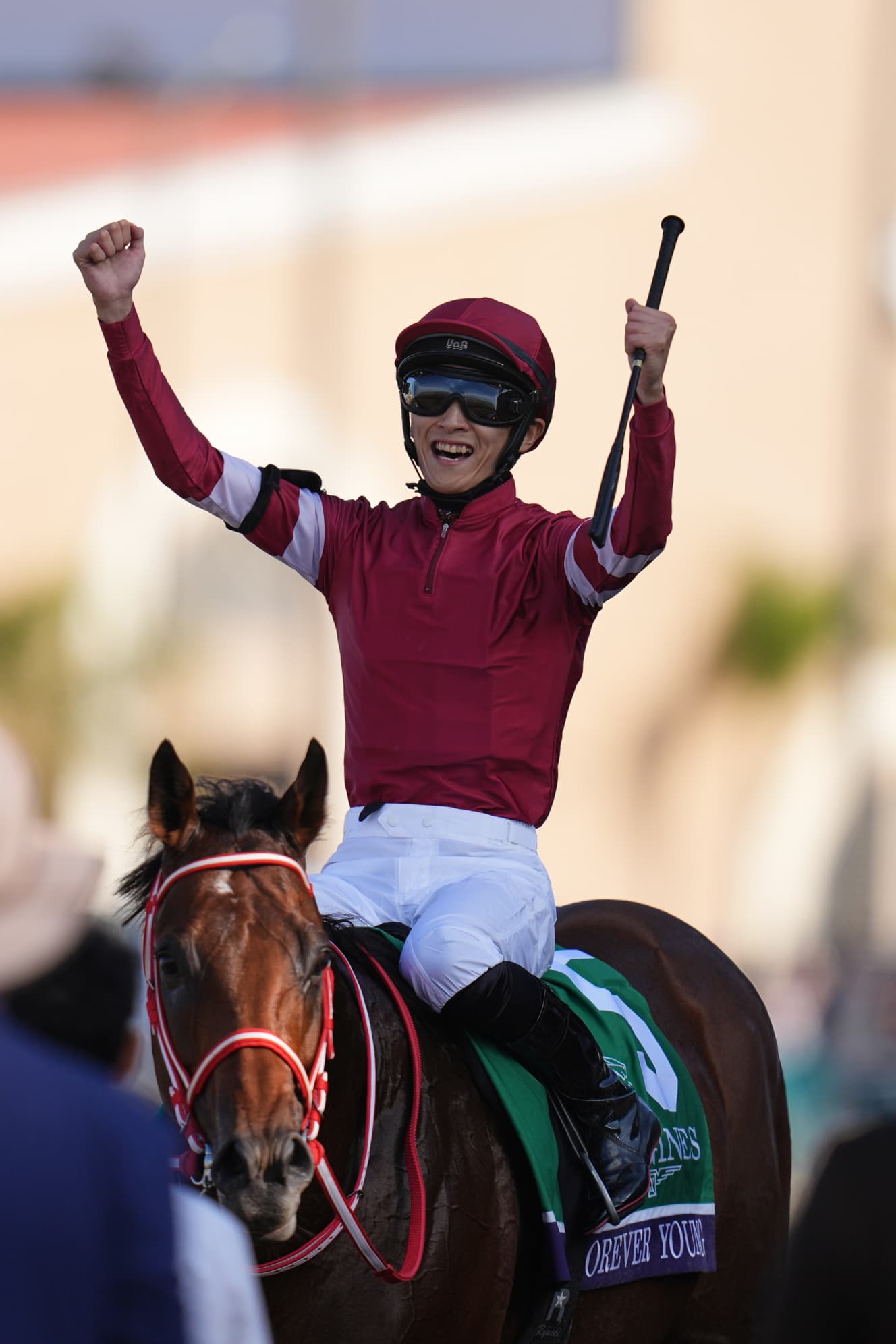
Although Forever Young has only raced on dirt so far, trainer Yoshito Yahagi has previously said, “In discussions with the owner, we’ve talked about running him on turf at least once.” This spring’s goals are the Saudi Cup and Dubai World Cup, but once he sweeps all the major dirt titles, the greatest drama may be waiting this fall.
If a horse that has conquered the top dirt race, the BC Classic, also goes on to win the world’s top turf race, the Prix de l’Arc de Triomphe, it would be a historic event that could reshape global horse racing history. Like Shohei Ohtani dazzling the Major Leagues with a two-way performance, this horse could captivate the world as a dual-threat on turf and dirt.
Interview and text by: Shinsuke Sakai