Reiwa Rice Turmoil Continues as Expert Predicts Another Year of High Prices
Minister of Agriculture Norikazu Suzuki's "rice coupons" are meaningless. 5 kg of rice now costs 4,000-5,000 yen or more.


The average retail price of rice per 5 kg reached 4,416 yen
According to the latest announcement from the Ministry of Agriculture, Forestry and Fisheries, the average retail price for 5 kg of rice for the period December 29 last year to January 4, 2026, reached 4,416 yen, setting a new all-time high.
In fact, supermarkets in Tokyo are lined with products in the 4,000–5,000 yen range for 5 kg. For branded rice, some even exceeded 6,000 yen.
Despite expectations that prices would fall with the distribution of newly harvested rice, why do they remain high?
Kazuhito Yamashita, research director at the Canon Institute for Global Studies and an expert on agricultural policy, points out that “JA (Japan Agricultural Cooperatives) is intentionally restricting the volume of distribution to maintain prices.”
“The ‘Reiwa rice panic’ that occurred in the summer of 2024 was caused by the poor harvest of the 2023 crop due to extreme heat. Because there was a shortfall of about 400,000 tons from the projected supply, the supply–demand balance collapsed, and prices did not fall even when new rice began circulating. On the other hand, the 2025 crop has a harvest nearly 10% higher than the previous year. So why haven’t prices dropped? It’s because JA is holding the newly collected rice as inventory and keeping the volume released to the market at about the same level as last year.”
According to the Ministry of Agriculture, Forestry and Fisheries, private-sector inventory at the end of last November stood at 3.29 million tons—700,000 tons more than in 2024. Why is JA increasing its stockpiles?
“Because it set the advance payment (gaisankin) high. The advance payment is the prepayment JA makes for shipped rice and is a major source of income for farmers. However, the year before last, due to the rice shortage, other collectors paid farmers more than the advance payment, so JA’s collection volume declined. This time, in order to increase its collection volume, JA set the advance payment at about three times the normal year’s level.
If the market price of rice falls under these circumstances, JA, which paid farmers high prices, would incur losses. But it cannot tell farmers, ‘We paid too much in advance, so give it back.’ Because the Ministry of Agriculture buys large amounts of rice as government stockpiled rice, JA’s inventory decreases, allowing high prices to continue until this September, the next harvest season,” he said.
Although the year has just begun, Yamashita asserts that rice prices will not fall until autumn. In other words, the current level of over 4,000 yen per 5 kg will continue for some time.
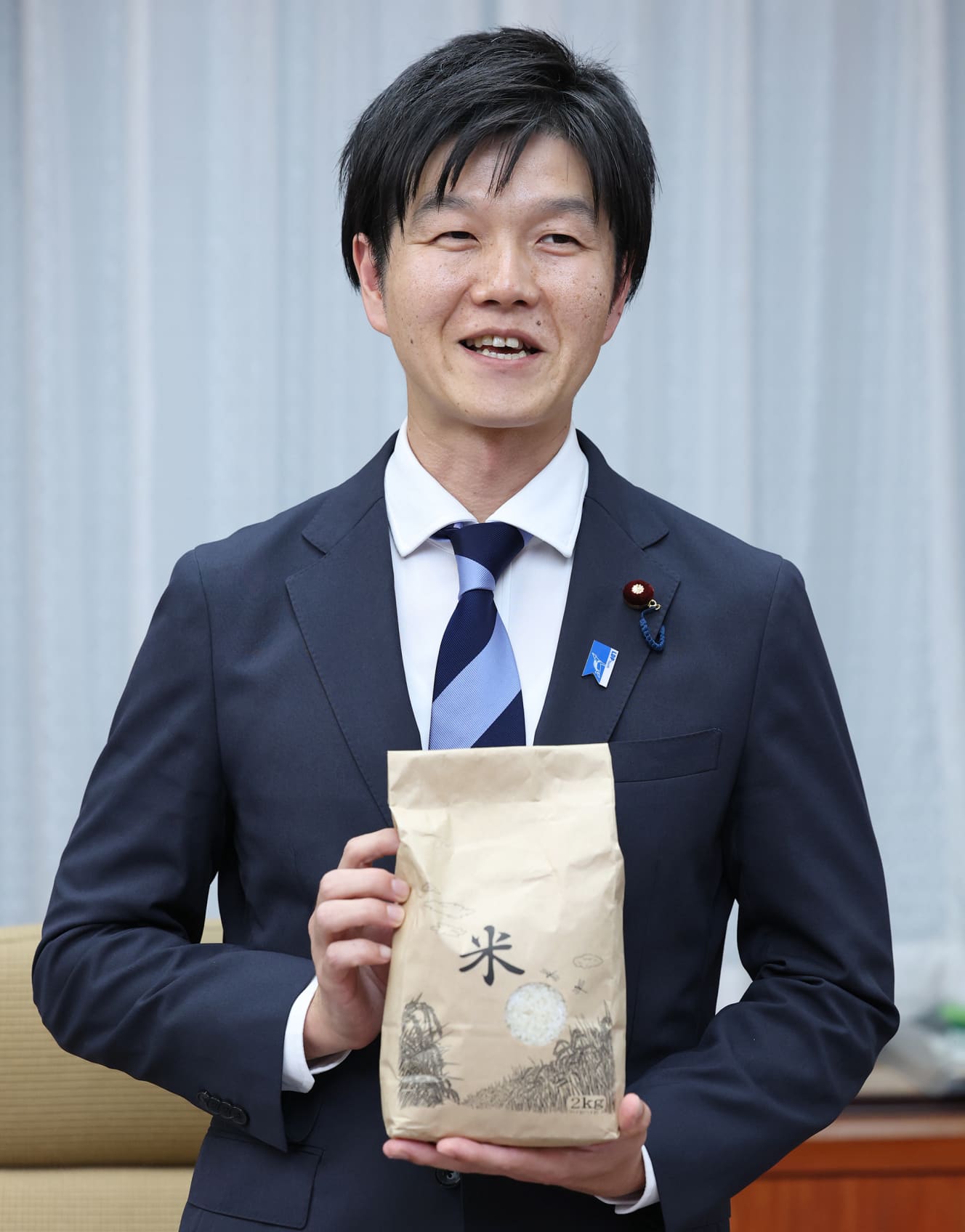
Agriculture Minister Norikazu Suzuki (43), an elite among the so-called agriculture-tribe politicians, is mindful of the rural vote, which could determine his political fate, and is backing JA’s strategy. He is pushing ahead with the acreage-reduction policy that maintains prices through government-led production controls—hardly a policy that puts the public first. Consumer economy analyst Hiroaki Watanabe fumes that acreage reduction should not be done.
“Minister Suzuki says, ‘Production according to demand,’ but due to population decline, Japan’s domestic demand will only keep falling. If this continues, the amount of rice circulating domestically will keep shrinking. Instead of falling into a negative spiral, we should increase production and export the surplus overseas to adjust the domestic distribution volume. There is no need for an acreage-reduction policy at all.”
Rice vouchers are not helping household finances
Last November, the secret measure announced in response to soaring prices was the rice voucher. It could be used at supermarkets nationwide and was touted as a way to help strained household budgets—an initiative strongly promoted by Agriculture Minister Suzuki. However, the aforementioned Yamashita is exasperated, saying, “It has no effect on lowering prices.”
“Since the cause is the high advance payments, handing out rice vouchers without addressing that will not lower prices. By supplementing purchasing power, it simply allows rice to sell at high prices. From JA’s perspective, it can dispose of its inventory without lowering prices until the next harvest season. In the end, the rice vouchers are not for struggling consumers but a measure to bail out JA.”
Needless to say, the rice vouchers are funded by our tax money. Could there be anything more absurd?


● From the January 30–February 6, 2026 combined issue
PHOTO: Jiji Press (Agriculture Minister Suzuki), Kazuhiko Nakamura