Chaos and Transformation in Tokyo’s Shinjuku 2-Chome, the Heart of the Global Gay Scene


[Irregular Series]
A nightlife district for gay people where both venues and patrons are diversifying
Women and foreign visitors are increasing in a neighborhood that once refused general customers
Meanwhile, issues like trash and noise have emerged—what do longtime residents think?
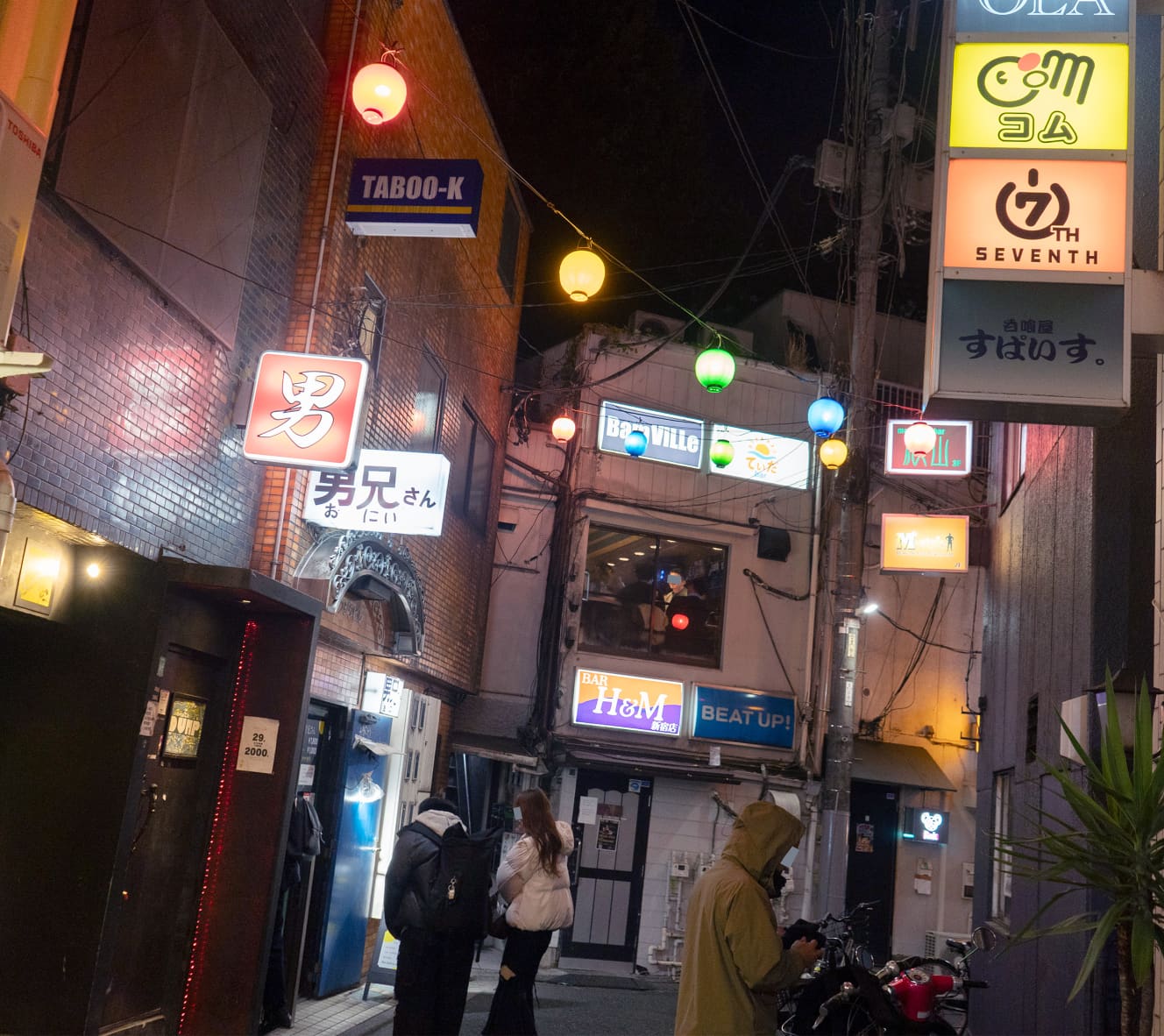
Just walking a short distance of 300 meters square, several six-colored rainbow flags in red and yellow immediately caught the eye. The people who live in this neighborhood place their wishes on these flags: to live freely, unbound by any single color.
The increasing presence of rainbow flags, a symbol of the LGBTQ movement, clearly reflects the changes in Shinjuku Ni-chome, which has been recognized as a gay town since around the 1980s.
In this small district, said to house some 400 bars crowded together, waves of openness to straight people, women, and foreign tourists have arrived, a trend that has become more pronounced since the COVID-19 pandemic. A bar owner in Ni-chome commented on this shift:
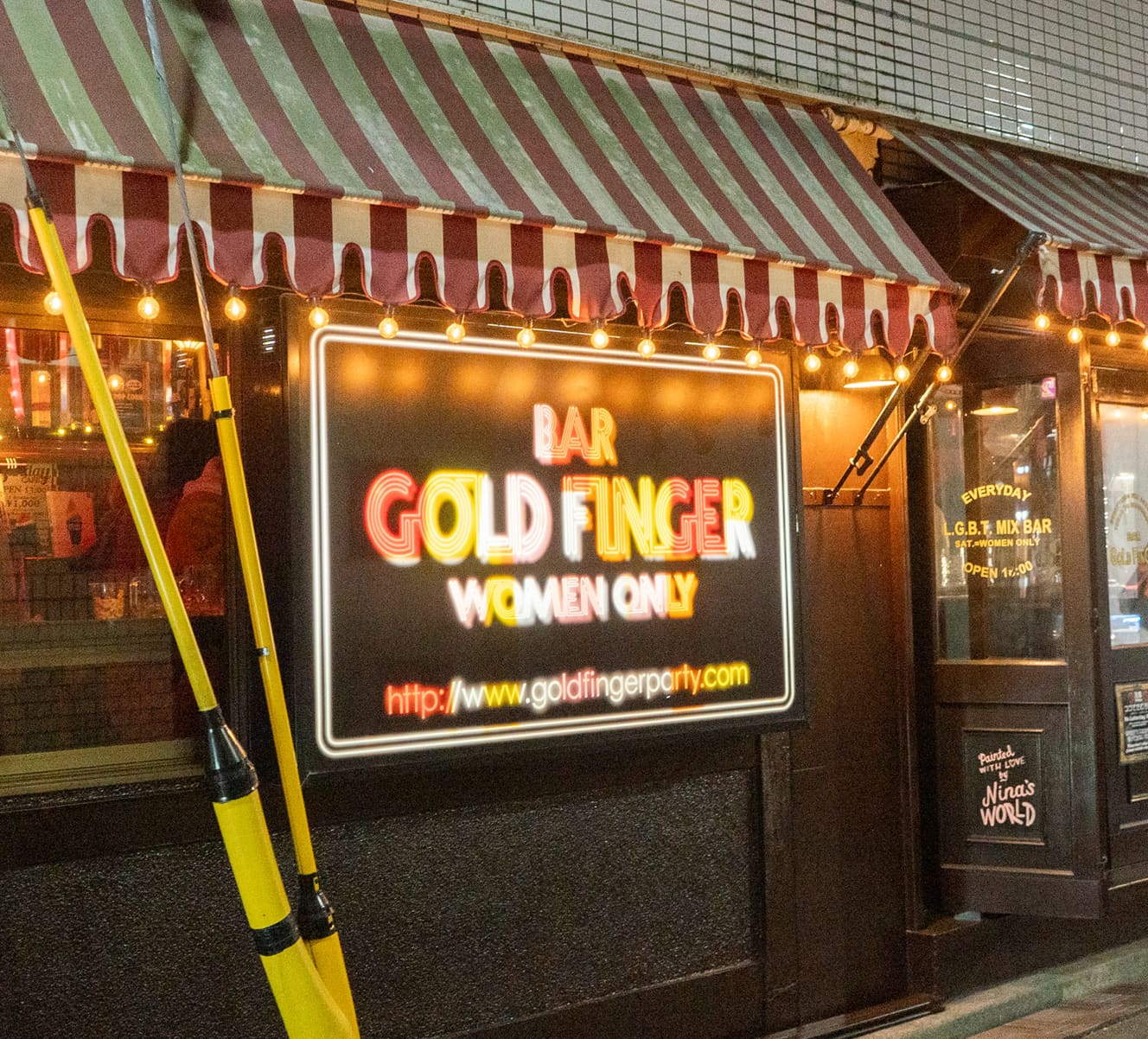
“In the past, if you walked around with a woman, people would even spit at you—the neighborhood was so closed-off. Now, however, lesbian bars and drag queen venues are opening, and things are diversifying. But the economy is far from good.”
“To survive, you have to accept the presence of diverse people, but those who’ve been in this area a long time have strong allergies. They lived in a time when prejudice against gay people was far stronger.”
Longtime residents of the area began to sense change about ten years ago, coinciding with the gradual spread of LGBTQ awareness in Japan. A male customer who has been bar-hopping in Ni-chome for 40 years shared:
“When you cross the intersection in front of the Shinjuku 3-chome police box toward Ni-chome, my gay switch turns on. In the past, it was a place for homosexual encounters, so entering the neighborhood came with a unique tension. But recently, most visitors come for bars, clubs, or sex establishments. People now look for their real partners on dating apps.”
At the Limit of Patience Over the Misbehavior of Increasing Foreign Tourists
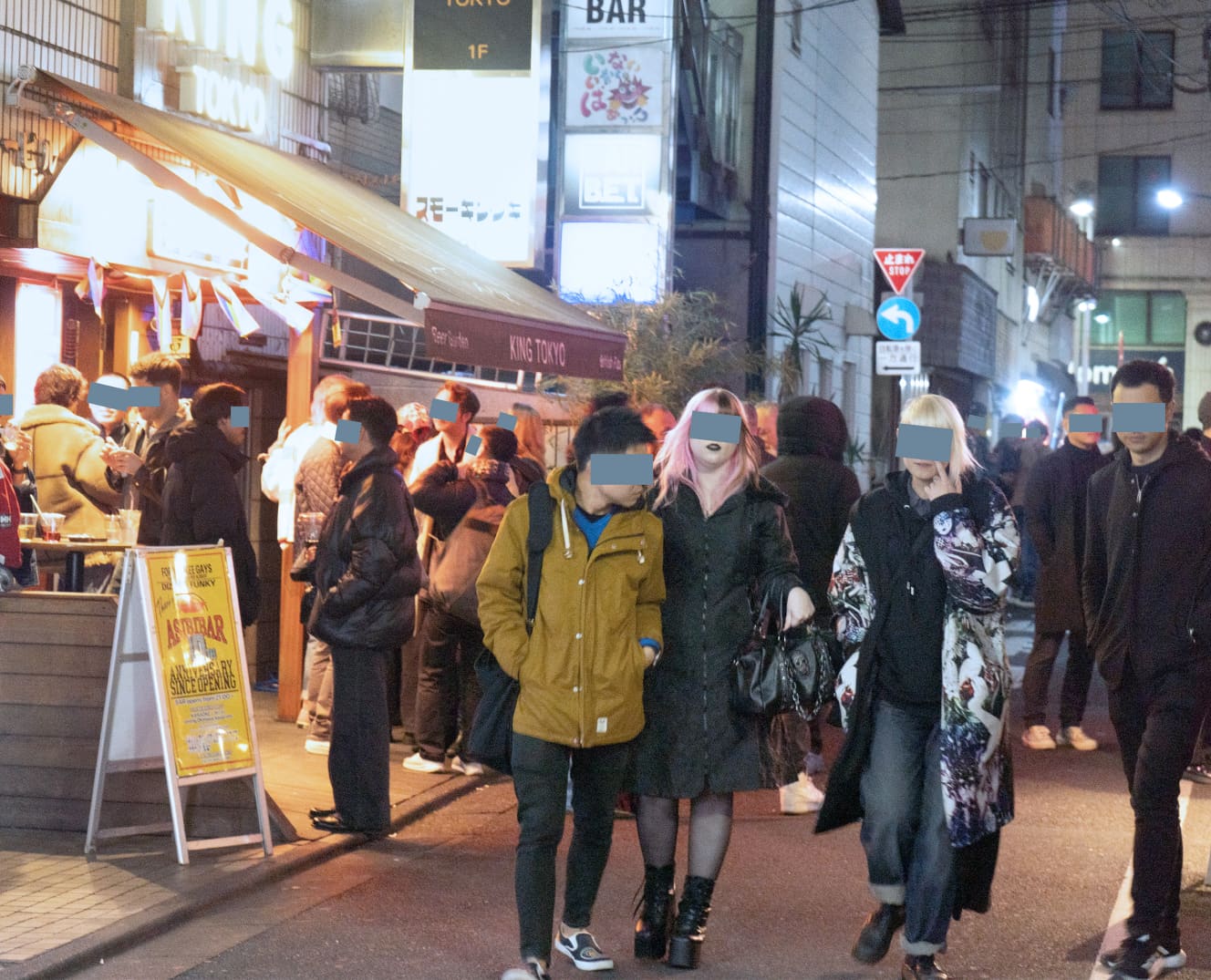
The number of foreign tourists has visibly increased. Most of them are Westerners from countries advanced in LGBTQ rights, such as those where same-sex marriage is legally recognized.
As seen in the photo above, shot bars targeting these tourists are thriving. On weekends, crowds even spill out onto the streets. However, by and large, the locals look at them critically. The aforementioned bar owner lets out a deep sigh:
“We’re frustrated with foreign tourists. They buy alcohol and food at convenience stores, then sit on the street and make a ruckus for hours. They don’t spend money in the shops. Yet, they leave large amounts of trash in front of stores or on the streets, and the noise bothers other customers. We know not all of them behave this way, but we’ve reached our limit.”
On the streets, contractors hired by the ward stand holding placards in English reading, “Be quiet” and “Don’t spill onto the street.” They’ve been patrolling occasionally since last summer to provide guidance.
Female tourists have also become noticeable. One of a group of four women visiting from the U.S. on a short trip said:
“I’m straight, but I came here on the recommendation of a gay friend who lives in Japan. I’ve traveled all over the world, but Shinjuku is the only place where so many bars are concentrated in such a large gay town. It’s a very fascinating place.”
The author has also visited cities abroad known as gay towns. For example, London’s Soho or Madrid in Spain don’t have bars concentrated in one place like Shinjuku Ni-chome; instead, the venues are spread across the city. “The smallest area in the world, yet the largest LGBTQ community in the world,” said a French regular about Ni-chome.
Ni-chome’s establishments rarely change hands. Many owners are elderly, and the strong sense of community means property information rarely reaches conventional real estate companies. As a result, most bars operate as sublets.
From FRIDAY, January 30 – February 6, 2026 combined issue
Interview and text by: Shimei Kurita (nonfiction writer) PHOTO: Takayuki Ogawauchi