Playback ’16] “Fly or It’s Over!” Four Men Sanctioned 17-Year-Old Boy for Drowning


What did “FRIDAY” report 10, 20, or 30 years ago? In “Playback Friday,” we revisit the topics that were hot at the time. This time, we take a look at the January 22, 2004 issue, which was published 10 years ago, in which four men brutally drowned a 17-year-old boy in the middle of winter in the city of Kashiwa, Chiba.
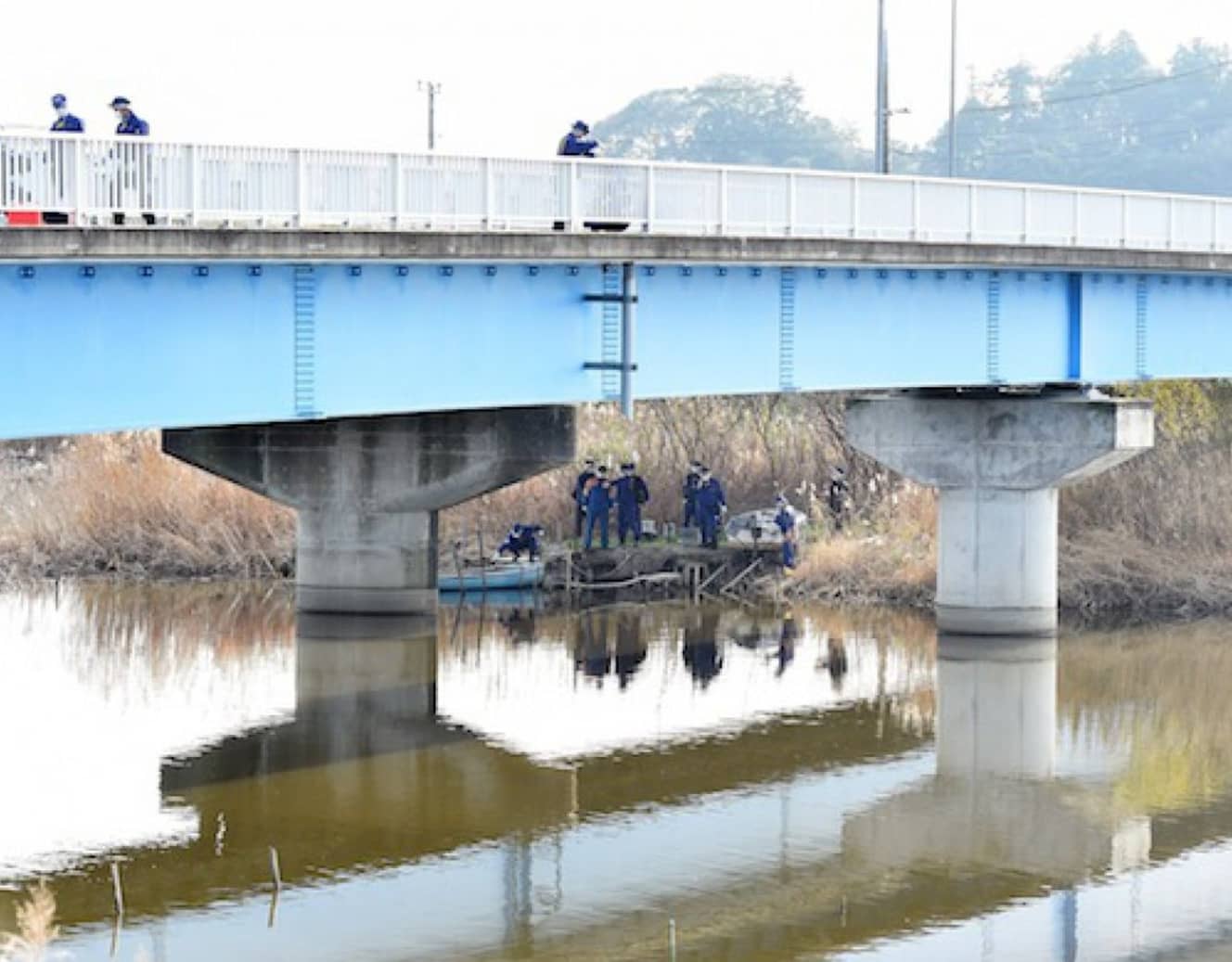
At around 10:00 a.m. on January 4, the body of Mr. A, then 17, an employee of a construction-related company in Abiko, was discovered at the bottom of the Tega River in Kashiwa City, Chiba Prefecture, completely naked. Arrested on suspicion of murder on the following day, the 5th, were X (then 22), a senior employee of Ms. A, Y (then 19), another colleague, W (then 21), a former colleague and unemployed, and Z (then 20), a friend of W’s. The four were arrested for the murder. Why did the four of them drive Mr. A to his death? (Descriptions in parentheses are quotations from past articles, and ages are those of the time).
He was a senior employee who took good care of them.
His colleague went into the Tegagawa River and never came back.
The four arrested had called 119 early in the morning of the 4th, and the cause of Mr. A’s death was determined to be drowning, and the four initially told the police that he had dropped his belongings in the river and had drowned while swimming to look for them. They had placed Mr. A’s clothes on the riverbank to disguise their whereabouts.
X was known locally as a baseball player, and even entered the prestigious Kisarazu Sogo High School with a baseball recommendation. He took good care of younger students and had a good reputation at his workplace. One of the juniors he particularly cared for was Mr. A. “Mr. A graduated from junior high school and went to Kisarazu Sogo High School,” Mr. X said.
After graduating from junior high school, he started working for us about a year ago. However, his work attitude was not very good. He couldn’t get up in the morning and was sometimes late or absent without permission. Even so, X drove A-kun home to pick him up, and at one point he even let him live at home.
You have to jump in or it will never end.”
X told the interrogator, “Two million yen that I had left at home was missing. When I questioned A, he admitted that he had stolen it and promised to return it little by little from his salary. It seems that X had been discussing with W and Z that it would be better to “screw A once” and so on.
Then, around noon on January 3, X sent a LINE to Ms. A saying, “Where are you now? X sent Ms. A a line saying, “Where are you now? Mr. A, who was at home, faked that he was not at home, but Y, who was with Mr. A, contacted X. X was angry that he had been lied to. X, angry at being lied to, invited W and Z to Mr. A’s house and took them out in his car.
At around 2:00 a.m. on the 4th, X took Ms. A out in his car and had her jump into a different river than the one where the crime took place. After returning to X’s home, they went to Sengenbashi Bridge on the Tega River, which was the scene of the crime. There, when Z asked her to choose between falling into the river or being beaten, Ms. A said, “I’d rather jump in,” and stripped completely naked.
As Mr. A hesitated, X said to him, “If you don’t jump in, it won’t be over.” As Mr. A climbed over the bridge railing, Y and W took hold of one of his arms and held him suspended above the river, then released his hands. …… The temperature that day was about 3 degrees Celsius. When Mr. A did not float, Y called 119 shortly after 6:00 a.m. The incident came to light. The incident came to light.
At the time of his arrest, X denied committing the crime , saying that he was just at the scene of the crime, but the other three admitted the charges.
Tragedy Caused by “Excessive Sanctions
On January 15, 2004, the Chiba District Public Prosecutors Office suspended the murder charges on the grounds that “there was insufficient evidence to admit the intent to kill,” and charged X and Z with manslaughter and W with confinement. Y, who was a minor, was released with his sentence suspended, and W was later sentenced to probation for ” accessory after the fact” at trial.
In the trial that began on November 25, 2004, X admitted the facts of the indictment, but Z denied part of it, saying, “I never told Mr. A to stand outside the parapet of the bridge. The defense argued that “Z did not intend to drop Mr. A into the river” and that manslaughter was not committed.
At the trial on December 15, the presiding judge rejected Z’s argument, saying that Z “thought it would be OK if she fell into theriver” when he had Y and W hold her hands while she stood on the bridge railing.
He also rejected Z’s argument, saying, “It is too short-sighted to resort to assault and the like for the sake of sanctions. It is clear that the two defendants were motivated by a desire to relieve their own anger or to enjoy the assault itself,” and sentenced them to eight years in prison.
On the other hand, the court also stated, “The fact that they were trying to rescue the drowning victim, rather than trying to ensure that he would fall, suggests that they did not anticipate the possibility of injury as well as death.
As the article states, X used to take good care of Mr. A among his junior colleagues. Z also stated at the trial that he had been a childhood friend of Mr. A’s, and that even before the incident, whenever Mr. A lied or stole money, he had warned him by using violence.
Was there any solution other than violence?
PHOTO: Shinji Hasuo