Former yokozuna Hakuho “has plenty of room to grow”…closely follows the “amateur number one” All Japan Sumo Tournament, a gateway to success for makuuchi rikishi!


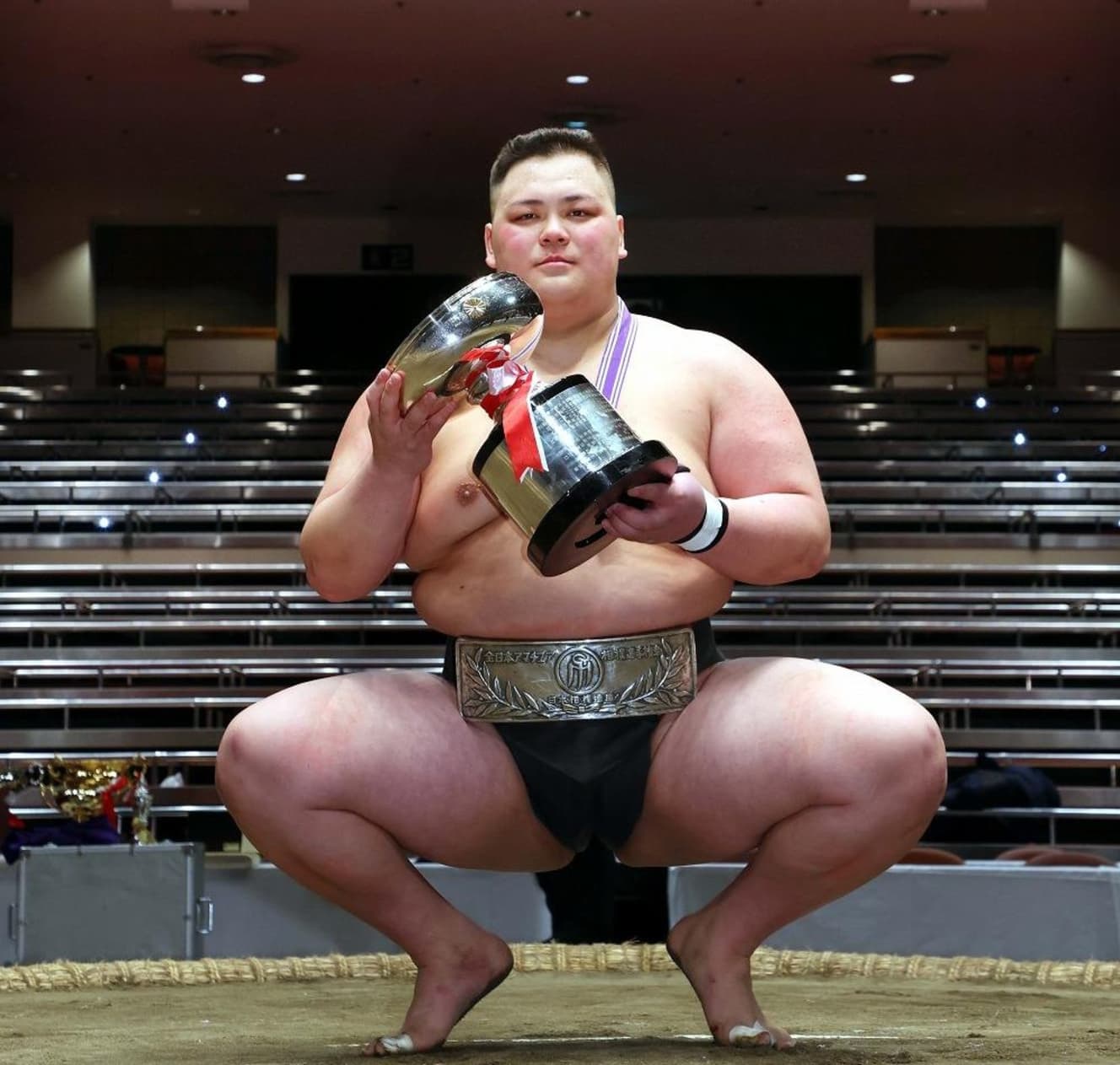
The first Grand Sumo Tournament of the year comes to a close.
Although the highlight of the tournament was the performance of new ozeki Yasushonishiki, the revenge of yokozuna Toyoshoryu, and the return of yokozuna Ohnosato from injury, the battle for the championship was chaotic. The majority of the rikishi currently in the makuuchi ring have amateur sumo experience in all disciplines.
Oh-nosato was crowned amateur yokozuna for two consecutive years in 2021 and 2022, and made his debut in the summer tournament of 2023 as the 10th ranked wrestler in the makushita division. His overwhelming strength propelled him to the rank of yokozuna in just over two years after joining the ranks.
Anushonishiki also achieved success in the European Sumo Championships and the World Junior Sumo Championships during his youth in Ukraine.
The All Japan Sumo Tournament, which determines the number one amateur sumo wrestler in Japan, was held on November 30 at the Ryogoku Kokugikan.
Before the opening ceremony at 10:00 a.m., Sho Hakuho, former yokozuna Hakuho, made an appearance at the event; Hakuho, who became an advisor to the International Sumo Federation in September, had observed the World Sumo Championships in Bangkok, Thailand.
Hakuho talked about wrestlers of note.
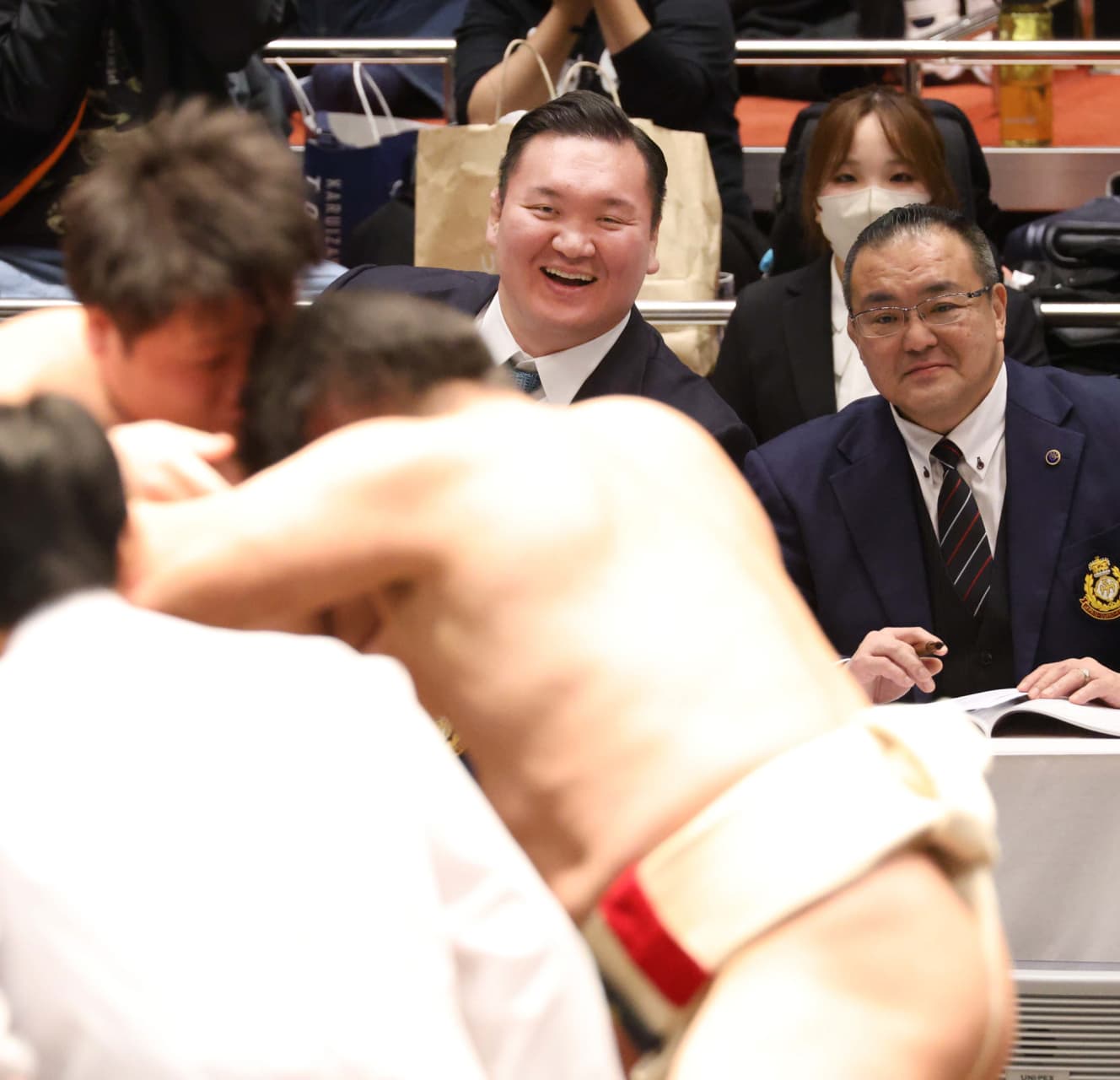
This was his first visit to the Kokugikan since retiring from the Japan Sumo Association after last summer’s tournament.
I am glad to be back at the Kokugikan in this way,” he said cheerfully.
Hakuho said cheerfully, “I am glad to be back at the Kokugikan in this way.
The three players to watch out for are Yasumasa Kitano (Aisin), an amateur, and Bayasgalanmunhu Munhbirgoun (Nihon University, freshman from Mongolia), a university student, and Shun Ikeda (Sodick), who is aiming for his third consecutive championship. Kitano is ranked No. 8 in this season’s rankings for working people, and although he is small (175 cm, 100 kg), he has a solid physical core. On the other hand, (Munhu) Birgun, whom I have watched since high school and have trained under, is a big sumo fighter to match his body. He is still a work in progress, so he has plenty of room to grow.”
Ikeda announced his absence just before the tournament, and Kitano ended up in the top 32.
Nevertheless, Hakuho leaned forward at times to watch the youngsters, who were all aiming to become future sekitori.
Intercollegiate champion Hiroki Sugimoto (junior, Kinki University) was eliminated in the first round of the final tournament. Yuki Kinoshita (Tokyo Univ. of Agriculture, 4th year), ranked No. 2 in the university student rankings, disappeared in the last eight, while the top four were Hayato Miwa (Sodick), Yasuhiro Omori (Kanazawa Gakuin Univ., 4th year), Bat Yagh Bayarbold (NITS, 2nd year) and Teru Samejima (NITS, 1st year) from Mongolia.
Since his days at NITS, the 31-year-old Miwa has represented Japan at the World Championships, World Combat Games, and other events. At the World Championships this September, he contributed to the Japanese team’s second consecutive victory in the team competition. Although Miwa has been playing with foreign players with a variety of techniques, he has yet to win the All-Japan Championships.

Yokozuna Ohnosato, who is six years his junior at Niigata’s Nose Junior High School, Maritime High School, and Nissai University, is one of the wrestlers who admired Miwa, also from Ishikawa Prefecture, and put his energy into sumo.
He is one of those who put his energy into sumo because he admires Miwa, who is also from Ishikawa Prefecture.
Miwa’s semifinal match was against Omori from his hometown (Anamizu, Ishikawa Prefecture), but he was defeated by a tsukidashi and finished in the top four.
The final was a matchup between Omori and Samejima, both university students.
He is 185 cm, 120 kg, and muscular. As captain of Kanazawa Gakuin University, he is aiming to become the first amateur yokozuna since Shun Ikeda.
Samejima, on the other hand, is only a freshman, but he has been very active as the captain of the team competition against the powerful Nihon University, and he is looking forward to decorating this season with a big title.
Kanazawa Gakuin University’s Flow

In the match, Samejima, who made the most of his physical strength (185 cm, 160 kg), pulled his right mawashi tightly, leaned in unilaterally, and won by yotei-koshi. This was the first victory by a freshman at Nihon University since Keita Kushima (former Makuuchi Kushimakai).
I can’t believe it, but I’m happy to win against a superior opponent (Omori),” said Kakko. I have been watching the cool older wrestlers competing in this tournament since I was in elementary school. I was able to get the best sumo of the day in the finals. But this is not the end, so I will change my mind and do my best tomorrow.
Sameshima was already looking ahead to the next season.
Kozaki Konosuke, the general manager of Nihon University, looks back on the season as follows: “This year, we won the Intercollegiate Championships, but we also won the championship.
This year, three first-year students, Samejima, Bill, and Nishide, played well in the intercollegiate competition. Samejima, who won the championship, is not a ‘first-rate’ player. He has a bit of a high waist, but he shows his true potential when he goes out with a right yatsu while pulling back. He can also wrestle in left shitsu, so I am planning to teach him tsukioshimi from now on.
What do you think of Kanazawa Gakuin University’s recent progress?
In the past, they were more Tokyo oriented, but in Ishikawa Prefecture, which is famous for its sumo, there are also teams of working people, so they have no trouble finding partners to train with. There is a steady flow of wrestlers from Kanazawa Gakuin University, such as Kiho (former makuuchi wrestler, Isegahama stable), Kaki (makushita wrestler, Otekaze stable), Ikeda, Omori, and Shino (Yuma, junior at the same university),” he said.
He said, “We are getting into the flow of Kanazawa Gakuin University.
The top eight finishers in this tournament are guaranteed to debut at the lowest rank in the makushita division when they enter the world of sumo.
If I had won the final, I would have scored 100 points today, but I lost, so I scored 50 points. I will aim for 200 points when I enter the world of sumo,” said Omori.
Omori said.
Kitajin Oyakata, a former kobun wrestler Endo, who has led the popularity of sumo as a good-looking rikishi, mentioned the name of Omori, who is from the same hometown (Anamizu, Ishikawa Prefecture) and has not yet joined the ranks, as a “good-looking rikishi to look forward to in the future.
Omori, with his macho and fearless mask, will aim to become a sekitori by this spring.


Interview and text: Hazuki Takeda, nonfiction writer PHOTO: Yoshinori Matsuda