[The Cultural History of Image Clubs, Part 2 (Part 1)] The Anything-Goes Creativity of the Golden Age


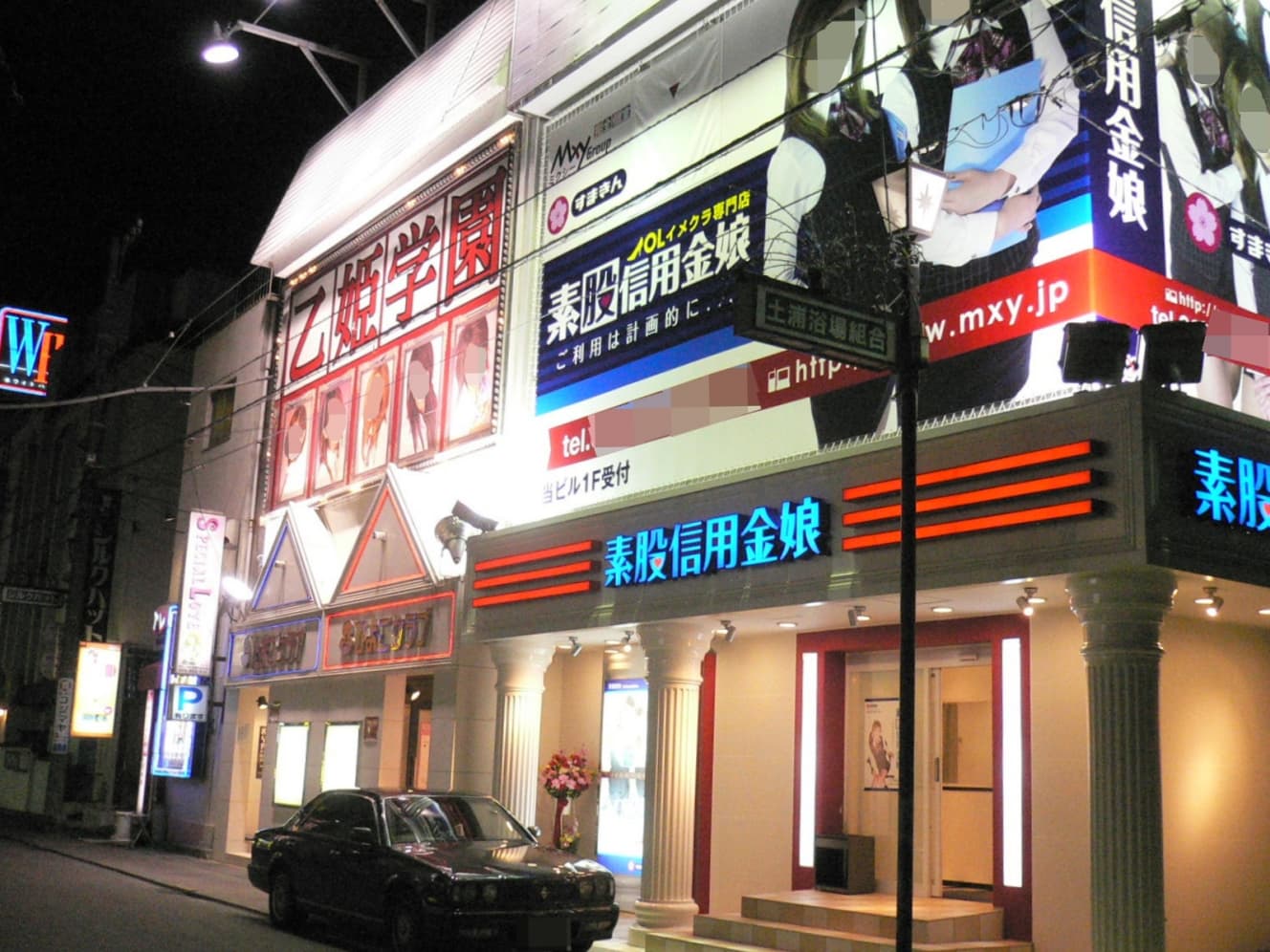
This is the first half of the second installment of a series in which sex-industry journalist Akira Ikoma explores the history of image-play services, which can be described as a cultural history of the sex industry. It looks back at the heyday of image-play clubs, which rapidly became popular in the early Heisei era.
One uniquely over-the-top service after another
As the Heisei era began, image-play clubs quickly grew into a popular line of business. However, some were cracked down on for operating without proper registration. Around that time, what emerged—sparked by an idea a studious soapland owner had while undergoing prostate treatment at a hospital—was the sensual esthetic, a service in which the customer took a passive role. These establishments featured women in white coats providing sensual massages, and as men’s erogenous sensitivities diversified, they prospered. Some even offered prostate massage performed by women.
Such establishments gradually came to be known as sensual massage, and their services also evolved. Prostate massage, which was a high hurdle for most people, became less common. Shops appeared that marketed services like facial showers for women, or that became the originators of intercrural play, and sensual massage came to resemble ordinary health clubs in terms of business style. As a result, registered establishments called themselves fashion health, while unregistered ones were referred to as sensual health, creating a distinction between the two.
By the mid-1990s, image-play clubs began to flourish in full bloom.
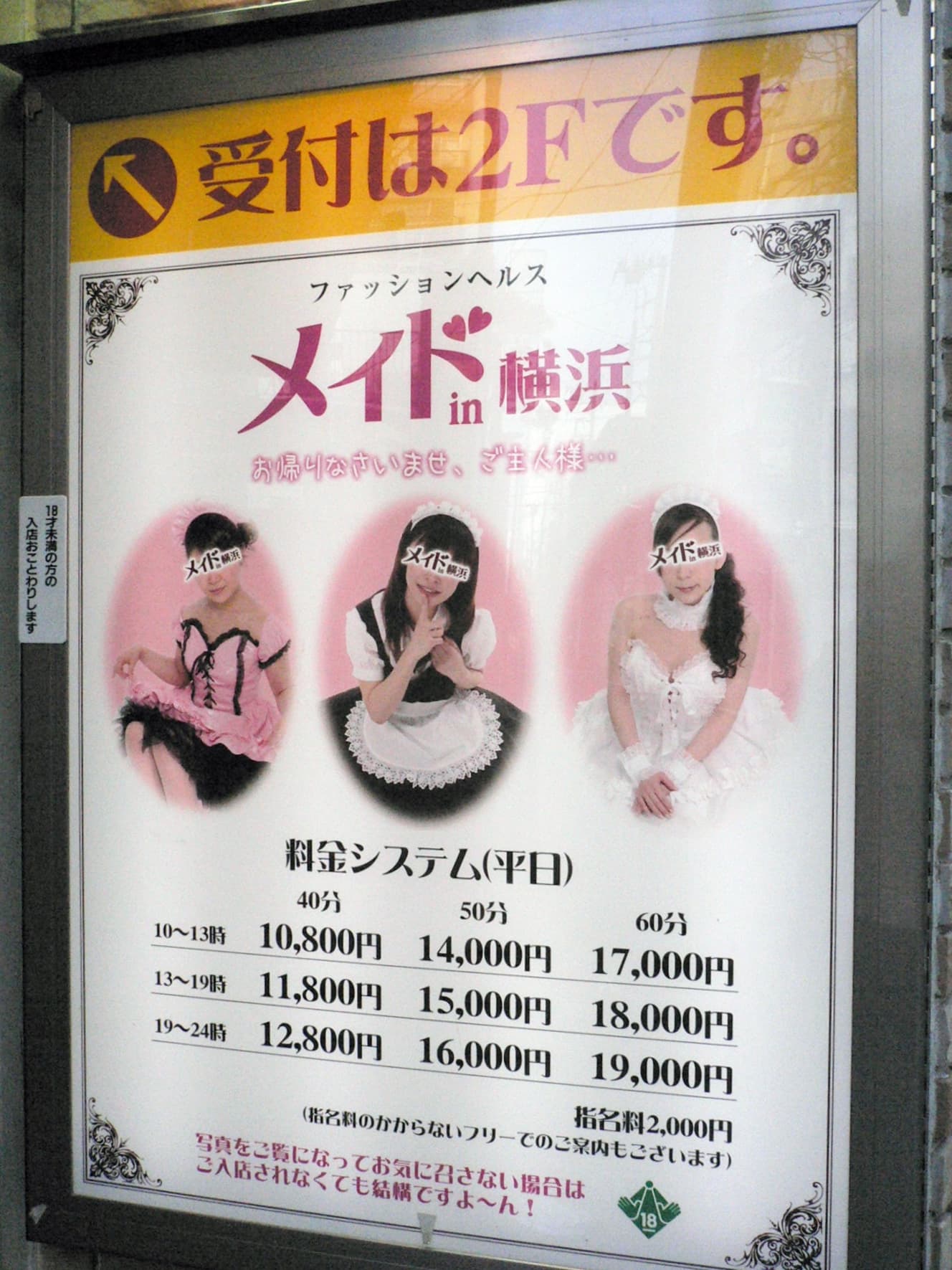
In 1995, the image-play health club Gold Crystal opened in Yokohama’s Akebonocho. Customers selected from women lined up behind a magic mirror wearing various costumes, then played in rooms that matched the chosen costume. The venue had a total of 11 rooms, including an interrogation room with a female guard, a girls’ dormitory designed to evoke a voyeuristic feel, and a crowd room where the walls were covered with photos of bustling crowds, allowing play under the premise of being watched by many people. It was, in effect, an adult amusement park.
“God Play” and “Movie Theater” themes too
The image-play club Aldebaran Machida in Machida, Tokyo, also drew attention for offering “God Play,” a five-person play involving four women. Using an entire one-room apartment as a single play space, it was popular for allowing customers to relax and indulge in a luxurious atmosphere, attracting many patrons from far away.
Shops advertising the sex industry’s first twin image-play girls also appeared. At Tiffany in Ikebukuro, Tokyo, customers could enjoy a perverse three-person play with beautiful 19-year-old sisters. One sister wore a sailor uniform, the other a nurse outfit, sandwiching the customer from above and below or from both sides. Seeing the same face no matter where one looked created a dangerously thrilling sensation.
In Ikebukuro, there were also places where customers could play in a movie theater–style room.”Chikan Club featured a spacious interior equipped with a full-scale screen, and classic films were screened during play. Customers could savor the feeling of doing something naughty in a real movie theater.
There were many other uniquely inventive establishments as well, such as festival rooms where customers could play while enjoying shooting galleries and water-yo-yo scooping, or disco image-play clubs where customers first watched women in bodycon dresses dance provocatively on podiums before receiving services.
Around this time, at a certain image-play club in Ikebukuro, women around 20 years old worked there, each seeing about five to six customers per day. With around 17 working days per month, they reportedly earned an average of 800,000 yen.
Customers ranged widely in age, from teenagers to people in their 70s, and some doctors and lawyers even traveled from afar. Most customers were nearby office workers in their 20s and 30s, with many stopping by during lunch breaks or brief gaps in their workday. The majority chose a short 40-minute course priced at 13,000 yen.
Among image-play workers, it was said that setting the mood is crucial. Technical skill in sexual services was important, but they were also told never to forget the sincerity required to convincingly play to the customer’s preferences.
Spreading to pink salons and cabarets
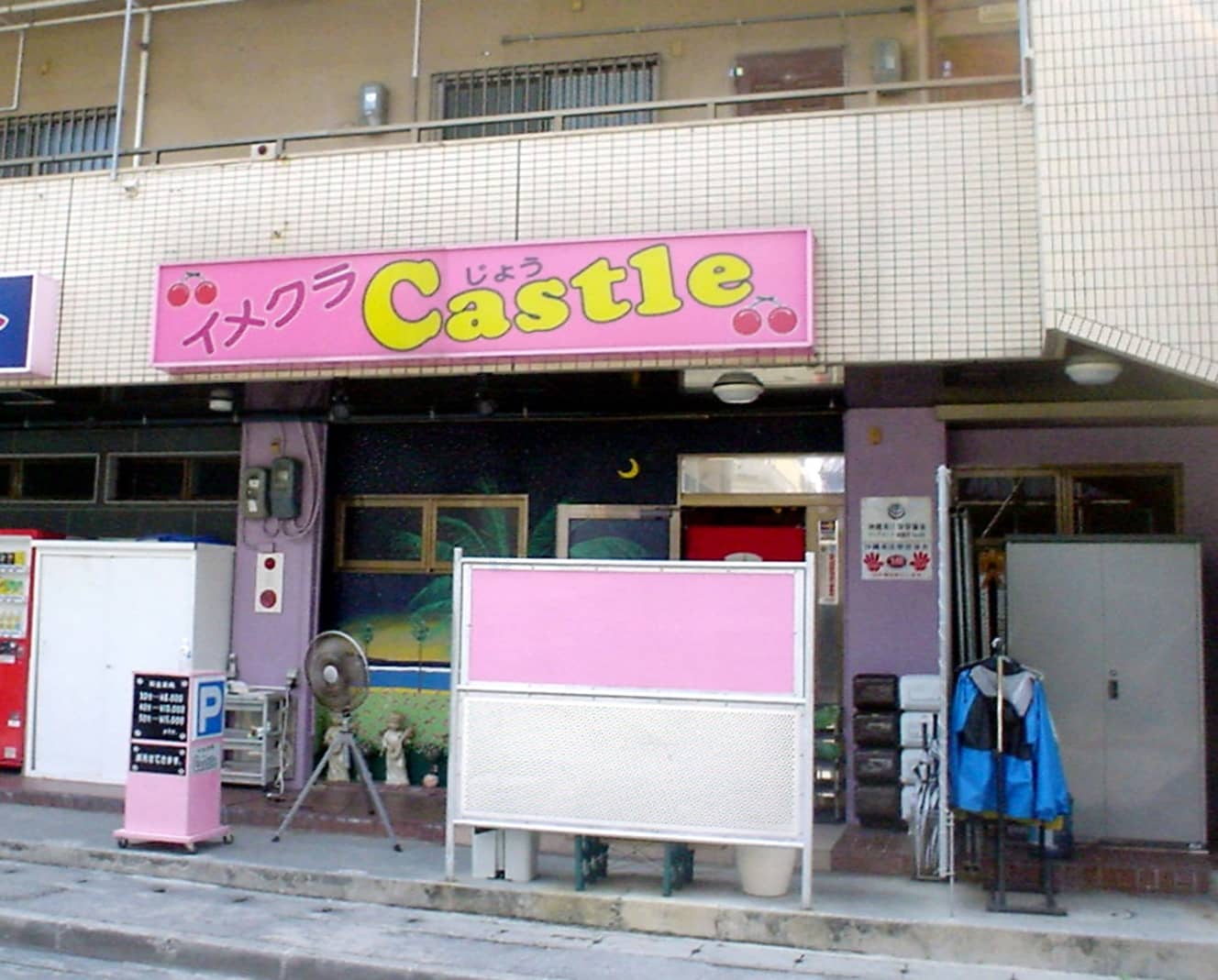
Image play spread to other types of businesses as well. At the pink salon T-Back Club in Kyōbashi, Osaka, a scenario was offered in which a woman is abducted and confined in a wire-mesh cage, allowing customers to touch the woman through the mesh.
Meanwhile, the sexual health shop The Return of White Clinic in Ikebukuro, Tokyo, prepared a playroom styled like an examination room, complete with an open-leg examination table and medicine shelves. They offered services such as the “Perverted Clinic Course,” where customers were examined by a female nurse, and the “M-Woman Examination Course,” in which the customer took the active role. Among the various plays, remote caressing play using a remote-controlled vibrator was said to be especially popular.
A business category called image erotic services, mixing image clubs and erotic massage, also appeared, though in the end the services were essentially the same as image clubs. At the image erotic shop Taboo in Uguisudani (Taitō Ward), Tokyo, customers could enjoy martial arts play. The signature offerings were the “Female Kickboxer Course” and the “Martial Arts Course.” In the kickboxing course, the customer was not allowed to fight back, making it an M-style play.
Cosplay was also adopted by nightlife establishments without explicit sexual services. In Akasaka, Tokyo, there was a hustle cabaret called Paradisso where women served customers wearing happi coats or sailor uniforms. At Capone House, a club produced by writer Kageki Shimoda, patrons could enjoy full-scale costume shows featuring kimono, bondage outfits, police looks, and more. In Yokohama, a pub lounge called Dream operated where customers could drink while watching women dressed in nothing but aprons.
In this way, image play spread beyond industry boundaries, becoming a standard service in the sex industry and nightlife businesses and expanding across various regions.
As time went on, things became even more chaotic
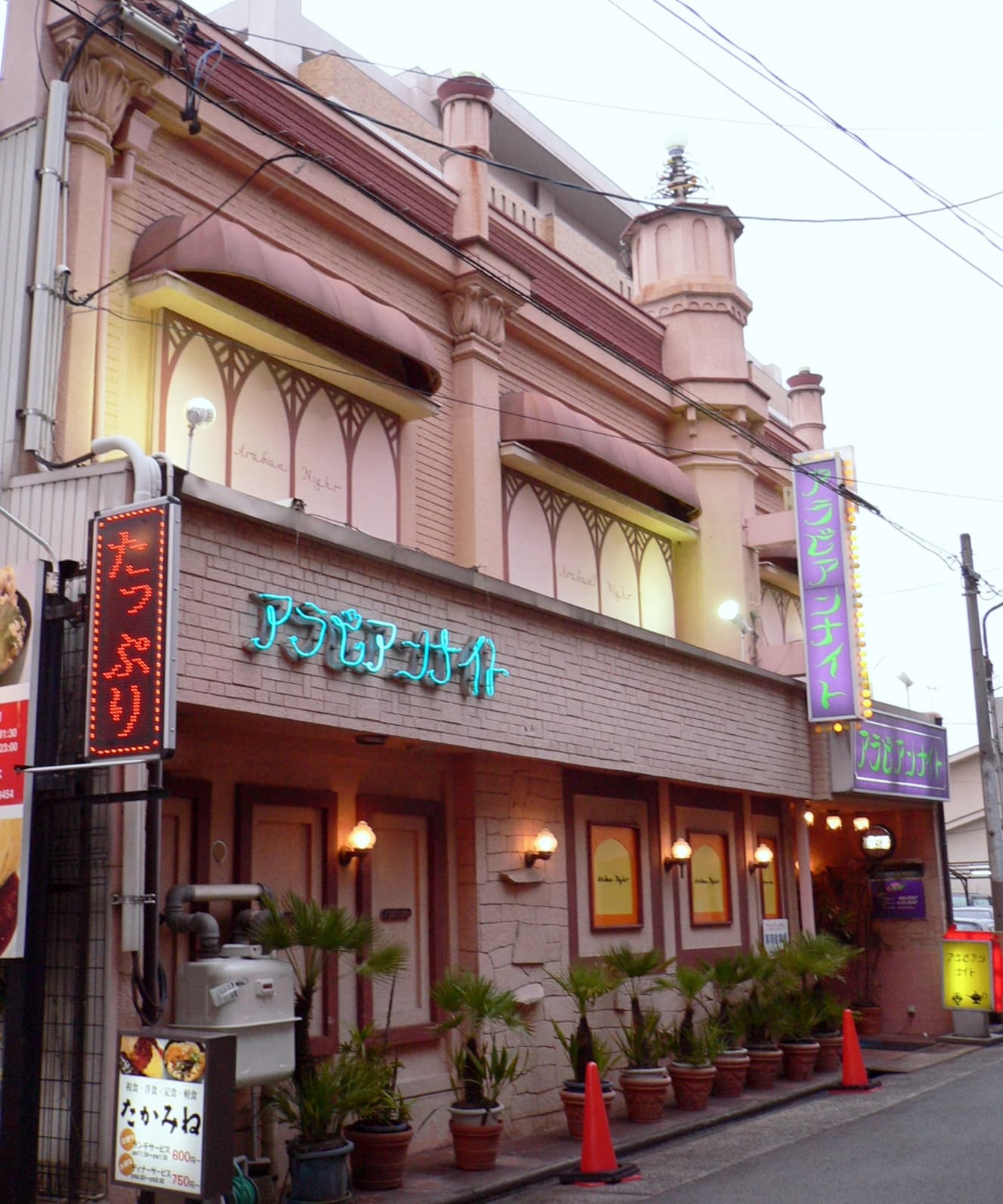
By the late 1990s, image clubs became even more extreme. In Tokyo, shops advertising themselves as mobile image clubs appeared. These involved play taking place in the back seat of a car, with customers reportedly excited by the thrill of wondering whether someone might be watching. The service was devised for people who didn’t have sex businesses nearby or who felt embarrassed entering flashy storefronts. Rather than openly advertising, they attracted customers through guerrilla-style, handwritten flyers.
In Osaka, Milky Doll billed itself as an “image club prep school.” The service involved women teaching male customers tips and manners for play, helping them get used to sexual techniques and assigned scenarios.
In Shinjuku, Tokyo, a digital bishōjo image club emerged. Peach Paipai, which opened in Kabukichō in 1997, featured women providing services while wearing anime and game costumes. The shop offered highly coveted outfits for fans, including the plug suit worn by Rei Ayanami from the anime Neon Genesis Evangelion.
In Sendagi (Bunkyō Ward), Tokyo, an image club called Dokudami-sō opened in a former student boarding house that had actually been in use. With no bath and shared toilets, customers received services in a retro setting, and many middle-aged patrons likely reminisced about their youth.
Among the most unique offerings was a male employee job interview play, in which an image-club worker dressed as an interviewer conducted the session while engaging in play. Passing the exam supposedly resulted in being hired as a staff member. This was offered for a limited time at the Ikebukuro image club 3-nen B-gumi Chinpatsu Sensei.
Other creative services followed one after another: play that let customers feel like newlyweds with a woman in a wedding dress; a modified three-legged race play where the customer and the woman tied one leg each together; a service where customers could compete with a woman in a game of Twister only on days when a typhoon made landfall; and even play inside a plastic pool set up on a building rooftop.
At this time, image clubs were truly anything goes. In a fast-paced, high-energy atmosphere, every conceivable idea was tried. These plays had a rapid turnover—some briefly became popular only to vanish like bubbles soon after. It was an era when the sex industry was full of vitality.
In Part 2, we will take a closer look at how the sex club industry has become even more segmented and maniacal.
In [Part Two], the article goes into detail about how image clubs became even more subdivided and niche.
[Part Two] “Absolutely impossible today”: the endlessly fragmented fantasies of the early 2000s
References
New Economics of the Sex Industry, Fumio Iwanaga, Kodansha, 2012
Illustrated Guide to Japan’s Sex Industry, Atsuhiko Nakamura, Mediax, 2016
Image Club, Kyōichi Tsuzuki, Aspect, 2008
In addition, numerous books and online sources were consulted.


Interview, text, and photos: Akira Ikoma