The Rise and Fall of Women-Only Escort Clubs: A 1990s–2000s Retrospective (Part 1)
Reporto: The Birth of the Sex Industry, Special Edition


In the sex industry, where trends come and go rapidly, how did the genres that remain popular today come to be? Non-fiction writer Mizuho Takagi explores the roots of various sex services in The Birth of the Sex Industry: A Report. While FRIDAY Digital has previously covered topics like happening bars and JK business, the book was published last December by Seidansha Publico as a complete volume. Here, we present an edited excerpt on female-oriented services that was not included in the magazine.
Female-Oriented Services Began in the Edo Period
“Onna-fū” (literally female wind) is the well-known abbreviation for female-oriented sex services. Typically, male therapists post photos and messages on a female-oriented service website to attract women seeking relaxation or sexual satisfaction, and women choose the therapist they prefer.
The comic essay Do Women Need Sex Services? — How Working Behind the Scenes at a Female-Oriented Service Changed My Life (by Yachinatsu, Shinchōsha) has attracted attention and was later adapted into a drama, highlighting the current popularity of female-oriented services.
The origin of female-oriented services is said to be “inkima.” In the Edo period, inkima were male prostitutes arranged by tea houses called “inkima chaya,” who sold sexual services to men, usually in their teens. Over time, however, they gradually began serving women as well.
The term “inkima” comes from kage no ma, meaning actors who do not appear on the main stage. During the early Edo period, boy actors wearing bangs performed wakashū kabuki (youth kabuki), which was eventually banned. Young actors who could no longer perform on stage began selling sexual services, laying the foundation for female-oriented services. In modern times, inkima evolved into dispatched host services.
Dispatched hosts commercialized what was called host after-service. The first such shop, Rocky, opened in Shibuya, Tokyo, in 1982—the same year as the Hotel New Japan fire. Hosts would visit women at their homes or hotels, providing various services according to requests. At the time, the going rate was 20,000 yen for 120 minutes. There were around 140 dispatched host establishments in Tokyo during this period.
Host clubs themselves began in 1965 with Night Tokyo in front of Tokyo Station’s Yaesu exit. Its predecessor, a women-only cabaret opened in 1964, allowed female guests to enjoy social dancing while male dancers worked to increase their earnings by gathering female clientele.
As after-services often included sex at host clubs, dispatched hosts naturally centered their services on sexual activity by offering one-on-one encounters with female clients outside the club. Around 2012, dispatched hosts inspired rental boyfriend services—dating services where men act as romantic partners. However, this discussion focuses solely on establishments explicitly identified as female-oriented sex services.
Reverse Soap Born in 1994
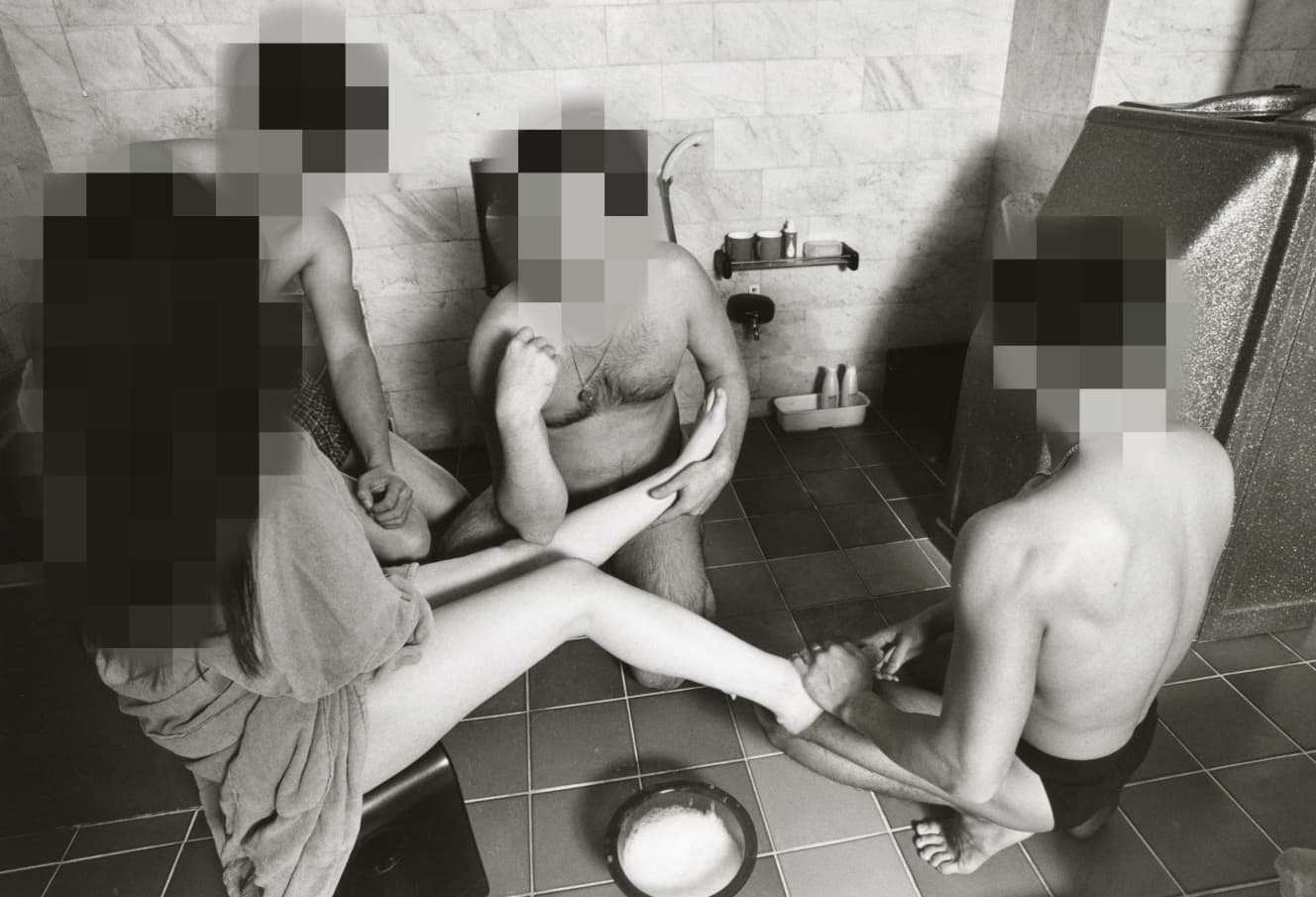
In 1994, when the Hosokawa Morihiro and Hata Tsutomu cabinets collapsed and the Murayama Tomiichi cabinet took office, Tokyo’s Yoshiwara saw the birth of Japan’s oldest female-oriented soapland, Queen. Shun Kisui, former publisher of the soapland magazine Number One Gal Information and a photographer, explains:
“It was a shop run alongside the soapland Queen Alice, and surprisingly, the owner was a woman. Queenmarketed itself as a reverse soap.”
The December 30, 1994, issue of FRIDAY described the operation. At the time, the female owner said:
“Currently, we have 15 staff members. They include university students, salarymen, and self-employed individuals, aged 20 to 33. Their experience ranges from completely inexperienced women to those with professional-level experience. Customers look at a photo album and choose the type they prefer.”
“They take a bubble bath, shower, have a drink, and then it’s up to the female customer to decide what she wants. On the bed, it’s entirely up to the customer. You can just talk the whole time if you like.”
Kisui adds:
“At that time, Yoshiwara soaplands often operated by renting space inside existing establishments, much like morning or daytime cabaret clubs today.”
When asked if it was popular, Kisui replied:
“It closed in less than a year. Even ordinary women, let alone soapland workers, hesitated to walk around Yoshiwara. I think the idea was just too ahead of its time.”
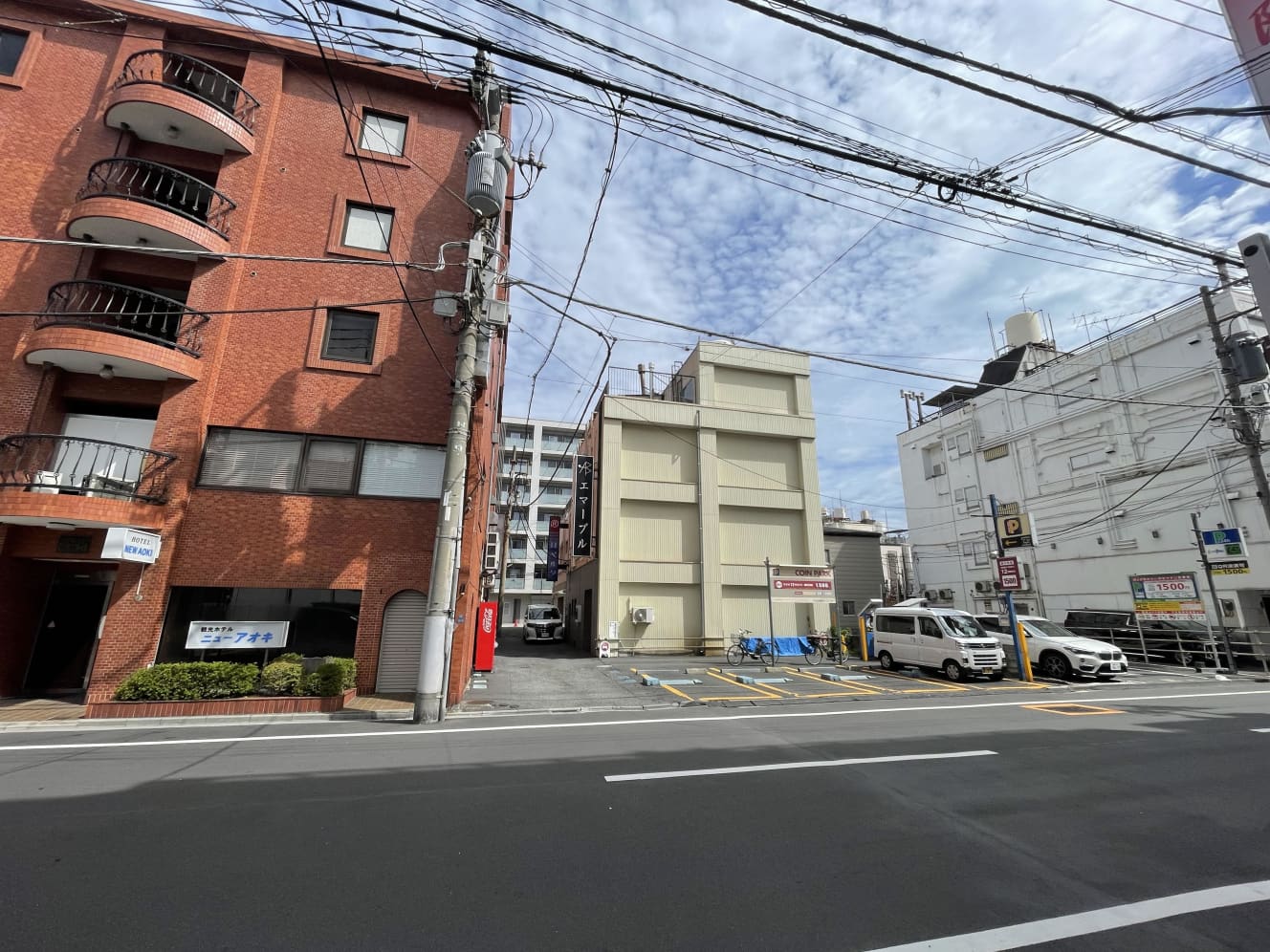
Holding an old map, Kisui visited the location. The map indicated Queen was situated on a side street, Sumicho Street, branching off Nakanocho Street. Today, however, the site is a parking lot.
The Brick-and-Mortar Female-Oriented Shops That Were Hard to Use
After the early experiments, there were no new female-oriented shops for over a decade. Then, in October 2007, when Prime Minister Abe Shinzo unexpectedly announced his resignation and the Fukuda Yasuo cabinet took office, Fukuoka’s Nakasu saw the opening of a female-oriented soapland, C.Club (C-Seek Club).
Visiting Nakasu, a sex-industry insider explained the setup. The shop had a central waiting room surrounded by about ten private rooms. In the waiting area, alcohol was served in a casual, host-club-like style. A few male therapists on shift would circulate, giving women a chance to see them, and the female customers could then choose a therapist to take to a private room for the services. The owner was a Nakasu-based sex-industry operator, and the shop was established as one of a group of affiliated stores. The location was on the top floor (6th floor) of a building in Nakasu’s red-light district, filled with male-oriented sex establishments.
While C.Club opened with considerable media attention, its lifespan was only nine months, similar to Queen. Female clients were sparse, and male therapists were difficult to recruit, leaving the shop largely inactive. According to the Nakasu insider, the problem was that all the other tenants in the building catered to male customers, and privacy was limited compared to delivery health (“deriheru”) services, making it uncomfortable for women to use.
Today, the same location houses the popular female-oriented fetish shop Chapel Coco.
Thus, from the early to mid-Heisei period, female-oriented shops that were established were all short-lived. Brick-and-mortar setups with high barriers for women meant that few new entrants appeared, and time simply passed.
However, ten years after C.Club’s opening, female-oriented services entered a new phase: they began to proliferate.
The [second part] explains the female-oriented boom in the late 2010s and the barriers these businesses encountered.
[Second part]: “Women Wanted Sex Services More Than Expected” — Reasons for the Boom and Its Limits
From The Birth of Sex Work: A Report (Mizuho Takagi / Seidansha Publico)
PHOTO: Shusuke Kudo (2nd photo)