Journalist Tetsuo Suzuki on Wartime Madness and Two Politicians’ Roles


Suicide attack with plywood
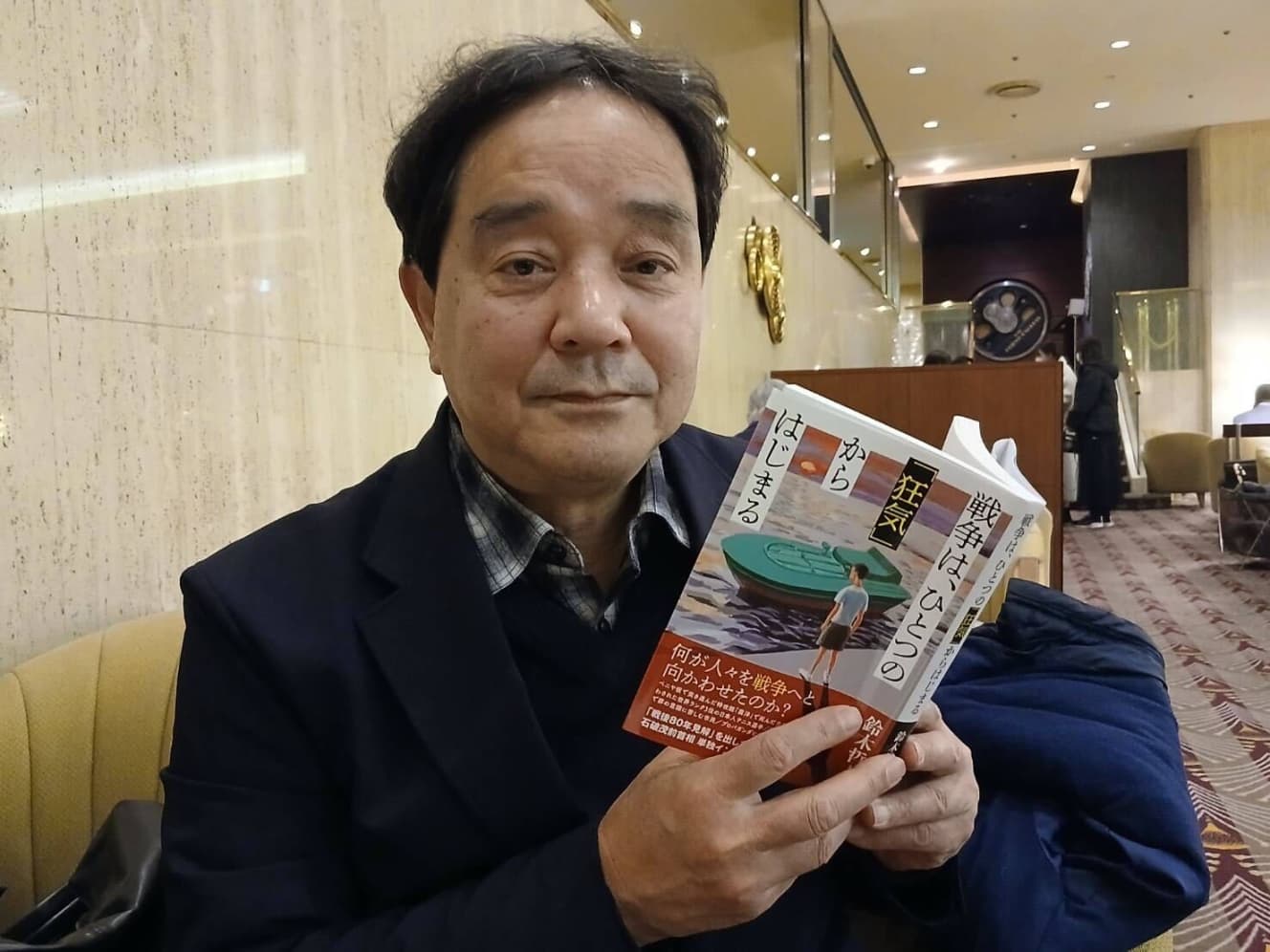
Journalist Tetsuo Suzuki (67), who continues to critique successive governments with a smile as a commentator on news and information programs, is affectionately called “Tetsu-san” or “Tetsu-chan” by former prime ministers, cabinet members, and party leaders who have been on the receiving end of his critiques.
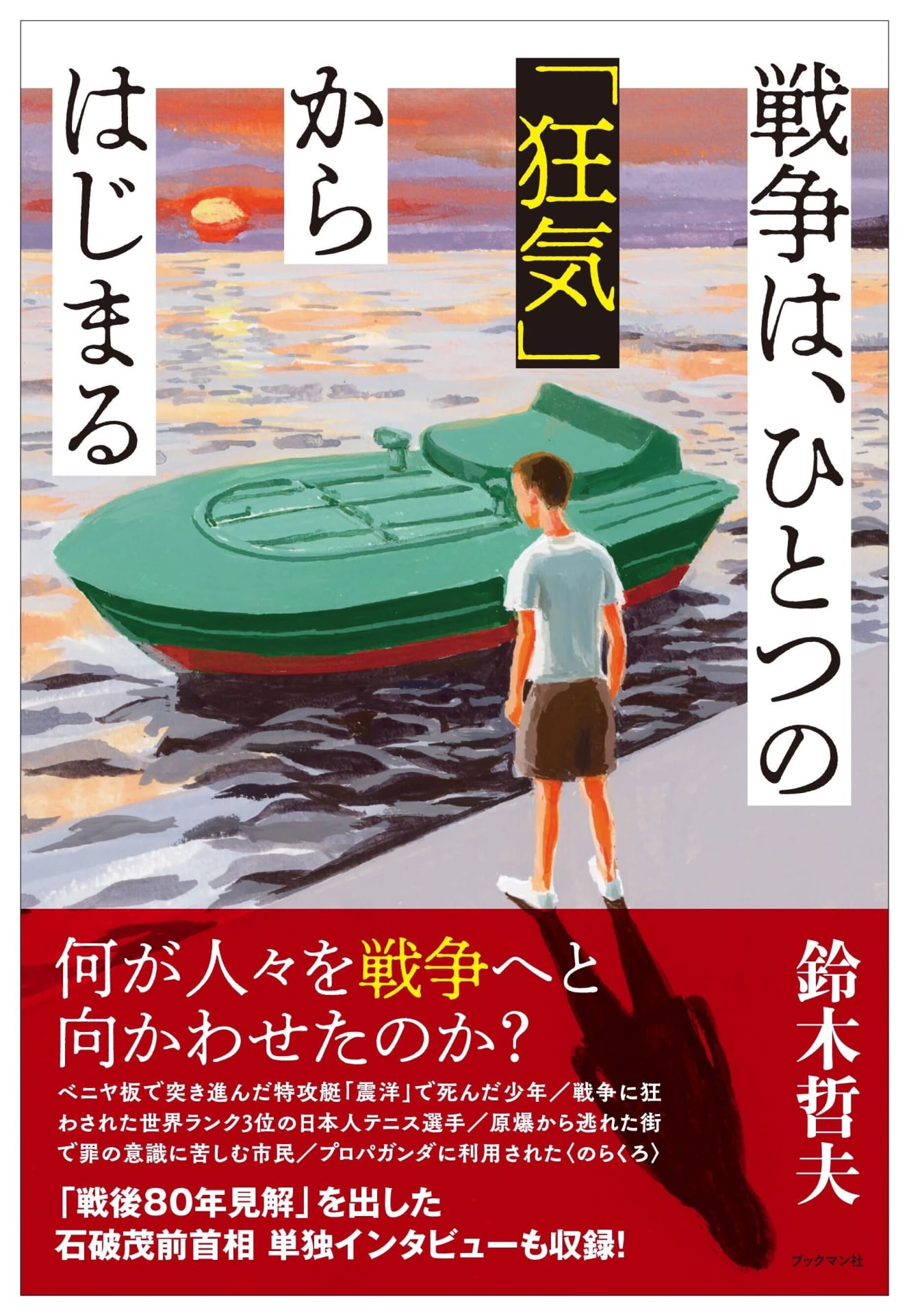
This unconventional journalist published War Begins with a Kind of “Madness” (Bookman Publishing) in December 2025. The book examines what drove people toward past wars and covers the Shinyo, a suicide boat made of plywood, mockingly called a suicide boat by the U.S. military. It also includes a featured interview with former Prime Minister Shigeru Ishiba (68), reflecting on 80 years after the war.
“Over the course of changing eras, war survivors are passing away one after another. By 90 years after the war, a decade from now, the number of people who can share first-hand accounts will certainly be far fewer, or perhaps none at all. The 80 years after the war milestone is likely the last chance to hear these voices in person, so I felt it was absolutely necessary to publish this book.
At 67, I don’t know if I even have the next ten years ahead of me. That’s why I was determined to release this book during the 80 years after the war milestone,” said Suzuki.
While it is well known that over 4,000 young men died in kamikaze suicide attacks with fighter planes toward the end of the Pacific War, similar reckless strategies were devised for boats as well.
That was the wooden boat Shinyo. These boats, made of plywood and other materials, were loaded with explosives and sent to ram U.S. warships—a reckless and perilous strategy.
“When I touched a restored Shinyo in Nobeoka City, Miyazaki Prefecture, I realized it was flimsy because it was made of plywood. It wasn’t anything you could call a weapon—it was more like a rowboat you’d find on a tourist lake. Did the military really believe they could defeat U.S. fleets with such a crude vessel?
The hull was so light that in many cases, the crew lost their sense of direction at sea, causing the explosives to detonate prematurely, killing them. Even during training, accidental detonations occurred repeatedly, claiming the lives of young crew members.”
Although Suzuki is now known as a leading authority on political reporting, his backbone comes from his days as a reporter for the social affairs division at Television Nishinippon. He worked extensively on police coverage, and at one point, even opened a window to speak to the Fukuoka Prefectural Police chief while he was bathing.
Former Prime Minister Shigeru Ishiba’s Reflections on 80 Years After the War
In 1992, at the age of 34, he was assigned to the political department of Fuji TV, a key network in the group. As a reporter covering the LDP secretary-general, he interviewed the late Seiroku Kajiyama, who was nicknamed the militant and strategist.
“When I interviewed Kajiyama one-on-one at his home, I noticed in the tatami room at the back of the living room a memorial portrait of his mother. When I looked at it, Kajiyama spoke about how he reported his daily actions to that portrait and shared his motivation for becoming a politician: ‘War must not happen. I have a feeling for my mother, who lost my older brother in the war. I became a politician because I wanted to do something for peace.’
I also will never forget the words of his wife when Kajiyama passed away in 2000: ‘When my husband and I visited the Chiran Kamikaze Peace Museum in Kagoshima, he cried out loud. If people call him militant, I believe it was because he fought to prevent war.’ Kajiyama was an anti-war politician.”
Former Prime Minister Kakuei Tanaka left these words:
“As long as the generation that experienced war remains at the center, there is no need to worry. There is no need to debate peace. But when the generation that did not experience war becomes central, that is very dangerous.”
Shigeru Ishiba, who worked as an apprentice in Tanaka’s office and heard these words directly, continued to visit war sites domestically and internationally even after becoming prime minister. On October 10 of last year, he released his “Reflections on 80 Years After the War.”
“I have known Ishiba for over 20 years. I have interviewed and debated with him many times about the Pacific War. I have heard that after the crushing defeat in last July’s House of Councillors election, he considered resigning several times to take responsibility. But he continued, partly because of the sudden tariff negotiations initiated by the Trump administration, and partly because he was devoting himself to delivering a message on the 80th anniversary of the war.
At the peace ceremonies in Hiroshima and Nagasaki, unlike past prime ministers who simply read pre-written statements, Ishiba spoke in his own words.
In his subsequent UN General Assembly speech and his 80-year postwar message, he seriously reflected on why the domestic political system could not serve as a check. Even in one-on-one interviews, he repeatedly stated, ‘It is my role to ensure things do not go back to prewar conditions’ and ‘We must never repeat the mistakes of the previous war.’”
In an era where social media spreads information quickly and politicians and commentators who simplify issues into dichotomies and relentlessly argue are celebrated:
“People continue to take misinformation at face value, which divides society and even affects election results. I feel a faint but growing fear that our society is gradually returning to prewar conditions.”
Holding this book should serve as one step toward preventing the arrival of a new prewar era.
Interview and text by: Daisuke Iwasaki