A complete change of common sense! Is it natural to refuse a seat you paid for? Japanese people’s lack of composure” was revealed in the “Switch seats” scandal.


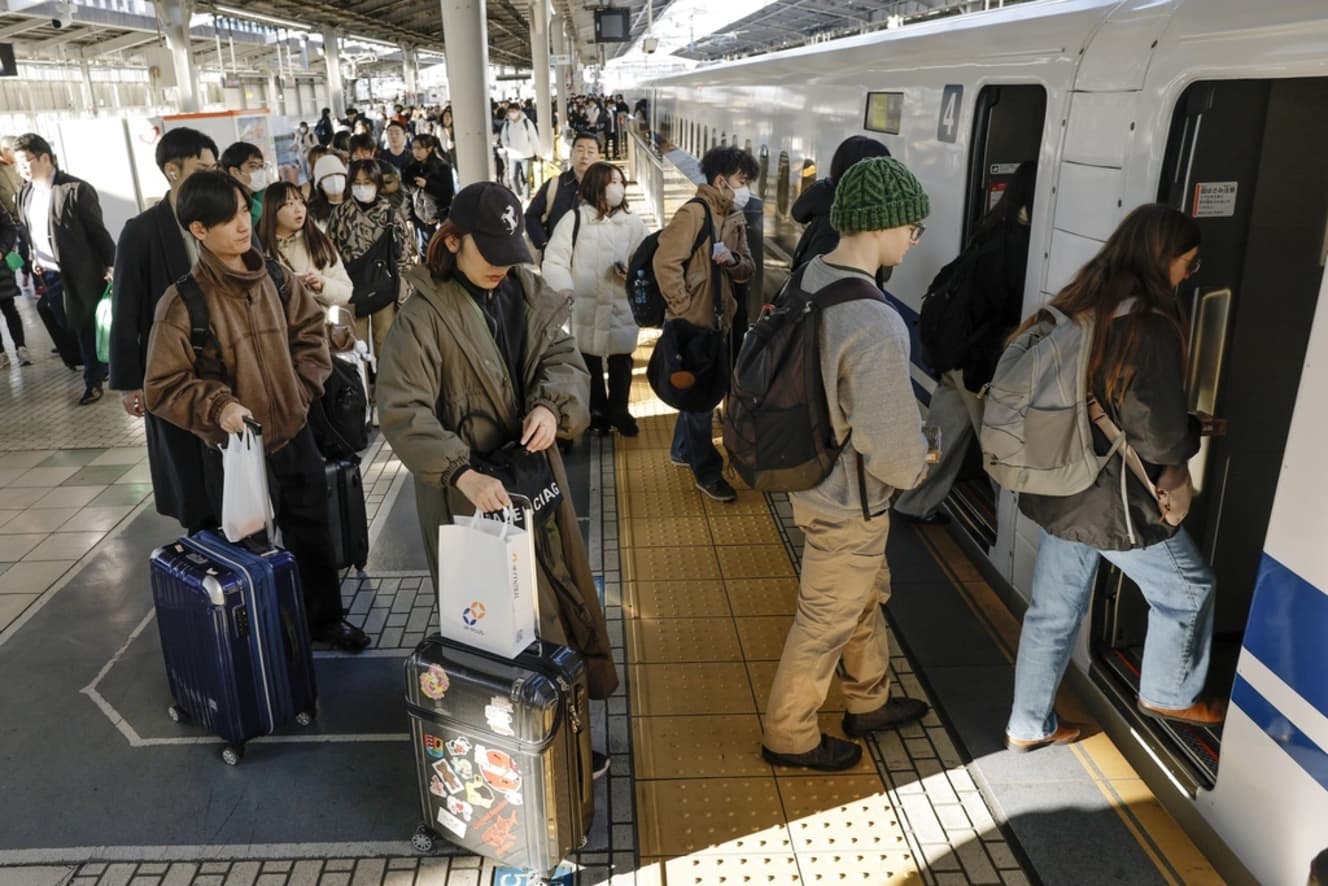
Omotenashi” is collapsing!
Recently, there have been many cases in public transportation such as trains, airplanes, and buses where passengers have asked to switch seats, only to be denied. In particular, articles and SNS postings about seat troubles have been seen all over the Internet since this year-end and New Year’s holiday season.
A decade ago, it was more common sense than usual for Japanese people to “immediately give up your seat to someone who should have given it to you. In recent years, however, many people have come up with a number of reasons for not wanting to give up their seats, and many people actually agree with them, so there is even an atmosphere in which it is difficult to say that the act of not giving up is wrong.
Why do we care so much about “giving up or not giving up” seats? And what is going on in Japan, a country that is known for its hospitality? A travel journalist, who is a professional in the field of transportation, took a look at the situation.
A good argument for refusing to give up the seat you paid for
First of all, one of the recent trends is “hesitancy to give up one’s seat,” which would not have existed in the past. Some people who give up their seats say that they are tired from work, or that they have been waiting in line long before the train departs in order to sit down, while others say that they bought a reserved seat on the Shinkansen in order to be sure of a seat, or that they pinpointed a window seat in advance because they want to enjoy the view or to recharge their batteries.
In the past, even under such circumstances, they would have given up their seat as soon as someone who should have been given up came in front of them. However, the “give up or don’t give up” debate in today’s Japan is not a simple one. One reason for this is that in some cases, the person who is supposed to give up also has a problem.
For those who have been carefully preparing for a seat for a long time, they may not be immediately convinced when a stranger suddenly appears in front of them and asks them to give up their seat. In particular, in the case of seat troubles on the Shinkansen, in addition to “Nozomi seats have been reduced to free seats” and “I did not know that all Nozomi seats are reserved (during peak season),” there are also differences in awareness between the person giving up his/her seat and the person on the other side, such as “If I tell him directly he will give it up” and “I thought I could manage.
Those on the giving side may be tempted to shout out in their hearts, “Please be prepared and get on the train,” by buying reserved seats or using priority seats in advance. This feeling is understandable. In the past, most people bought their Shinkansen tickets at the “Midori-no Madoguchi” counter at the station or at the counter of a travel agency. Nowadays, the buying of tickets has become more convenient with the use of smartphones such as JR Tokai’s “Express Reservation” and “Smart EX,” but the gap between those who can use them and those who can’t is widening.
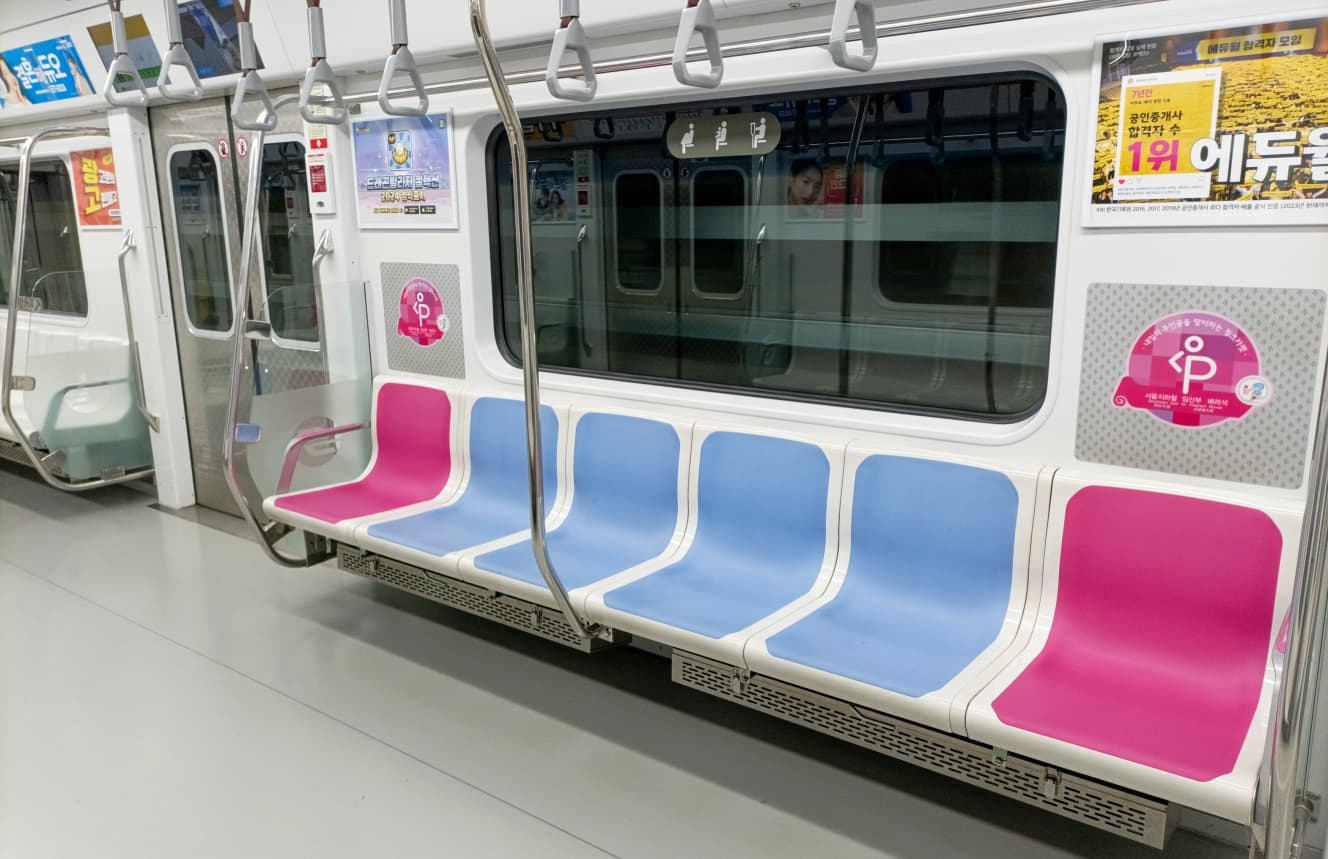
The Reality of the Collapse of the “Priority Seating” System
Priority seats” are provided on trains and buses, but not on Shinkansen and limited express trains. There are many cases where people other than those who are eligible for priority seating are sitting in those seats. Sitting there itself is not against the rules, but if a person continues to sit in the priority seat long after the person for whom the seat is intended comes to the seat, trouble may occur.
In other countries, if there is a priority seat, very few people sit there. Even if there are no priority seats, if someone who should be given up comes along, they immediately give up any seat they have. In the first place, there is no need for priority seats, and “every seat is a priority seat,” so to speak.
On the other hand, priority seats have always existed in Japanese public transportation. This is probably due in part to Japan’s unique culture of being reluctant to ask people to give up their seats, or in other words, being reluctant to be assertive.
For example, pregnant women are also eligible for priority seating, but in the early stages of pregnancy, there is almost no change in body shape, so it is difficult to tell at first glance. However, many women in the early stages of pregnancy suffer from morning sickness, which is more severe than in the later stages of pregnancy, such as the second half of the second trimester. Although the use of the “maternity mark” has become widespread, it is still not well known in some areas, and even if people know about it, they may say, “She’s young, so she’s fine, right?
In addition, Japan has become a hyper-aged society, with approximately 30% of the population now aged 65 or older. Although the elderly are eligible for priority seating, the number of seats is not sufficient to meet the needs of the growing number of elderly people.
Insolent Passengers “Switching Seats for Free
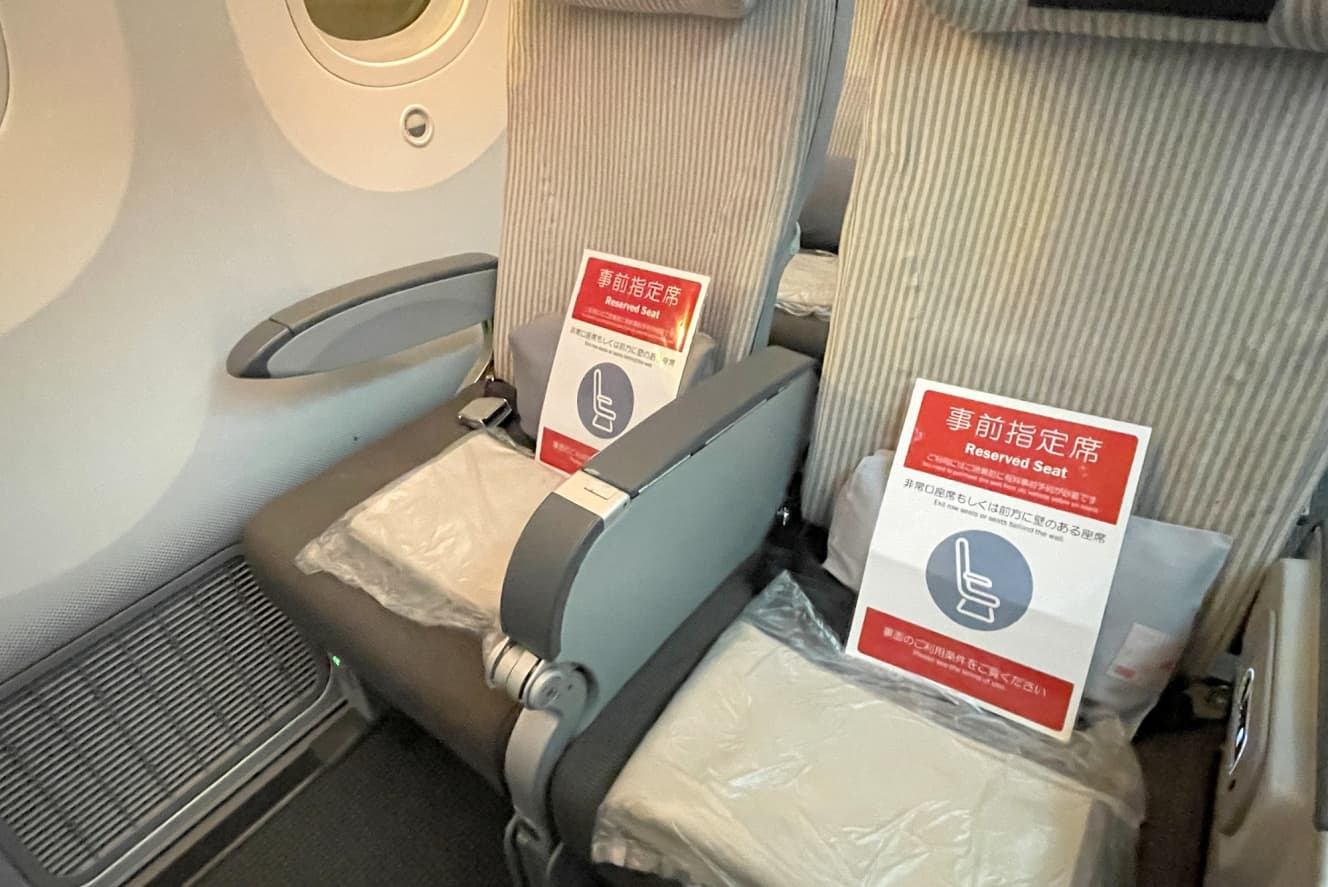
All seats on airplanes are reserved, and each seat is registered with the passenger’s name and other information. Even so, problems over seat assignments occur without end.
Changing seats should be done at check-in, or at least before the boarding gate. This is because changing seats without permission, for which personal information has already been registered, can lead to complications in the event of an accident or other trouble, such as having to prove your identity. In fact, many people do not know this and think that they can freely change seats on board an airplane just as they can change seats on trains and buses.
A common occurrence on board is when a family member or friend is separated from his or her seat and is asked to switch seats because he or she wants to sit with them. If you agree, you may switch seats, but even in that case, it is smart to ask the flight attendant to do so. Also, if you have been asked to switch seats when you have paid to have a seat reserved, you should clearly tell the other person that you have paid to have a seat reserved for you.
Recently, not only low-cost carriers (LCCs) but also major airlines are charging for seat selection in advance. The cheapest fares charge for this service, and in some cases, if you are a senior member of the airline, you can have a number of seats reserved for you free of charge.
It used to be common knowledge that, aside from LCCs, major airlines offered free advance seat selection. However, it is different now. The stereotype of “everything is free” actually needs to be abandoned. Still, there are people who fly occasionally who are unaware of the rule change and mistakenly believe that any seat is free.
Cheap Fares Cause “Deterioration of Customers
Ed Bastian, CEO of Delta Air Lines of the U.S., said in an interview with CNN last December that “cheap fares are one reason for the decline in manners and the increase in problems” regarding problems on airplanes.
Fares have fallen due to sales fights among competing companies, and as cheap travel becomes available, a wide variety of people are mixing on airplanes. In addition, Bastian points out that in recent years, due to the downsizing of airplanes, many flights are closer to full capacity than in the past, which can lead to a cramped and stressful in-flight experience.
Being able to travel on the cheap has both positive and negative aspects. While inbound travelers are happy to visit Japan, where everything is cheaper than in their home countries, there are also real problems that did not exist when the yen was strong.
Poor Japan” where people will not even give up their seats
Japan has long had, and still has, a culture of peer pressure in human relations, a worldly sense of concern for the eyes of others, a fear of failure, and a virtue of endurance. In addition to these factors, the “lack of leeway” seen among Japanese people in recent years may also be a contributing factor.
When I ride the commuter trains in Japan, most people are either staring at the screen of their smartphone or sleeping, and I get the sense that they are not looking around them and are pretending not to see anything. Sometimes, when I see people quickly standing up from their seats and giving up, it is because they are foreigners, not Japanese.
In addition, in terms of living, even though wages have risen, take-home pay has not changed much during the “lost 30 years,” but rather has decreased. At the same time, a sense of stagnation is also felt in Japanese society, as a bright future cannot be found in a society where prices continue to rise, the yen continues to depreciate, and the population is rapidly aging.
Overseas, there is still a culture of “giving up” one’s seat on public transportation. One cannot get a real sense of the current situation in other countries unless one actually goes there and sees for oneself. Currently, only 17% of the Japanese population owns a passport. The majority of Japanese do not go abroad, or are “too poor to afford it. Without the opportunity to compare one’s own country with other countries, one cannot realize that there is something wrong with one’s own country.
If we could afford to live a comfortable life, we would all be more attentive to our surroundings and more generous. Japan has long been known as the land of hospitality, but where has that spirit gone?
Interview, text, and photographs: Shikama Aki