[Breaking] Prime Minister Takaichi Pushes Solo Dissolution—Scandals Foreshadow Snap Election Without Cause


The Biggest Concern for Lawmakers Is Already the Election Schedule
Why this timing—?
Prime Minister Sanae Takaichi (64) may move to dissolve the House of Representatives at the start of the ordinary Diet session convening on January 23, according to reports from the Yomiuri Shimbun and other outlets on January 10.
“Right after the news came out, the likelihood of a general election was around 50%, but by January 13, after the three-day weekend, it had risen to 95%. The fact that Prime Minister Takaichi herself has not directly commented on the issue is proof that the dissolution is already a foregone conclusion, and lawmakers are now focused on the election schedule,” political commentator Harumi Arima told our site.
According to sources, while February 8 is a tight schedule-wise, February 15 is currently seen as the more likely date for the vote in Nagatacho. However, Arima added:
“For Prime Minister Takaichi, having decided on a sudden dissolution, she would want to move as quickly as possible. Even a one-week gap could become an unexpected pitfall. In that case, February 8 might be the date rather than the 15th.”
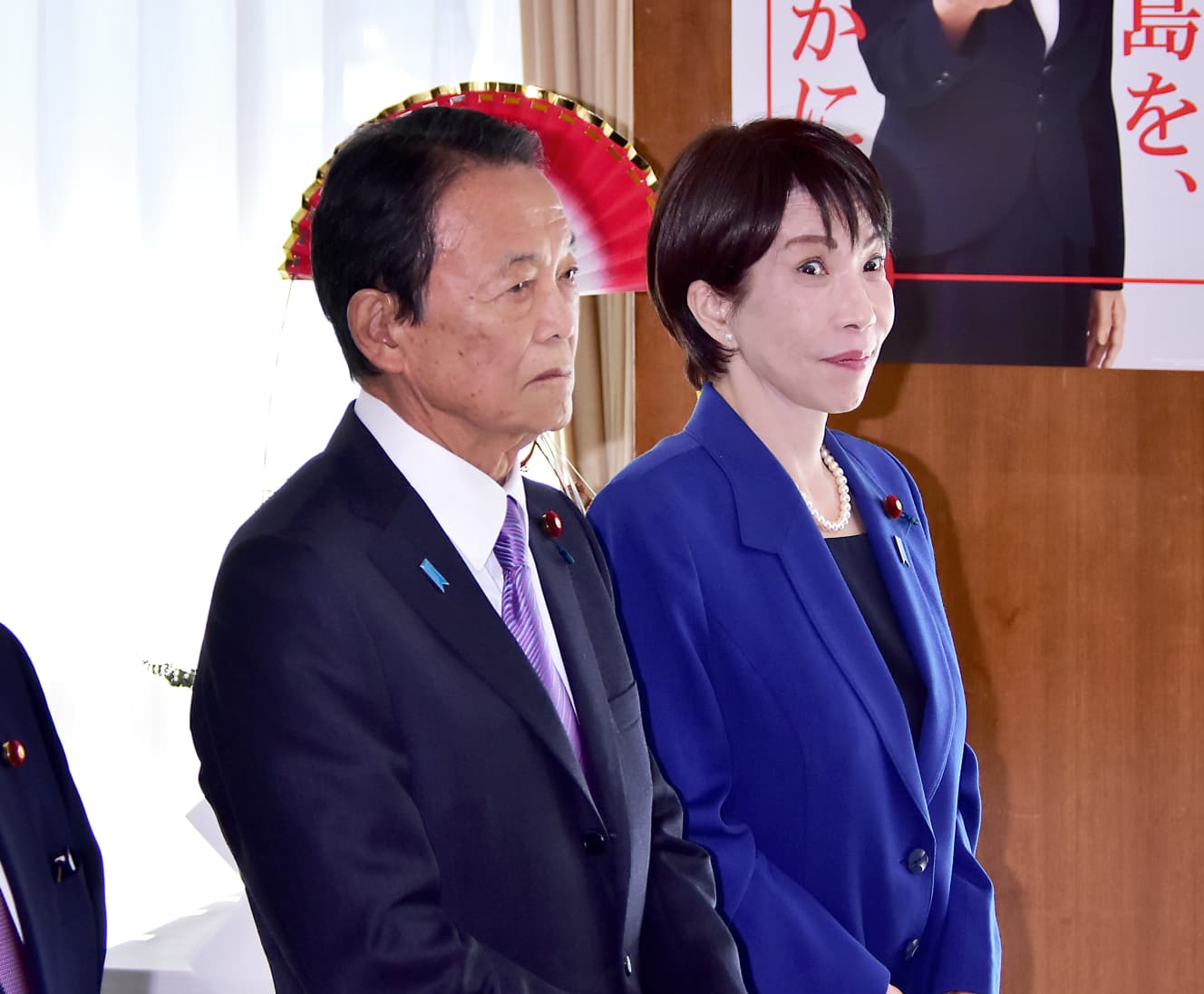
Deputy President Taro Aso (85), who serves as Takaichi’s mentor, responded to an interview with Nishinippon Shimbunin his hometown on January 10 regarding a dissolution at the start of the session, saying,
“That’s unlikely,”
showing a negative stance. What draws attention, however, is Aso’s reaction:
“Only a small number of people in the Prime Minister’s Office were informed. As a result, Aso seems to be furious, feeling utterly embarrassed. But originally, it was Aso who wanted an early general election. If the LDP wins big, that anger will likely vanish,” a Liberal Democratic Party source revealed.
Because the LDP is a minority party in both houses of the Diet, it must consult with other parties to push anything forward. Currently, its partner is the Japan Innovation Party, but it remains questionable whether policies are being implemented smoothly.
For Prime Minister Takaichi, this is an opportune moment to maintain high approval ratings, call a general election, and aim to secure a stable majority for the LDP in the House of Representatives alone.
Reports of 50 million yen donation from Tenrikyo-affiliated companies
However, that appears to be purely a matter of personal convenience, and the justification for the dissolution remains questionable. Above all, Prime Minister Takaichi has long prioritized policies directly affecting citizens’ lives, such as measures against rising prices and early execution of supplementary budgets, and she has repeatedly said she is
“not thinking about it”
regarding dissolution. On that point, there is no consistency at all. Could there be some other aim?
According to sources close to the Prime Minister, there was an expectation that a time bomb would go off during the ordinary Diet session.
The January 8 issue of Shūkan Bunshun ran an article titled “Prime Minister Takaichi’s Heavenly Wish: Unification Church Top-Secret Report”. The article introduced highly confidential documents discovered during investigations into the Unification Church’s political activities in South Korea, reporting on a remarkable connection between Prime Minister Takaichi and the religious organization.
In December last year, the same magazine reported that in 2024, political branch offices and financial management organizations headed by Prime Minister Takaichi had disbursed a total of 50 million yen to Tenrikyo-affiliated companies. Takaichi responded,
“All expenditures were necessary for the activities of the relevant political organizations.”
Currently, scandals involving the LDP are being continually reported in the media, led by Bunshun, including donations from companies connected to Prime Minister Takaichi or contributions routed through her party branch.
“There are leaks suggesting that more scandals involving government executives may emerge. Once the ordinary Diet session begins, such suspicions could be pursued in committees like the Budget Committee. Perhaps Takaichi saw an early dissolution and the resulting media attention as a way to overwrite these scandals before her popularity declines,” said a political reporter for a national newspaper.
A sudden dissolution and short campaign period disadvantages opposition and minor parties, as candidate selection and coordination may not be completed in time. With the Takaichi Cabinet’s approval rating above 70% in various polls, she likely felt confident she could secure a landslide victory at this timing.
In the stock market, the saying elections are good for stocks was evident: after news of a possible House dissolution broke on the evening of January 9, Nikkei futures surged more than 3% at one point. While investors may appear to welcome this, a mid-sized securities firm executive commented,
“If Takaichi’s LDP wins overwhelmingly, there is a scenario of aggressive fiscal policy and yen selling. Stock prices rise alongside inflation, but this is far from a healthy stock boom.”
The leader of the largest opposition party, the Constitutional Democratic Party, Yoshihiko Noda (68), criticized the sudden dissolution, saying,
“While they say we must work, work, work, they are creating another political vacuum and asking the public to place their trust without addressing the economy or rising prices. Whether this is the right approach is questionable and will be rigorously scrutinized.”
With inflation continuing unabated and Japan-China relations cooling, problems are piling up. Voters must calmly judge whether there is any real need for a general election at this timing.
PHOTO: Takeshi Kinugawa