Who Should Handle Public Trash? Shibuya Ward and Residents Weigh In on Mandatory Trash Bin Installation


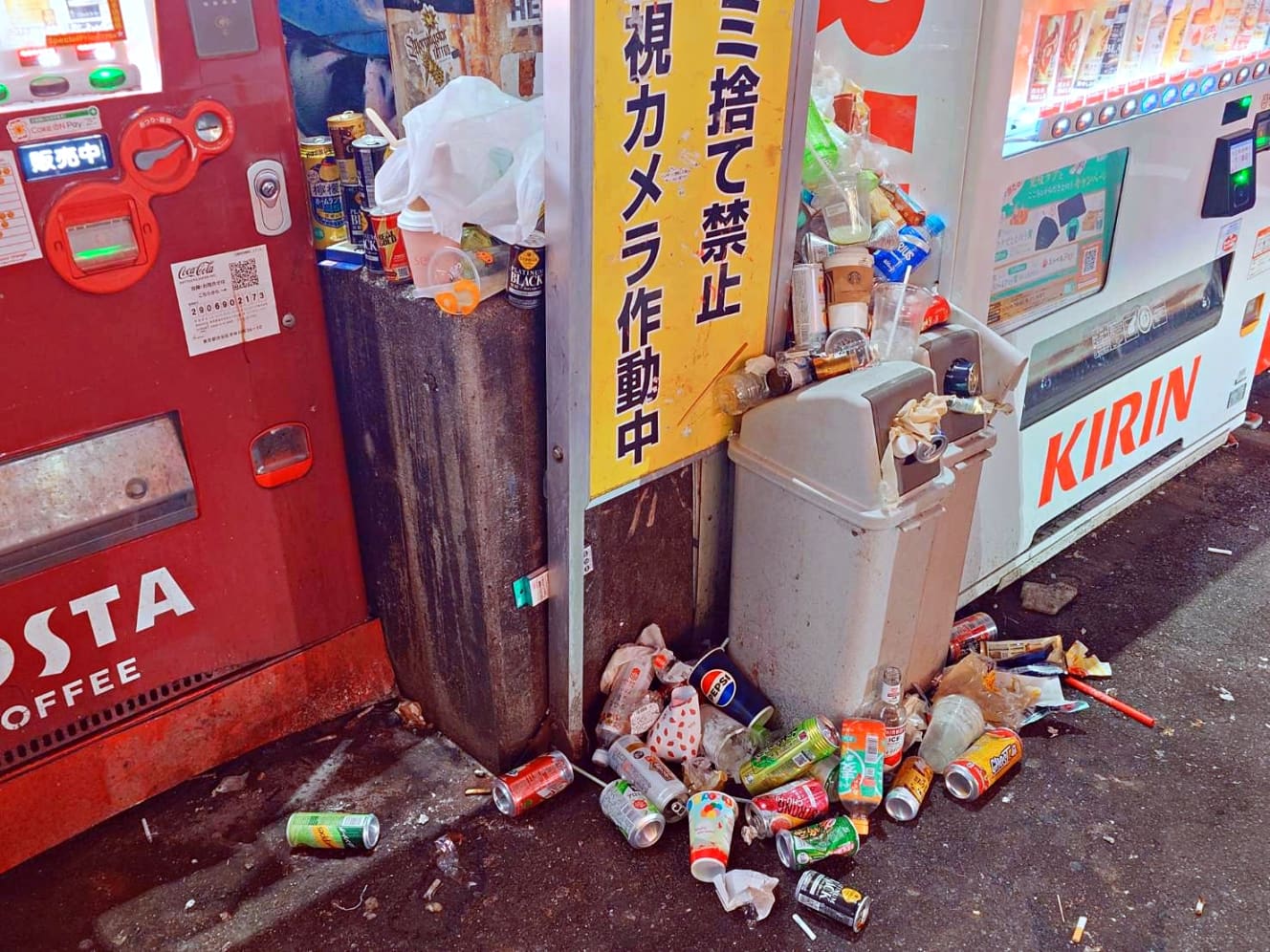
Convenience store turned into a garbage dump
Tokyo’s Shibuya Ward will require convenience stores, takeout-capable restaurants, and operators of vending machines to install trash bins starting in April 2026. The areas covered are those around Shibuya, Harajuku, and Ebisu stations, where ward surveys found particularly high levels of littering. This will be the first attempt in Tokyo to mandate trash bin installation for businesses. Those that fail to comply will be subject to a fine of up to ¥50,000. In addition, people who litter will newly face a ¥2,000 fine.
The collection of these fines is scheduled to begin from June 2026 onward. However, there has been criticism that making stores responsible for measures against littering amounts to shifting the burden onto the private sector. If trash bins are installed, there is also the possibility that people will bring household garbage to dispose of there. An investigation into Shibuya Ward’s trash problem reveals the realities on the ground.
While the ward is not increasing the number of trash bins it manages, it decided to mandate trash bin installation because Shibuya attracts many visitors from outside the ward, and it considers it inappropriate to use ward tax revenue to dispose of trash left by non-residents. Shibuya is one of Tokyo’s leading entertainment districts, with large numbers of inbound tourists as well as commuters and students visiting daily from outside the ward. On the day the author visited for reporting, the area was bustling with people.
When convenience stores around Shibuya Station were asked about the mandatory installation of trash bins, responses included “It will increase our workload” and “If we install trash bins, more people will come just to throw away their trash.”
“One of the biggest problems for convenience stores is that people bring in a lot of garbage. During busy times, the trash bins inside the store can be completely full within an hour. It’s the staff who have to clean up overflowing trash, and it’s also the staff who have to clean after things are made dirty. I hope this mandate will reduce trash being brought in from other stores, but there are also people who come only to throw things away. I really don’t think it will work out that way,” said a convenience store employee.
Similar opinions were heard at another convenience store. It appears that many people bring their trash into convenience stores, largely because there are so few public trash bins on the streets.
Street drinking also affects
Shibuya ward says “No problem.”
When asked about the mandatory trash bin installation and related measures, Shibuya Ward’s Environmental Maintenance Division responded as follows:
“In Shibuya Ward, we have been promoting the idea of ‘take your own trash home’ for about the past 10 years. Since around last year, the number of visitors to the area has increased. Accordingly, trash in the ward has also increased, and this ordinance revision reflects that situation.”
Regarding criticism that this shifts responsibility onto businesses, the ward seems unconcerned:
“For example, businesses that sell beverages are required by ordinance to provide trash bins so that customers can easily dispose of waste generated at the store, and to manage these bins properly. This doesn’t necessarily have to be outside the store; it can be inside. Concerns have been raised that outside bins might lead to household garbage being dumped, but inside the store, we don’t expect people to bring in household trash, so we consider this approach acceptable,” explained the Environmental Maintenance Division.
The change from fines to administrative penalties for littering was made so that ward staff themselves can collect the penalties:
“Previously, littering carried a fine, which involved authorities outside Shibuya Ward and made enforcement difficult. By switching to administrative penalties, Shibuya Ward staff can collect them directly, making enforcement more practical. That is why we revised the ordinance,” they said.
The division also stated: “Regarding the mandatory installation of trash bins, we aim to identify challenges and consider responses to ensure sustainable operation.”
Bulky trash such as empty cans and PET bottles already exceeds the capacity of bins and places a burden on businesses that provide them. While the hope is that mandating trash bins will reduce the burden on these businesses, some may still feel that the private sector is being made to carry the load.
Moreover, judging by the voices of Shibuya residents and workers, there remains doubt as to whether this measure will have a fundamental effect on reducing littering.
“FRIDAY Digital” welcomes your information and tip-offs. Please send your information to the information form below or to the official X.
Information form: https://friday.kodansha.co.jp/tips
Official X: https://x.com/FRIDAY_twit


Interview, text, and photos: Blank Green