Former Advisor Files Criminal Complaint Against Nippon Seishinkai Leader Toshiaki Yoshino


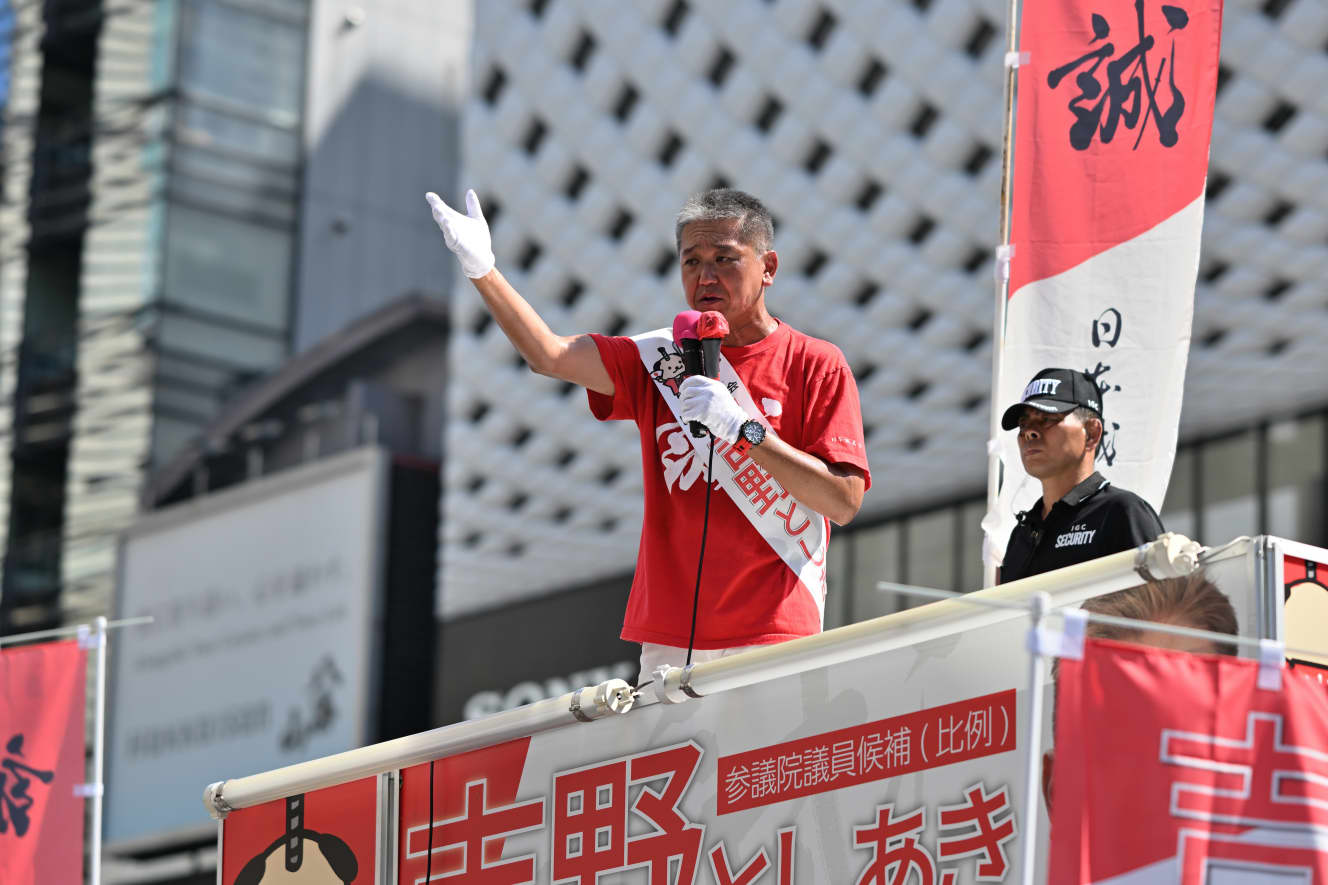
Toshiaki Yoshino Criminally Reported
“Curing Japan’s ills and building a nation that prospers for eternity”
This was the noble ideal behind the establishment of the political organization Nihon Seishinkai (Japan Seishinkai). However, just over a year after its founding, the group is reportedly facing an internal crisis.
The creation of Nihon Seishinkai was rooted in the intense internal conflicts that once occurred within the national political party Sanseitō. Toshiaki Yoshino (58), a dentist who serves as the leader of Nihon Seishinkai, was previously a co-representative of Sanseitō and promoted unique positions such as being anti-vaccine, contributing to the party’s rise as one of the “Gorengers” (key players).
However, Yoshino opposed the authoritarian-style leadership of Sanseitō’s representative, Sohei Kamiya (48). After a bitter confrontation, he split from the party. Following his departure, he received strong support from lawyer Kikuji Minamide (76). Minamide, a constitutional scholar who advocates for genuine constitutional protection, stated:
“He was the only one who agreed with my ‘Occupying Constitution Invalidity Theory,’ so he became an advisor to Nihon Seishinkai.”
While Kamiya repeatedly shifted his stance on constitutional debates, Yoshino resonated with Minamide’s beliefs, and the two vowed to change Japan together. In this way, they aimed to create a truly authentic political organization and founded Nihon Seishinkai in September ’24.
Nihon Seishinkai adopted one of Yoshino’s health philosophies from his book Shidoku Nuki no Susume(“Recommendation for Removing the Four Poisons,” Tokuma Shoten), a diet that avoids wheat, vegetable oils, dairy, and sweets. This attracted a health-conscious support base. The book even became a weekly bestseller in the nonfiction/light essay category, seemingly maintaining Yoshino’s charismatic appeal—until things took a turn.
The situation escalated on December 12, ’25.
On that day, Minamide and complainant Masahiko Fujita held a press conference in Tokyo, revealing that Yoshino had been criminally reported to the Tokyo District Public Prosecutor’s Office Special Investigation Department on suspicion of violating the Medical Practitioners Act.
Fujita had joined Nihon Seishinkai in April ’25. After reading Yoshino’s co-authored book with Kazuhiko Haraguchi(66, Constitutional Democratic Party) titled What I Realized When I Got Cancer — A Dialogue with Toshiaki Yoshino(Seirindo), Fujita trusted Yoshino as a doctor and sought consultation for his own illness.
Yoshino is a dentist, a periodontology specialist, and holds a doctoral degree in dentistry—but he does not have a medical doctor’s license. Nevertheless, the complaint detailed the medical consultations that Yoshino allegedly conducted.
Engaged in acts violating the Medical Practitioners Act
Below is the sequence of events based on the criminal complaint.
On July 22, ’25, Masahiko Fujita, who suffers from a heart condition, visited the examination room at Toshiaki Yoshino’s clinic in Ginza, “Ginza Eldia Clinic.” Fujita claims that he provided Yoshino with CT scan data and blood test results related to a previous heart procedure (stent placement),
“I was seeking a consultation regarding my heart condition” (from the complaint; all text in < > below is from the complaint).
There was no internal medicine doctor present during the examination, yet
“Despite not having a medical doctor’s license, Yoshino personally conducted the medical examination and diagnosis without any internal medicine physician present, thereby committing acts in violation of Article 17 of the Medical Practitioners Act, which states that ‘No person shall engage in medical practice unless licensed as a physician.’”
In other words, the complaint asserts that Yoshino, a dentist without a medical license, performed a medical examination and diagnosis concerning Fujita’s heart condition.
The complaint also notes:
“While conducting the diagnosis and inquiry regarding the heart condition, Yoshino did not provide any concrete guidance on improvement, and ultimately concluded with statements such as ‘I don’t know any further,’ abruptly ending the examination and diagnosis of the heart issue.”
“Meanwhile, Yoshino shifted the focus of the examination and explanation—without request—to dental matters (upper right tooth), strongly recommending extensive private dental procedures, including tooth extraction, partial removal of the gum bone, direct cauterization of inflamed areas, and subsequent bone replacement and regeneration.”
The complainants argue that a patient who came for a heart consultation was forcibly guided toward unnecessary and costly dental surgery. Since Fujita had a heart condition, careful systemic management was essential for any procedure. Yoshino’s clinic, however, lacked inpatient facilities and had no cardiologist present. Feeling his life was at risk, Fujita canceled the surgery appointment.
Minamide pursued criminal reporting not only due to suspicion of violating the Medical Practitioners Act but also because of deep mistrust of Yoshino.
Minamide had received consultation from Fujita regarding potential medical law violations and also from Yoshino’s wife, Junko, who claimed that Yoshino’s asserted background of being from an 11-generation family of acupuncture and herbal medicine practitioners was false. Seeing the seriousness of these issues, Minamide demanded that Yoshino cease the false and illegal medical practices, but Yoshino refused.
On December 6, ’25, Minamide, as the party advisor, recommended that Yoshino resign as party leader. In response, Yoshino immediately dismissed Minamide. Minamide stated in a press conference:
“My dismissal was retaliation for raising concerns, an unjust measure meant to silence me. The action was taken without following the procedures I, as Party Disciplinary Chair, oversee, and violated party rules. Yoshino is also privatizing the party by appointing his wife and clinic staff to key positions, allowing a dictatorship with no regard for compliance.”
He added:
“To prevent further victims due to Yoshino’s medical acts, we had no choice but to pursue criminal accountability.”
This led Minamide and Fujita to proceed with the criminal complaint.
Yoshino’s Side Denies Allegations as Blatantly False
FRIDAY Digital requested an interview with Yoshino. Yoshino’s attorney submitted a detailed written response, directly countering the claims made by Minamide and others:
“There is no truth to the allegation that [Yoshino] performed diagnostic acts in the absence of a physician for a patient (Masahiko Fujita) seeking consultation for a heart condition, and furthermore strongly recommended dental surgery.”
The response further stated:
“In the first place, Fujita himself made a dental appointment and came to Eldia Clinic, so the premise of your inquiry is incorrect.”
Yoshino’s side maintains that Fujita voluntarily sought dental treatment.
Regarding the consultation, the attorney said:
“It is true that Fujita brought up concerns about heart failure during the dental consultation, but Yoshino did not respond outside the scope of his dental practice.”
“Fujita claims he felt his life was in danger and canceled the surgery appointment, but he also booked a follow-up dental appointment and left the clinic. There was no situation in which he could have felt life-threatening danger.”
Furthermore, Yoshino’s attorney explained:
“Article 17 of the Medical Practitioners Act stipulates that ‘No person shall engage in medical practice unless licensed as a physician.’ ‘Medical practice’ is interpreted as performing medical acts professionally. Case law (Supreme Court, September 16, 2020, Criminal Collection Vol. 74, No. 6, p.581; Medical Practitioners Act violation case) defines medical acts as acts related to medical treatment and public health guidance that, if not performed by a physician, could pose a risk to health or hygiene.
Fujita’s complaint consists mostly of grievances that Yoshino did not respond to consultations about heart failure. Such inaction by Yoshino clearly does not constitute acts that could pose a risk to health or hygiene if not performed by a physician.
Furthermore, there is no claim or evidence that Yoshino engaged in any other acts that would fall under acts that could pose a risk to health or hygiene if not performed by a physician. Therefore, the claim that Article 17 of the Medical Practitioners Act was violated is baseless and false.”
Based on this, Yoshino filed a criminal complaint with the Tokyo District Prosecutors Office on December 19, 2025, against Fujita and Minamide for false accusation.
Regarding the disputed claim of being from an 11-generation family of acupuncture and herbal medicine practitioners, Yoshino’s attorney stated:
“In the sense that the family has produced acupuncturists, herbal doctors, and other practitioners of medicine or pharmaceuticals over generations, this is not false.”
At the same time, the attorney partially acknowledged the potential ambiguity of the statement:
“However, there is no objective evidence that the Yoshino family heads (including branch families) have continuously practiced such trades for several centuries. Using the family tradition literally by Yoshino may be questionable.”
Regarding Junko Yoshino consulting Minamide, the attorney explained:
“To prevent possible misunderstandings, Junko Yoshino, being both Yoshino’s wife and an advisor’s family member, consulted with attorney Minamide. Following her advice, Yoshino plans to refrain from using this expression in the future.”
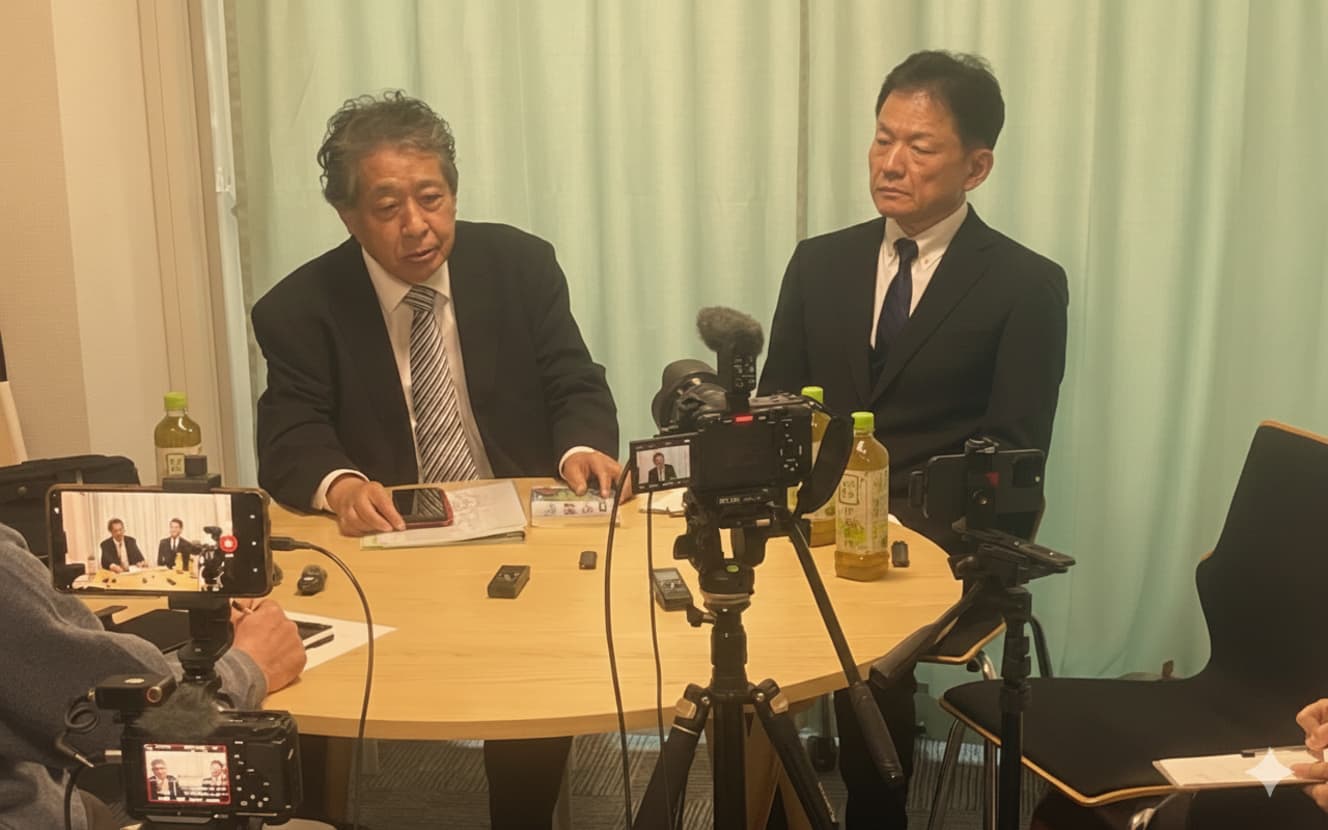
The Quagmire of the Situation Is Inevitable
“Minamide was dismissed under the delegation contract solely because the trust relationship had been significantly damaged. Also, his claim to be party disciplinary committee chairman is false. In the first place, he is not even a party member, merely an unpaid advisor.”
They also argued, based on the press conference content, that Minamide had committed serious misconduct including encouraging illegal acts, breach of confidentiality, and conflicts of interest, and added:
“It is clear that Minamide has grounds for disciplinary action. We also believe he could be considered an accomplice to defamation.”
They showed a stance of pursuing Minamide’s legal responsibility as well.
Furthermore, regarding criticism of party privatization, appointing relatives or employees to key party positions, they rebutted:
“We do not consider such criticism valid. The Nihon Seishinkai operates democratically according to party regulations and the law.”
Amid this intense legal back-and-forth, on December 24, 2025, Minamide and others submitted a second criminal complaint. According to Minamide, this filing serves to strengthen and supplement the first complaint, and in fact, new descriptions were added, such as:
“On the Nihon Seishinkai website, phrases like ‘Toshiaki Yoshino, politician and doctor’ and ‘Party leader Toshiaki Yoshino as a physician’ indicate that Yoshino is a doctor, thereby allegedly violating Article 18 of the Medical Practitioners Act.”
Although the term doctor was not visible on the party’s website, as of January 7 of this year, the descriptions on the official YouTube channel videos did include:
“Toshiaki Yoshino, politician and doctor”
“Party leader Toshiaki Yoshino as a physician”
Minamide has indicated that he is also considering criminal charges for fraud in the future, making the deepening quagmire of the situation all but inevitable.
The “Nihon Seishinkai,” established by Yoshino, who once criticized dictatorship and left the Sanseitō, is now facing the risk of collapse of the lofty vision of curing Japan’s ills just over a year after its founding.
Interview and text by: Shinsuke Sakai PHOTO: Masahiro Tsurugi/Afro (1st photo)