Osaka’s dashi culture is the “surprising reason” for the enthusiasm for “Shisan Udon” among the people of Osaka.


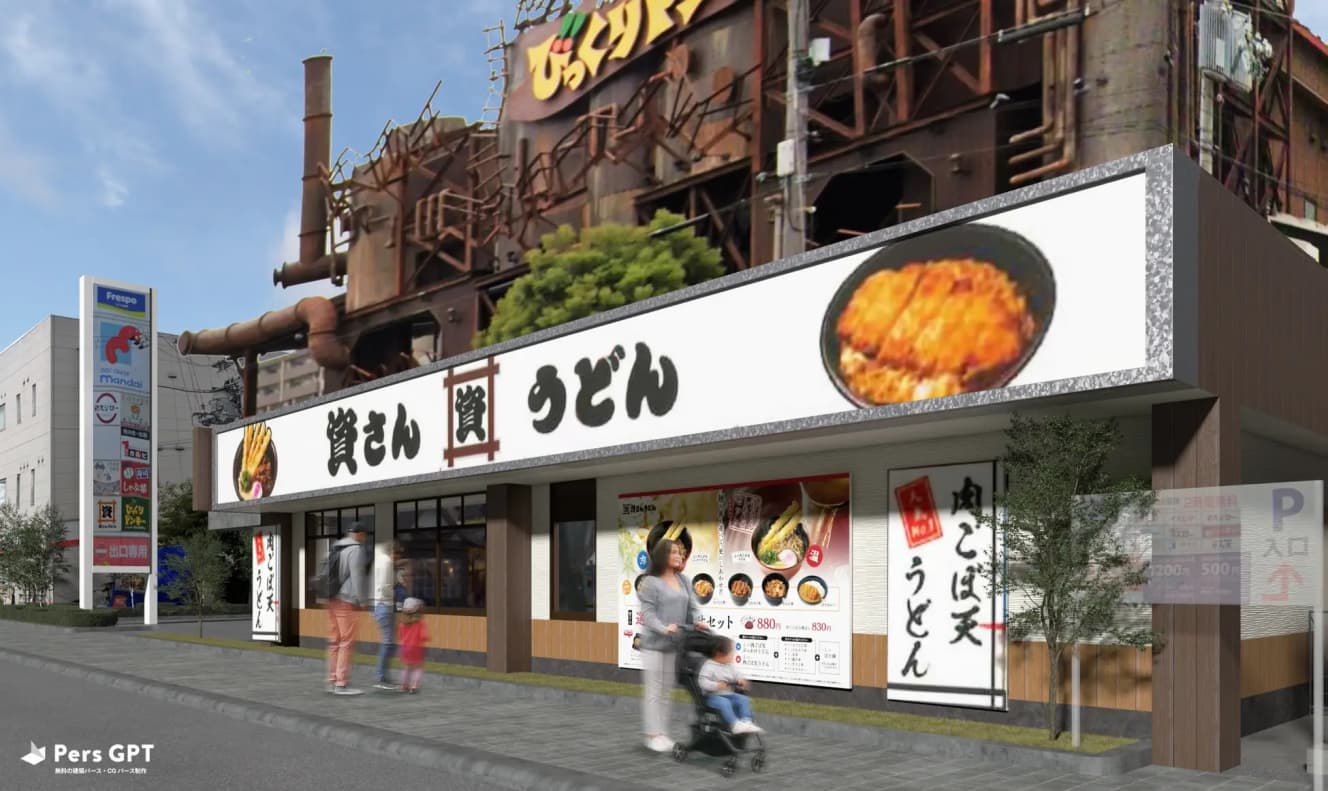
”Acquired by Sukairaku HD for about 24 billion yen.” This news that circulated in the restaurant industry in the past 24 years seems to be now appearing as a real “achievement”.
According to a report in the Nihon Keizai Shimbun, the effect of the acquisition of “Shisan Udon” was “more than expected. The momentum is so great that the parent company’s medium-term management plan was achieved a year ahead of schedule.
The most surprising of all is the enthusiasm in the Kansai region of Osaka. Osaka people, who are supposed to take pride in their “dashi culture,” are in fact completely fascinated by Kyushu’s udon and are going crazy over it.
As if to prove its “24 billion yen value,” we went to the site where huge lines are formed. Osaka-based gourmet journalist Shigeru Nekota explored the “surprising identity” of the udon that has captured the stomachs of Kansai people and won’t let go.
I won’t accept anything but Osaka’s udon!
Osaka people are uncommonly fond of udon. Nekota is a Sanuki udon fan, so when he asked the Osakan if there was any point in eating Osaka’s udon with no firmness, he was almost strangled and emphatically replied, “Udon is about tasting the broth! I was told emphatically, “Udon is to taste the broth! I vowed never to speak ill of udon to an Osakan again.
But when “Shisan Udon” landed in Kyushu in 2011, people in Osaka easily formed a line to get in. Where did their love for dashi go? In fact, even now, two years after its first opening in Kansai, the Imafuku Tsurumi branch of “Shisan Udon” is thriving day after day.
What in the world is so special about it⁉ I wanted to know how it had broken the Osaka people’s theory that “our udon is the strongest.
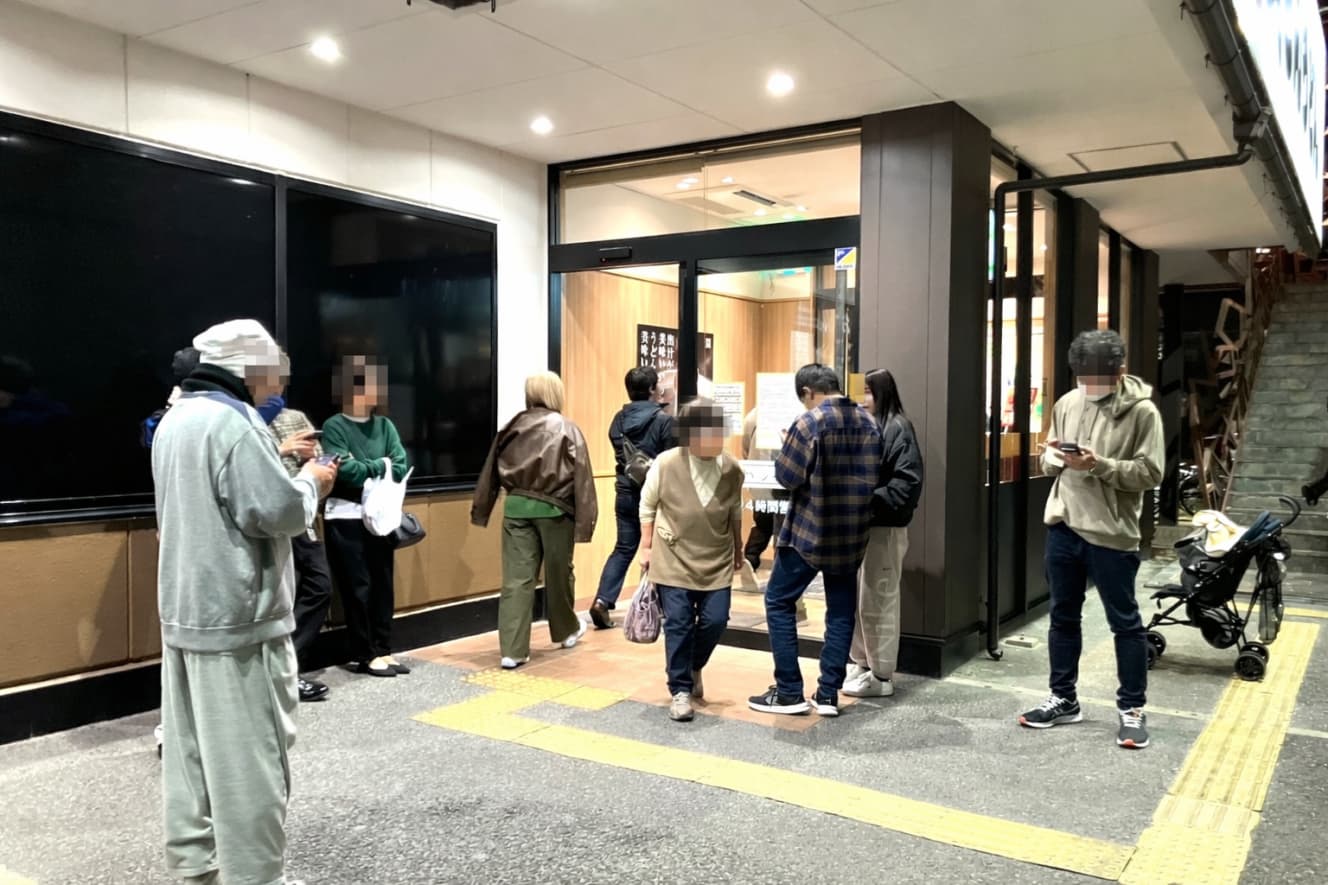
I accidentally came at 8:00 p.m. on Sunday, when the restaurant was extremely crowded, and I had to wait for 2 hours! As a chain restaurant that works as hard as Prime Minister Koichi, there is no limit to the number of hours they are open. I don’t want to end the interview at midnight, so I have to come back out.
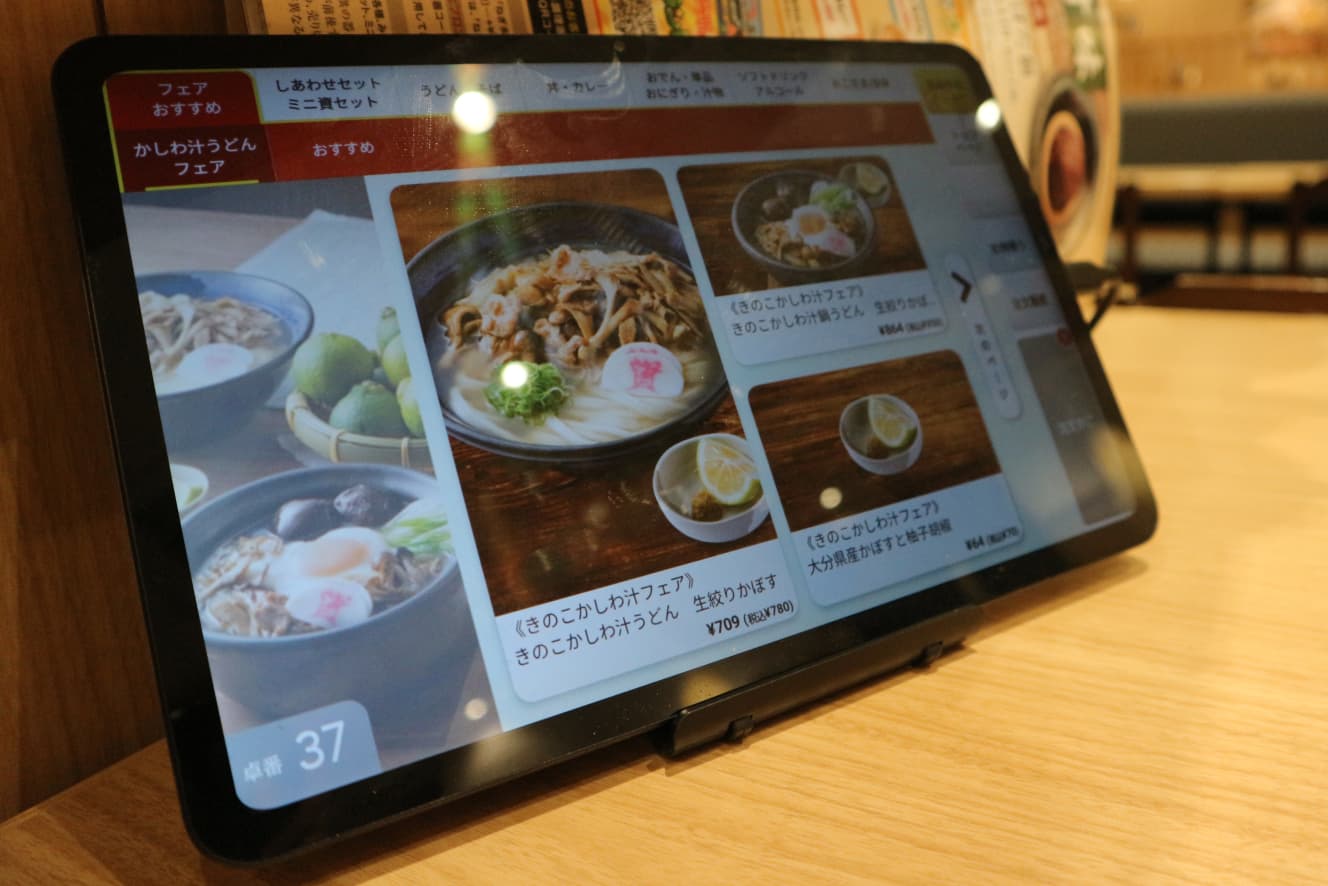
Next time, we hit the restaurant at around 4:00 p.m. on a weekday, halfway through the day, when no one knows what kind of food they eat, and we were able to get in without any problems. The menu is a touch-panel type, and there is a wide variety of food items such as udon, soba, rice bowl, curry, oden, and sweet ……. Moreover, the menu is subdivided into “katsu toshidon”, “gyu toshidon”, and “katsu no tose yaki udon”, so you can easily get lost. There are roughly more than 100 kinds of dishes. I was most interested in the “Kaijiru Set Meal,” but since it was off the main course, I decided to try the famous Goboten Udon (Udon with Goboten).

To begin with, this goboten udon is said to be a local gourmet dish born in Fukuoka. As the name suggests, it is a simple menu item consisting of udon noodles topped with burdock tempura. In the case of Shizuke’s, “Meat Goboten Udon” with beef added to it is his specialty.
The true nature of the “Shiawase Set” that makes Osaka people line up for it.
The “Katsu-Tsuji-don” looks delicious, too. While I was staring at the menu with a wrinkled brow, a voice from the seat behind me said, “I’ll make you happy! I’ll make you happy! I wondered if he was proposing in such a place, but the waitress kept repeating, “Happiness Set, isn’t it? The waitress kept repeating, “The Happiness Set.” She said they have a “Happiness Set” that includes a mini bowl of rice topped with a mini bowl of meat gobo-ten udon noodles. That would make me happy.

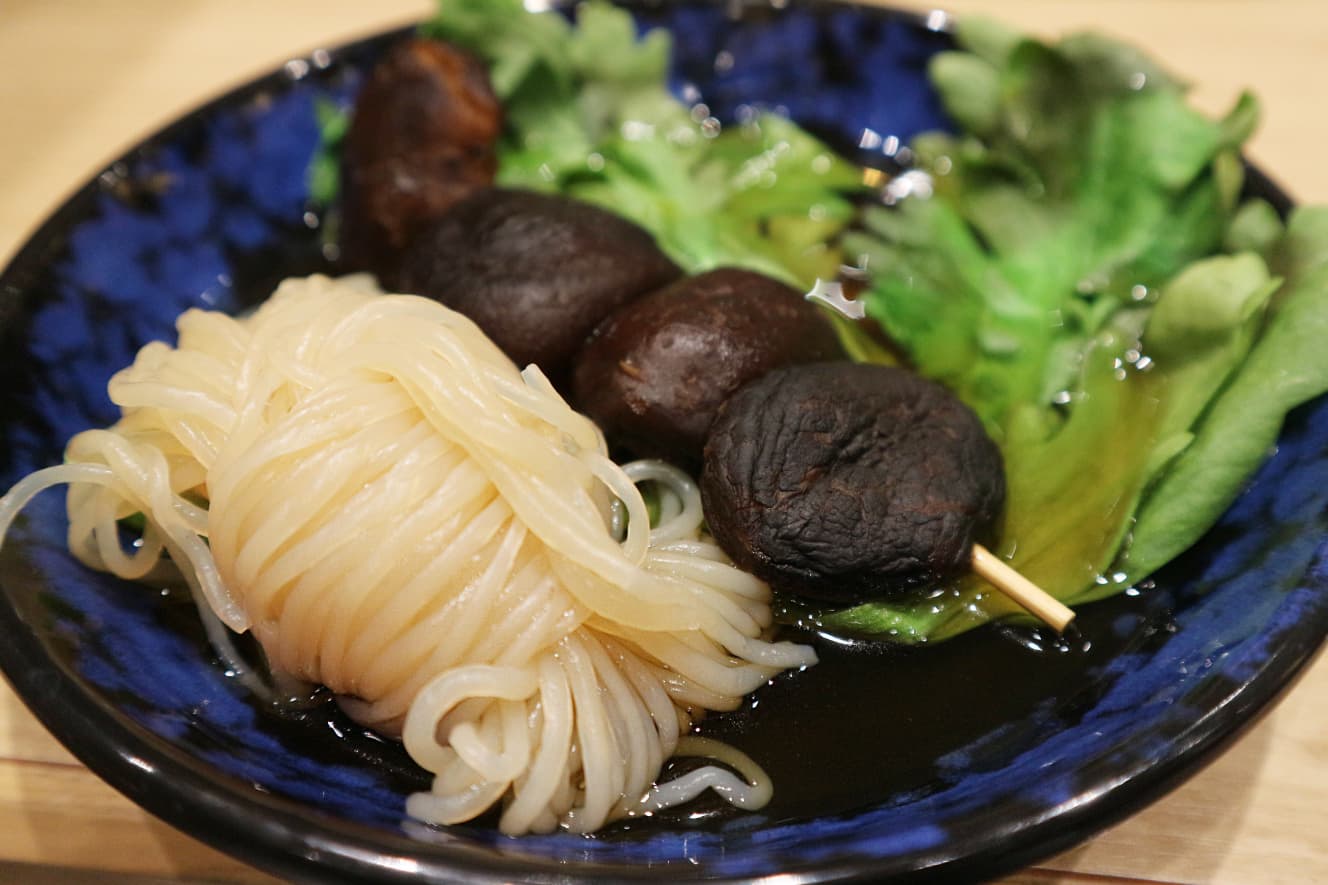
The regular meat and gobo tempura udon is also available as a mini rice bowl set for 400 yen, so Nekota decided to go for that one since the mini udon was not enough for him. While waiting, I had some free time, so I decided to eat some oden. There were so many kinds of oden that I panicked and ordered a mysterious order of “garland chrysanthemum,” “shirataki mushroom,” and “daikon radish. After the plate of oden arrived, udon noodles and mini katsudon arrived immediately. It was a brilliant operation.
The meat gobo-ten has five sticks of gobo-ten. The batter is crispy and the portion dipped in the broth has a “shunda” texture that is very addictive. The broth is a sweet Kyushu-style broth, with a strong aroma of kelp, shiitake mushrooms, and saba-bushi (mackerel bones). The fat from the meat also adds to the broth, making it light but not lacking in flavor!
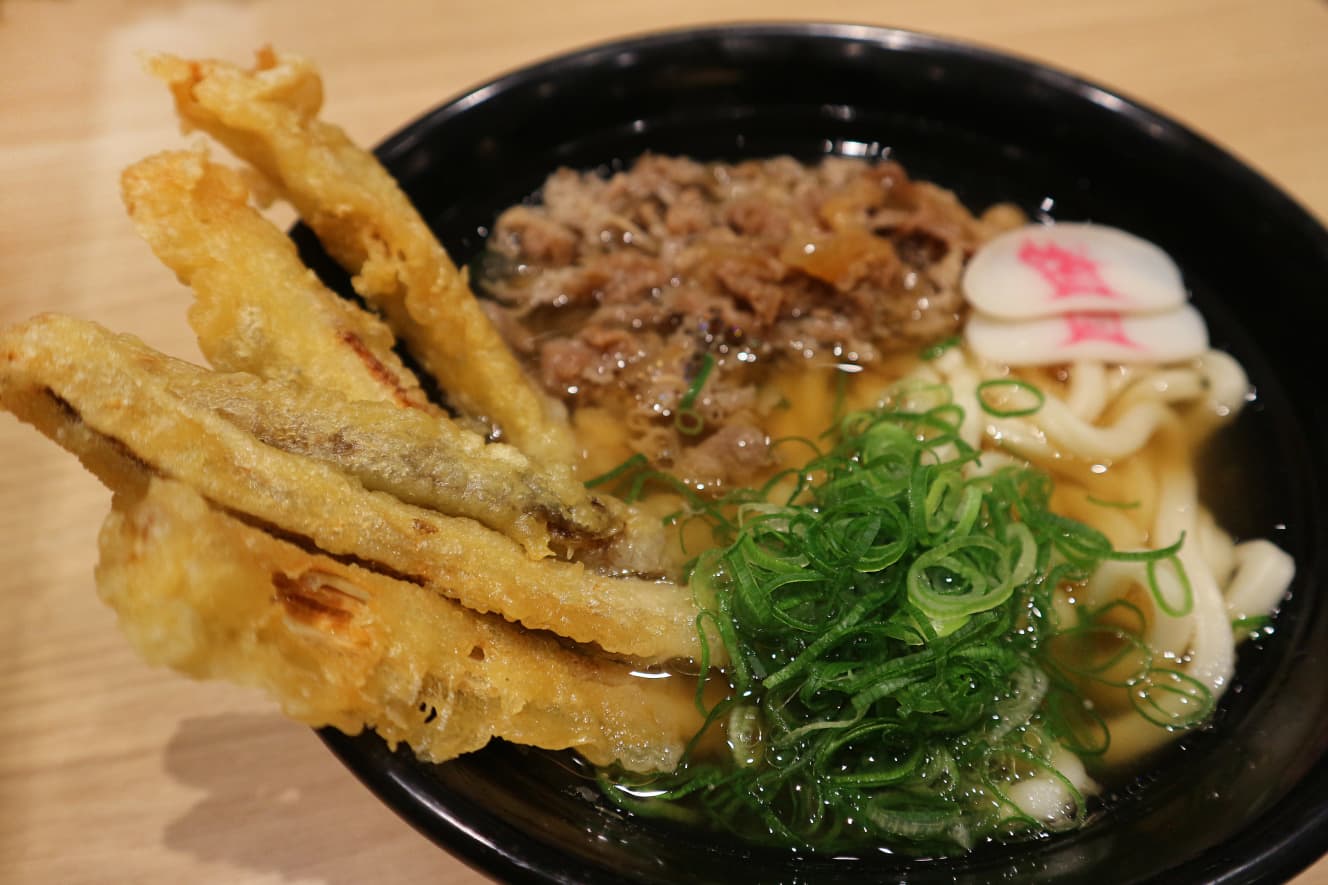
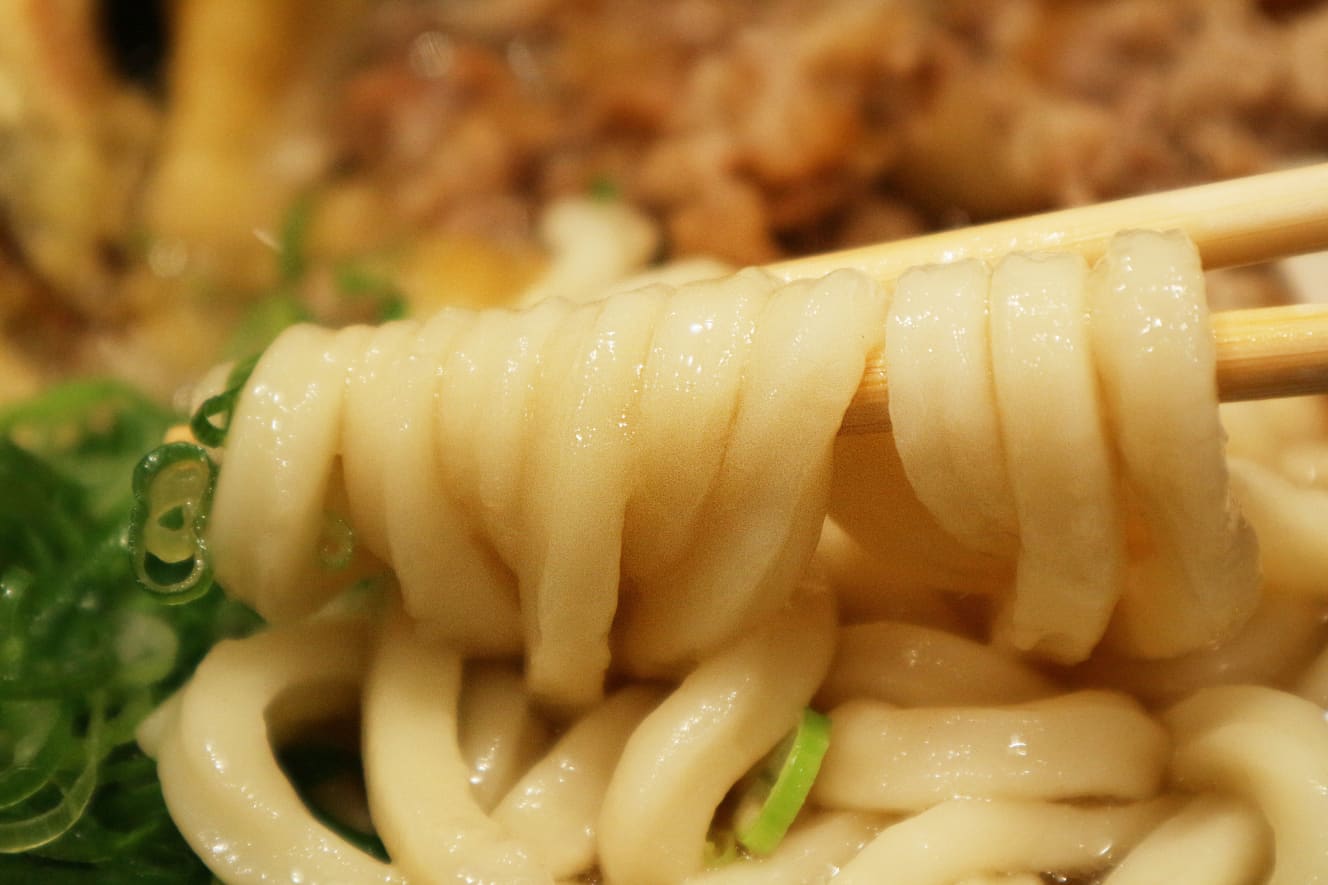
The udon noodles are not as soft as you would expect, but they have a “churny” texture and a freshly pounded chewiness. Unlike Osaka’s extremely soft noodles, they are quite elastic. It’s like a big bouncy noodle! It’s like “BUYON!
The “devilish taste change” with “Tororo Kombu” and “Tenkasu” which can be added as much as you like!
Now it’s time to customize the dish. On the table, there are amakasu and tororo konbu, which you can add as much as you like (within the limits of common sense). These tenkasu are oil from fried burdocks, shrimps, and chickens, so they are flavored with a variety of ingredients and are so delicious that they can be used as a side dish. Add some grated yam, kelp and shichimi, and you have a new dish.


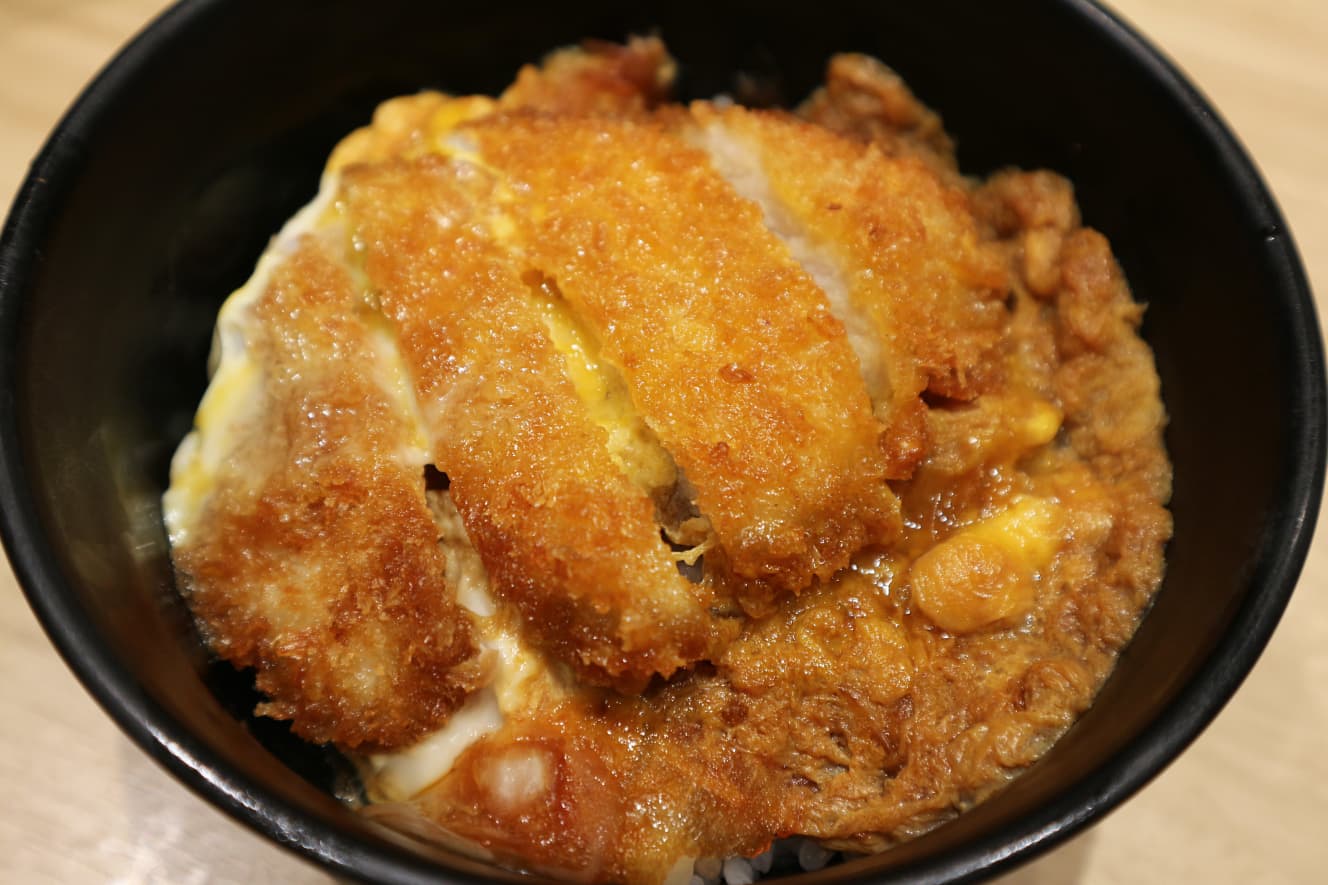
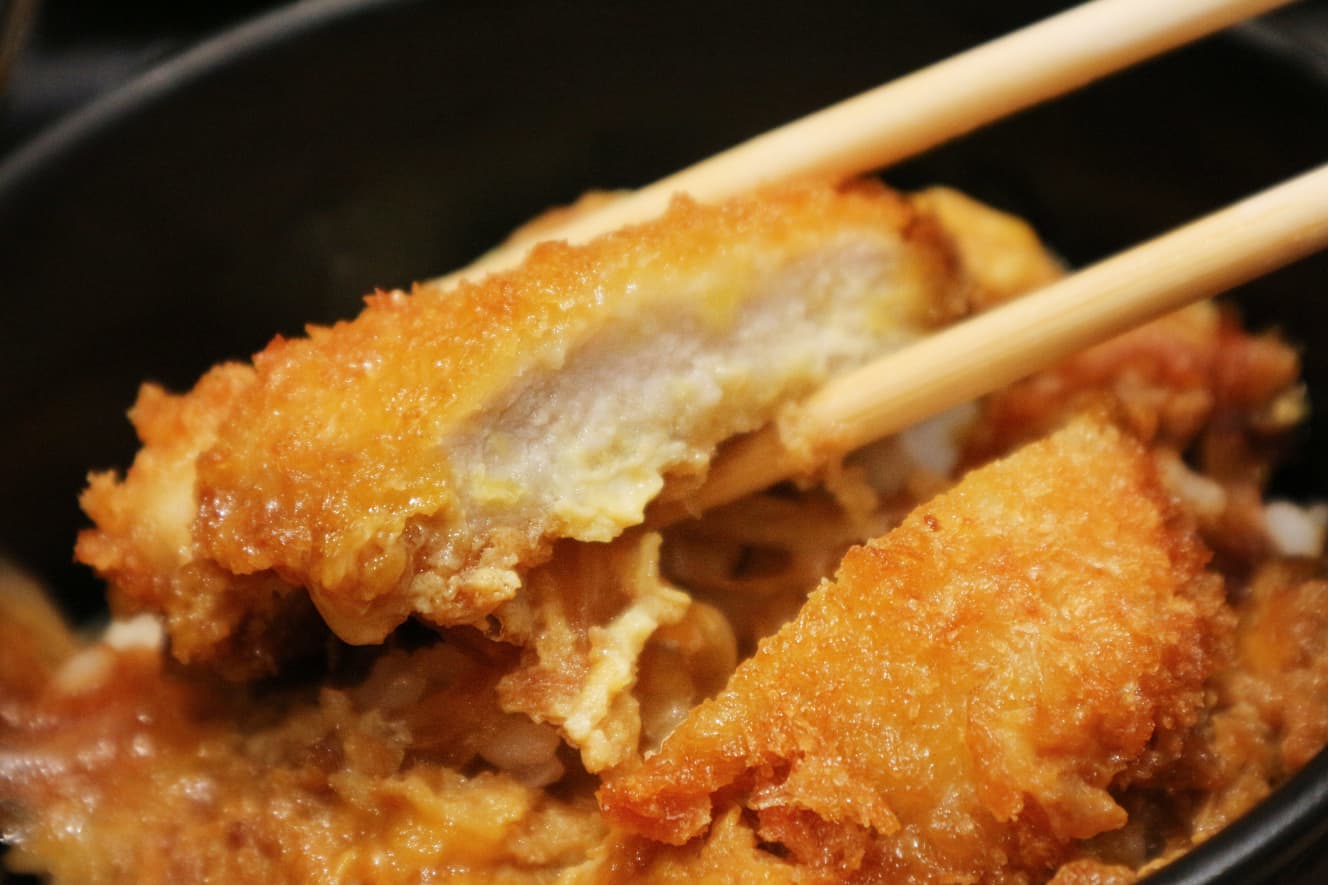
Don’t forget about the pork cutlet bowl. The pork cutlets are made from high quality Japanese pork and deep-fried in fresh oil and fresh breadcrumbs. The sweet and spicy donburi sauce soaks into the half-boiled egg, and even the white meat is delicious.
The “Tsuu” is “Yaki”!
Actually, I heard a rumor on the Internet (……) that the yaki udon is actually quite high quality. I was already full from just gobo-ten, mini katsudon and oden, but my poor guts kicked in and I ordered yaki udon as well, thinking that I could take it home and save one meal. I also ordered yaki udon, and in my foolishness, I ordered the wan naku set of yaki udon with pork cutlet on top and a small rice!

Moreover, the yaki udon says that it originated in Kitakyushu. I looked it up and found that it is a local delicacy that originated at “Daruma-do” in Kokura in 1945. Wow.
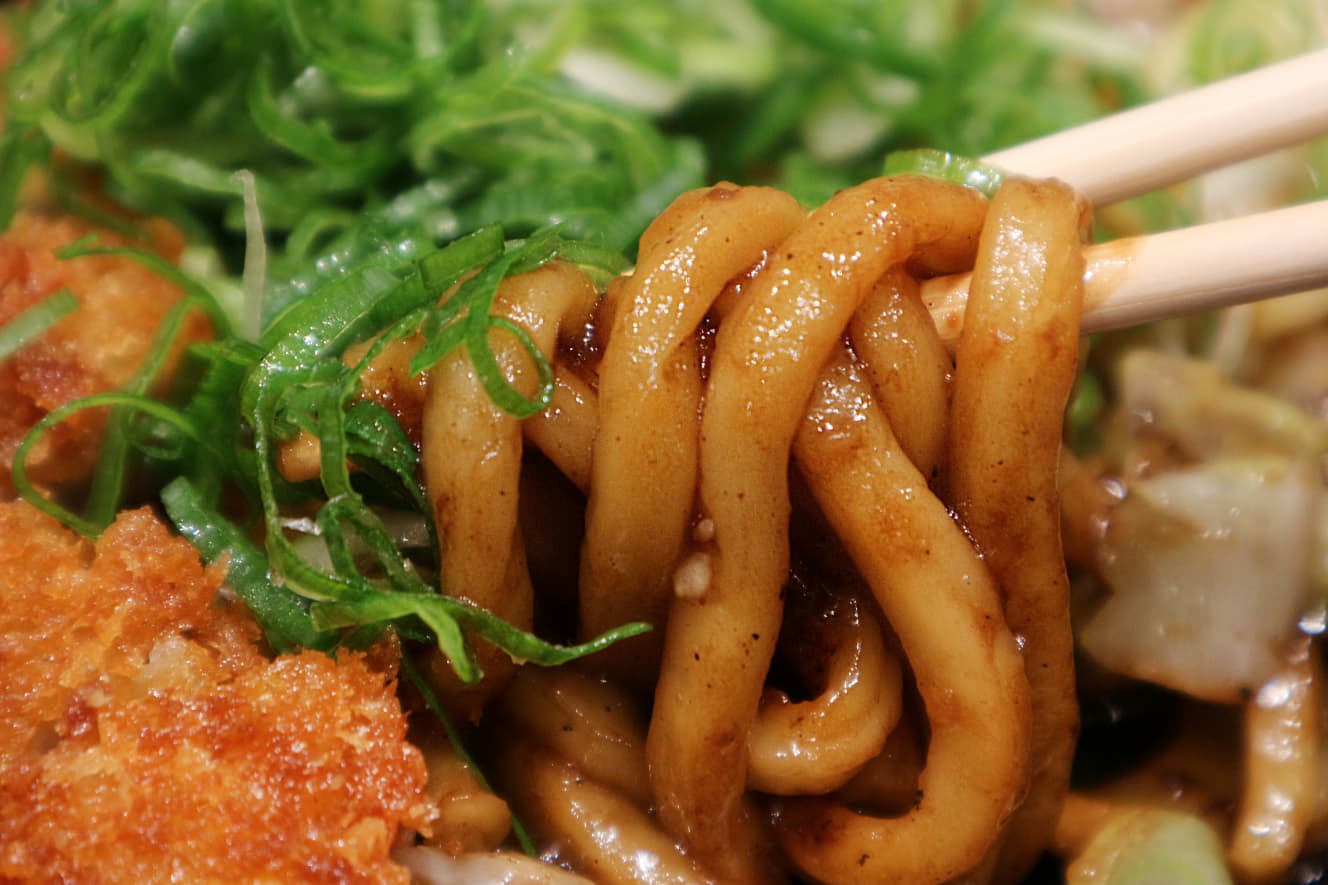
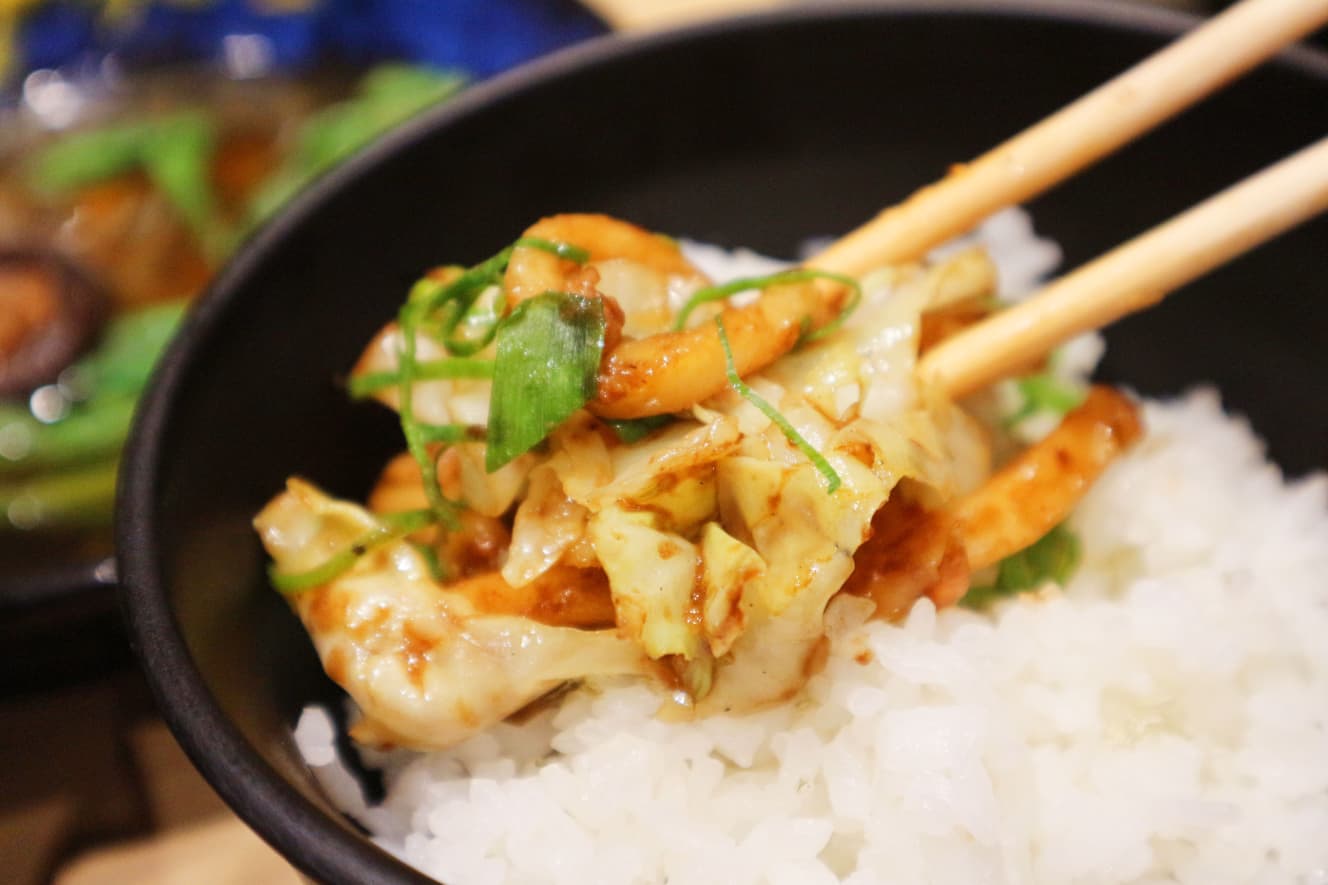
The yakiudon noodles appear on a griddle, making a sizzling sound, and the noodles are coated with sauce. The sauce is soy-sauce based, sweet and slightly spicy, with a hint of bonito broth for a full-bodied flavor. The noodles are made with pork, cabbage, onion, green onion, and this chikuwa-like paste, which is made by the company ……. So many ingredients. A half-boiled fried egg is tossed with noodles on the way and then on the rice to make a double-decker of carbohydrates. You will forget that you had the meat gobo-ten udon and the mini katsu-don (pork cutlet bowl) and just gobble it up.
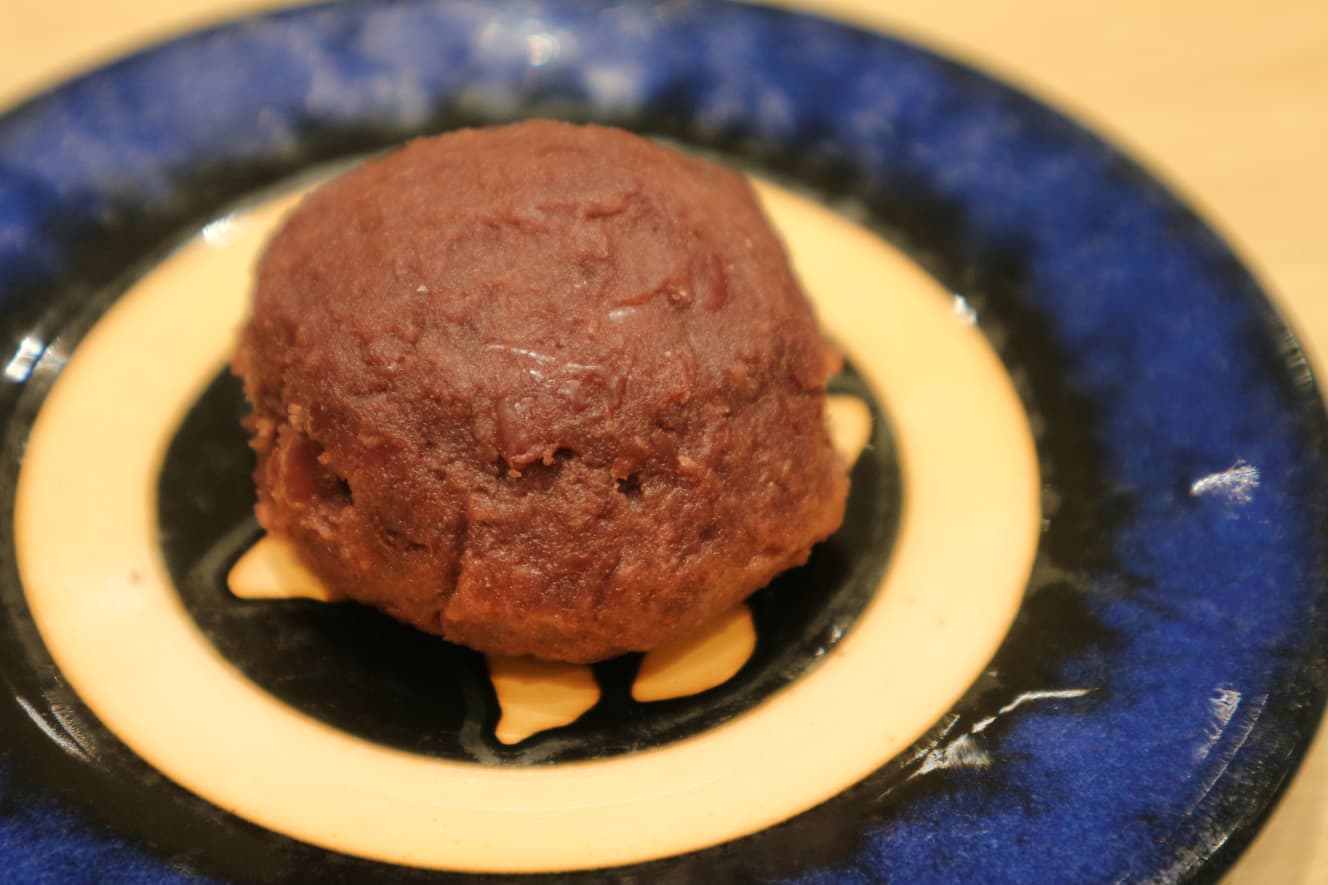
Why “Botamochi,” Kitakyushu’s soul food, makes Osaka people fall in love with it.
By the way, I heard that another specialty of Shisun’s is botamochi. Why at an udon shop? I can understand if it is a donut that utilizes wheat flour like Marugame Seimen, but ……. In fact, this is also a soul food of Kitakyushu, and botamochi was often eaten to relieve fatigue since there were many factory workers in the area. You can learn a lot from “Shisan Udon”.
In the end, I came to the usual conclusion that the secret of “Shisan Udon’s” popularity in Osaka is that it has a full menu, is genuinely tasty, and is reasonably priced.

However, I noticed something. Osaka people do not “like Osaka udon” but “like the food called udon. …… If you think about it, in Osaka, there are always crowds of people at every “Sanuki Udon”, “Inaniwa Udon”, and “Kyo Udon”.
In Osaka, kombu (kelp) was brought in by the Kitamae-bune (a long time ago) and dashi (Japanese soup stock) was used to build the Japanese food culture, so there is endless respect for “udon” because dashi is the lifeblood of udon. I ended this article as if it were a gourmet article.

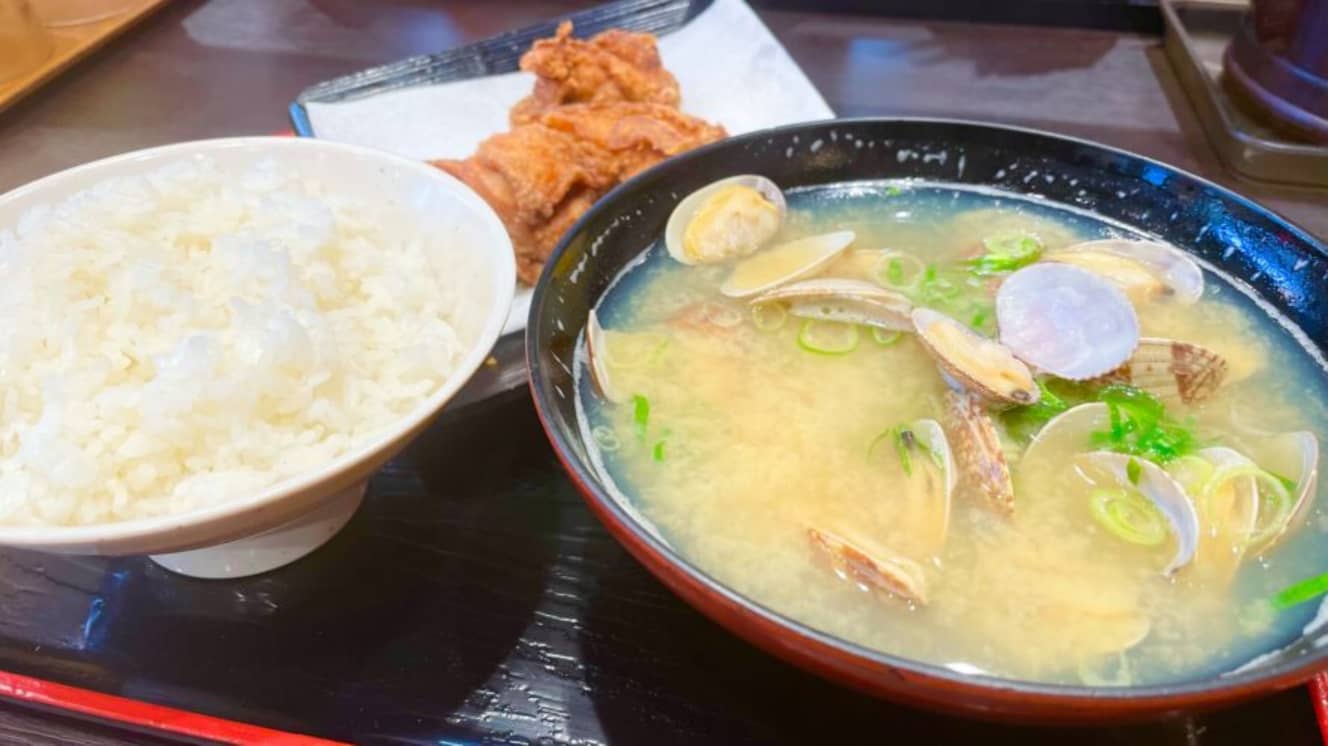
There is one regrettable mistake. I should have tried the immoral act of “eating soba at Shisan Udon. Also, I still have some lingering regrets about the shellfish soup set meal. I will try it next time I go there. I wonder if this is how people become addicted to Shisun.
*Information is current as of December 1, 2013. Menu items and prices may differ depending on the restaurant.
Interview, text, and photographs: Shigeru Nekota
Born in 1979. Worked as an editor and writer for town magazines, travel books, and recipe books. Currently, as a web writer, he writes on a wide range of topics from decadence to traditional crafts. His life motto is "Sake is best drunk while walking". Shigeru Nekota's food blog "I love quirky restaurants! https://nekotashigeru.site/・Instagram @nekota_sigeru