Public Health Nurse Shares Top 8 Meal-Boosting and Substitute Foods



The persistently high price of rice is hitting our dining tables directly. With inflation forcing people into a frugal lifestyle, some may feel that the only defense is the painful option of buying as little rice as possible.
Still, rice is a staple. We can’t completely stop eating it. For households with growing children, managing daily meals is a matter of life and death.
Some people have already reduced the number of meals with rice, switching to noodles or bread. But is there a way to more easily get the satisfaction of a rice-based meal—through substitutes or by bulking up white rice? If it not only fills you up but also has health benefits, that would be even better.
For this article, we asked Kyoko Maruge, a public health nurse at Dr. Trust Co., Ltd. (Shibuya, Tokyo), which provides corporate and government healthcare services, to list substitute and bulking foods recommended by professionals.
1. 1.5× the cooked volume! The ultimate bulking ingredient highly recommended by the pros
The first recommendation from Maruge is mochi barley and mixed grain rice.
“You often see mochi barley and mixed grain rice at supermarkets. They are easy to cook, simple, and easy to try. Both have a slightly chewy texture, which naturally increases the number of times you chew compared to eating plain white rice.” —Maruge
Chewing more can also aid digestion and stimulate the brain.
Mochi barley: Mix about 20–30% with white rice when cooking. It’s best to experiment and find a ratio that works for you.
The biggest feature is its high dietary fiber content, which helps relieve constipation. White rice alone can cause blood sugar to spike rapidly, but the abundant fiber helps slow this rise. Rapid blood sugar spikes trigger large insulin releases, which then cause sudden drops, leading to post-meal drowsiness and reduced concentration. Chronic high blood sugar also increases the risk of diabetes, so suppressing these spikes is a major advantage.
Furthermore, it has a strong bulking effect. Mochi barley absorbs a lot of water, so even a small amount expands easily, and the cooked volume can be about 1.5 times that of plain white rice. This makes it easier to feel satisfied when eating, which is a welcome point when saving money.
Mixed grain rice: This is rice mixed with small amounts of grains like millet or foxtail millet. Like mochi barley, it’s rich in dietary fiber, plus vitamins, calcium, and iron. These nutrients, often lacking in the Japanese diet, can be efficiently consumed, making it feel like a good deal. Unlike mochi barley, it doesn’t expand much when cooked, but offers a unique flavor and texture. However, its appearance and taste differ from plain white rice, so preferences may vary.
“For small children, mixed grain rice may look different from their usual white rice, and they may refuse to eat it. Dietary fiber can also be a burden for toddlers, so it may be better to introduce it from around age three.”
2. Make it rice-like! The most cost-effective & kid-friendly all-purpose food
As an easily available substitute at supermarkets, oatmeal remains consistently popular. It is a cereal made from processed oats, and many people use it as a staple food.
It is highly nutritious, containing dietary fiber, carbohydrates, protein, vitamins, and minerals. Switching from white rice can significantly reduce calories and carbs. Buying in bulk lowers the unit cost, so planned purchases are recommended if you want to continue using it.
“If you add water and heat it until soft, it can be eaten like rice. Mixing in cheese or canned tuna and cooking it in a frying pan makes it like a risotto. You can even mix cocoa powder while making it rice-like, turning it into a dessert, so children can enjoy eating it.”
Depending on the cooking method, it can be made rice-like or dessert-like, among other variations. The ability to choose a method you like is its greatest appeal.
3. Only 1/6 the calories! Surprising substitutes that make you wonder, “Can you lose weight just by eating this?”
The following options are a bit harder to obtain but suitable for health-conscious individuals.
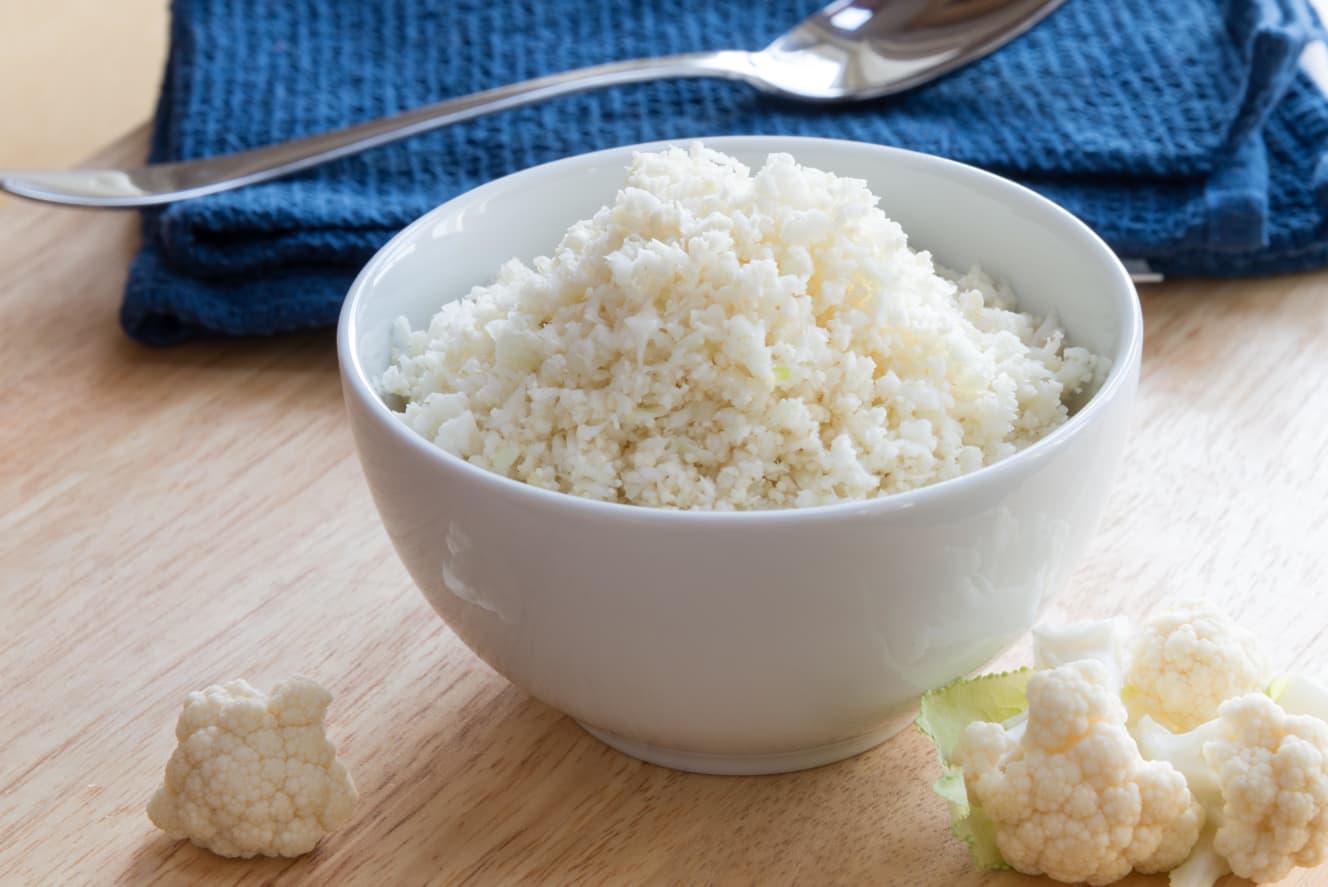
Cauliflower rice: Cauliflower finely chopped to resemble rice. It is healthy, with about 1/6 the carbs and calories of white rice, and is rich in vitamin C and dietary fiber. According to Maruge, it is recommended to use it in fried rice or risotto rather than eating it plain.
Konjac rice: Less common in circulation but low in calories and high in fiber, which can improve digestion and support dieting. It is generally cooked mixed with white rice.
Quinoa: A superfood originating from the Andes. It looks like rice but is actually related to spinach, and its seeds are eaten. It contains essential amino acids and has excellent nutritional balance. It can be cooked like rice, mixed with white rice, or added to salads, making it versatile.
4. No shopping needed! Boost satisfaction with that ingredient already in your fridge
You don’t necessarily have to buy specialty foods; you can bulk up your meals using familiar ingredients.
Potatoes: Notable for keeping you full. However, depending on the cooking method, they can spike blood sugar, so steaming is better than frying or stir-frying. Mixing them with rice during cooking can create a substantial volume boost.
Beans (e.g., soybeans): Rich in protein and dietary fiber. Mixing them with rice while cooking also increases volume.
Both options change the texture of the meal, so some experimentation is needed to find the combination that suits your preferences.
Even with rice prices remaining high, there are many substitutes and bulking techniques available. Compared to relying solely on white rice as a staple, these methods offer nutritional and health advantages. Using ingredients that are easy to obtain, experimenting with preferred ratios and cooking methods, you can smartly navigate this period of high prices.
Interview and text by: Hideki Asai PHOTO: Afro