Overtourism Really Dissipated? Walking around Kyoto, where the Chinese have disappeared due to Koichi’s comments.


The number of Chinese people has obviously decreased.
The Chinese Ministry of Foreign Affairs called for voluntary restraint on travel to Japan in response to Prime Minister Sanae Takaichi’s (64) comments regarding the Taiwan emergency. As a result, accommodations and restaurants in tourist areas, which had been boosted by inbound demand, are reportedly experiencing cancellations of reservations by Chinese tourists. In some cases, sudden cancellations have even resulted in penalty fees. In addition, the price of hotels in tourist areas, which had been soaring, is also reportedly falling.
Some people on social networking sites said , “Thanks to this, overtourism has been eliminated. We interviewed people in the area.
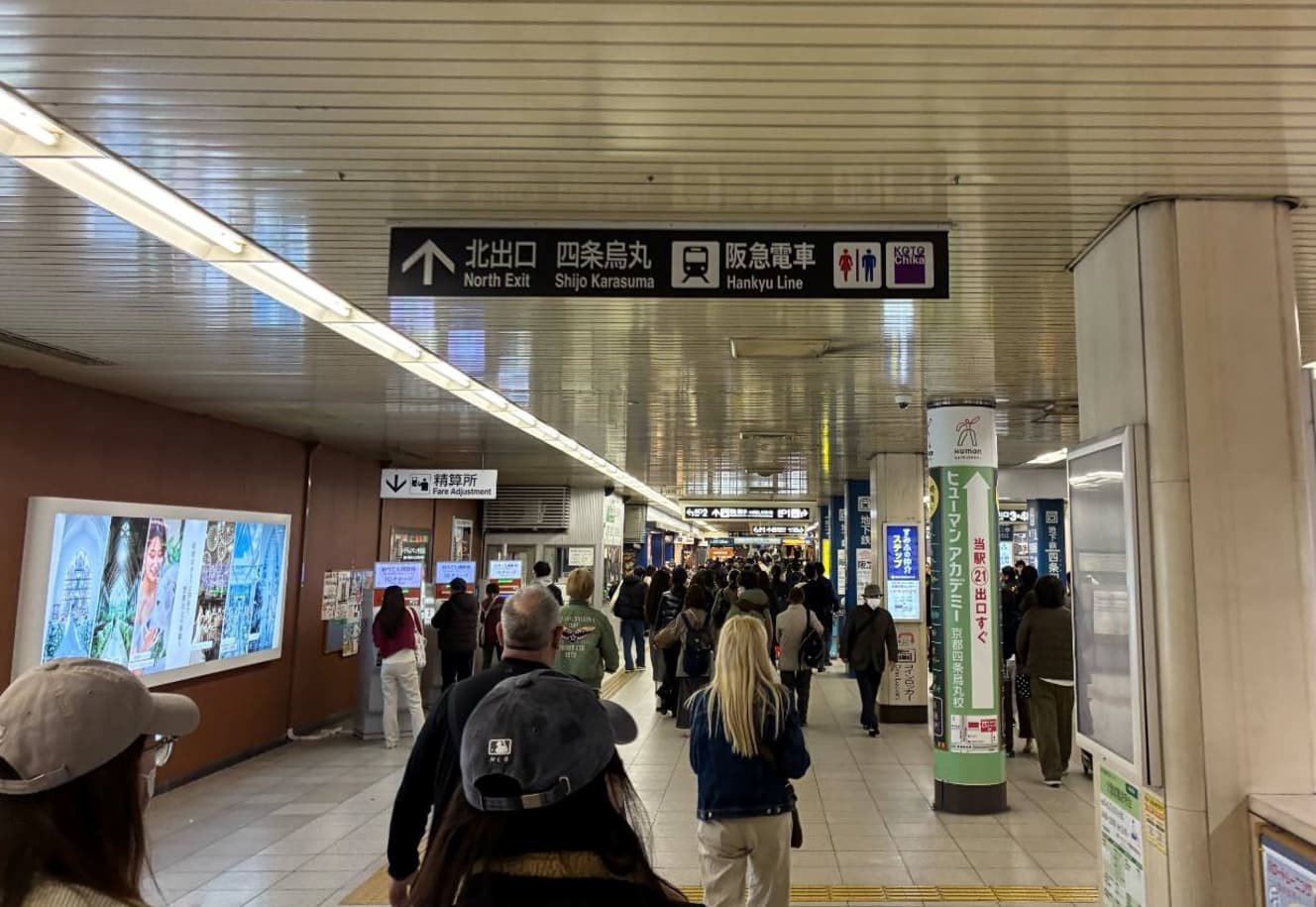
The crowded situation inside JR Kyoto Station, the gateway to Kyoto, has not changed with many foreigners. However, once we stepped out of the ticket gates, the number of foreigners seemed to be fewer than when we visited in September. There were no foreigners stopping to look at their smartphones to check on the city’s transportation system, and no foreigners relaxing after a long trip by leaning back against their large luggage around the ticket gates.
The first “strange” thing I noticed when I boarded the subway was that I could not hear Chinese around me. Before, I used to hear Chinese every time I passed someone, but this is no longer the case. Even on Kiyamachi Dori, lined with restaurants frequented by foreigners, there are very few Chinese people. When we asked tourists about their countries of origin, many were of Southeast Asian or European descent. Still, there were several groups of Chinese tourists, so it seems that they have not disappeared completely.
One izakaya chain restaurant told us that “the number of foreigners has obviously decreased,” and they are concerned about their future business.
The number of foreigners seems to have decreased since the end of November,” said one izakaya chain. In the first half of the year, there were many foreign visitors, but in the second half of the year, there were no people.
I am worried about the future because Japanese tourists do not come to chain restaurants like the one we work at. I don’t think there will be a problem during the year-end and New Year’s holidays because there will be year-end and New Year’s parties, but if the number of customers continues to increase after those parties are over, we will have a problem.
150% to 100%?
Local university students felt the same decrease in tourists.
I think the crowds at ramen stores and other places have disappeared. When I would stop by after college or after my part-time job, I would often give up because there were so many foreigners lined up. I am honestly grateful that this is no longer the case and I can casually walk into a restaurant. When you live in Kyoto, you don’t feel like waiting in line to eat a meal,” said a local university student.
The university student guided me around Kyoto, but I did not hear many foreign languages, especially Chinese, around me.
Shijo-dori is especially crowded with foreigners, so much so that I repeatedly bumped shoulders with them as it is a narrow street. Nishiki Market was also quite crowded, but now it is not that crowded. However, there are still many foreign tourists. I think only the Chinese, who used to be numerous, have decreased in number.
The Kiyomizu-dera area, one of the most popular tourist spots in Kyoto, was also experiencing an unusual situation. On the way to Kiyomizu-dera Temple, the Kiyomizu-zaka area, lined with souvenir stores, is visited by many foreigners every day. A man who works at a souvenir store told us about the current situation, “I knew that the number of visitors would drop after the autumn foliage season ended, but …….
He said, “This area is really crowded, so only tourists pass through. But now there is some room. Many were still customers from China, but I didn’t think they would suddenly disappear. It’s a popular tourist attraction, so it’s not like there are no people at all. ……”
Other souvenir stores also reported a decrease in the number of Chinese tourists. A shopkeeper testified.
If the crowds were about 150% of what they were before, now I think they are back to about 100%. We know that the number of tourists will decrease even more in the winter. I am concerned about what will happen in the spring and if this continues through the cherry blossom season. After all, we would be happier if the place was crowded than if there were no people there at all.
In the past, problems caused by foreign tourists, such as “staying in stores for long periods of time and bothering other customers,” “persistently bargaining for lower prices,” and “being arrogant in groups,” have caused some locals to say that they would be more comfortable spending time with fewer tourists. Since Chinese tourists are a symbolic aspect of overtourism, it seems that many people welcome the current situation.
According to the Japan National Tourist Organization, the number of tourists in November increased 10.4% from the same month last year to a record 3,518,000. Of these, 562,600 were tourists from China, up 3% from last November. However, this is quite a slowdown, considering that the number was up 22.8% in October.
Still, the figure of 560,000 is still second only to South Korea with 824,500 visitors by country and region. The full impact of the worsening Japan-China relations will not begin to be felt until December. The current situation is just the beginning.
FRIDAY Digital welcomes information and tips from our readers. Please send your information to the following information form or to the official X.
Information form: https://friday.kodansha.co.jp/tips
Official X: https://x.com/FRIDAY_twit


Interview, text, and photos: White Paper Green