NHK Party Councilor’s Comment Sparks Pressure Allegations From Detained Tachibana


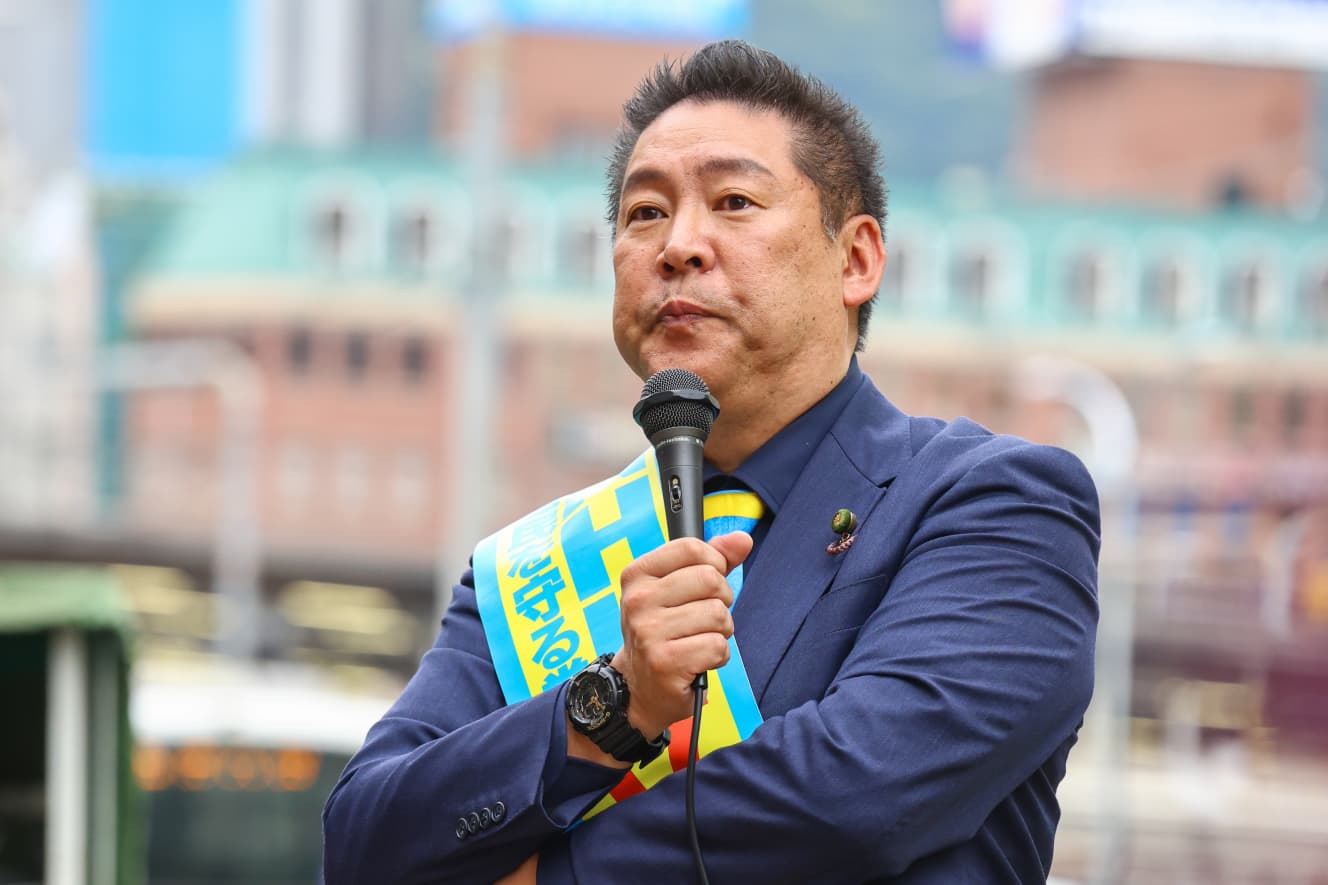 Takashi Tachibana, defendant and leader of the NHK Party, was arrested on suspicion of defamation. His bail request was also rejected.
Kobe District Court rejects bail request amid certain concerns
Tachibana (58), leader of the NHK Party to Protect the People from NHK, was arrested and indicted for defaming the late Hideaki Takeuchi, former Hyogo Prefectural Assembly member, who passed away in January this year. His request for bail was reportedly denied.
According to the Kobe Shimbun on December 10, Tachibana’s lawyer requested bail on November 28, the same day he was indicted, but it was rejected on December 2. A quasi-appeal against this rejection was also dismissed on December 8.
Some observers had expected that, barring re-arrest, Tachibana could be released on bail after the New Year, but it appears he will not be able to leave custody for some time.
The Kobe District Court has not disclosed the reason for rejecting the bail request, but the Sankei Shimbun reported on December 10:
“The district court is believed to have considered the risk of evidence destruction or undue influence on related parties.”
In fact, a recent incident seems to evoke the concern about undue influence on related parties.
On December 5, some local newspapers reported that in the June Hyogo Prefecture Amagasaki City Council election, Tachibana and three members of the NHK Party, including City Councilor Kanki Fukui (54), were accused of inflating their election poster expenses billed to the city. Two citizens filed a criminal complaint for fraud, which the Hyogo Prefectural Police accepted on November 19.
According to the complaint, Fukui, who was elected to the city council for the first time, commissioned Net Election Inc.(based in Nerima, Tokyo), a company represented by an NHK Party affiliate, to produce election posters and billed the city 555,984 yen.
A total of 576 posters were produced, making the cost per poster 965.25 yen. It was pointed out that in last year’s Hyogo gubernatorial election, the same company produced posters for about 130 yen each. The complaint claims that approximately 480,000 yen was obtained fraudulently.
Fukui has explained and refuted the claims several times in videos. On December 6, he stated on his YouTube channel:
“If I stayed silent, people might say that Tachibana committed an even more serious crime. So I’m following the instructions to prevent that from happening.”
Fukui said.
Concerns that pressure could be exerted on witnesses or parties involved in the case
In a video released on December 8, Fukui explained the poster production costs, noting the difference in the number of posters produced (1,300 for Tachibana’s case) and that the posters had a sticker-style backing that could be peeled off and applied, making them more expensive to produce than regular posters. He then added:
“It would be good if (the person who filed the complaint) could withdraw it, realizing they were mistaken. But if this still remains, I will file a lawsuit for false accusation.”
This statement could be interpreted as a threat to the complainant. Fukui also stated:
“I was instructed to file the complaint by Leader Tachibana.”
This prompted comments such as:
“You shouldn’t say it’s the leader’s instructions. That implies he can pressure people outside from the detention center, which would prevent bail.”
“Fukui-san, you said too much.”
The next day, on December 9, Fukui updated his YouTube channel. He clarified that the statement about following Tachibana’s instructions was misleading. In reality, he had acted on his own initiative and had only obtained Tachibana’s agreement through his lawyer. Nevertheless, this correction likely left a negative impression.
Many pointed out that Fukui’s remarks endangered Tachibana’s position and could delay his bail. Kosuke Nishiwaki, former Head of Legal Affairs at TV Asahi, was one of them.
In an interview with FRIDAY Digital, Nishiwaki explained:
“Although this concerns a matter separate from Tachibana’s current indictment, it could lead the court to fear that people around Tachibana might exert pressure on witnesses or parties involved if given instructions. For the prosecution, this could also be a reason to oppose bail, arguing that releasing Tachibana could put case-related parties at risk.”
Furthermore, Tachibana himself had stated in a past video:
“Even if I go to prison, I can manage things remotely.”
Given this, it is understandable why the court decided to reject his bail request.
It seems the enemy was a supporter lurking behind him.
Interview and text by: Hiroyuki Sasaki (Entertainment Journalist) PHOTO: Pasya/Afro