Taxpayer Money Wasted? Agriculture Minister Suzuki’s Rice Voucher Sparks Backlash


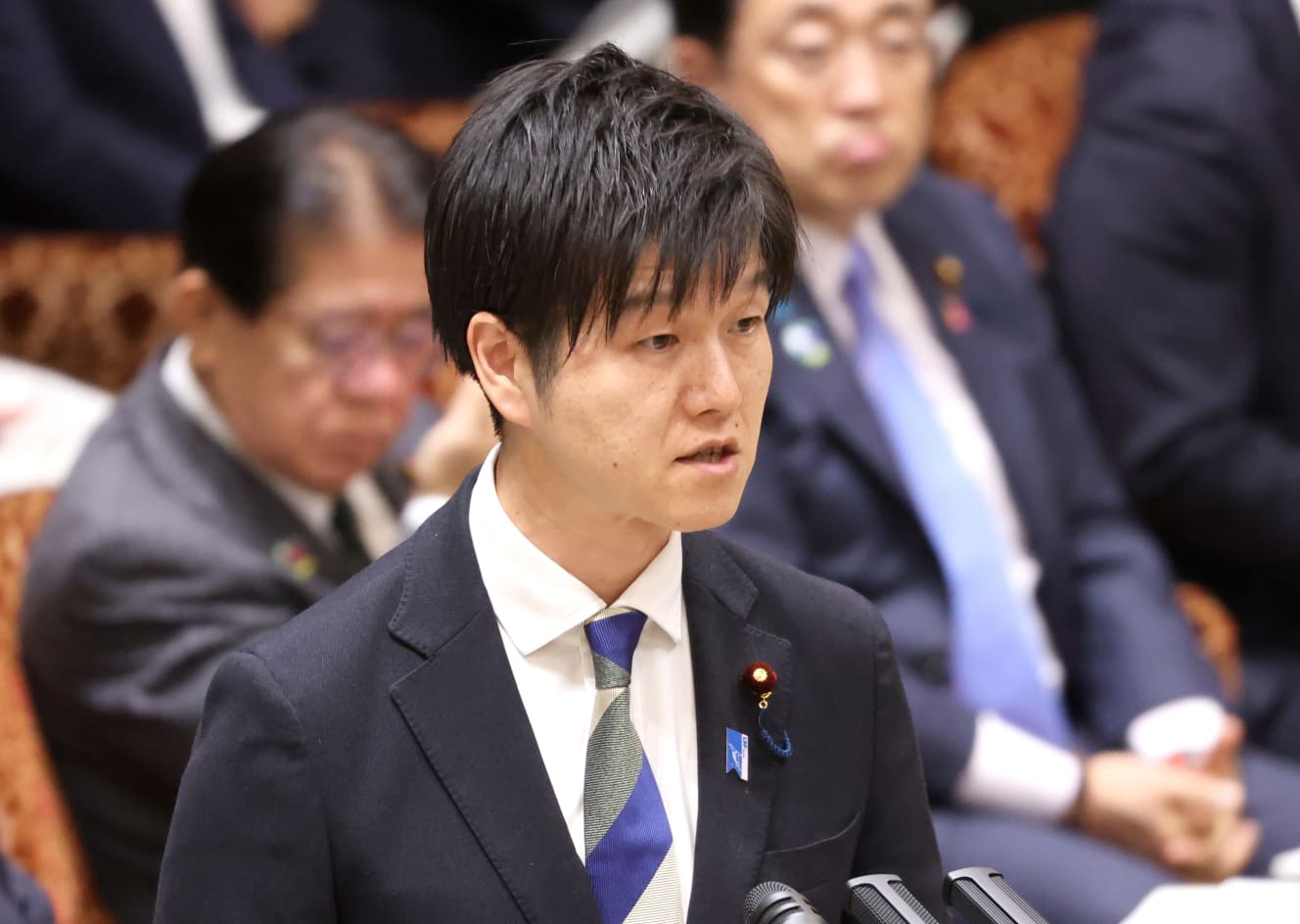
Municipalities cast cool glances at Agriculture Minister Suzuki’s struggling explanations
Criticism of the government’s rice vouchers, a favorite of the Minister of Agriculture, Forestry and Fisheries, shows no signs of subsiding.
The government added rice vouchers to the recommended menu of the Priority Support Local Allocation Fund as a measure against rising food prices. However, many municipalities have refused to distribute them, citing high administrative costs and financial burdens.
Mayor Keichi Yamamoto of Katano City in Osaka Prefecture was quick to announce on his X account on November 28, “Katano City will not distribute rice vouchers.” He cited two reasons: “The cost rate is over 10%, which is high” and “There is no need to force the purchase of expensive rice at the moment.” In a subsequent post, he declared, “Katano City will not succumb to Minister Suzuki’s blatant inducement to distribute rice vouchers.”
Rice vouchers are sold by the National Rice Retailers’ Mutual Aid Association (Zenmeihan) and the National Federation of Agricultural Cooperative Associations (JA Zen-Noh) at 500 yen each. After deducting printing and handling fees of 60 yen, the actual rice value is reduced to 440 yen per voucher.
Additionally, if a municipality mails paper vouchers to residents, postage and administrative costs are incurred.
Since Mayor Yamamoto of Katano City declared the refusal to distribute, many other municipalities have followed suit.
Mayor Kazuhisa Takeuchi of Kitakyushu City explained to reporters on December 5, “Rice vouchers take time and incur fees. The amount residents actually receive is relatively low, so we will not adopt them.”
Mayor Soichiro Takashima of Fukuoka City commented at a press conference on December 9, “All costs for distributing rice vouchers are borne by taxpayers. The government should be more conscious of that.”
Mayor Shigeru Horiuchi of Fujiyoshida City in Yamanashi Prefecture sharply criticized the idea on December 10, saying, “Nowadays, the very concept of rice vouchers is one or two steps behind. It’s far too inept.”
In the face of widespread criticism from municipal leaders, JA Zen-Noh and Zenmeihan both announced that they would not add profit to rice vouchers distributed using the Priority Support Local Allocation Fund. They lowered the selling price: approximately 480 yen per voucher for JA Zen-Noh and 477 yen for Zenmeihan.
However, costs for printing and mailing remain.
According to NST Niigata General TV, as of December 11, no municipalities in Niigata Prefecture planned to distribute rice vouchers. The Fukushima Minyu Shimbun reported on December 14 that at least 22 of the 59 municipalities in Fukushima Prefecture would not distribute them.
On December 12, Agriculture Minister Komei Suzuki addressed the Upper House Budget Committee in response to a question from LDP member Akira Kato about rice vouchers:
He acknowledged concerns about high administrative costs and stated that he had received reports from JA Zen-Noh and Zenmeihan about the selling price of rice vouchers, asserting that the costs will decrease.
Regarding reports that rice vouchers are inconvenient because they can only be used for rice, he said, “They are not limited to rice. They can be used for other products approved by participating stores, such as eggs, miso, and soy sauce. The purpose of the special allocation fund is to alleviate the burden of rising food prices, and I personally believe the rice vouchers are well suited for that.”
Experts point out the fatal mismatch in the policy
Agriculture Minister Suzuki, who loves rice vouchers, has consistently pushed for their inclusion as a measure against rising food prices, even if it earns criticism from municipalities. Because he is a member of the agricultural faction representing Yamagata Prefecture, a major rice-producing region, there is criticism that he may have sought to channel profits toward agricultural organizations issuing the vouchers, JA Zen-Noh and Zenmeihan. Suzuki has consistently denied this.
Some see the rice vouchers as a way to stimulate demand for expensive rice and maintain high rice prices. In response to such claims, Suzuki argued, “The vouchers are meant to address complaints that affordable rice is unavailable and that people cannot buy as much as they want. There is absolutely no intention to influence rice prices.”
No matter how many times the minister stresses the significance of distributing rice vouchers or promotes the price reduction, there is little sign that more municipalities will adopt the scheme. Nonetheless, the rice vouchers remain positioned as a recommended item under the Priority Support Local Allocation Fund. The vouchers are set to expire at the end of September 2026 and are prohibited from resale. Zenmeihan plans to issue them in late December, while JA Zen-Noh aims for mid-January.
Professor Kazunori Oizumi, Emeritus Professor at Miyagi University and an expert on rice matters, points out:
“The expiration date was likely set due to budget constraints, but by limiting the vouchers to the period when FY2025 rice is being sold, there is a consistency with the intent to encourage early purchases, increase demand, and maintain rice prices.
Regarding the resale ban, rice vouchers inherently have little resale value, so it may not be meaningful.
Issuing these temporary rice vouchers with such conditions requires new printing, making distribution in late December virtually impossible. The distribution will likely take place in mid-January or later, when prices are expected to start falling. If the intent was to maintain rice prices, that objective will likely fail.”
It seems extremely unlikely that rice vouchers, which cannot be expected to ease the burden of rising rice prices on consumers, will actually reach the hands of those consumers.
Interview and text by: Sayuri Saito PHOTO: Afro