Why is Chiba Prefecture the only place safe from disaster-level bear damage? Experts talk about “non-zero” attack routes.


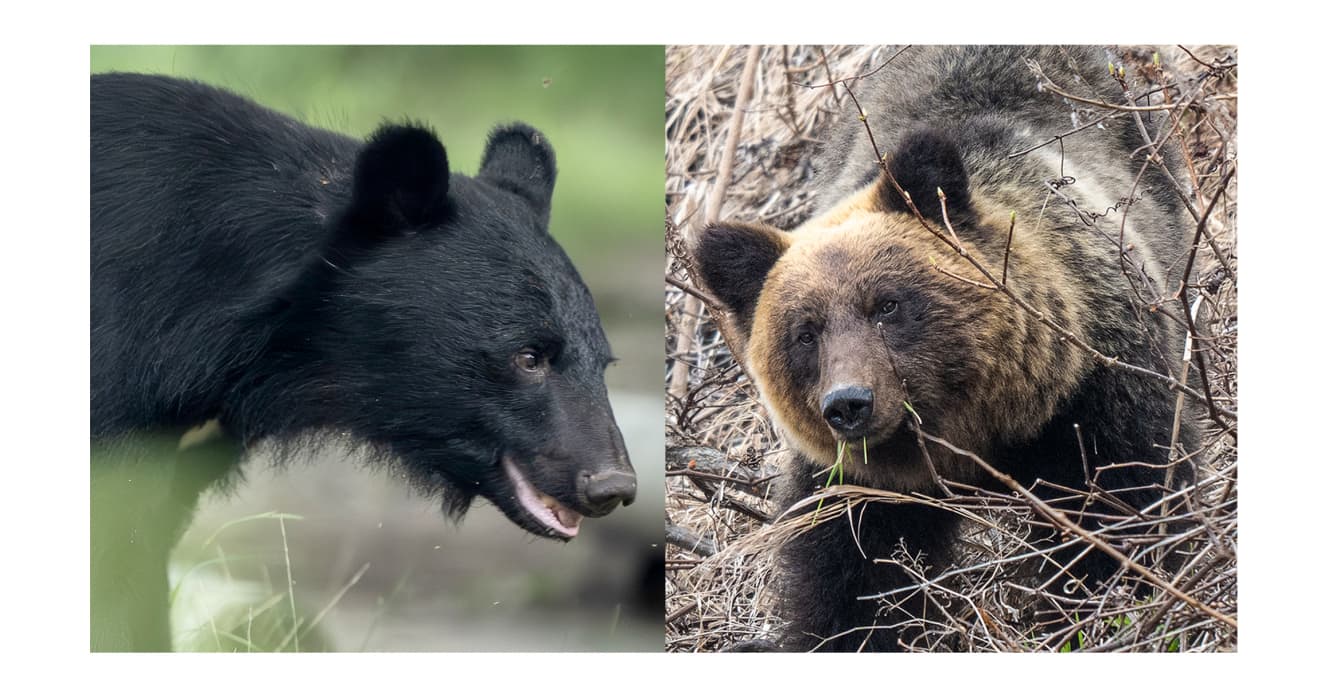
Since 2011, the Japanese archipelago has suffered “disaster-level damage” from brown bears and black bears. According to statistics from the Ministry of the Environment, the number of human casualties has surpassed the record high of 219 in FY 2011, and as of the end of November 2013, a preliminary figure of 230 casualties had been reported, indicating that the situation is still critical.
Especially in the Tohoku region, the combination of a poor harvest of nuts that beech trees feed on and the disappearance of the boundary between satoyama and human settlements due to depopulation has resulted in a serious “urbanization” of the area, with bears appearing in residential areas and around schools. In addition to Hokkaido, which is overrun by large brown bears, caution continues to be exercised throughout the country.
Chiba Prefecture is unique in that no bear damage has been reported.
However, amidst this nationwide threat, there are some prefectures where no bear damage has been reported for about 20 years since 2006, when the Ministry of the Environment began compiling statistics in the current format. One such prefecture is Chiba. Why, then, are there no bears in Chiba? Sayaka Shimoinaba, a researcher at the Chiba Prefectural Museum who is familiar with the mammals that live in Chiba Prefecture, explained the reason for the absence of black bears in Chiba Prefecture.
There is no direct evidence of the existence of black bears in Chiba Prefecture, such as records of their capture, the discovery of their bodies, or photographs,” she said. If a creature has been around for a long time, it will be there unless it becomes extinct, or if it comes from another area, it may inhabit it, but there is no evidence of either pattern in Chiba Prefecture.
Even going further back in history, he continues, there is no record of bears living in Chiba Prefecture.
There is an abundance of archaeological sites from the Jomon period in Chiba Prefecture, but no black bear bones have been found among the bones of animals excavated. Wild boar bones have been found, but bear bones have only been processed into ornaments. It is assumed that they were brought into the prefecture as trade goods, and this is not evidence that bears existed in the prefecture. Even when we check documents such as municipal histories from the Meiji era onward, we can find no mention of bears in records dating back to the 1920s.”
Indeed, “an area to be on the lookout for.”
There is a theory that bears did not come to Chiba because the prefecture was once an island, but Shimoinaba denies this.
There was a time when only the southern side of the Boso Hills was land, such as about 120,000 years ago, and there was also a time during the Jomon period when the land connected to the mainland was narrower than today due to rising sea levels,” Shimoinaba said. However, in subsequent periods, the land has been connected to the mainland. Geography can be cited as one of the reasons for the absence of bears, but it is not “the whole story.
The black bear is a good swimmer and can cross the Tone River, which is several kilometers wide. So why don’t they come into Chiba?
Bears like to hide in bushes, so riverside areas are more suitable for their migration. It is not that the river is preventing them from entering the area, but simply because they have not been able to reach there.
Looking at the situation in Tokyo, Saitama, and Ibaraki, which are adjacent to Chiba, the black bear’s habitats (Okutama in Tokyo, Chichibu in Saitama, etc.) are far from Chiba.
To come from these habitat areas to Chiba, there are urban areas stretching in between. Bears are basically creatures that like to hide and move about, so it is difficult for them to pass through densely populated urban areas. There is a strong possibility that they will be discovered and captured before they arrive.”
Currently, the black bear’s closest habitat to Chiba is in southern Tochigi Prefecture, which is not adjacent to the prefectural border. This physical distance and the urban area that stretches between the two prefectures make them the “strongest defensive barrier. So, will Chiba be safe forever?
The Boso Hills in the southern part of Chiba Prefecture are covered with broadleaf forests that produce acorns, which the bears use as food, and this is an environment that could potentially support black bears. However, it is unknown whether the area is large enough to support a large population on a permanent basis.
The area to be on the lookout for bears is along the Tone River, which is relatively close to the southern tip of the Ashio Mountains, including Sano City in Tochigi Prefecture, where bears have already been sighted. Although the distance from Sano City to the Tone River is great and there are urban areas in between, bears’ behavior is unpredictable and they are physically strong, walking tens of kilometers. In the unlikely event that an accidental individual should appear that wanders southward along the Tone River while hiding and wanders beyond the junction with the Edogawa River, it is very unlikely but not zero.”
Although the residents of Chiba Prefecture can rest assured that the situation will continue for the time being, given the expansion of the bears’ habitat and changes in their ecological behavior throughout Japan, it remains to be seen when the “strongest defensive barrier” will be breached.


PHOTO: Shinnosuke Futagami