Inside Japan’s Realistic Stuffed Animal Hospital Where Plushies Get Spas and Hair Transplants


In recent years, plush activities (spending time with favorite stuffed toys) and plush photography have become trendy, sparking a plush toy boom. However, many people have likely experienced problems such as holes appearing in their favorite stuffed toys, noticeable black stains, or their once-fluffy bodies becoming flattened.
Did you know there are now specialized plush toy hospitals that can restore toys once considered beyond repair? Social media buzzes with comments like, “They can bring damaged plush toys back to life!” and “The results are amazing,” drawing attention to these services.
For this report, our site’s journalist brought their own 45-year-old Hello Kitty to the famous “Mori no Miyako Natsumi Clinic” in Tokyo’s Chiyoda Ward. This specialized hospital boasts over 100 treatments per month. We followed the process to see how much a dirty, worn-out Hello Kitty could be restored to a pristine state.
Off to the savior hospital for stuffed toys!
When the clinic’s door opened, the waiting room walls were lined with plush toys ready for discharge, and Dr. Natsumi Hakozaki, wearing a white coat, greeted us with a warm smile.
Hakozaki-san, who previously worked at a clothing repair shop, was deeply moved by the number of plush repair requests and the joy of the owners when their toys were fixed. In 2016, she opened the clinic. Since then, guided by the belief that plush toys are family members, she has treated a total of 18,000 stuffed toys.
In other words, she is a savior for plush toys. The clinic is so popular that there is currently a three-month waiting period for treatment.
“Welcome! Let’s start the examination.”
Hakozaki-san received the patient Hello Kitty from the reporter and conducted a consultation similar to a human patient. She asked for the toy’s name, age, gender, and areas of concern. The toy’s name was “Hello Kitty,” a 45-year-old girl, and the reporter requested repairs for a large hole around her eyes.
“Next, let’s measure her height. 57 cm,” she said, measuring with a tape. She then conducted a thorough physical check, examining even hard-to-see areas like the back and underarms. After the examination, Hakozaki-san explained the treatment plan using diagrams. Because the fabric was severely worn, she would reinforce it by sewing a special interfacing fabric to the back of the material.
“This one is quite severe—a mid-level severe case. If the damage worsens, treatment options will be limited, so this is a good timing.
For the eye area, we’ll do a re-furring procedure. First, the hole will be reinforced with gauze, then yarn matching the original color will be implanted to restore the fur. Finally, the eyes will be reattached. Full recovery will take about two and a half months.”
Thus, Hello Kitty was admitted to the clinic to receive treatment from her savior.
Treatment Begins — The Shocking Sight After Removing Old Stuffing
First, Hakozaki-san carefully removed Hello Kitty’s clothes. As she did, the old stuffing inside the plush crumbled and fell like dust.
“This is polyurethane stuffing that has deteriorated into powder. It seeps from the inside of the body and is one of the causes of discoloration on the clothes. Nowadays, most plush toys use pure white polyester stuffing, which is gentler on the fabric, so we’ll replace it with new stuffing.
During the final stage of treatment, the restuffing, we adjust the amount so the toy regains its original weight. The new stuffing will give it a soft, plump, and pleasant feel.”
Next, to check the condition of the inner fabric, Hello Kitty—now completely emptied of her old stuffing—was turned inside out with a gentle flip.
“When you flip the fabric, there’s no stuffing, so the damaged areas become easy to see. While inspecting the fabric, we remove the polyurethane powder by hand. If you don’t brush off the powder completely, no matter how many times the toy goes through the bath spa (cleaning), the dirt won’t come out properly.”

To prepare for the bath spa treatment, the old stuffing and powder are removed.
Bath Spa—Carefully addressing each plush toy’s dirt
Kitty-chan, carefully brushed on her fabric, looked somewhat refreshed as she experienced her very first bath spa.
“The dirt on plush toys can come from ink, food, cosmetics, or body oils. We first determine what kind of dirt it is, and then use the appropriate bath additive (detergent). Also, plush toys are often more worn than they appear, so if the color might fade, we apply a color fixative before the bath. If the fabric seems likely to tear, we reinforce it before putting it in the bath.
This time, we applied adhesive interfacing to the large hole around her eye before bathing. After confirming the dirt was removed, we reapplied the interfacing. We always try to perform the treatment in the cleanest state possible.”
Thanks to Ms. Hakozaki’s hands, Kitty-chan’s years of dirt were removed, leaving her astonishingly white. Then her fabric was dried naturally, the entire body reinforced, and frays repaired with sewing. The hole around her eye was firmly reinforced with gauze and adhesive interfacing, ready for the next hair planting treatment.
Hair Planting — Carefully stitching each thread, precise craftsmanship
“What’s important in hair planting is selecting yarn that matches the texture and characteristics of each plush toy’s fur. This time, we mixed two colors of yarn to match Kitty-chan’s feel and carefully stitched it into the gauze-reinforced hole. To achieve a natural finish, we treat the yarn so it won’t easily come out, ensuring the hair planting lasts a long time.”
With delicate fingers, each stitch was inserted carefully. Once finished, the length and height of the fibers were adjusted and trimmed. The result was indistinguishable — you couldn’t tell where the original fur ended and the planted hair began. This meticulous process was repeated on other worn areas, bringing the treatment to its final stage.
“Next, we’ll attach the polished, sparkling eyes, and the newly remade ribbon, nose, whiskers, and clothing buttons. Then we’ll insert new stuffing to complete the restoration. Discharge will be in one week. When we return it, I hope the original fur feels as fluffy as the newly planted yarn.”

《Welcoming Kitty》Delighted by an unexpectedly soft texture
After a two-and-a-half-month treatment period, I visited the clinic to pick up the fully healed Kitty, and received her along with the warm words, “Congratulations on your discharge!” She had become astonishingly white.
Her previously flat and stiff fur had fluffed up, restoring a soft and fluffy texture. The result exceeded expectations. You could truly feel the dedication and heartfelt effort of Ms. Hakozaki, who believes that plush toys are part of the family.
“After treatment, it’s important to keep them as clean as possible. When taking them out, don’t just put them directly into a bag; wrap them in a soft cloth first. Also, if, for example, ketchup gets on them at a restaurant, use the soap in the restroom to remove it as quickly as possible. The key is to remove stains before they set—just like with humans.”
She continued further:
“At our clinic, we often treat plush toys that clients have cherished like family for over 30 years. But we also have gentlemen bringing in new character plushes. People of all ages come to us, so we will continue to provide care that stays close to these beloved family plushes.”
Even those who have given up on their worn-out toys are encouraged to consult a specialized plush hospital. For the sake of your irreplaceable family member, take the first step!
【This Treatment and Costs】
Basic hospitalization pack: ¥14,300 (includes plush cleaning and stain removal)
Removal of deteriorated urethane: ¥3,300
Hole patching: ¥220
Run stitch repair: ¥1,100
Full backing reinforcement with adhesive fabric: ¥57,200
Reattaching whiskers: ¥1,320
Eye restoration and polishing: ¥4,400
Ribbon creation: ¥2,750
Nose wrapping redo: ¥2,200
Basic hair planting: ¥1,000
Hair planting area 42×¥1,320 = ¥56,700
Button attachment: ¥440
Clothing cleaning: ¥550
Material procurement fee: ¥4,950
Button: ¥220
Ribbon fabric: ¥550
Nose fabric: ¥550
Consultation fee: ¥3,300
Pickup fee: ¥550
Total: ¥155,600
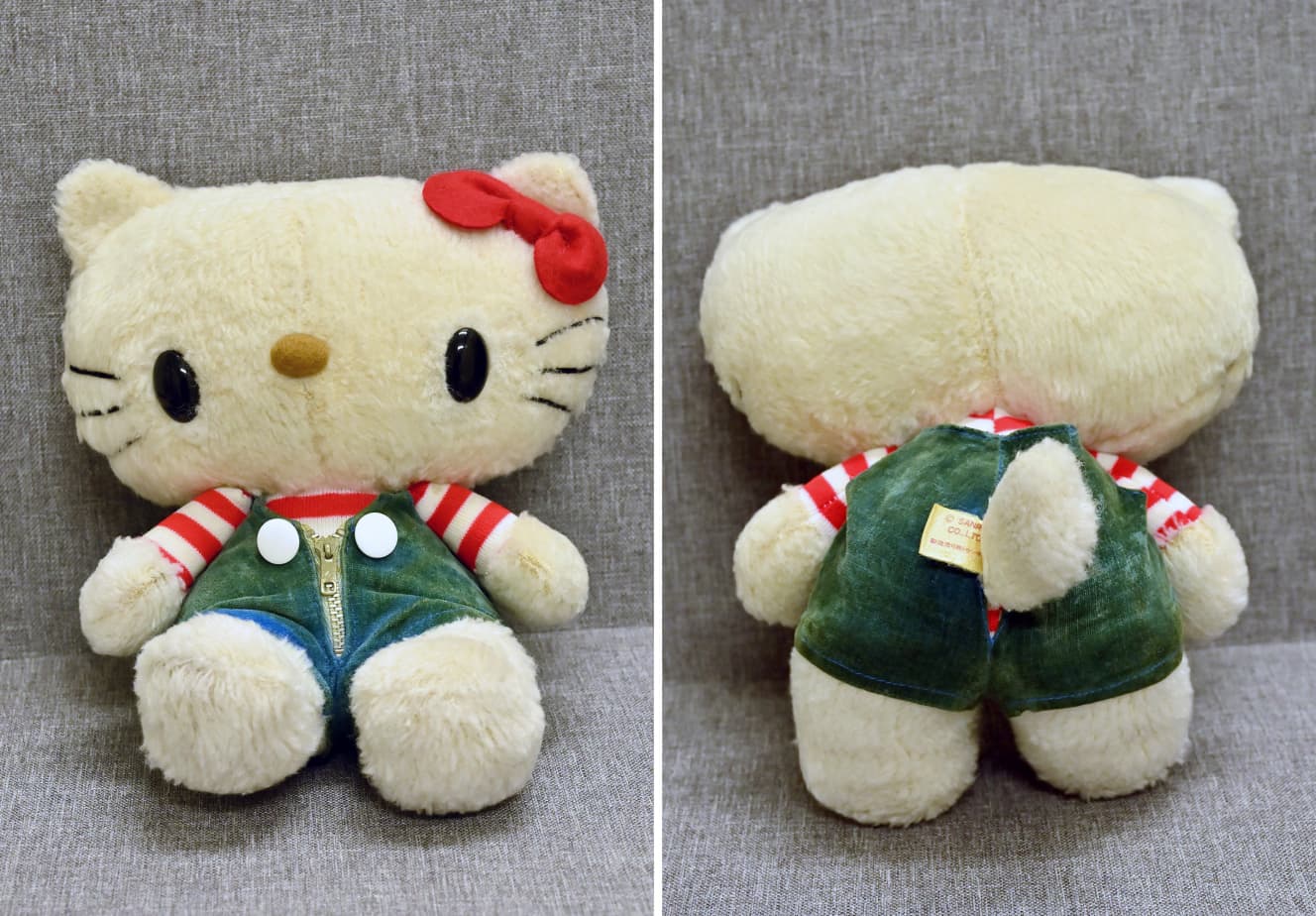
Post-Treatment Kitty


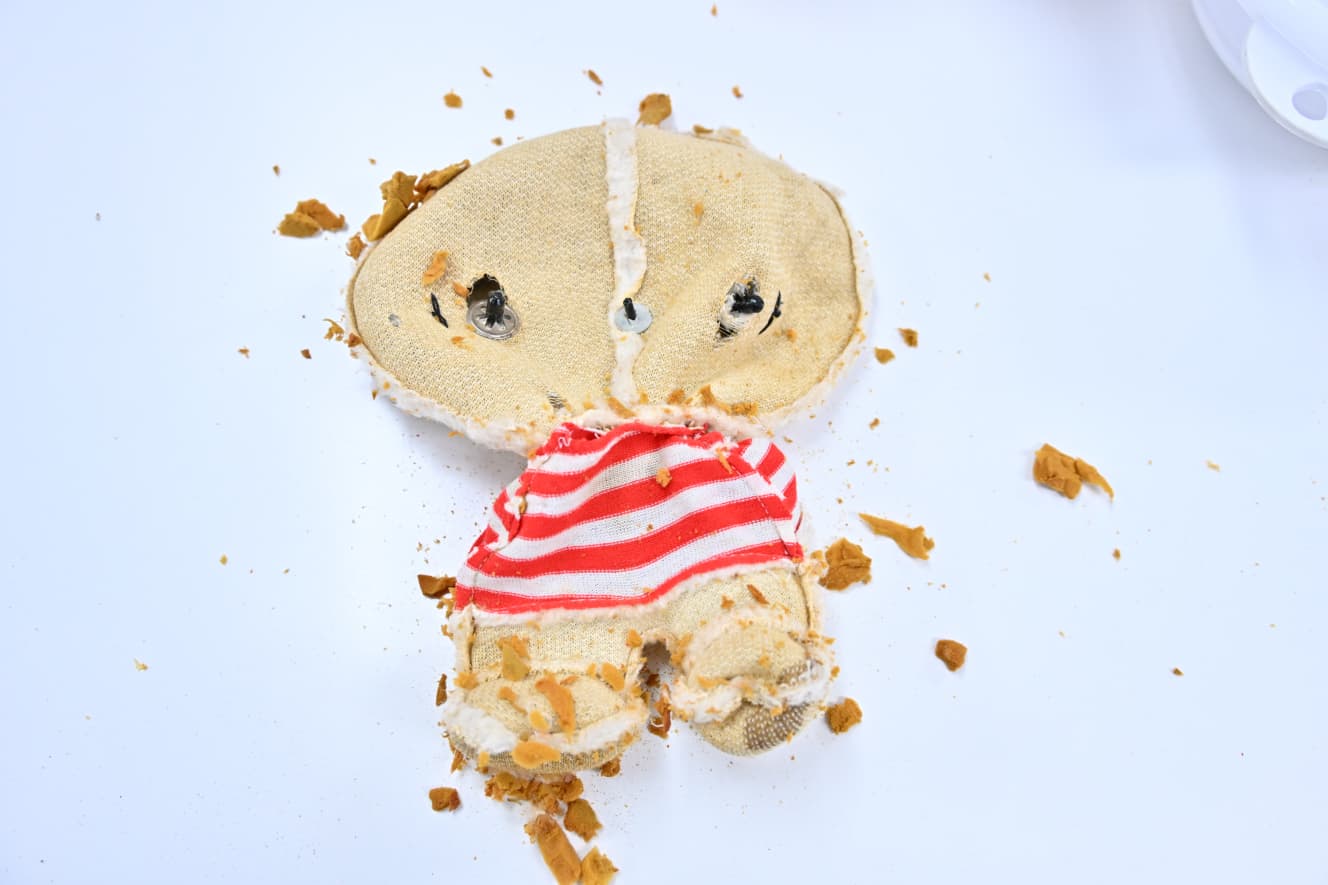


PHOTO: Yasuko Funamoto