Even a Shot to the Heart Won’t Stop Brown Bears as Experts Warn Over Police Removal Efforts


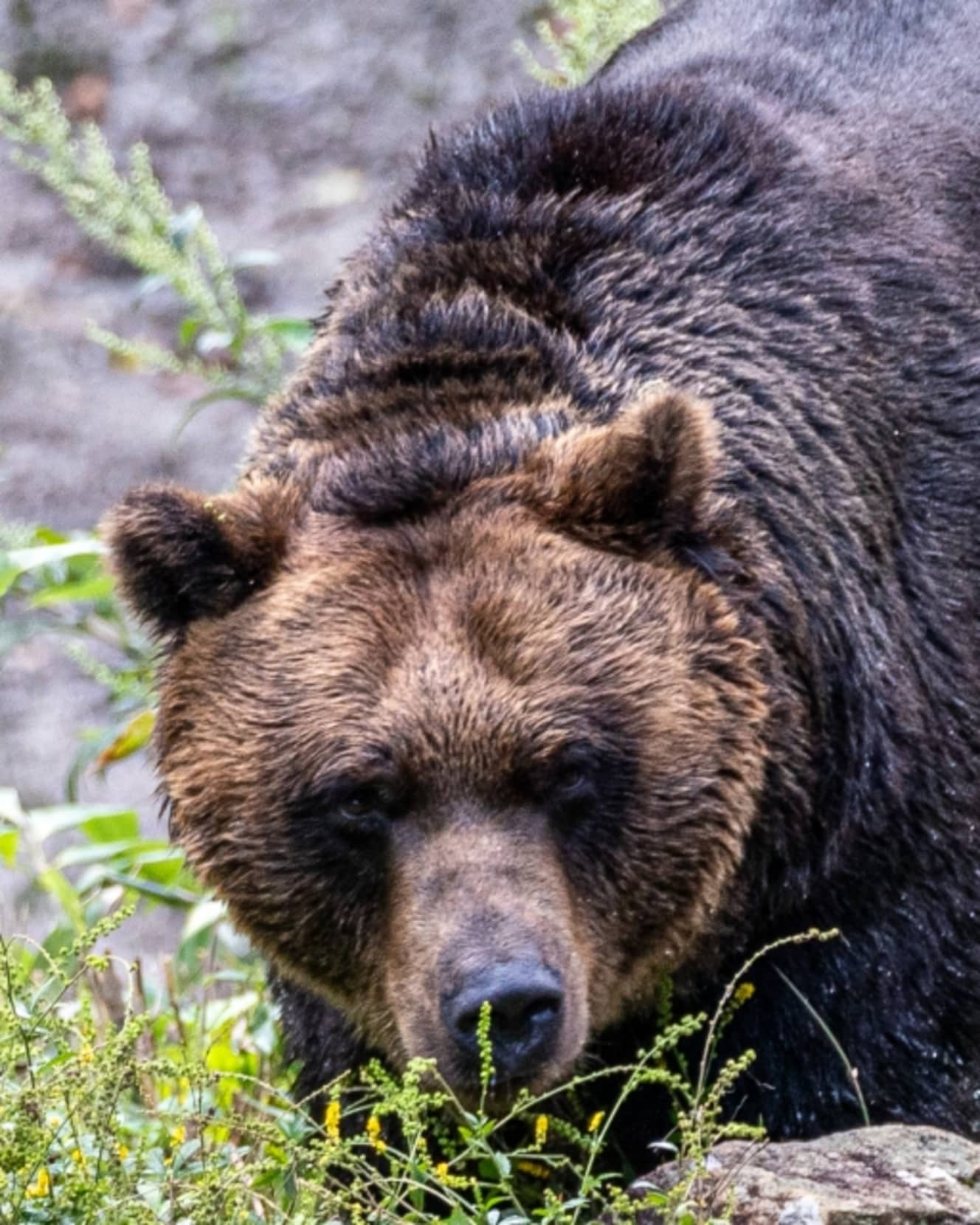 “Even if a bear’s vital organs like the heart or lungs are damaged, it can still sprint 100 meters into the bushes and confront anyone pursuing it—it’s an animal with formidable combat abilities,” says Yasuo Tamaki, head of the Sapporo branch of the Hokkaido Hunters Association’s bear control unit.
Even if shot in the heart, it will run 100 meters
As bear sightings continue to occur one after another, a National Public Safety Commission regulation that allows police officers to use rifles to cull bears came into effect on November 13. While officers reportedly undergo training on bear ecology before heading to the field,
“At our association, we require beginners to first accumulate many years of sufficient hunting experience in the mountains before deciding whether they should shoot a bear. Until then, we instruct them to return without firing even if they encounter a bear in the mountains,”
says Yasuo Tamaki, head of the Hokkaido Hunters Association’s Sapporo Branch Brown Bear Control Unit. That is how dangerous bear hunting is, he explains.
“Even if a bear’s vital organs like the heart or lungs are damaged, it can still sprint 100 meters into the bushes and then turn to confront the human chasing it. Bears have that kind of combat capability.”
Tamaki deals with brown bears, but he believes large Asiatic black bears are likely the same.
Sometimes a bear will charge straight toward the person who shot it; other times, you might assume it’s dead because it hasn’t moved, only for it to suddenly get up and attack when you approach.
“That’s why none of our members ever recklessly approach a wounded bear. We observe it for a while, then slowly and carefully circle around from a direction where the bear isn’t facing us. And if there’s even the slightest sign of life, we fire another shot to the head.”
To think that a bear can keep running even after its heart is shot through—an astonishing vitality.
“Ultimately, it will die from blood loss, but that takes time. To stop it from moving, you need the shooting skill to take out, in a single shot, the nerves that run from the brain to the spinal cord. If you sever the nerves that control movement, even if the bear is still alive, it won’t be able to move. Then you can approach and deliver the finishing blow. That’s the kind of marksmanship we aim for.”
So does that mean you should just aim for the brain? Apparently, it’s not that simple.
“If the bullet hits the head at a perpendicular angle, it works, but if the angle is shallow, it may not be fatal. You also need the ability to judge what kind of angle will inflict a lethal wound.”
Why you should never hoot a bear in high places
On television and elsewhere, we often see bears climbing persimmon trees in urban areas. It looks like they would be easy to shoot, but…
“You can’t shoot a bear that’s up in a tree because there’s no backstop—an earthen mound or something similar—to stop the bullet. More generally, among us hunters it’s an established rule that you should not shoot a bear that’s on high ground, such as on a slope. If you shoot at a bear that’s positioned higher than you, it can come crashing down and then charge straight at you while falling.
Bears are said to normally run at speeds of 40 to 45 kilometers per hour, but if they tumble down a slope, they could be moving even faster. You don’t have time to prepare a second shot. That’s why bears in high places can’t be shot.”
There are also concerns that firing a gun in urban areas could cause bullets to ricochet off walls or other structures and injure residents.
“I have full confidence in the police officers’ handling of firearms, but understanding how a bear will move, or what posture it’s about to take, is something you only learn by sharing the field with bears. For someone facing a bear for the first time, I think that would be extremely difficult.”
 As head of the Sapporo branch’s brown bear control unit of the Hokkaido Hunters Association, Tamaki leads a busy life, but his main occupation is running a specialty Japanese tea shop. He is also a certified Japanese tea instructor. “I take part in the hunters association’s activities because I want to protect the local community and nature. When my skills decline, I’ll step aside without hesitation.”
Can a police officer make this decision? Professionals are concerned about experience and information sharing
This year, bear sightings in urban areas have made headlines, but Sapporo has a history: in 2021, bears appeared in the city and attacked people one after another, with several more urban sightings occurring afterward.
“At that time, we realized that if something similar happened again, we wouldn’t be able to respond adequately under the current system. So we began organizing a unit capable of handling urban bear appearances, in accordance with the law. This year, many bears have appeared in Sapporo’s city areas, but we were able to respond because our preparations just barely kept pace,” explains Tamaki.
The Sapporo Brown Bear Control Unit is composed of a mix of experienced veteran hunters and young, mobile members skilled in high-tech equipment, all working together on bear control.
While the hunters association faces aging members and a shortage of successors,
“Fortunately, our Sapporo branch has seen an increase in members over the past two to three years, and now has about 600 to 700 members,”
Tamaki says. The branch has abolished seniority-based hierarchy in favor of a merit system. “Someday, I might be the one being tapped on the shoulder,” he laughs.
Members who are dispatched to capture bears receive a reward, half of which is contributed back to the branch. This helps fund beginner training sessions, shooting competitions, and other events aimed at developing the next generation.
“I’m truly grateful that the government has provided the police rifle units as a safety net. But if police officers are expected to do the same work we do on the front lines of bear control, they need to share the same level of information and experience; otherwise, the risks are high. While we focus on training successors, the development of professionals is also urgently needed.”
Interview and text by: Izumi Nakagawa