Alarm Report] Number of Victims Doubles! The horrifying truth revealed by the “Attack MAP” of the “man-eating bears” that have gone berserk.


Alarming Report” Victims and Population Doubles! Even in December, they are still dangerous!
They have learned that there is “bait” in the city, and they are coming down from deep in the mountains…
I think it was mid-October, around …… midnight. I had been working late and was exhausted, and I was dozing off in my living room when I heard a chewing sound coming from behind my house, as if someone was eating something.
I got creeped out and quietly peeked out the upstairs window to see a huge black mass climbing up the persimmon tree in the backyard and eating persimmon nuts. It was so large and terrifying that I couldn’t speak and was shaking with fear. ……”
Mr. A, a man in his 60s who had been living quietly in Toyama City, recalled his terrifying encounter with a bear.
There have been a number of bear attacks across Japan. The map below summarizes the damage caused by bears throughout Japan from April to October this year. The number of casualties is already close to 200, double the number of deaths in ’23, which was the worst year on record. The situation has become a state of emergency, with the Self-Defense Forces deployed at the request of local governments. The map also shows that injuries and accidents have occurred in urban areas such as prefectural capitals, as well as in Hiroshima, Fukui, and other prefectures that were not affected last year.
This year, even in Osaka Prefecture, where there had been almost no reports of sightings, the bears were confirmed to have appeared. Except for Chiba Prefecture, where black bears do not live, you should expect them to appear anywhere in Honshu,” said Professor Koji Yamazaki of Tokyo University of Agriculture.
Why have bears come down from the mountains and into human living areas, such as fields, residential areas, supermarkets, and schools……?
One reason is physical: population growth. According to data from the Ministry of the Environment, the brown bear population is estimated at about 12,000, and the black bear population at 42,000. The number of brown bears alone has doubled over the past 30 years.
Professor Yoshikazu Sato of Dairy Farming University says, “There are still many brown bears in the wild, but the number of bears is increasing.
The increase in the bear population is due in part to bear protection policies, such as voluntary hunting restrictions. The reason for the increase in bear appearances in human settlements and human suffering is the lack of food. Global warming has increased the frequency of poor harvests of beech nuts (acorns), the bears’ staple food, and hungry bears are coming to urban areas in search of food.
This year’s crop has been one of the worst in recent years. Fruits from beech and other trees used to produce good and bad harvests in three- to four-year cycles, but in recent years the cycle has become every two years. It is speculated that this is because global warming has given trees enough energy to produce a good harvest again after a year’s rest. In other words, bad harvest years now come in shorter spans than before.”
The bears have learned and become accustomed to human settlements due to the increased frequency of their visits to the city.
In addition to the increase in population and poor harvests, there are other factors that have led bears to invade urban areas. Professor Yamazaki points out, “The bears’ habitat itself is changing.
It is better to think that many bears are settling near human settlements rather than that they are coming down from the mountains in large numbers. This is because they know there is food around human settlements.
If a female bear gives birth to cubs near a human village, the cubs’ living area will be around the human village, not in the mountains. And as these cubs gave birth to grandchildren in similar areas, I believe the density of bears living around human settlements became higher and higher.
It is not easy to exterminate bears living near human settlements. Professor Yamazaki continues, “Bears living in the mountains are not easy to exterminate.
Bears living in the mountains are not accustomed to people, so if you drive them away, they become frightened and return to the mountains. However, bears born and raised near human settlements do not know how to live in the mountains, so even if you drive them away, they will continue to stay near human settlements.
Bears do not recognize humans as food from the beginning. However, there are some individuals that, after an initial self-defensive attack upon encountering humans, have begun to prey on the deceased.”
Even if you get rid of them, they come back… Why conventional measures are not effective
Professor Sato is also concerned about the changing behavior of bears.
Bears now recognize the vicinity of human settlements as their living area, and they have developed a defensive instinct to protect food in human settlements,” he said. They are becoming very aggressive toward humans, partly because they are in a hurry to accumulate nourishment before hibernation.
The transformation of the bears that Sato and his colleagues fear has been observed in many parts of Japan, as an official with the agricultural promotion division of Kitakami City in Iwate Prefecture, where three people died, told this magazine, “In Iwate Prefecture as a whole, there were 3,000 bears last year.
The number of bear appearances in Iwate Prefecture as a whole last year was about 3,000, but as of the end of September this year, the number had exceeded 4,000. In Kitakami City, an unprecedented bear took out a staff member who was cleaning an open-air bath on October 16.
This year bears are coming back even if you drive them away. They come back again and again, as if they have memorized the location of the bait. There was a case of bears entering a farmer’s warehouse in Kitakami City for grain stored there, and they came back twice after being chased away.
With a memory and intelligence said to rival that of primates, bears understand that food is available in human settlements, and they remember where it is stored. Conventional wisdom does not apply to the bears that are now attacking human settlements. We are in a very dangerous situation.
Even with the mobilization of police and Self-Defense Forces, the bears’ attacks show no sign of abating. It is already mid-November, and even their hibernating habits have changed.
The hibernation period is getting later in general. We have confirmed that some individuals are still active as late as mid-December. We must not let our guard down even though the end of the year is approaching,” said Professor Sato.
We now live in an age when we can encounter bears on our walks, while shopping, in our yards, and so on. If you are unlucky enough to encounter one, what should you do?
He recommends, “Do not run away, do not show your back, and if attacked, curl up to protect your head and lie down on the ground. It is also dangerous to leave trash on your property that could be used as bear bait. It is important to clean up trash frequently,” said a Kitakami City Hall official.
Attacks by “man-eating bears” have become a “crisis that exists today.
Brown bear population doubles
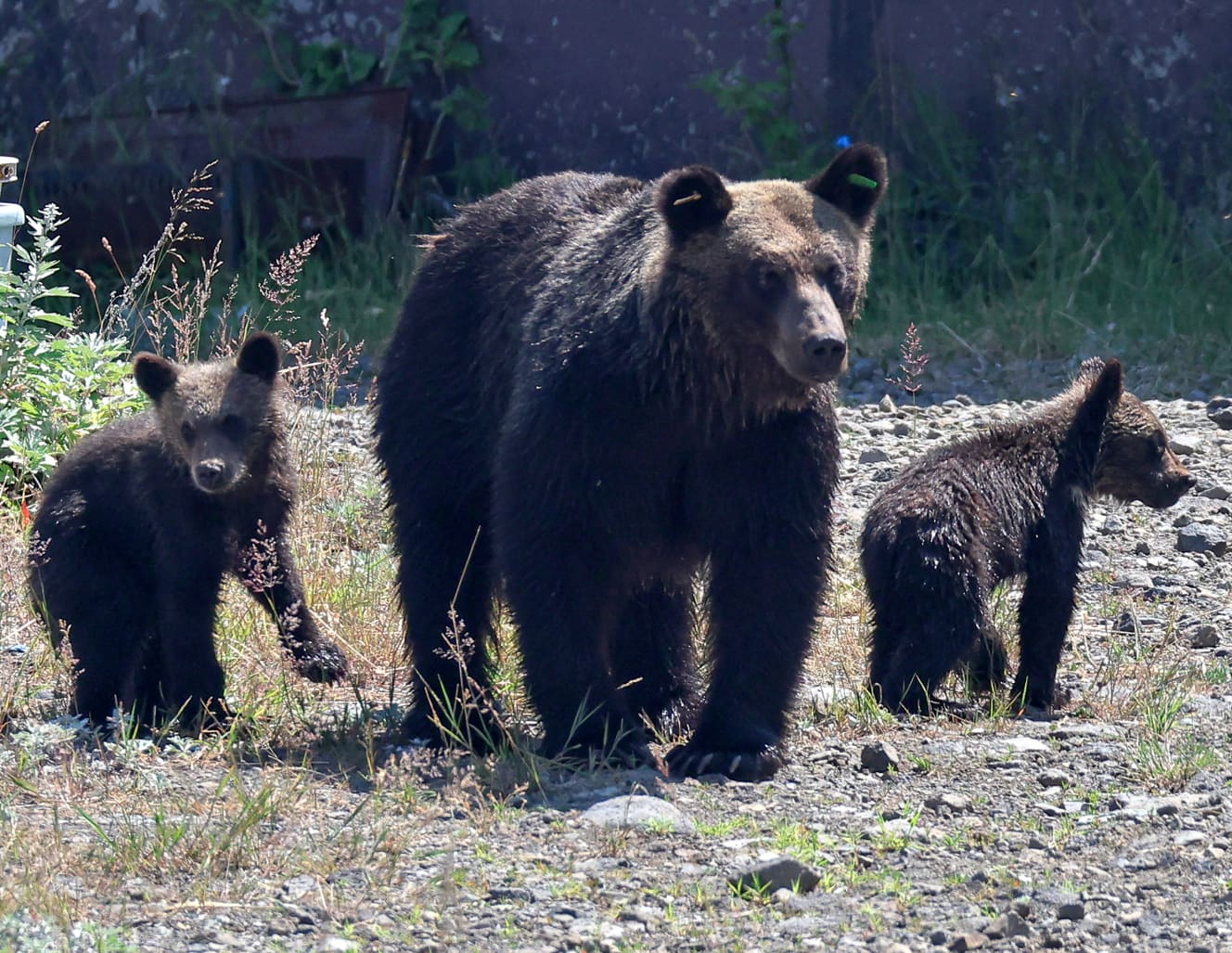
Bears Accustomed to People Appear in Urban Areas
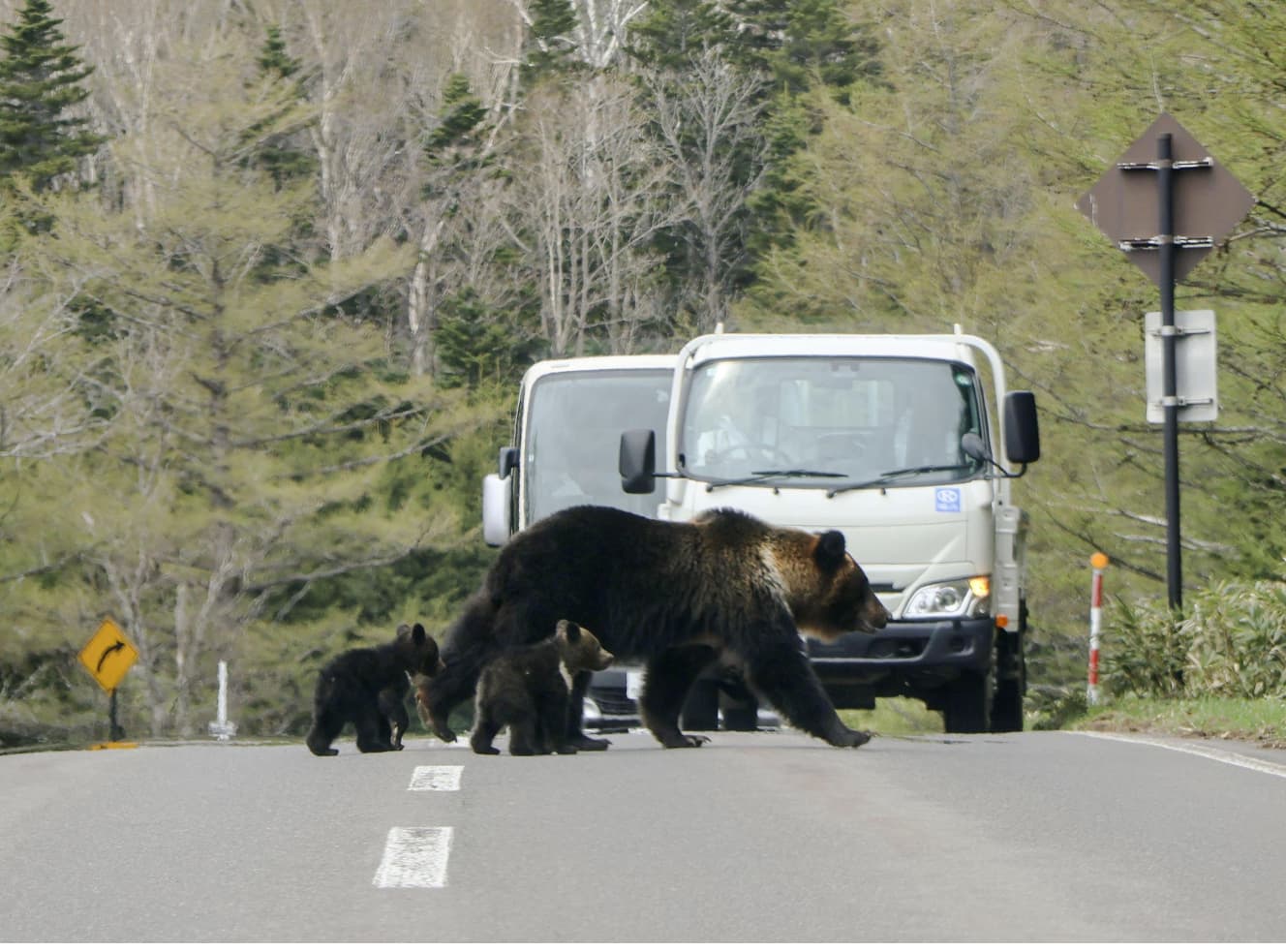

From the November 28 and December 5, 2025 combined issue of FRIDAY